Types of Saws for Wood: Cutting Treated & Preserved Lumber
Discover the best types of saws for wood when cutting pressure-treated and preserved lumber. Learn blade choices, dust safety, and end-grain sealing.
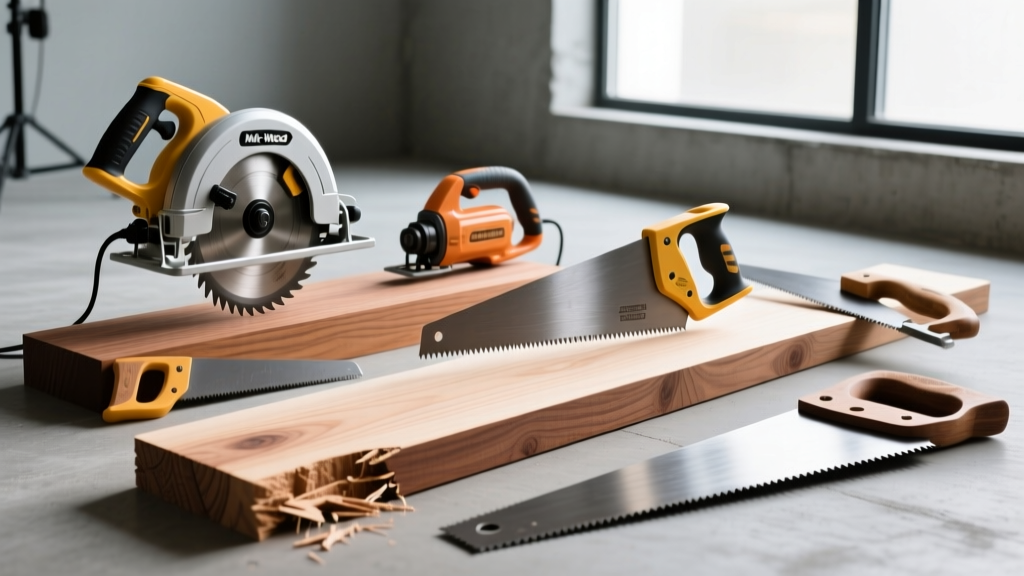
The Anatomy of a Treated Wood Cut
When evaluating the various types of saws for wood in a construction context, most guides focus solely on speed and convenience. However, when working with pressure-treated, thermally modified, or chemically preserved lumber, the cutting process directly impacts the material's long-term structural integrity. Pressure treatment is rarely uniform throughout the entire cross-section of a board. According to the American Wood Protection Association (AWPA), preservative penetration in Southern Yellow Pine typically reaches a minimum of 0.25 inches to 0.4 inches from the surface, leaving the inner core largely untreated.
When you sever a treated board, you expose this untreated core to moisture, fungal spores, and wood-destroying insects. The type of saw and blade you use dictates the surface area and roughness of this exposed end-grain. A ragged cut creates deep micro-fissures that wick moisture deep into the untreated core, bypassing the protective chemical shell. Conversely, a glass-smooth cut minimizes the exposed surface area and allows field-applied preservatives to seal the end-grain effectively.
Evaluating Types of Saws for Wood Treatment Integrity
Not all saws are created equal when it comes to preserving the chemical envelope of treated lumber. Here is how the primary saw categories perform when cutting preserved wood.
1. Power Miter Saws (Chop Saws)
The power miter saw is the undisputed champion for cross-cutting pressure-treated decking and framing lumber. Because the blade enters the wood at a steep angle and maintains a rigid, guided path, it produces exceptionally clean, square end-cuts.
- Preservation Advantage: Minimal tear-out on the exit side of the cut. The smooth end-grain requires less field-applied sealer and penetrates more evenly.
- Best Application: Sizing treated 2x6 decking boards, cutting 4x4 treated posts, and trimming structural timbers.
2. Circular Saws
Circular saws are essential for ripping treated lumber and making long bevel cuts. However, because the blade cuts on the upward stroke, the top surface of the board (the visible face) is prone to severe splintering and tear-out.
- Preservation Advantage: When used with a fine-tooth finishing blade and a straight-edge guide, circular saws produce clean rip cuts that do not compromise the longitudinal treatment shell.
- Best Application: Ripping treated deck boards to fit against house siding, notching treated sill plates.
3. Table Saws
Table saws cut on the downward stroke, meaning the bottom of the board gets the cleanest cut while the top splinters. For treated wood, which is often warped, cupped, or twisted due to the moisture from the treatment process, table saws present a significant kickback hazard.
- Preservation Advantage: Excellent for precise, repeatable rip cuts on kiln-dried-after-treatment (KDAT) lumber.
- Warning: Never force warped, wet pressure-treated lumber through a table saw without a riving knife and outfeed support; the binding can ruin the cut and cause severe injury.
4. Reciprocating Saws and Chainsaws
These are demolition and rough-framing tools. The aggressive, oscillating, or continuous chain action violently tears the wood fibers rather than shearing them cleanly.
- Preservation Disadvantage: Creates highly porous, deeply fractured end-grains. If you must use a reciprocating saw to cut a treated post in the field, you must follow up with an angle grinder and a 40-grit flap disc to smooth the end-grain before applying preservative, otherwise, the sealer will fail.
Blade Geometry and TPI Matrix
The saw itself is only half the equation; the blade determines the actual cut quality. Cutting treated wood requires carbide-tipped blades, as the copper and alkaline chemicals in modern preservatives like ACQ (Alkaline Copper Quaternary) and CA-C (Copper Azole) are highly corrosive to standard high-speed steel. Below is a decision matrix for blade selection based on the USDA Forest Products Laboratory guidelines for wood machining.
| Saw Type | Recommended Blade TPI | Blade Grind | Cut Quality | End-Grain Sealer Required |
|---|---|---|---|---|
| Miter Saw (Crosscut) | 60 to 80 TPI | ATB (Alternate Top Bevel) | Excellent (Glass-smooth) | Standard 1-coat application |
| Circular Saw (Rip) | 24 to 40 TPI | FTG (Flat Top Grind) | Good (Minor fuzzing) | Standard 1-coat application |
| Table Saw (Rip/KDAT) | 40 to 50 TPI | TCG (Triple Chip Grind) | Very Good | Standard 1-coat application |
| Reciprocating Saw | 6 to 10 TPI | Wavy Set | Poor (Severe tear-out) | Heavy 2-coat + sanding required |
Modern micronized copper and alkaline-based preservatives will rapidly oxidize and pit standard steel saw blades and extruded aluminum saw tables. After cutting pressure-treated lumber, always wipe down your saw's baseplate, blade guard, and arbor with a dry cloth and apply a light coat of boeshield T-9 or WD-40 Specialist Corrosion Inhibitor to prevent permanent pitting.
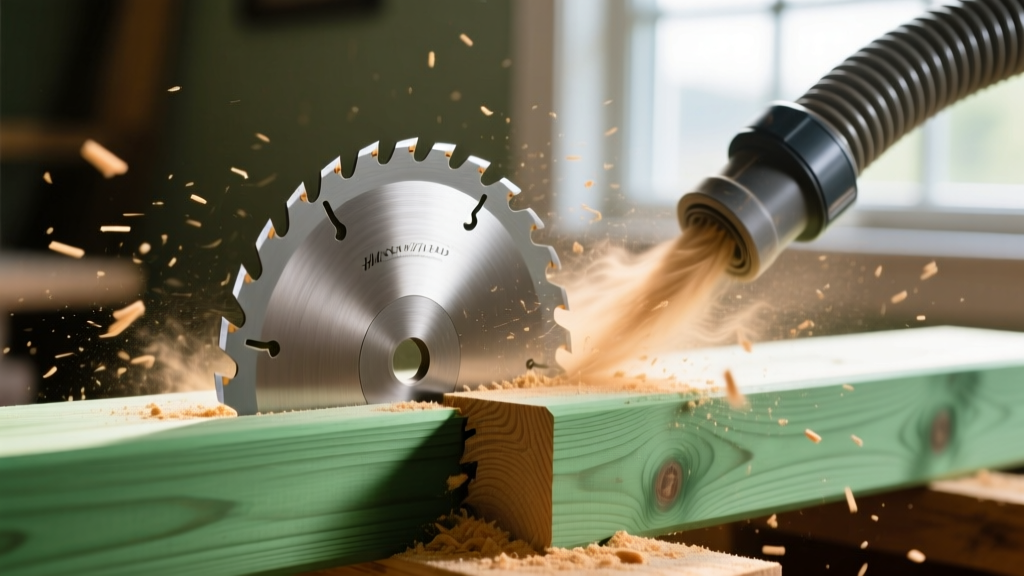
Dust Management and Toxicity Mitigation
When researching types of saws for wood, dust collection is rarely a primary concern for standard framing. However, cutting preserved lumber generates particulate matter laden with biocides, fungicides, and heavy metals. The Occupational Safety and Health Administration (OSHA) strictly regulates wood dust exposure, and the chemical additives in treated wood elevate the hazard level.
When cutting ACQ or Copper Azole lumber, you must utilize saws equipped with integrated dust ports connected to a HEPA-filtered vacuum. Never use a leaf blower to clear treated sawdust from your workbench, as this aerosolizes the copper compounds. If you are cutting older lumber that may contain CCA (Chromated Copper Arsenate)—commonly found in structures built before 2004—the use of a P100 respirator and a fully enclosed dust-extraction saw system is non-negotiable to prevent arsenic inhalation.
The 3-Step End-Grain Preservation Protocol
Regardless of which saw you use, every field cut on pressure-treated lumber must be re-treated in accordance with AWPA Standard U1. Failure to do so voids the manufacturer's warranty and invites premature rot. Follow this exact protocol immediately after making your cut:
- Clean and Dry the Surface: Brush away all sawdust from the exposed end-grain using a stiff nylon brush. Do not use compressed air, as it can drive fine dust into the wood pores. If the wood is saturated from the treatment process, allow the cut face to air-dry for 15 to 30 minutes so the sealer can penetrate rather than bead up on the surface moisture.
- Apply a Copper Naphthenate Sealer: Use a heavy-bodied, copper-based end-grain sealer such as Woodlife CopperCoat or Tenino Copper Naphthenate. These products contain 2% to 3% copper naphthenate, which matches the toxicity profile of the original pressure treatment. Apply the sealer liberally with a disposable chip brush until the wood stops absorbing it. Expect to use approximately 1 quart of sealer per 100 linear feet of 2x6 cuts.
- Verify Penetration and Cure: The sealer should penetrate at least 1/16th of an inch into the end-grain. Allow a minimum of 24 hours of curing time before the cut end is placed in direct contact with soil, concrete, or standing water. If the cut will be buried (e.g., a treated fence post), apply a second coat after the first coat becomes tacky, and wrap the sealed end in a bituminous membrane or joist tape for added mechanical protection.
Never burn offcuts, sawdust, or shavings from pressure-treated wood in a fire pit, wood stove, or burn barrel. The combustion of copper, arsenic, and alkaline compounds releases highly toxic heavy metal ash and fumes. All treated wood waste must be disposed of in accordance with local municipal solid waste regulations, typically requiring transport to a lined landfill.
Final Considerations for the Job Site
Selecting the correct saw for preserved lumber is an exercise in moisture management and chemical retention. By prioritizing high-TPI carbide blades on rigid saw platforms like the miter saw, you minimize the physical destruction of the wood's cellular structure at the cut line. When paired with immediate, aggressive application of copper naphthenate field treatments, you ensure that the structural lifespan of your treated lumber matches the 40-year warranties promised by modern chemical manufacturers.
Written by
Sarah WhitfieldSarah Whitfield is a chartered quantity surveyor (MRICS) and construction cost analyst with 15 years of experience in material pricing, procurement strategy, and project budgeting. She earned her degree in Construction Management from the University of Reading (UK) and has worked on projects ranging from $2M custom homes to $180M mixed-use developments across North America and Europe. Sarah currently leads cost estimating for BuildMat Insight, maintaining a proprietary database of 4,000+ material price points updated quarterly. She is a frequent contributor to RSMeans cost data panels and has presented at the International Cost Engineering Council (ICEC) congress. Based in Denver, CO, Sarah is an avid trail runner and volunteer mentor for Women in Construction.
More from Sarah Whitfield
View all
Wood & Lumber
What Are the Different Types of Wood? A Builder's Guide
Compare structural softwoods, finish hardwoods, and engineered lumber. Analyze Janka ratings, MOE values, and 2026 pricing for construction.
Aug 4, 2026

Walls & Panels
Steel Framing vs Wood Framing: Corrosion and Moisture Defense
Compare steel framing vs wood framing for moisture resistance. Learn about galvanized coatings, condensation risks, and corrosion protection strategies.
Jul 21, 2026

Stone & Masonry
How to Cut Stone Veneer: Wet Saw vs Grinder Comparison
Compare the best tools for cutting stone veneer. We review wet saws, angle grinders, and chop saws to help you achieve clean, chip-free cuts.
Jul 21, 2026