What Are the Types of Wood for Construction? Hardwood vs Softwood Compared
Discover what are the types of wood used in construction. We compare hardwoods and softwoods by structural strength, cost, and best building applications.
The Core Divide: Softwood vs. Hardwood in Construction
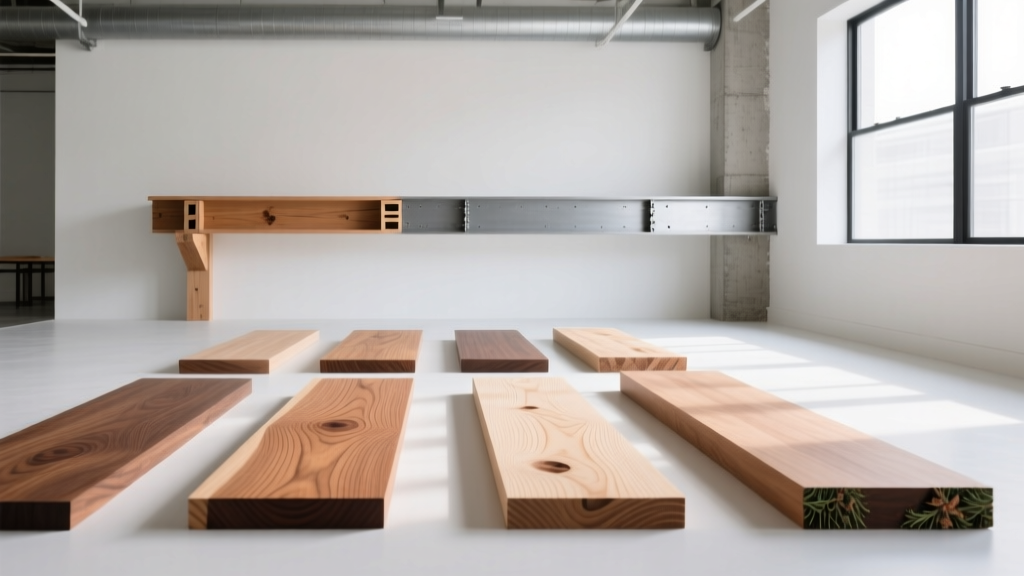
When builders and architects ask, "what are the types of wood suitable for structural and finish applications?" the answer begins with the botanical divide between gymnosperms (softwoods) and angiosperms (hardwoods). In modern construction, softwoods account for roughly 80% of all structural timber used in North America due to their rapid growth cycles, straight grain, and predictable engineering values. Hardwoods, while denser and more resistant to wear, are primarily reserved for finish carpentry, heavy timber framing, and exterior decking.
Understanding the mechanical properties of these wood types is critical for passing structural inspections and ensuring long-term building durability. The American Wood Council (AWC) establishes the National Design Specification (NDS) for Wood Construction, which dictates the allowable stress values for every commercially available species. Selecting the wrong species for a load-bearing application can lead to deflection, fastener withdrawal, or catastrophic structural failure.
Softwood Species Comparison: The Structural Backbone
Softwood framing lumber is graded by agencies like the WWPA (West Coast) or SPIB (South) based on visual defects, slope of grain, and knot size. Below is a comparison of the three primary softwood groupings used in residential and light commercial framing, based on NDS allowable design values for No. 2 grade 2x4 dimension lumber.
| Species Grouping | Common Stamp Abbreviation | Bending Strength (Fb) | Modulus of Elasticity (E) | Avg Cost per Board Foot (2026) |
|---|---|---|---|---|
| Spruce-Pine-Fir | S-P-F or SPF | 875 psi | 1,200,000 psi | $3.50 - $4.50 |
| Douglas Fir-Larch | D FIR-L | 900 psi | 1,600,000 psi | $4.00 - $5.50 |
| Southern Yellow Pine | SYP | 975 psi | 1,600,000 psi | $3.80 - $5.00 |
Application Nuances for Softwoods
- Spruce-Pine-Fir (SPF): The most economical choice for interior, non-load-bearing partition walls and standard roof rafters. It has lower shear strength, making it less ideal for heavily loaded transfer beams.
- Douglas Fir-Larch: The premier choice for the Pacific Northwest and mountain regions. Its high modulus of elasticity (stiffness) makes it the superior choice for floor joists where minimizing bounce and deflection (L/360 criteria) is critical.
- Southern Yellow Pine (SYP): Known for its high density and exceptional fastener-holding capacity. SYP is heavily treated with micronized copper azole (MCA) or alkaline copper quaternary (ACQ) for ground-contact applications like deck posts and retaining walls.
Hardwood Species Comparison: Finish, Flooring, and Heavy Timber
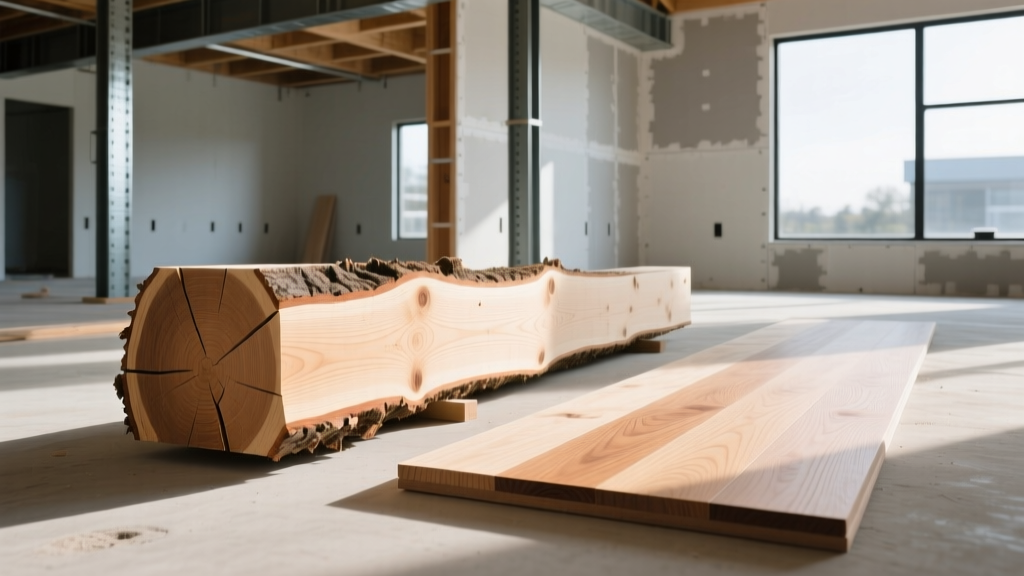
Hardwoods are evaluated differently than softwoods. Instead of structural bending stress, the primary metric for construction hardwoods is the Janka Hardness Test (measuring resistance to denting and wear) and natural rot resistance. The Wood Database provides exhaustive mechanical testing for these species.
White Oak (Quercus alba)
Janka Hardness: 1,360 lbf | Rot Resistance: Very High (Tyloses block water penetration)
Best Use: Interior flooring, stair treads, and exterior timber framing. White oak's closed-cellular structure makes it historically significant for shipbuilding and modern exterior architectural millwork. Unlike red oak, it will not wick water and rot when exposed to weather.
Cost: $8.00 - $12.00 / bf (Select & Better grade)
Ipe (Handroanthus spp.)
Janka Hardness: 3,684 lbf | Rot Resistance: Exceptional (Class A fire rating, 40+ year lifespan)
Best Use: High-traffic exterior decking, boardwalks, and rainscreen cladding. Ipe is so dense that it requires pre-drilling for all fasteners and carbide-tipped saw blades. It naturally weathers to a silver-gray patina if left unoiled.
Cost: $14.00 - $22.00 / bf (FSC-Certified premium applies)
Engineered Wood Products: The Modern Alternative
When discussing what are the types of wood available to modern builders, engineered wood products (EWP) must be included. EWPs overcome the natural limitations of solid-sawn lumber, such as twisting, cupping, and length restrictions.
- Laminated Veneer Lumber (LVL): Created by bonding thin wood veneers with parallel grains. Used for headers, rim boards, and long-span beams. An LVL beam can span 20% to 30% further than an equivalent solid-sawn Douglas Fir beam without deflection.
- Glued Laminated Timber (Glulam): Composed of stacked, bonded dimensional lumber laminations. Primarily used in commercial and heavy timber residential construction for exposed architectural beams and curved arches.
- Cross-Laminated Timber (CLT): A mass timber panel system where layers of wood are stacked crosswise (usually at 90-degree angles). CLT panels act as structural floors and walls in mid-rise and high-rise buildings, offering a 1-hour to 2-hour fire resistance rating through predictable charring rates.
Decision Framework: Matching Wood Type to Building Application
To ensure structural integrity and cost-efficiency, use this decision matrix when specifying materials for your next project:
1. Structural Wall Framing & Roof Rafters
Specification: SPF No. 2 or SYP No. 2. Ensure the grading stamp includes "S-DRY" (Surface Dry, moisture content ≤ 19%) or "MC-15" (Moisture Content ≤ 15%) to prevent post-installation shrinkage that causes drywall nail pops and truss uplift.
2. Floor Joists & Long-Span Beams
Specification: Douglas Fir-Larch No. 1 or LVL. Floor systems require high stiffness (E value). If spans exceed 18 feet, transition from solid-sawn DF to LVL or open-web floor trusses to eliminate bounce and accommodate HVAC ductwork.
3. Exterior Decking & Ground Contact
Specification: Pressure-treated SYP (UC4A for above-ground, UC4B for ground contact) or naturally rot-resistant hardwoods like Ipe or Cumaru. Never use untreated SPF or interior-grade hardwoods in exterior applications, as they will succumb to fungal decay within 3 to 5 years.
4. Interior Finish Flooring
Specification: White Oak or Hard Maple. Look for flooring milled to NWFA (National Wood Flooring Association) standards with a moisture content between 6% and 9%, acclimated to the home's interior HVAC environment prior to installation.
Cost Analysis and 2026 Market Realities
Lumber pricing remains subject to global supply chain dynamics, tariff adjustments, and environmental regulations. According to data tracked by the Forest Products Laboratory Wood Handbook, the physical properties of wood remain constant, but the market availability of high-grade old-growth timber has shifted heavily toward second-growth plantation lumber.
For builders operating in 2026, expect a 15% to 25% price premium for FSC (Forest Stewardship Council) certified hardwoods like Ipe and Teak, driven by strict import regulations and sustainable forestry mandates. Conversely, domestic softwood framing lumber (SPF and SYP) has stabilized, though regional shortages can occur following severe weather events that disrupt Southern and Pacific Northwest milling operations. Always verify the grading stamp on the lumber bundle; purchasing ungraded or "economy" cull lumber for structural applications violates the International Building Code (IBC) and will fail municipal framing inspections.
Written by
David NakamuraDavid Nakamura is a licensed architect (AIA) and construction technology writer focused on sustainable building methods, mass timber engineering, and high-performance building envelopes. He holds a Master of Architecture from the University of Washington and is a certified Passive House Consultant (CPHC). David spent eight years at the Seattle firm Mithun, where he led the design of three LEED Platinum projects, before founding his own practice specializing in net-zero residential design. He serves on the editorial advisory board of GreenBuilder Magazine and has authored peer-reviewed papers on cross-laminated timber (CLT) connections for the Journal of Structural Engineering. In his spare time, David teaches woodworking at Pratt Fine Arts Center and kayaks the Puget Sound.
More from David Nakamura
View all
Construction Cost
Labor Cost to Build a Deck Per Sq Ft: 2026 Installation Guide
Discover the exact labor cost to build a deck per sq ft in 2026. This installation guide breaks down contractor rates, complexity factors, and hidden fees.
Aug 4, 2026

Construction Cost
How Much Does It Cost to Build a 3 Bedroom House? Financing Guide
Learn exactly how much it costs to build a 3 bedroom house and explore 2026 financing options, construction loan types, and budget frameworks for your build.
Aug 4, 2026

Construction Cost
Cost to Build a Tennis Court: 2026 Guide
How much does it cost to build a tennis court in 2026? Breakdowns for asphalt, concrete, and synthetic surfaces plus fencing and lighting.
Jul 30, 2026