What Type of Wood Is Plywood? Treatment & Preservation Guide
Discover what type of wood is plywood and how species selection impacts pressure treatment, adhesive durability, and long-term decay resistance.
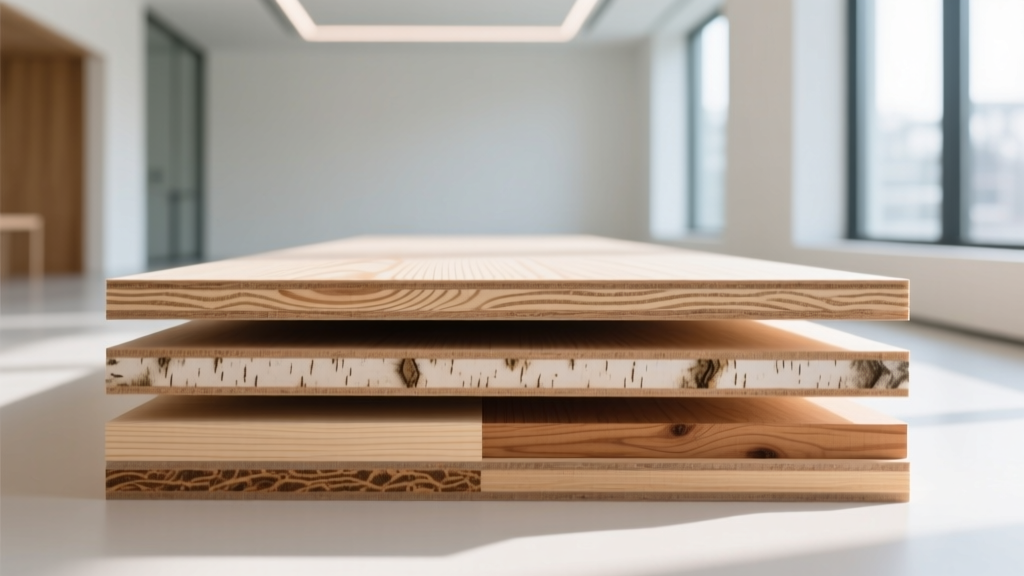
The Core Question: What Type of Wood Is Plywood?
When builders and architects ask, "what type of wood is plywood," the answer is that plywood is not a single wood species. It is an engineered composite panel manufactured by gluing together thin sheets of wood veneer (plies). From a treatment and preservation perspective, the specific tree species used to slice these veneers dictates everything: how deeply chemical preservatives can penetrate the panel, how the wood reacts to the high moisture of pressure-treatment retorts, and the long-term structural integrity of the glue lines.
Understanding the botanical and cellular makeup of plywood is critical for specifying the right panel for moisture-prone environments, ground-contact applications, and termite-heavy regions. This guide breaks down the species composition of plywood and how those species interact with modern wood preservation technologies.
Common Plywood Species and Their Treatability
The treatability of plywood depends heavily on the ratio of sapwood to heartwood in the veneers, as well as the cellular structure of the species. Sapwood is highly permeable, allowing waterborne preservatives to penetrate deeply, while heartwood is often resistant to chemical uptake due to tyloses and extractives.
| Wood Species | Primary Plywood Use | Natural Decay Resistance | Preservative Penetration Rate |
|---|---|---|---|
| Southern Yellow Pine (SYP) | Structural, Pressure-Treated Exterior | Low (Heartwood), Very Low (Sapwood) | Excellent (High sapwood content allows deep, uniform chemical uptake) |
| Douglas Fir | Structural, Marine, Exterior Siding | Moderate (Heartwood) | Difficult (Requires mechanical incising of veneers prior to treatment) |
| Radiata Pine | Imported Structural, Interior/Exterior | Low | Very Good (Highly permeable sapwood, widely used in treated export markets) |
| Yellow Birch / Hardwoods | Cabinet Grade, Interior Millwork | Low | Poor to Moderate (Rarely pressure-treated; relies on surface coatings) |
Southern Yellow Pine (SYP) remains the undisputed industry standard for pressure-treated plywood in North America. Its cellular structure and high sapwood ratio allow preservatives like Alkaline Copper Quaternary (ACQ) and Copper Azole (CA-C) to achieve the required retention levels without the need for mechanical incising, which can compromise the structural tension of the veneers.
Adhesive Chemistry: The Hidden Preservation Factor
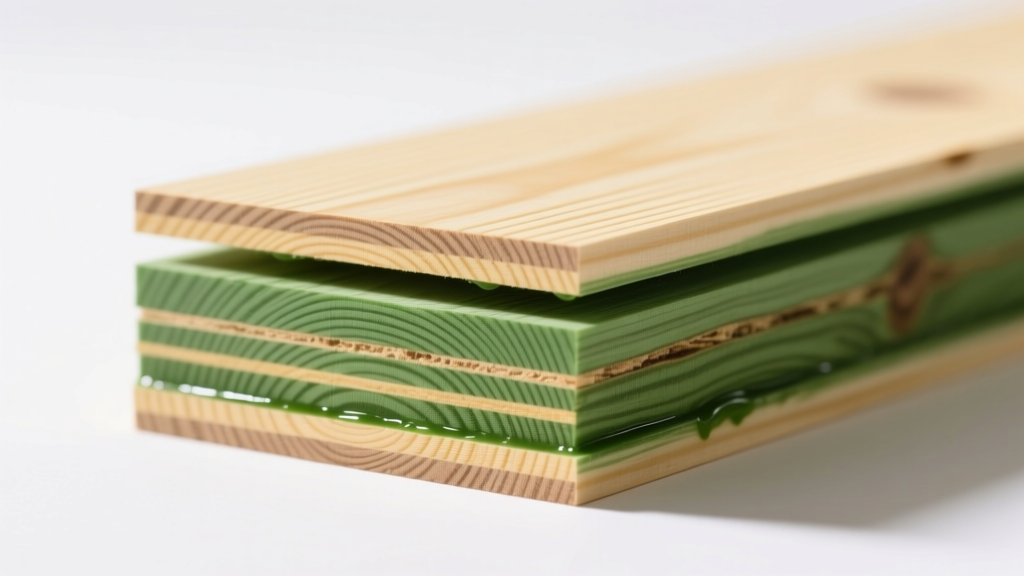
Knowing what type of wood is plywood is only half the equation; the adhesive binding the plies is equally critical for preservation. When plywood undergoes pressure treatment, it is submerged in waterborne chemical solutions and subjected to vacuum/pressure cycles. Inferior glues will delaminate under these conditions.
Warning: Interior Glues and Moisture Failure
Plywood manufactured with Urea-Formaldehyde (UF) adhesives—commonly marked as Interior or Type II—will suffer catastrophic delamination if subjected to waterborne pressure treatment or prolonged exterior moisture exposure. Only Phenol-Formaldehyde (PF) resins, used in Exterior (Type I) plywood, possess the cross-linked chemical stability to survive both the treatment retort and long-term weathering.
According to the USDA Forest Products Laboratory Wood Handbook, phenolic resins form irreversible, water-insoluble bonds during the hot-press curing process. When specifying treated plywood for ground contact or marine environments, always verify the panel stamp indicates "Exterior" glue lines, regardless of the wood species used in the veneers.
AWPA Use Categories and Retention Levels
The American Wood Protection Association (AWPA) classifies treated wood into Use Categories (UC) based on exposure severity. The required preservative retention—measured in pounds per cubic foot (pcf)—varies based on the plywood species and the intended application. The AWPA U1 Standard provides the baseline specifications for these treatments.
- UC3A (Above Ground, Coated): Requires minimum 0.25 pcf retention (for ACQ/CA-C). Used for protected exterior siding or soffits where plywood is shielded from direct weather.
- UC3B (Above Ground, Uncoated): Requires minimum 0.25 pcf to 0.40 pcf depending on species. Used for exterior structural sheathing exposed to rain but with adequate ventilation.
- UC4A (Ground Contact, General): Requires minimum 0.40 pcf to 0.60 pcf. Essential for plywood used in retaining walls, sill plates on concrete, or agricultural structures.
- UC4B (Ground Contact, Heavy Duty): Requires minimum 0.60 pcf to 0.80 pcf. Specified for permanent wood foundations, marine bulkheads, and critical structural components in high-decay environments.
Borate Treatments for Termite and Indoor Preservation
While copper-based treatments (ACQ, CA-C) are standard for exterior moisture and fungal decay, Disodium Octaborate Tetrahydrate (DOT) is the preferred preservative for plywood used in termite-prone regions. Borate treatments do not alter the wood's color, do not corrode fasteners, and have low mammalian toxicity.
Because borates are highly water-soluble, borate-treated plywood (often categorized under AWPA UC2 for interior/dry applications) must never be exposed to liquid water or ground contact. However, for interior sheathing, subflooring in humid climates, or sill plates protected by exterior cladding, borate-treated SYP plywood provides exceptional protection against Formosan and subterranean termites without the handling hazards associated with copper-heavy preservatives.
Field Cuts and End-Grain Preservation Protocols
A critical failure point in treated plywood installation occurs during field cutting. When a builder rips a sheet of UC4A treated plywood to fit a foundation layout, the newly exposed edge reveals untreated or under-treated core veneers. This breach compromises the preservative envelope and invites fungal ingress.
Step-by-Step Field Treatment Protocol
- Cut the Panel: Use a carbide-tipped blade. Copper-based preservatives are highly abrasive and will dull standard steel blades rapidly, leading to tear-out and exposed core voids.
- Clean the Edge: Brush away sawdust from the cut edge. Preservative coatings cannot penetrate through a layer of fine wood dust.
- Apply Field Preservative: Apply a minimum of two heavy coats of an AWPA M4-compliant end-cut preservative. Look for formulations containing 0.67% Copper Naphthenate or 2% Zinc Naphthenate (e.g., Copper-Green or Tenino Wood Preservative).
- Allow Penetration Time: Wait 15 to 30 minutes between coats to allow the solvent carrier to pull the active copper/zinc biocides into the end-grain of the veneers.
Pro Tip: Fastener Compatibility
Modern copper-based preservatives (ACQ and CA-C) are highly corrosive to standard steel and aluminum. When fastening treated plywood, you must use hot-dipped galvanized (HDG) fasteners meeting ASTM A153 Class D standards, or stainless steel (Type 304 or 316). Electroplated zinc fasteners will corrode within months when in contact with copper-treated SYP plywood.
Frequently Asked Questions
Can hardwood plywood be pressure-treated for exterior use?
Generally, no. Hardwood plywoods (like oak, maple, or birch) have dense cellular structures and high heartwood content that resist the penetration of waterborne preservatives. Furthermore, the decorative face veneers would be chemically stained and physically damaged by the treatment process. For exterior applications requiring a hardwood appearance, specify an exterior-grade SYP plywood core with a weather-resistant architectural finish, or use naturally decay-resistant species like marine-grade Okoume.
Does pressure treatment protect plywood from UV degradation?
No. Preservatives like ACQ and CA-C protect against fungal decay and insect infestation, not ultraviolet (UV) radiation. UV rays will break down the lignin in the exposed surface veneers of treated plywood, causing checking, graying, and surface erosion. Treated plywood exposed to sunlight must be protected with a UV-inhibiting stain, paint, or water-repellent coating once the wood has dried to a moisture content below 19%.
What is the difference between Marine Plywood and Pressure-Treated Plywood?
Marine plywood is defined by its manufacturing standard (APA PS 1-09), requiring 100% solid face and back veneers, no core voids, and waterproof PF adhesives to prevent delamination in wet environments. However, marine plywood is not inherently treated with chemical preservatives against rot. If marine plywood is used in a high-decay environment, it must be manufactured from a treatable species (like Douglas Fir) and subsequently pressure-treated, or sealed meticulously with marine-grade epoxy systems.
Written by
Marcus ChenMarcus Chen is a licensed structural engineer (PE) and building materials analyst with over 12 years of experience across residential, commercial, and industrial construction. He holds a Master of Science in Civil Engineering from UC Berkeley and spent six years at Thornton Tomasetti before transitioning to independent consulting and technical writing. Marcus specializes in material selection for seismic-prone regions, concrete reinforcement strategies, and lifecycle cost analysis. His work has been cited by the American Concrete Institute (ACI) and the Structural Engineers Association of California (SEAOC). When he is not on a job site or at his desk, you will find him hiking the Sierra Nevada or restoring a 1920s craftsman bungalow in Oakland, CA.
More from Marcus Chen
View all
Construction Cost
How Much Did the Eiffel Tower Cost to Build?
How much did the Eiffel Tower cost to build in 1889? We adjust for inflation and compare its budget to modern skyscraper construction.
Aug 4, 2026

Fire Resistance
What Is a Fire Resistant Material? Testing & Certification Guide
Discover what is a fire resistant material through ASTM and UL testing. Learn how fire ratings, certifications, and assemblies work in construction.
Aug 4, 2026

Construction Cost
How Much Did the Burj Khalifa Cost to Build?
How much did the Burj Khalifa cost to build? We break down the $1.5B project and extract 5 money-saving strategies for your next build.
Jul 30, 2026