The Ultimate Woodworking MDF Taxonomy: Grades, Types & Selection
Master woodworking MDF selection with our taxonomy guide. Compare standard, moisture-resistant, and ultralight MDF grades for cabinetry and routing.
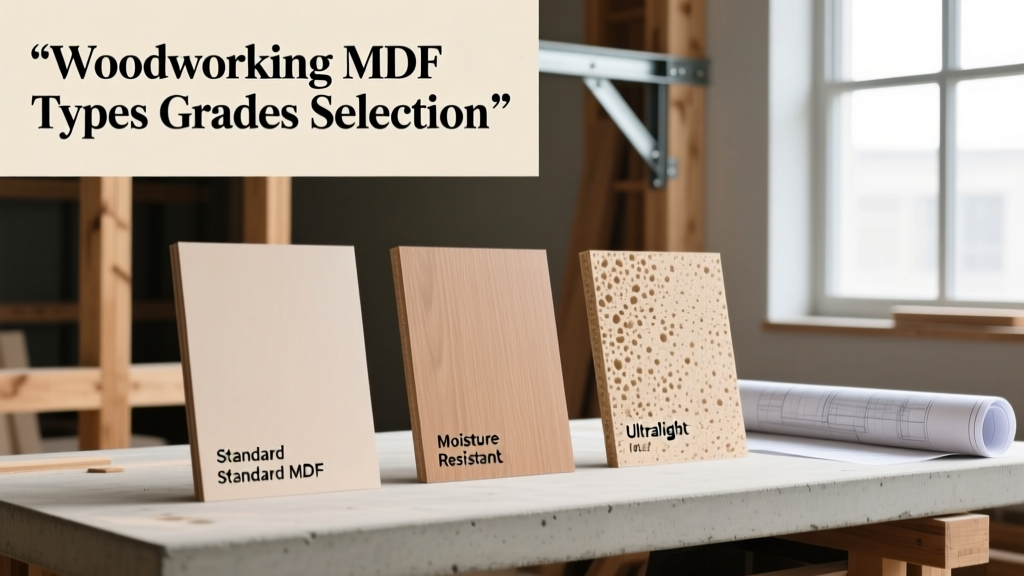
Medium Density Fiberboard (MDF) is not a monolithic material. In professional woodworking and architectural millwork, treating all MDF as identical leads to catastrophic finish failures, premature tool wear, and structural delamination. Modern MDF manufacturing has bifurcated into highly specialized panels engineered for specific mechanical, environmental, and aesthetic demands. Selecting the correct panel requires understanding the underlying resin chemistry, fiber refinement levels, and density profiles. This taxonomy breaks down the exact specifications of available woodworking MDF variants to ensure optimal project outcomes.
The MDF Density & Composition Matrix
The core differentiation in MDF lies in its density (measured in pounds per cubic foot, or pcf) and the chemical binders used during the hot-pressing process. Standard urea-formaldehyde (UF) resins yield different mechanical properties than moisture-resistant melamine-urea or exterior-grade polymeric methylene diphenyl diisocyanate (pMDI) resins.
| MDF Classification | Core Visual | Density (pcf) | Resin Chemistry | Primary Woodworking Application |
|---|---|---|---|---|
| Standard MDF | Light Brown/Tan | 45 - 52 | Urea-Formaldehyde (UF) | Interior painted millwork, basic cabinetry, furniture cores. |
| Double-Refined (Premium) | Uniform Tan, Fine Grain | 48 - 54 | UF with fine wood flour | CNC 3D carving, intricate V-groove routing, high-end painted doors. |
| Moisture-Resistant (MR-MDF) | Green or Brown Tint | 48 - 55 | Melamine-Urea-Formaldehyde | Bathroom vanities, kitchen cabinet boxes, high-humidity interiors. |
| Ultralight MDF | Pale, Fluffy Core | 28 - 35 | Low-density UF | Exhibition booths, theater sets, large lightweight wall panels. |
| Exterior Grade (e.g., Medex) | Dark Brown | 55 - 62 | pMDI (Isocyanate) | Exterior signage, architectural brackets, unprotected outdoor millwork. |
Decoding Formaldehyde Emissions and Safety Standards
Standard UF resins off-gas continuously as the polymer chains hydrolyze over time. NAF panels, manufactured using pMDI resins, emit zero added formaldehyde because the isocyanate binder reacts completely with the wood's natural moisture and hydroxyl groups, creating an inert polyurethane bond. When sourcing NAF MDF for interior woodworking, verify the manufacturer's third-party certification (e.g., SCS Global Services or CARB Phase 2 NAF exemption status) rather than relying solely on marketing claims.
Application-Specific Selection Framework
Matching the MDF grade to the machining and environmental requirements is critical for avoiding edge tear-out and swelling.
CNC Routing & 3D Carving
Standard MDF contains coarse fiber bundles that cause severe 'fuzzing' and tear-out when machined with small-diameter V-bits (60° or 90°). For intricate relief carving or fine typography, you must source Double-Refined MDF (often branded as Ranger Board or FiberSin). These panels pass through secondary disc refiners that reduce the fiber size to under 2mm, creating a homogeneous, high-density surface layer. When routing double-refined MDF, use solid carbide compression spiral bits (e.g., Onsrud 52-800 series) at feed rates of 120-150 IPM to prevent burning the dense resin core.
Cabinetry & Painted Millwork
For standard cabinet boxes and painted shaker doors, 3/4-inch Standard or MR-MDF is ideal. MR-MDF utilizes a moisture-scavenging resin system that limits thickness swelling to less than 8% after 24 hours of water exposure (compared to 15-20% for standard MDF). However, MR-MDF is notably harder on tooling; the melamine additives accelerate carbide wear by approximately 15% compared to standard UF panels.
High-Moisture Environments
Do not use MR-MDF for exterior applications or areas subject to direct liquid water intrusion (e.g., shower surrounds). MR-MDF resists ambient humidity, not standing water. For exterior woodworking, specify pMDI-bonded exterior MDF. Note that exterior MDF does not accept standard wood glues (PVA) effectively due to the lack of open pores; use structural epoxies or polyurethane adhesives for joinery.
Fastening and Joinery Mechanics
MDF has notoriously poor screw-holding power in its edge grain due to the lack of continuous longitudinal fibers. Driving a standard wood screw into the edge of 3/4-inch MDF will cause localized swelling and splitting. To achieve structural joinery in woodworking MDF, adhere to the following hardware protocols:
- Confirmat Screws: Use 5mm x 50mm or 7mm x 70mm Confirmat screws with specialized deep-thread profiles designed for particleboard and MDF. Pre-drill with a stepped Confirmat bit to prevent core blowout.
- Twin-Thread MDF Screws: Brands like GRK or Spax offer specialized MDF screws featuring a dog-point tip (eliminating the need for pre-drilling in 3/4" material) and a twin-thread design that pulls the joint tight without jacking the panels apart.
- Dado and Rabbet Joints: For cabinet carcase construction, rely on 1/4-inch deep dados secured with PVA glue and 18-gauge brad nails. The mechanical interlock of the dado compensates for the MDF's low shear strength.
Edge Treatment and Finishing Protocols
The edges of MDF are highly porous end-grain sponges. Applying standard latex or water-based primers directly to raw MDF edges will cause the fibers to swell, creating a raised, fuzzy texture that requires aggressive sanding and ruins crisp profiles. Follow this exact sequencing for glass-smooth painted edges:
- Sand the Edge: Machine-sand all routed or sawn edges to 220-grit. Do not burnish the edge with excessive pressure, which closes the pores and prevents primer penetration.
- Apply Glue Sizing: Mix a 50/50 solution of PVA wood glue (e.g., Titebond II) and water. Brush this heavily onto the raw MDF edges. The glue solids will bind the loose fibers and seal the capillaries.
- Block Sand: Once the sizing is fully cured (minimum 4 hours), block sand the edges with 320-grit sandpaper. You will feel a distinct, hard, plastic-like surface.
- Shellac Primer: Apply one coat of a pigmented shellac-based primer (such as Zinsser B-I-N). Shellac flashes off rapidly and does not introduce water into the substrate, guaranteeing zero fiber swell.
- Topcoat: Finish with your chosen CAB-acrylic or polyurethane topcoat.
2026 Sourcing and Cost Benchmarks
Panel pricing fluctuates based on resin costs and timber availability. Below are the current wholesale-to-retail benchmark ranges for 3/4-inch thick, 4x8-foot sheets of woodworking MDF in the North American market.
| Material Grade | Estimated Sheet Cost (4x8, 3/4") | Weight per Sheet | Availability Tier |
|---|---|---|---|
| Standard MDF (45-50 pcf) | $42.00 - $52.00 | ~95 lbs | Commodity (Big Box & Lumberyards) |
| Double-Refined (Premium) | $60.00 - $75.00 | ~105 lbs | Specialty (Cabinet Suppliers) |
| MR-MDF (Moisture Resistant) | $68.00 - $85.00 | ~100 lbs | Specialty (Cabinet Suppliers) |
| Ultralight MDF (30 pcf) | $48.00 - $58.00 | ~60 lbs | Commodity / Specialty |
| Exterior pMDI MDF | $95.00 - $125.00 | ~115 lbs | Special Order Only |
When calculating project costs, factor in the hidden expenses of MDF: the accelerated wear on carbide tooling, the additional labor required for proper edge sizing, and the necessity of high-capacity dust extraction systems. While the raw material cost of standard MDF is lower than plywood or solid lumber, the total cost of ownership in a professional woodworking environment demands precise grade selection to minimize waste and rework.