How Much Will It Cost to Build a 10x12 Shed on a Budget?
Discover how much will it cost to build a 10x12 shed using money-saving strategies, DIY foundation hacks, and smart material choices for a budget build.
Breaking Down How Much Will It Cost to Build a 10x12 Shed
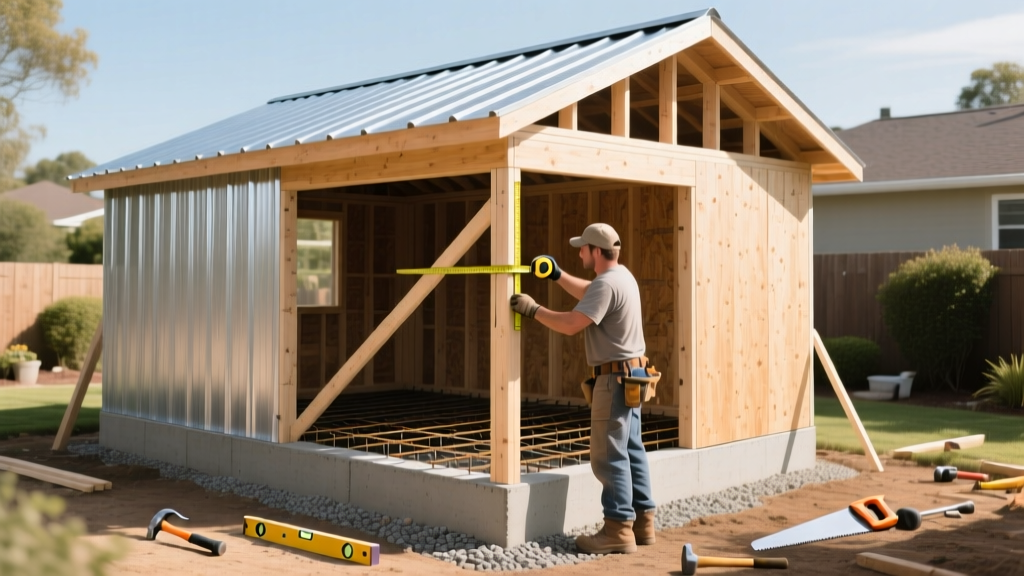
When evaluating exactly how much will it cost to build a 10x12 shed, the baseline figures can be discouraging. A professionally constructed 120-square-foot shed typically ranges from $4,800 to $7,200, factoring in labor markups, premium material sourcing, and contractor overhead. However, by applying strategic material substitutions, optimizing the foundation footprint, and leveraging advanced framing techniques, a disciplined DIY builder can execute the same 10x12 structure for $1,450 to $2,100. The key to aggressive cost reduction is not buying the cheapest materials available, but rather eliminating redundant structural layers and sourcing commercial-grade alternatives that outperform residential retail products.
2026 Cost Snapshot: 10x12 Shed (120 Sq Ft)
- Contractor-Built (Standard): $4,800 - $7,200
- DIY Retail (Big Box Store): $2,400 - $3,100
- DIY Budget-Optimized (Pro Sourcing): $1,450 - $2,100
- Average Cost Per Square Foot (Optimized): $12.08 - $17.50
The Foundation: Where Budgets Are Made or Broken
The most common financial mistake in shed construction is over-engineering the foundation. A 10x12 shed weighs roughly 2,500 pounds empty. Pouring a 4-inch reinforced concrete slab costs between $720 and $960 at current 2026 concrete prices, consuming nearly 40% of a tight budget. Instead, utilize a crushed gravel pad with pressure-treated timber skids.
| Foundation Type | Material Cost | Labor/Equipment | Total Estimated Cost |
|---|---|---|---|
| 4-Inch Concrete Slab | $650 - $800 | $150 (Formwork/Finishing) | $800 - $950 |
| Concrete Deck Blocks (12) | $140 - $180 | $0 (Manual Digging) | $140 - $180 |
| Crushed Gravel & 4x4 PT Skids | $110 - $150 | $0 (Manual Raking) | $110 - $150 |
For the gravel pad method, excavate the 10x12 footprint to a depth of 4 inches, lay a 6-mil polyethylene vapor barrier to prevent weed growth and moisture wicking, and fill with 5/8-inch minus crushed limestone. Compact the gravel using a rented plate compactor ($65/day). Rest three 10-foot 4x4 pressure-treated timbers (rated UC4A for ground contact) directly on the compacted stone. This provides exceptional drainage, prevents frost heave in northern climates, and saves up to $800 compared to a slab.
Framing and Lumber: Strategic Material Sourcing
To minimize framing costs without sacrificing structural integrity, source kiln-dried Spruce-Pine-Fir (SPF) #2 grade lumber for the wall studs and rafters. According to the American Wood Council, SPF #2 meets all structural span requirements for standard residential and light accessory outbuildings. Avoid the premium for "Stud" grade or select structural grades; #2 is perfectly adequate for a shed envelope.
The Bottom Plate and Fastener Rule
While wall studs can be standard SPF, the bottom plate resting on the floor joists or skids must be carefully considered. If your floor joists are pressure-treated, you must use hot-dipped galvanized (HDG) or stainless steel fasteners. Modern pressure-treated lumber uses Alkaline Copper Quaternary (ACQ) or Copper Azole (CA-C) preservatives, which are highly corrosive to standard electro-galvanized nails and screws. Using cheap bright or electro-galvanized nails will result in severe corrosion and structural failure within 24 months. Buy 16d HDG common nails for framing and 8d HDG ring-shank nails for sheathing.
Exterior Envelope: High-Impact Money-Saving Swaps
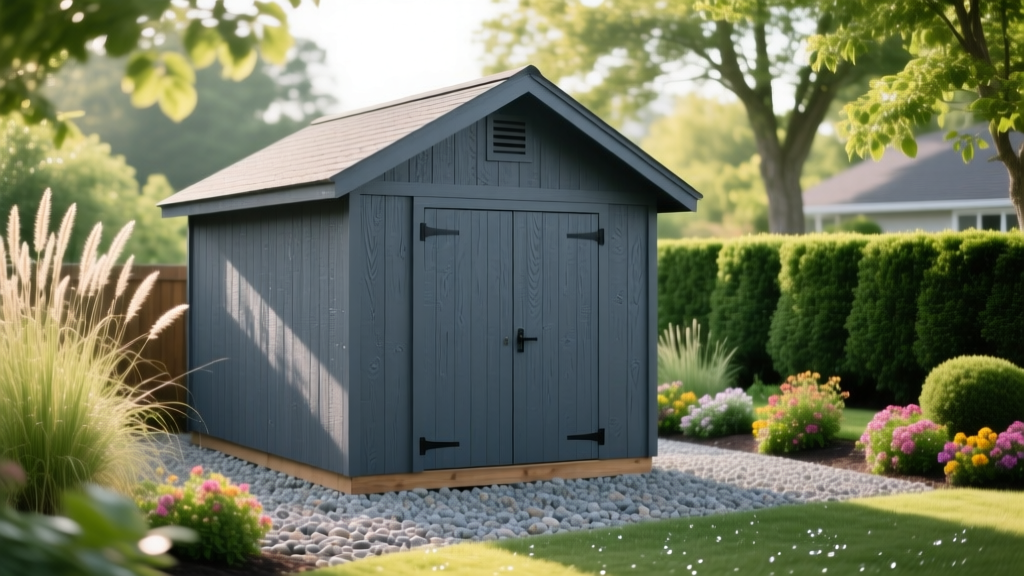
Siding and roofing represent the largest surface area and the highest potential for budget optimization. The traditional approach of sheathing walls with 1/2-inch OSB, wrapping in housewrap, and applying lap siding is financially inefficient for a non-conditioned shed.
- T1-11 Plywood Siding: At roughly $48 per 4x8 sheet, T1-11 acts as both structural sheathing and exterior finish. This eliminates the need for OSB and housewrap. However, it requires diligent priming and painting, especially on the bottom 6 inches where splash-back causes rot.
- LP SmartSide Panel (Strand Subscription): Priced around $58 per sheet, this engineered wood product features a zinc borate treatment that resists fungal decay and termites. It costs $10 more per sheet than T1-11 but offers vastly superior moisture resistance and a 5/50-year limited warranty. The Home Depot's Shed Building Guide frequently recommends engineered panels for their longevity in humid climates.
- Corrugated Steel Roofing (ProPanel): Skip the OSB roof decking and asphalt shingles. By spacing your 2x4 roof purlins 24 inches on-center, you can screw 29-gauge corrugated steel panels directly to the purlins. This eliminates the cost of roof sheathing ($180), roofing felt ($40), and architectural shingles ($220), replacing them with $160 worth of steel panels and closure strips.
Doors, Windows, and Hardware
Pre-hung exterior doors and vinyl replacement windows are massive budget drains. A standard pre-hung steel door costs $250-$400, while a custom-sized vinyl window can easily exceed $150.
The Budget Alternative: Build your own barn-style double doors using 1x6 T1-11 offcuts and 2x4 Z-bracing. Hang them on heavy-duty 12-inch strap hinges ($25/pair) and secure with a slide bolt. For natural light, source salvaged single-pane aluminum windows from local architectural salvage yards or Habitat for Humanity ReStores, where they frequently sell for $15 to $30 each. Frame them out with 1x4 pine trim and seal the exterior perimeter with OSI Quad Max window and door sealant.
Navigating Permits and Zoning Frameworks
Before purchasing materials, verify your local municipal codes. The International Residential Code (IRC) generally exempts detached accessory structures under 200 square feet from requiring a building permit. However, local zoning ordinances often impose stricter limits, frequently capping permit-exempt structures at 120 square feet. Because a 10x12 shed is exactly 120 square feet, it sits precisely on the threshold of many local zoning exemptions.
According to the National Association of Home Builders, regulatory compliance and permit fees can add 5% to 10% to the total cost of small construction projects. By keeping your shed footprint strictly at 10x12 and maintaining the required property line setbacks (usually 5 to 10 feet for accessory structures), you can legally bypass the $200-$500 permit fee and the weeks of delay associated with municipal inspections.
Tool Rental vs. Purchase Strategy
Do not buy specialized tools for a single build. Rent a pneumatic framing nailer and compressor combo from a local equipment rental yard for $45/day. This cuts framing time by 60% and ensures tighter joints than hand-nailing. Conversely, purchase a high-quality cordless impact driver and a speed square; these are permanent additions to your arsenal that will pay for themselves during future maintenance projects.
Written by
Priya KapoorPriya Kapoor is a real estate market analyst and construction economics researcher with expertise in housing affordability, development feasibility, and infrastructure investment. She holds a Master of Regional Planning from Cornell University and previously worked as a senior analyst at CBRE's Investment Properties group, where she modeled returns for $4B in mixed-use development pipelines. Priya now runs an independent research practice advising developers, municipalities, and REITs on construction cost forecasting and market timing. She publishes the quarterly "BuildMat Market Pulse" report tracking material price indices across 12 commodity categories. Based in Austin, TX, Priya serves on the board of Habitat for Humanity Austin and is a marathon runner.
More from Priya Kapoor
View all
Construction Cost
Cost to Build a 1600 Sq Ft Home in 2026: Full Breakdown
Accurate 2026 cost to build a 1600 sq ft home—material, labor, and regional pricing breakdowns included. Plan your budget with real-time estimates.
Aug 11, 2026

Wood & Lumber
Name the Types of Wood for Pressure Treatment and Preservation
Learn how to name the types of wood best suited for pressure treatment. Compare species treatability, chemical retention levels, and 2026 preservation costs.
Aug 4, 2026

Stone & Masonry
Stone Veneer Suppliers Lindenhurst: 2026 Cost Analysis
Analyze 2026 stone veneer costs in Lindenhurst, NY. Compare local supplier pricing, delivery fees, and Suffolk County installation labor rates.
Aug 4, 2026