7 Affordable Building Materials to Slash Construction Costs
Discover 7 affordable building materials for 2026 home builds. Compare costs, failure modes, and sourcing strategies to slash construction budgets.
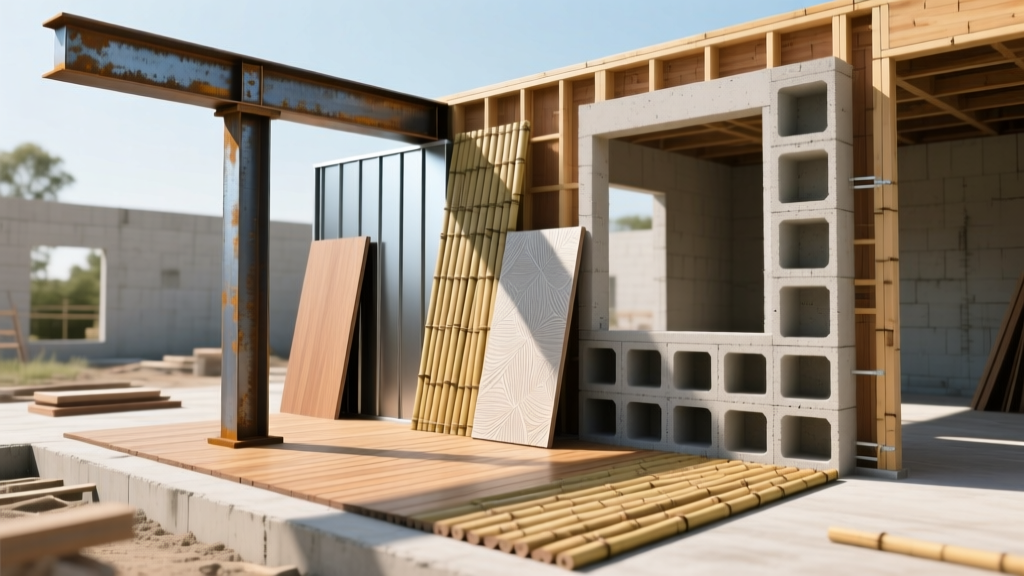
The True Cost of 'Cheap' vs. 'Affordable' Materials
When estimating construction costs, the distinction between 'cheap' and 'affordable' is the difference between a budget that holds and one that balloons during the warranty phase. Cheap materials minimize upfront expenditure but carry high lifecycle costs through premature failure, excessive maintenance, or poor thermal performance. Affordable building materials, conversely, offer a low initial price point while maintaining structural integrity, code compliance, and long-term durability.
According to the National Association of Home Builders (NAHB), material costs account for roughly 40% to 50% of a new home's total construction budget. Optimizing this segment requires selecting products that reduce labor time, minimize waste, and eliminate the need for secondary treatments. Below is a technical breakdown of the most cost-effective building materials for residential projects, complete with exact specifications, current pricing, and critical failure modes to avoid.
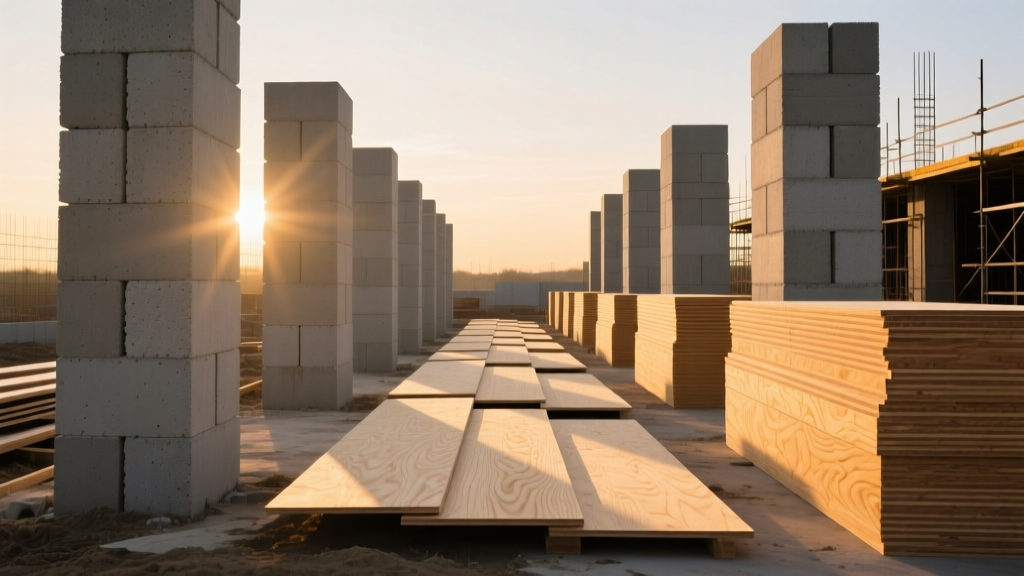
4 High-Performance Affordable Building Materials
1. Autoclaved Aerated Concrete (AAC) Blocks
AAC blocks are lightweight, precast foam concrete building materials that combine structural framing, insulation, and fire resistance into a single component. By eliminating the need for separate wood framing and batt insulation in the wall cavity, AAC drastically reduces labor and material line items.
- Current Cost: $2.75 to $3.80 per 8x8x24 inch block (approx. $3.50 - $4.50 per sq. ft. of wall area).
- Thermal Performance: R-1.25 per inch. A standard 10-inch block yields R-12.5.
- Installation Nuance: AAC requires a specialized polymer-modified thin-bed mortar applied at 1/16-inch thickness, not traditional 3/8-inch masonry mortar. Using standard mortar destroys the thermal envelope and compromises structural bonding.
- Primary Failure Mode: Moisture wicking. AAC is highly porous. If the exterior is not sealed with a vapor-permeable acrylic stucco or elastomeric coating, the blocks will absorb driving rain, leading to interior efflorescence and mold.
2. Oriented Strand Board (OSB) for Sheathing and Subfloors
OSB remains the undisputed champion of affordable structural sheathing. While plywood prices fluctuate wildly with timber tariffs and mill closures, OSB pricing has stabilized due to the use of fast-growing, small-diameter aspen and pine logs.
- Current Cost: $38 to $52 per 4x8 sheet (7/16-inch structural wall sheathing).
- Specification to Demand: Look for APA-rated Exposure 1 panels. Exposure 1 can withstand construction delays and weather exposure during the framing phase, whereas Exposure 2 will delaminate if left in the rain.
- Primary Failure Mode: Edge swelling. When OSB edges absorb water, they swell and create 'ghost lines' visible through vinyl siding or flooring. Always specify factory-sealed edges or apply an end-seal coating on-site if cuts are made.
3. 29-Gauge Galvalume Corrugated Metal Roofing
For budget-conscious builds, agricultural or exposed-fastener metal roofing provides a 40-year lifespan at a fraction of the cost of standing seam panels or architectural asphalt shingles. The Galvalume coating (an aluminum-zinc alloy) provides superior rust resistance compared to standard galvanized steel.
- Current Cost: $2.20 to $3.50 per square foot (material only).
- Energy Efficiency: Unpainted, bare Galvalume reflects up to 65% of solar radiant heat. The U.S. Department of Energy notes that cool roofs can reduce peak cooling demand by 10% to 15%, lowering HVAC sizing requirements and long-term energy costs.
- Installation Nuance: Fasteners must feature EPDM or neoprene washers. Over-driving the screws compresses the washer to the point of tearing, while under-driving leaves the neoprene unsealed, guaranteeing leaks within 24 months.
- Primary Failure Mode: Galvanic corrosion. Never allow Galvalume panels to come into direct contact with copper flashing or treated lumber containing high levels of copper (like ACQ). Use a peel-and-stick butyl membrane as a separator.
4. Fiber Cement Lap Siding
Fiber cement (a composite of Portland cement, sand, and cellulose fibers) offers the aesthetic of wood clapboard with the fire and rot resistance of masonry. It is significantly cheaper than natural wood, brick veneer, or engineered wood cladding.
- Current Cost: $1.80 to $3.20 per square foot for pre-primed lap profiles.
- Installation Nuance: Cutting fiber cement generates respirable crystalline silica. OSHA mandates the use of HEPA-filtered dust extraction vacuums attached to the saw, or wet-cutting methods. Factoring in the cost of a HEPA vacuum ($400-$600) is mandatory for contractor compliance.
- Primary Failure Mode: Moisture trapping at the bottom edge. Fiber cement acts like a sponge at unsealed cut ends. Installers must leave a 1/4-inch gap above rooflines and flashing, and caulk the cut ends with a high-quality polyurethane sealant.
Material Cost & Performance Matrix
Use this comparison matrix to evaluate trade-offs when finalizing your material takeoffs.
| Material | Est. Cost (2026) | Expected Lifespan | Best Application | Critical Vulnerability |
|---|---|---|---|---|
| AAC Blocks | $3.50 - $4.50 / sq ft | 75+ Years | Exterior load-bearing walls | Unsealed moisture absorption |
| OSB Sheathing | $38 - $52 / sheet | 50+ Years (if dry) | Wall sheathing, roof decking | Edge swelling from rain |
| 29-Ga Galvalume | $2.20 - $3.50 / sq ft | 40 - 50 Years | Roofing, pole barn exteriors | Galvanic corrosion at flashings |
| Fiber Cement | $1.80 - $3.20 / sq ft | 50+ Years | Exterior cladding | Silica dust during cutting |
Strategic Sourcing: Where to Buy for Maximum Savings
Securing affordable building materials is only half the battle; HOW you buy them dictates your final margin. Implement these three sourcing strategies to trim 10% to 15% off your material invoices:
- Direct-from-Mill OSB and Lumber: For projects requiring more than 2,000 sheets of OSB or extensive framing lumber, bypass big-box retailers. Contact regional wholesale distributors or use B2B platforms like Boral or West Fraser direct-sales portals. You will pay a flat freight fee, but the per-unit cost drops significantly.
- Overstock and Liquidation Yards: Manufacturers frequently liquidate 'discontinued' colors of fiber cement siding or metal roofing. The material is structurally identical to current runs. Check local architectural salvage yards or online liquidators (e.g., Surplus World or local Habitat for Humanity ReStores) for unopened pallets at 40% to 60% off retail.
- Freight Consolidation for Heavy Materials: AAC blocks and fiber cement are incredibly heavy. Shipping costs can erase any material savings if not managed. Always consolidate heavy materials onto a single flatbed delivery to avoid multiple LTL (Less Than Truckload) freight surcharges, which can add $800+ per delivery.
Never buy 'cull' or '#2 grade' structural lumber or OSB for primary load-bearing applications to save a few dollars. FEMA Building Science guidelines emphasize that compromised structural sheathing drastically reduces a building's lateral load resistance during high-wind events. The cost of a failed roof deck during a storm far exceeds the $0.50 per sheet saved on cull lumber.
Hidden Cost Traps to Avoid When Buying Budget Materials
When estimating with affordable building materials, budget for the hidden ancillary costs that manufacturers rarely list on the primary product data sheet:
- Specialized Fasteners: Metal roofing requires specific powder-coated hex-head screws with neoprene washers. Standard wood screws will rust and streak the Galvalume finish within one season, voiding the manufacturer warranty.
- Primer and Paint Systems: Pre-primed fiber cement still requires a high-quality 100% acrylic exterior topcoat. Using cheap vinyl-acrylic paint will result in peeling within three years, negating the low-maintenance benefit of the siding.
- Waste Factor Adjustments: Budget materials like standard asphalt shingles or basic OSB have a standard 10% waste factor. However, if you are using AAC blocks on a design with complex window cutouts, increase your waste factor to 15% to account for off-cuts that cannot be reused.
Frequently Asked Questions
Can I use affordable building materials without violating local building codes?
Yes, provided the materials carry the proper certification marks. OSB must bear the APA (The Engineered Wood Association) stamp indicating its span rating and exposure durability. Metal roofing must carry a UL or FM Global wind-uplift rating for your specific wind zone. Always submit the manufacturer's ICC-ES (International Code Council Evaluation Service) report to your local building department during the permitting phase.
Is it cheaper to build with AAC blocks or traditional wood framing?
In terms of pure material cost, wood framing is currently 15% to 20% cheaper upfront. However, when you factor in the eliminated costs of exterior rigid foam insulation, house wrap, and the reduced labor time of installing a single-component wall system, AAC often reaches cost parity on homes larger than 2,000 square feet, while offering superior fire and sound ratings.
The most effective money-saving strategy in construction is not buying the cheapest product on the shelf; it is selecting materials that simplify the labor sequence and eliminate the need for secondary trades.
Written by
Priya KapoorPriya Kapoor is a real estate market analyst and construction economics researcher with expertise in housing affordability, development feasibility, and infrastructure investment. She holds a Master of Regional Planning from Cornell University and previously worked as a senior analyst at CBRE's Investment Properties group, where she modeled returns for $4B in mixed-use development pipelines. Priya now runs an independent research practice advising developers, municipalities, and REITs on construction cost forecasting and market timing. She publishes the quarterly "BuildMat Market Pulse" report tracking material price indices across 12 commodity categories. Based in Austin, TX, Priya serves on the board of Habitat for Humanity Austin and is a marathon runner.
More from Priya Kapoor
View all
Construction Cost
Cost to Build a 1600 Sq Ft Home in 2026: Full Breakdown
Accurate 2026 cost to build a 1600 sq ft home—material, labor, and regional pricing breakdowns included. Plan your budget with real-time estimates.
Aug 11, 2026

Wood & Lumber
Name the Types of Wood for Pressure Treatment and Preservation
Learn how to name the types of wood best suited for pressure treatment. Compare species treatability, chemical retention levels, and 2026 preservation costs.
Aug 4, 2026

Stone & Masonry
Stone Veneer Suppliers Lindenhurst: 2026 Cost Analysis
Analyze 2026 stone veneer costs in Lindenhurst, NY. Compare local supplier pricing, delivery fees, and Suffolk County installation labor rates.
Aug 4, 2026