Evaluating the Cost to Build AR-15 From Parts: 2024 Baselines vs 2026 Regional Shifts
Analyze the true cost to build an AR-15 from parts across US regions. Compare 2024 baselines with 2026 component pricing, FFL fees, and shipping.
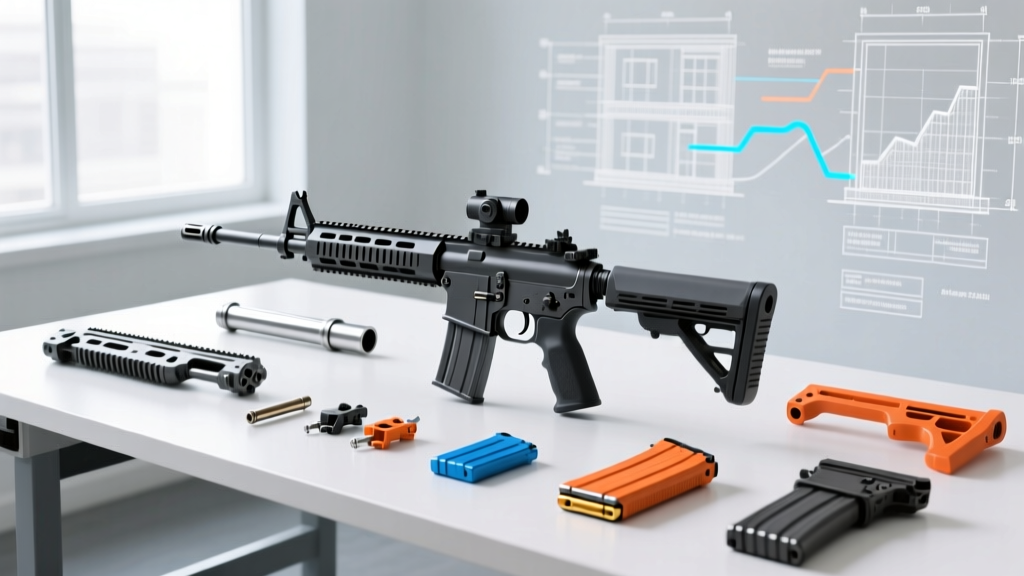
The Economics of a Custom Modular Build
Treating a modular rifle assembly like a traditional construction project requires a rigorous Bill of Materials (BOM), specialized tooling overhead, and a deep understanding of regional logistics. When industry analysts compiled the cost to build ar-15 from parts 2024 datasets, the market was experiencing a post-panic stabilization phase. Now in 2026, component availability is exceptionally high, and manufacturing tolerances have tightened. However, the final price tag is rarely just the sum of the parts.
The true cost of this modular build fluctuates wildly based on your geographic location. State-level compliance mandates, localized Federal Firearms License (FFL) transfer fees, and regional shipping surcharges create massive price disparities between a builder in Texas and a builder in California. To accurately estimate your project costs, we must break down the assembly into raw materials, tooling overhead, and regional penalties.
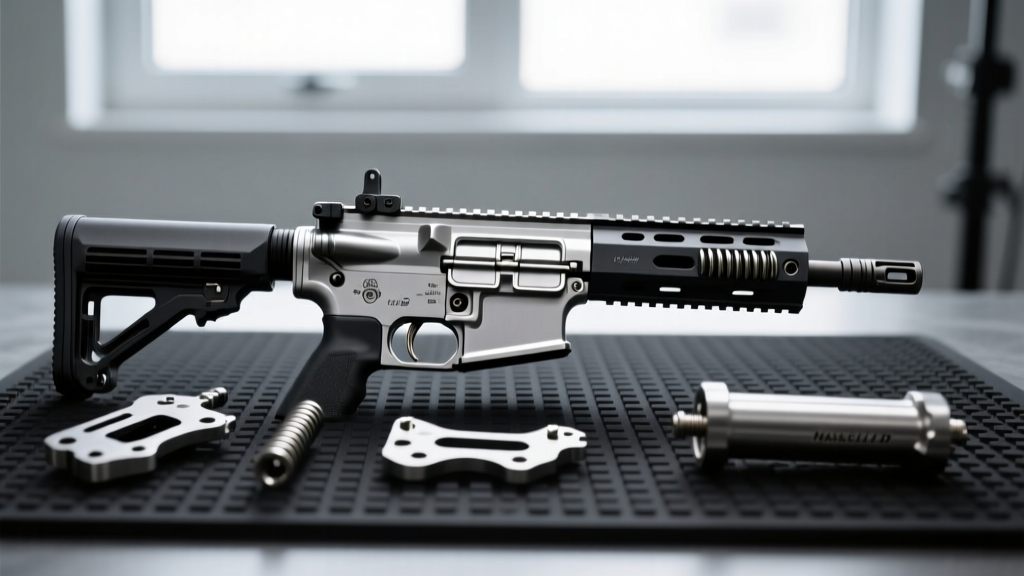
Bill of Materials (BOM): Component Cost Breakdown
For this estimate, we are pricing a reliable, duty-grade 16-inch mid-length gas carbine. This configuration offers the best balance of reliability and parts longevity, avoiding the ultra-budget tier that often requires immediate replacement of gas keys and extractor springs.
| Component | Selected Model (2026 Pricing) | Est. Cost |
|---|---|---|
| Lower Receiver | Aero Precision M4E1 Threaded Stripped | $135.00 |
| Upper Receiver | Aero Precision M4E1 Threaded Stripped | $110.00 |
| Barrel | Criterion Core 16' Mid-Length Gas | $200.00 |
| Bolt Carrier Group | BCM Standard 5.56 MPI/HPT | $160.00 |
| Handguard | BCM MCMR 13.5' M-LOK | $185.00 |
| Trigger Assembly | Geissele SSA-E (Lightning Bow) | $240.00 |
| Charging Handle | Radian Raptor-SD Ambidextrous | $95.00 |
| Buffer System | VLTOR A5 Recoil System w/ H2 Buffer | $140.00 |
| Stock & Grip | Magpul CTR Stock + MOE+ Grip | $100.00 |
| Lower Parts Kit | Aero Precision LPK (w/o trigger/grip) | $45.00 |
| Total BOM | Base Component Cost | $1,410.00 |
Regional Price Analysis: The Hidden Variables
The BOM represents your baseline material cost, but regional logistics dictate your final out-of-pocket expense. The lower receiver is the only serialized part of the build and must be shipped to a local FFL dealer. The upper receiver, barrel, and all internal components can ship directly to your door in most jurisdictions. This split-shipping requirement creates distinct regional cost centers.
Regional FFL Transfer Fee & Tax Matrix
FFL dealers charge a fee to process the paperwork and background check for your serialized lower receiver. These fees are highly localized, driven by commercial real estate costs and local demand.
| Region | Avg FFL Fee | State Sales Tax | Compliance Overhead | Total Regional Penalty |
|---|---|---|---|---|
| Pacific Coast (CA) | $90 - $120 | 7.25% - 10.75% | $85 (Mag locks, 10rd mags) | $250+ |
| Northeast (NY/NJ) | $75 - $100 | 6.00% - 8.00% | $60 (Compliance pins/welding) | $200+ |
| Texas / South | $20 - $35 | 6.25% - 8.25% | $0 | $45 |
| Midwest (IN/OH) | $25 - $40 | 5.00% - 7.00% | $0 | $55 |
| Tax-Free Zones (OR/NH) | $30 - $50 | 0% | Varies by local ordinance | $40 |
As the matrix demonstrates, a builder in Los Angeles will pay upwards of $200 more in fees, taxes, and mandated compliance parts (such as a Fin Feather Fur or Patriot Mag Release fixed magazine device) compared to a builder in rural Indiana sourcing the exact same BOM. According to ATF transaction frameworks, the serialized lower dictates the legal jurisdiction of the build, meaning you cannot bypass local FFL fees by using an out-of-state dealer.
Tooling and Assembly Overhead
Unlike framing a shed where a standard cordless drill suffices, assembling an AR-15 upper receiver requires precise torque specifications and specialized armorer tools. The barrel nut on a standard mil-spec handguard requires 30 to 80 ft-lbs of torque, and failure to use the correct anti-seize compound can result in galled aluminum threads. For proprietary handguards like the BCM MCMR listed in our BOM, specific barrel nut wrenches are mandatory.
Required Gunsmithing Tooling Budget
- Upper Receiver Vise Block: $35.00 (Prevents torque damage to the receiver indexing pin)
- Armorer's Multi-Wrench: $25.00 (For castle nuts and flash hiders)
- 1/2' Drive Torque Wrench: $85.00 (Must accurately read down to 35 ft-lbs)
- Reaction Rod: $45.00 (Essential for timing the muzzle device without stressing the index pin)
- Consumables: $15.00 (Aeroshell 33MS grease, Loctite 242, carbon solvent)
- Total Tooling Overhead: ~$205.00
For a comprehensive look at proper assembly sequences and torque charts, refer to the step-by-step build guides at Pew Pew Tactical, which detail the exact timing procedures for muzzle devices.
Headspacing and Safety Verification
While reputable manufacturers like Criterion and BCM headspace their barrels and bolts at the factory, a master builder never assumes tolerances are perfect. Environmental shifts and batch variations in 2026 steel forgings mean you should verify headspace before your first trip to the range.
Purchasing a set of 5.56 NATO Go and No-Go gauges (approximately $35 each from Brownells gunsmithing supplies) adds $70 to your overhead. The bolt must close fully on the Go gauge, and fail to close on the No-Go gauge. If the bolt closes on a Field gauge, the chamber is dangerously out of spec and the barrel must be returned. This $70 verification step prevents catastrophic case head separations and is a non-negotiable cost for any serious builder.
Sourcing Strategies to Minimize Regional Penalties
To optimize your build budget, implement the following logistics strategies:
- Batch Direct-to-Door Shipments: Order your upper receiver, barrel, BCG, and handguard from a single vendor to consolidate shipping costs. Since these are non-serialized, they bypass the FFL entirely.
- Pre-Negotiate FFL Rates: Call local gun shops before purchasing your lower receiver. Many shops charge walk-in rates of $75, but offer pre-approved online transfer rates of $30 if you establish a relationship beforehand.
- Buy Complete Uppers: If you lack the $205 tooling overhead budget, purchasing a complete, headspaced, and test-fired upper receiver assembly often costs only $50-$80 more than buying the parts individually, effectively outsourcing the assembly labor and tooling costs to the manufacturer.
Frequently Asked Questions
Is it cheaper to build an AR-15 or buy one complete?
In 2026, buying a complete entry-level rifle from a major manufacturer (like a Ruger AR-556 or Smith & Wesson M&P15) is generally $150 to $300 cheaper than building a comparable rifle from individual premium parts. You build from parts to achieve exact specifications, select premium triggers and barrels, and avoid paying retail markup on bundled configurations—not strictly to save money on the baseline hardware.
Do I need a license to build a rifle for personal use?
No. Under federal law, an individual may assemble a firearm for personal use without an FFL, provided they are not prohibited from possessing firearms and do not intend to sell the weapon. However, the serialized lower receiver must still be purchased through a licensed dealer who will conduct the required NICS background check.
What is the most common mistake that inflates build costs?
Incompatible gas systems. Buying a rifle-length gas tube for a mid-length gas barrel, or pairing a heavy H3 buffer with an over-gassed carbine system, leads to unreliable cycling. Builders often end up buying three different buffer weights and multiple gas tubes to tune the rifle, adding $100+ in wasted parts. Always match the buffer weight to the gas system length and ammunition velocity.
Written by
Priya KapoorPriya Kapoor is a real estate market analyst and construction economics researcher with expertise in housing affordability, development feasibility, and infrastructure investment. She holds a Master of Regional Planning from Cornell University and previously worked as a senior analyst at CBRE's Investment Properties group, where she modeled returns for $4B in mixed-use development pipelines. Priya now runs an independent research practice advising developers, municipalities, and REITs on construction cost forecasting and market timing. She publishes the quarterly "BuildMat Market Pulse" report tracking material price indices across 12 commodity categories. Based in Austin, TX, Priya serves on the board of Habitat for Humanity Austin and is a marathon runner.
More from Priya Kapoor
View all
Construction Cost
Cost to Build a 1600 Sq Ft Home in 2026: Full Breakdown
Accurate 2026 cost to build a 1600 sq ft home—material, labor, and regional pricing breakdowns included. Plan your budget with real-time estimates.
Aug 11, 2026

Wood & Lumber
Name the Types of Wood for Pressure Treatment and Preservation
Learn how to name the types of wood best suited for pressure treatment. Compare species treatability, chemical retention levels, and 2026 preservation costs.
Aug 4, 2026

Stone & Masonry
Stone Veneer Suppliers Lindenhurst: 2026 Cost Analysis
Analyze 2026 stone veneer costs in Lindenhurst, NY. Compare local supplier pricing, delivery fees, and Suffolk County installation labor rates.
Aug 4, 2026