How Much Does an Automatic Car Wash Cost to Build in 2026?
Discover the 2026 capital requirements for building an automatic car wash. Detailed cost breakdowns for express tunnels, in-bay automatics, and site prep.
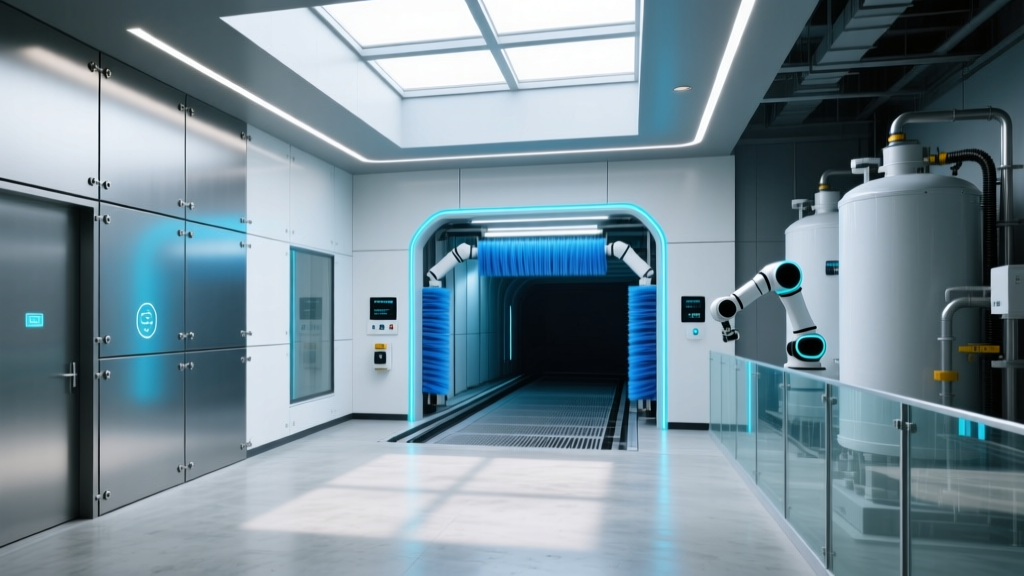
Executive Summary: 2026 Capital Requirements
Developing an automatic car wash is a capital-intensive commercial real estate venture that requires heavy civil engineering, specialized plumbing, and high-capacity electrical infrastructure. When evaluating how much does an automatic car wash cost to build, investors must look beyond the wash equipment itself. The total capital expenditure (CapEx) is heavily influenced by municipal utility tap fees, soil remediation, and water reclamation mandates. According to industry data tracked by the International Carwash Association (ICA), the barrier to entry has risen due to supply chain adjustments in pre-engineered steel and advanced robotics integration.
Quick Capital Snapshot (2026 Estimates)
- Express Tunnel (100ft - 130ft): $2,800,000 – $5,500,000+
- In-Bay Automatic (IBA) Rollover: $450,000 – $850,000 per bay
- Self-Serve Wand Bays: $60,000 – $95,000 per bay
- Typical Footprint Requirement: 30,000 – 45,000 sq. ft. (0.75 – 1.25 acres)
Express Tunnel vs. In-Bay Automatic: Capital Matrix
The business model dictates the construction methodology. Express tunnels rely on high-volume subscription models requiring extensive queue stacking lanes, while In-Bay Automatics (IBA) serve lower-traffic convenience store locations with a smaller physical footprint.
| Feature | Express Tunnel | In-Bay Automatic (IBA) |
|---|---|---|
| Total Build Cost | $2.8M - $5.5M+ | $450k - $850k (per bay) |
| Equipment Brands | Sonny's, MacNeil, Coleman | PDQ, Ryko, Aqua-Sprays |
| Electrical Service | 1600A - 2000A (3-Phase) | 400A - 800A (3-Phase) |
| Water Reclamation | Mandatory (100k+ gal capacity) | Optional / Smaller scale |
| Target ROI Timeline | 4 - 7 Years | 3 - 5 Years |
Line-Item Cost Breakdown: Express Tunnel (100ft)
1. Site Preparation & Utility Hookups
Site work for a car wash is uniquely demanding due to the massive volume of water and chemical runoff. You are not just pouring a slab; you are engineering a multi-stage subterranean water treatment facility. Trenching for 6-inch water mains, 4-inch sewer lines, and specialized grease traps is standard. Expect site preparation, grading, and paving to cost between $350,000 and $700,000. A critical variable is the municipal water tap fee. In water-scarce regions, securing a 3-inch or 4-inch commercial water meter can incur impact fees ranging from $80,000 to over $150,000.
2. Wash Equipment & Water Reclamation
The mechanical heart of a 100-foot express tunnel involves the conveyor system, friction cloth or touchless high-pressure arches, and high-velocity blowers. A complete equipment package from manufacturers like Sonny's The CarWash Factory or MacNeil Wash Systems typically ranges from $1,200,000 to $2,200,000. Furthermore, modern environmental regulations and municipal discharge limits make water reclamation systems non-negotiable. Systems from providers like Klaro or Aqua-Sprays cost between $90,000 and $160,000 installed. These systems filter and recycle up to 85% of wash water, drastically reducing municipal sewer discharge fees and aligning with commercial conservation standards outlined by EPA WaterSense.
3. Building Construction & Vacuum Canopies
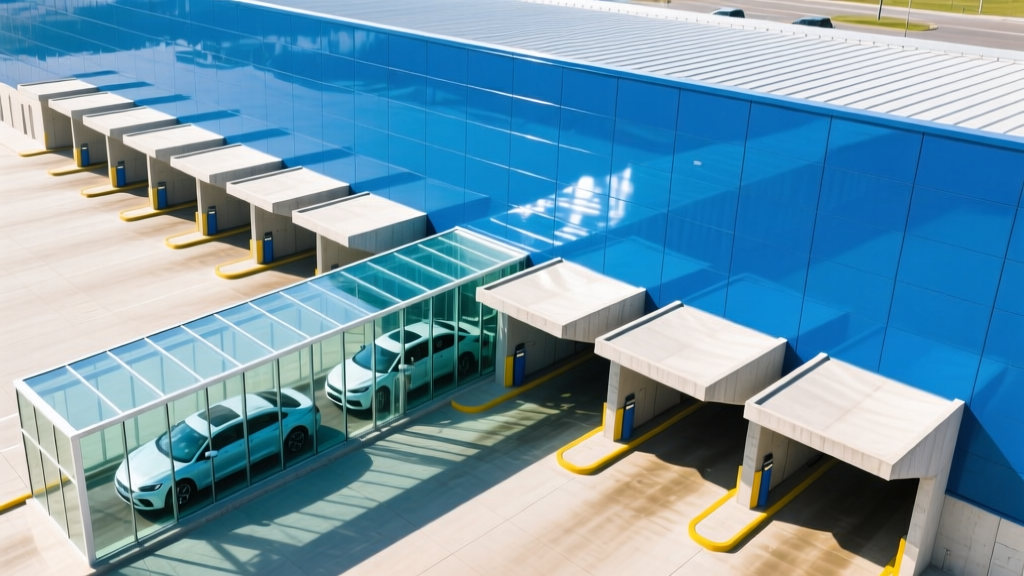
Most modern car washes utilize Pre-Engineered Metal Buildings (PEMB) for the tunnel and equipment room, paired with Architectural Composite Material (ACM) panels and glass stack facades for branding. Construction costs for the tunnel structure average $150 to $220 per square foot, totaling roughly $600,000 to $1,100,000. The free-standing vacuum canopy requires heavy-gauge structural steel to handle wind and snow loads, costing an additional $150,000 to $250,000 depending on the number of bays (typically 16 to 24 bays).
Hidden Capital Traps in Car Wash Development
Budget overruns in car wash construction rarely stem from the wash equipment itself; they originate in civil engineering and utility misallocations.
- Electrical Transformer Upgrades: An express tunnel requires 1600 to 2000 amps of 3-phase power. If the local utility grid lacks a nearby high-capacity transformer, pulling new lines and installing pad-mounted transformers can add $75,000 to $120,000 to your utility budget.
- Flooring Chemistry: Standard epoxy flooring degrades quickly when exposed to harsh alkaline tire-shine chemicals and acidic pre-soaks. Specify Polyaspartic or Polyurea floor coatings. While 30% more expensive upfront ($8-$12 per sq. ft. vs. $5-$7 for epoxy), they cure in 24 hours and resist chemical etching, saving thousands in premature resurfacing.
- Geotech Surprises: Car washes require deep pits for tunnel conveyor returns and massive underground clarifier tanks. If soil borings reveal high water tables or bedrock, excavation and shoring costs can easily balloon by $100,000+.
- ADA Compliance in Vacuum Areas: Developers often overlook the requirement for ADA-accessible vacuum bays and mat cleaners, requiring specialized concrete ramping and wider turning radii that consume valuable lot space.
Strategic Sourcing: Equipment & Technology Selection
Conveyors: Chain vs. Belt
The conveyor is the highest-maintenance component in a tunnel. Traditional chain-and-roller conveyors are less expensive initially but are prone to snapping and require constant lubrication. Modern facilities are migrating to heavy-duty belt conveyors (e.g., Sonny's ProBelt). A belt system adds $40,000 to $60,000 to the initial equipment cost but drastically reduces vehicle tire-sidewall damage claims and minimizes daily maintenance downtime.
POS and Access Control Integration
The Point of Sale (POS) system dictates your recurring revenue capability. Integrating License Plate Recognition (LPR) cameras at the pay kiosk allows for seamless subscription redemption. Systems from DRB or Washify cost between $40,000 and $85,000 for multi-kiosk, LPR-enabled setups. LPR integration has been shown to increase unlimited club retention rates by over 18% by removing friction at the point of entry.
Financing & Debt Service Structuring
Because car washes are highly specialized, single-purpose real estate assets, traditional commercial mortgages can be difficult to secure without substantial liquid reserves. Many developers utilize the SBA 504 Loan Program, which allows for 10% down payments on commercial real estate and heavy equipment, provided the project meets job creation or community development criteria. Equipment leasing is also common for the wash machinery itself, preserving working capital for the first 12 months of marketing and chemical inventory.
"Undercapitalization is the primary reason new car washes fail in their first 24 months. Developers must budget not just for the concrete and steel, but for a $150,000+ marketing war chest to capture local subscription market share during the grand opening phase."
Frequently Asked Questions
How long does it take to build an automatic car wash?
From groundbreaking to the grand opening, construction typically takes 7 to 10 months. However, the pre-construction phase—including zoning approvals, environmental impact studies, and utility permitting—can add 12 to 18 months before a shovel hits the dirt.
Is a touchless or friction tunnel more expensive to build?
Touchless systems require more high-pressure pumps, larger chemical storage tanks, and advanced water softening systems, making the initial mechanical build slightly more expensive. However, friction tunnels require more complex moving parts and cloth maintenance. Most modern 2026 builds utilize a "Hybrid" approach, using touchless high-pressure for the lower rockers and friction cloth for the upper body to balance CapEx and wash quality.
What are the ongoing chemical and utility costs?
Operating expenses (OpEx) for a high-volume express tunnel typically run between 25% and 35% of gross revenue. Chemical costs average $0.35 to $0.60 per car, while water and sewer costs range from $0.20 to $0.45 per car, heavily dependent on the efficiency of your water reclamation system and local municipal rates.
Written by
James ThorntonJames Thornton is a construction industry veteran with 25 years of hands-on experience in wood framing, lumber grading, and residential building codes. He started as a framing carpenter in rural Oregon, earned his ICC Residential Building Inspector certification, and eventually became a senior plan reviewer for the City of Portland Bureau of Development Services. James holds a B.S. in Wood Science & Technology from Oregon State University and is a certified lumber grader through the West Coast Lumber Inspection Bureau (WCLIB). He has inspected over 3,000 residential construction sites and authored the city's internal guide on advanced framing techniques (2x6 at 24" O.C.). James lives in Bend, OR, where he builds custom timber-frame cabins and competes in lumberjack sports.
More from James Thornton
View all
Insulation
Best Home Insulation Materials: Complete 2026 Guide
Compare top home insulation materials for 2026. Find R-values, installed costs per square foot, and best uses for fiberglass, spray foam, and mineral wool.
Aug 4, 2026

Sustainable Building
Certify Your Green Building Material for LEED and WELL
Step-by-step guide to certifying a green building material for LEED v5 and WELL v2. Master EPDs, HPDs, and VOC limits for 2026 project specifications.
Aug 4, 2026

Stone & Masonry
Veneer Stacked Stone Panels: Interior Design & Style Showcase
Discover how veneer stacked stone panels transform interiors. Explore modern design profiles, material pairings, and technical installation specs.
Aug 4, 2026