Veneer Stacked Stone Panels: Interior Design & Style Showcase
Discover how veneer stacked stone panels transform interiors. Explore modern design profiles, material pairings, and technical installation specs.

Interior stacked stone veneer consists of thin, interlocking stone slices mounted on panels or applied individually to create a mortarless, modern textured wall. This guide is for homeowners, interior designers, and general contractors seeking to integrate stacked stone veneer panels into interior spaces like fireplaces, kitchens, and accent walls.
Key Takeaways
- Interior stacked stone veneer provides a mortarless, high-texture aesthetic suitable for modern and rustic designs.
- Manufactured panels weigh between 9 and 12 pounds per square foot, eliminating the need for structural reinforcement.
- Proper substrate preparation, including cement backer board, is mandatory for interior drywall applications.
What Is Interior Stacked Stone Veneer?
Stacked stone veneer is a decorative building material composed of narrow, rectangular stone pieces arranged in a linear, mortarless pattern. Unlike traditional masonry, these veneers are sliced to a thickness of 1.5 inches or less, allowing them to be adhered directly to interior walls without requiring a structural footing.
Manufactured Stone Veneer (MSV) is an engineered building product cast from Portland cement, lightweight aggregates, and iron oxide pigments to replicate natural stone. According to the Masonry Veneer Manufacturers Association, MSV offers consistent coloring and reduced weight compared to quarried stone, making it ideal for interior retrofits.
Interior Stacked Stone Veneer Design Showcase
Integrating stacked stone veneer panels interior spaces transforms flat drywall into dynamic architectural features. The linear profile of stacked stone draws the eye horizontally, making it highly effective for widening narrow rooms or emphasizing ceiling height.
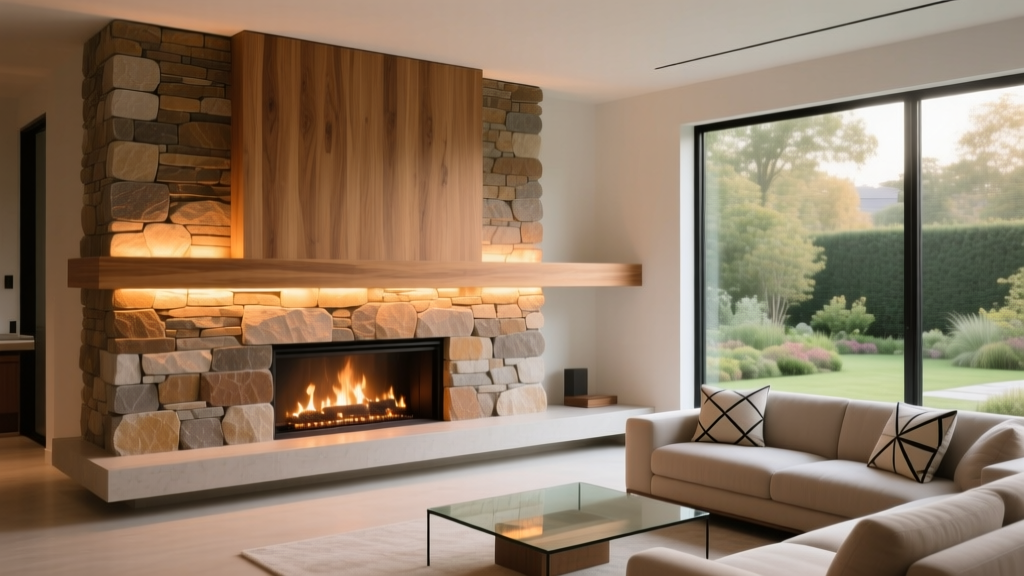
Fireplace Feature Walls
The most common application for interior stacked stone is the fireplace surround. A floor-to-ceiling installation using 24-inch by 6-inch interlocking panels creates a dramatic focal point. Designers frequently pair slate-colored stacked stone with matte black fireplace inserts to achieve a contemporary aesthetic.
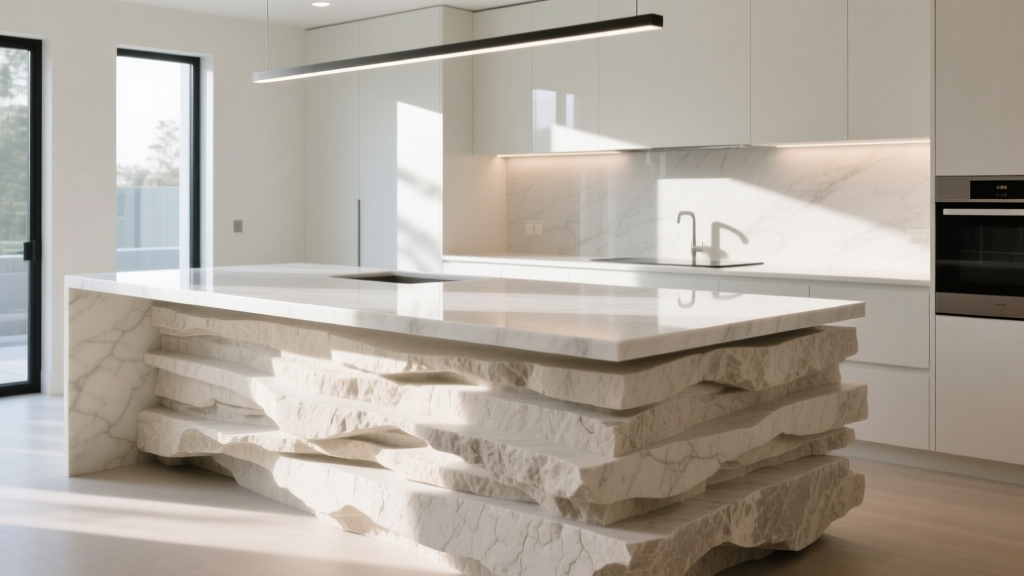
Kitchen Islands and Backsplashes
Applying stone veneer to kitchen island bases adds tactile contrast to smooth quartz or marble countertops. The National Kitchen and Bath Association notes that textural contrast remains a primary trend in 2026 kitchen design, with stacked stone providing a durable, splash-resistant surface when properly sealed.
Bathroom Accent Walls
Stacked stone introduces organic warmth to sterile bathroom environments. When used behind a floating vanity, the mortarless joints prevent moisture trapping, provided the stone is treated with a breathable, penetrating silane-siloxane sealer.
Material Comparison: Natural vs. Manufactured Panels
Choosing between natural and manufactured stacked stone veneer panels interior applications requires evaluating weight, cost, and consistency. Use the decision framework below to select the appropriate material for your specific structural constraints.
| Feature | Natural Stacked Stone | Manufactured Stone Veneer (MSV) |
|---|---|---|
| Weight | 13 to 15 lbs per sq ft | 9 to 12 lbs per sq ft |
| Material Cost | $12 to $22 per sq ft | $8 to $15 per sq ft |
| Thickness | 1.5 to 3.0 inches | 0.75 to 1.5 inches |
| Color Consistency | Variable (natural veining) | High (batch-controlled pigments) |
| Installation Speed | Moderate (requires cutting) | Fast (interlocking panel edges) |
Installation Guidelines for Interior Substrates
Interior stacked stone veneer cannot be adhered directly to painted drywall or standard plaster. The weight of the stone, combined with the moisture from the thinset mortar, will compromise the paper facing of the drywall, leading to structural failure.
Substrate Preparation
Install a 0.5-inch cement backer board over the existing wall studs using corrosion-resistant screws spaced 6 inches apart. Seal all backer board joints with alkali-resistant mesh tape and thinset mortar to create a monolithic, moisture-resistant surface.
Weight and Structural Considerations
Before installing heavy natural stone, verify the load-bearing capacity of your interior wall framing. Standard 2x4 wood studs spaced 16 inches on center can typically support up to 15 pounds per square foot of dead load. If your chosen stone exceeds this threshold, you must reinforce the framing with additional blocking or steel studs.
Adhesive and Curing
Apply a polymer-modified thinset mortar using a 0.5-inch notched trowel to ensure complete coverage. Back-butter each stone panel before placement. Allow a minimum of 48 hours curing time before applying any grout or sealant to the installation.
Lighting and Maintenance Strategies
The deep shadows created by the mortarless joints of stacked stone require deliberate lighting design to maximize visual impact. Recessed ceiling lights or linear LED strips placed directly above the stone wall graze the surface, emphasizing the three-dimensional texture and natural color variations.
Maintenance for interior stacked stone is minimal but requires specific techniques. Avoid using acidic cleaners or high-pressure water, which can degrade the stone surface or wash out pigments in manufactured variants. Instead, use a soft-bristle brush attachment on a vacuum to remove dust from the horizontal ledges monthly.
Frequently Asked Questions
Can you install stacked stone veneer on drywall?
No. You must install a cement backer board or a specialized metal lath and scratch coat system over drywall before applying stacked stone veneer. Direct application to drywall risks adhesive failure and wall damage due to weight and moisture.
How much does interior stacked stone veneer cost?
Material costs for interior stacked stone veneer range from $8 to $22 per square foot, depending on whether you choose manufactured or natural stone. Professional installation labor typically adds $10 to $18 per square foot, bringing the total project cost to $18 to $40 per square foot.
Do interior stacked stone panels require sealing?
While not strictly mandatory in dry areas, applying a breathable penetrating sealer is highly recommended. Sealing protects the porous stone from dust accumulation, cooking grease in kitchens, and humidity in bathrooms, making routine maintenance significantly easier.
What is the difference between stacked stone and ledger panels?
Stacked stone refers to the visual pattern of mortarless, linear stone placement. Ledger panels are the physical, pre-assembled mesh-backed sections of stone used to achieve this pattern quickly. Ledger panels typically measure 6 inches by 24 inches and interlock at the edges to hide seams during installation.
Project Planning and Next Steps
Interior stacked stone veneer offers a permanent, high-impact design upgrade that bridges modern minimalism and natural texture. By selecting the correct material weight and preparing your substrate properly, you ensure a durable installation that enhances your interior architecture.
To begin your project, order physical sample boards of both natural and manufactured stacked stone to evaluate color accuracy under your specific interior lighting conditions. Once selected, consult a licensed masonry contractor to verify your wall framing can support the calculated dead load.
Written by
James ThorntonJames Thornton is a construction industry veteran with 25 years of hands-on experience in wood framing, lumber grading, and residential building codes. He started as a framing carpenter in rural Oregon, earned his ICC Residential Building Inspector certification, and eventually became a senior plan reviewer for the City of Portland Bureau of Development Services. James holds a B.S. in Wood Science & Technology from Oregon State University and is a certified lumber grader through the West Coast Lumber Inspection Bureau (WCLIB). He has inspected over 3,000 residential construction sites and authored the city's internal guide on advanced framing techniques (2x6 at 24" O.C.). James lives in Bend, OR, where he builds custom timber-frame cabins and competes in lumberjack sports.
More from James Thornton
View all
Insulation
Best Home Insulation Materials: Complete 2026 Guide
Compare top home insulation materials for 2026. Find R-values, installed costs per square foot, and best uses for fiberglass, spray foam, and mineral wool.
Aug 4, 2026

Sustainable Building
Certify Your Green Building Material for LEED and WELL
Step-by-step guide to certifying a green building material for LEED v5 and WELL v2. Master EPDs, HPDs, and VOC limits for 2026 project specifications.
Aug 4, 2026
Construction Cost
How Much Does It Cost to Build a Basketball Gym? Size & Scope Guide
Calculate exactly how much it costs to build a basketball gym. Break down size, scope, materials, and 2026 construction pricing for 1 to 3-court facilities.
Aug 4, 2026