Average Cost to Build a House in Tennessee: 2026 Regional Guide
Discover the 2026 average cost to build a house in Tennessee. Breakdowns by region, material, and labor for Nashville, Knoxville, and rural areas.
The Baseline: 2026 Construction Costs Across Tennessee
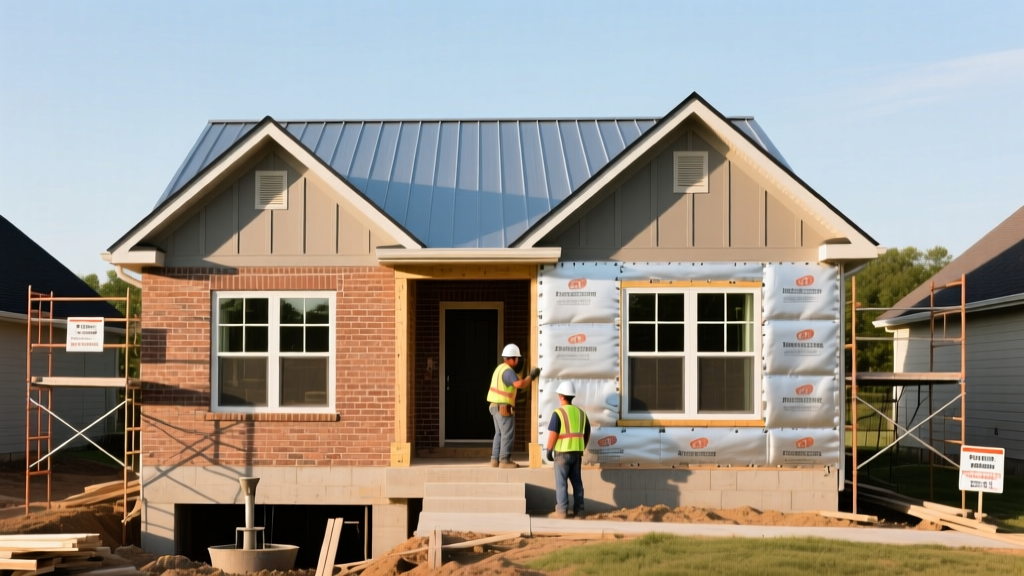
Calculating the average cost to build a house in tennessee requires moving beyond national averages, which fail to account for the state's extreme topographical and micro-regulatory variations. As of early 2026, the statewide baseline for a standard, builder-grade single-family home sits between $155 and $185 per square foot. For a 2,200-square-foot home, this translates to $341,000 to $407,000, excluding land acquisition and site preparation.
However, treating Tennessee as a monolithic market is a critical estimating error. The state spans three distinct geological and economic zones, each imposing unique structural requirements. According to the National Association of Home Builders (NAHB), regional labor shortages and localized material logistics now account for up to a 22% variance in final build costs within the same state.
2026 Quick Data Snapshot: Tennessee Residential Builds
- Statewide Average: $155 - $185 per sq. ft.
- Custom/Luxury Average: $220 - $310+ per sq. ft.
- Average Permitting Timeline: 45 to 120 days (highly county-dependent)
- Primary Cost Driver: Subsurface site prep (limestone blasting and clay remediation)
Regional Price Matrix: Nashville vs. Knoxville vs. Memphis vs. Rural
To accurately budget your project, you must align your estimates with the specific micro-economy of your county. The matrix below breaks down the cost drivers across Tennessee's primary building corridors.
| Region | Avg Cost / Sq. Ft. | Key Cost Drivers | Primary Soil / Site Challenge |
|---|---|---|---|
| Nashville Metro (Davidson/Williamson) | $185 - $240 | Strict zoning, high labor demand, tree mitigation fees | Nashville Basin Limestone (requires blasting) |
| Knoxville & Chattanooga | $165 - $210 | Sloped lot engineering, retaining walls, stepped foundations | Karst topography (sinkhole risk), heavy red clay |
| Memphis (Shelby County) | $155 - $195 | Seismic structural reinforcement, expansive clay foundations | Loess soil, New Madrid Seismic Zone compliance |
| Rural Middle / West TN | $140 - $170 | Well/septic installation, long utility runs, transport fees | Variable agricultural topsoil, high water tables |
Davidson County (Nashville Metro): The Premium Market
Building in the Nashville basin introduces significant subsurface expenses. The region is underpinned by dense Ordovician limestone. If your lot requires a basement or deep footings, expect to pay $4,500 to $9,000 for controlled blasting and rock excavation before concrete is even poured. Furthermore, Davidson County enforces strict tree mitigation ordinances; removing protected hardwoods can trigger replacement fees exceeding $1,200 per caliper inch.
Memphis and the New Madrid Seismic Zone
While labor rates in Shelby County are generally 10-15% lower than in Nashville, structural costs offset these savings. Memphis sits near the New Madrid Seismic Zone. According to FEMA guidelines, residential construction here requires enhanced continuous load paths. This means specifying Simpson Strong-Tie H2.5A hurricane/seismic ties at every truss-to-wall connection and utilizing deeper, heavily reinforced grade beams to resist soil liquefaction. Budget an additional $8,000 to $12,000 for seismic framing hardware and structural engineering stamping.
Material Specifications for Tennessee's Humid Subtropical Climate
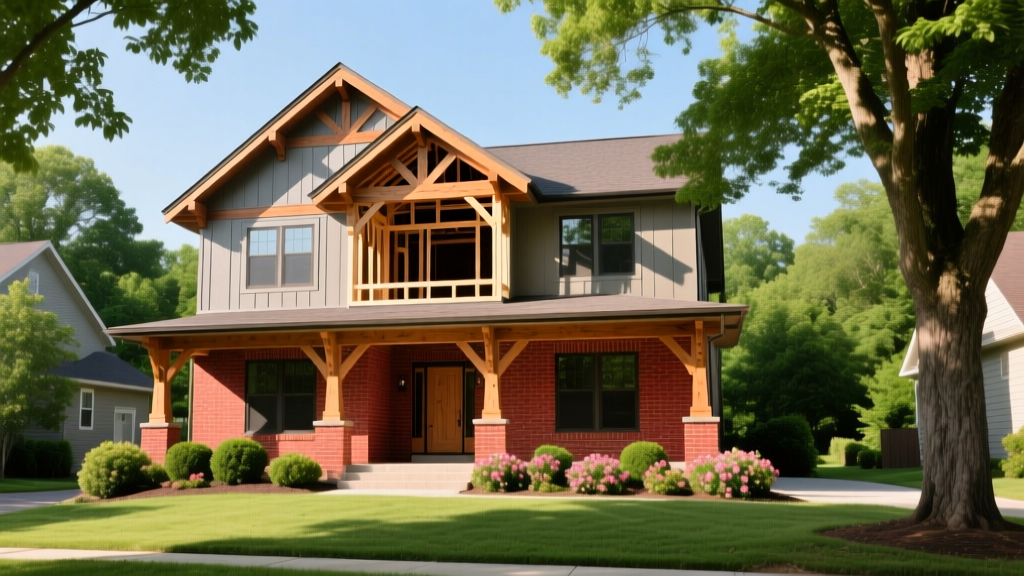
Tennessee experiences high humidity, heavy spring rainfall, and hot summers. Standard material selections used in drier climates will lead to premature moisture failure. To protect your investment, allocate your material budget toward the following moisture-management systems:
- Exterior Sheathing: Upgrade from standard OSB to ZIP System sheathing. The integrated water-resistive barrier eliminates the need for housewrap and prevents the panel swelling common in TN spring rains.
- Siding: Avoid traditional wood lap siding. Specify LP SmartSide engineered wood siding (primed with Diamond Kote finish) or James Hardie fiber cement. Both resist the subterranean termites native to the state and withstand 90%+ summer humidity without warping.
- Vapor Retarders: The International Residential Code (IRC) classifies most of Tennessee in Climate Zone 4A (Mixed-Humid). Do not use polyethylene sheeting on the interior, which traps moisture. Instead, specify CertainTeed MemBrain, a smart vapor retarder that adapts its permeability based on ambient humidity levels.
HVAC Sizing and Energy Code Compliance
Tennessee's climate demands rigorous HVAC planning. The Tennessee Valley Authority (TVA) strongly recommends exceeding minimum code requirements to manage peak summer cooling loads. In 2026, the baseline code requires a minimum 15 SEER2 rating. However, for a 2,500-square-foot home in Middle Tennessee, installing a variable-speed, 18 SEER2 heat pump system with a dedicated dehumidification mode will cost roughly $3,500 more upfront but will reduce annual cooling costs by 22% and prevent interior mold growth during the muggy August weeks.
Estimator Warning: Never rely on builder-grade 14 SEER2 single-stage units for homes over 2,000 sq. ft. in Tennessee. The latent heat (humidity) load in July will overwhelm single-stage compressors, leading to a clammy interior environment and accelerated drywall degradation.
Hidden Site Costs: Topography and Soil Testing
The most frequently underestimated line item in Tennessee construction estimates is geotechnical remediation. Before finalizing your budget, mandate a $1,500 to $3,000 geotechnical soil boring test. Here is what you are looking for based on your region:
- East Tennessee (Karst Topography): The limestone bedrock here is prone to dissolution, creating voids and sinkholes. If your soil test reveals shallow, fractured bedrock, you may need to drill micropiles or inject polyurethane grout to stabilize the foundation subgrade, adding $10,000+ to site prep.
- West Tennessee (Expansive Clay): The heavy Yazoo clay in the western third of the state expands and contracts violently with moisture changes. Standard shallow footings will crack. You must budget for a post-tensioned slab-on-grade or a structural void-form foundation system, which adds $6 to $9 per square foot to the foundation cost.
- Rural Utility Trenching: In unincorporated counties, bringing power and fiber internet to a setback lot requires trenching. Expect to pay $12 to $18 per linear foot for private trenching, plus transformer pad fees from local co-ops like Middle Tennessee Electric (MTE).
Actionable Framework: Budgeting Your TN Build
To translate these regional variables into a working spreadsheet, use this percentage-based allocation framework tailored for a $400,000 hard-cost build in Middle Tennessee:
2026 Tennessee Hard-Cost Allocation Model
- Site Work & Foundation (18%): $72,000 (Includes rock excavation, engineered fill, and reinforced slab/crawlspace).
- Framing & Exterior Envelope (26%): $104,000 (Lumber package, ZIP system, architectural asphalt roofing, SmartSide siding).
- MEP Rough-In & Trim (24%): $96,000 (18 SEER2 HVAC, PEX-A plumbing, 200-amp electrical, interior millwork).
- Interior Finishes (22%): $88,000 (Quartz countertops, LVP flooring, ceramic tile, paint).
- Permits, Engineering, & Contingency (10%): $40,000 (Geotech reports, grading permits, 5% material escalation buffer).
By anchoring your estimate to Tennessee's specific geological realities and micro-regional labor markets, you eliminate the guesswork that leads to mid-construction change orders. Secure your geotechnical data first, specify moisture-resilient materials second, and let the regional matrix dictate your baseline square-footage costs.
Written by
Marcus ChenMarcus Chen is a licensed structural engineer (PE) and building materials analyst with over 12 years of experience across residential, commercial, and industrial construction. He holds a Master of Science in Civil Engineering from UC Berkeley and spent six years at Thornton Tomasetti before transitioning to independent consulting and technical writing. Marcus specializes in material selection for seismic-prone regions, concrete reinforcement strategies, and lifecycle cost analysis. His work has been cited by the American Concrete Institute (ACI) and the Structural Engineers Association of California (SEAOC). When he is not on a job site or at his desk, you will find him hiking the Sierra Nevada or restoring a 1920s craftsman bungalow in Oakland, CA.
More from Marcus Chen
View all
Construction Cost
How Much Did the Eiffel Tower Cost to Build?
How much did the Eiffel Tower cost to build in 1889? We adjust for inflation and compare its budget to modern skyscraper construction.
Aug 4, 2026

Fire Resistance
What Is a Fire Resistant Material? Testing & Certification Guide
Discover what is a fire resistant material through ASTM and UL testing. Learn how fire ratings, certifications, and assemblies work in construction.
Aug 4, 2026

Construction Cost
How Much Did the Burj Khalifa Cost to Build?
How much did the Burj Khalifa cost to build? We break down the $1.5B project and extract 5 money-saving strategies for your next build.
Jul 30, 2026