How Much to Build a Bear Enclosure: Cost & Financing
Discover how much to build a bear enclosure costs, including heavy-duty fencing, concrete moats, and sanctuary financing options for 2026.
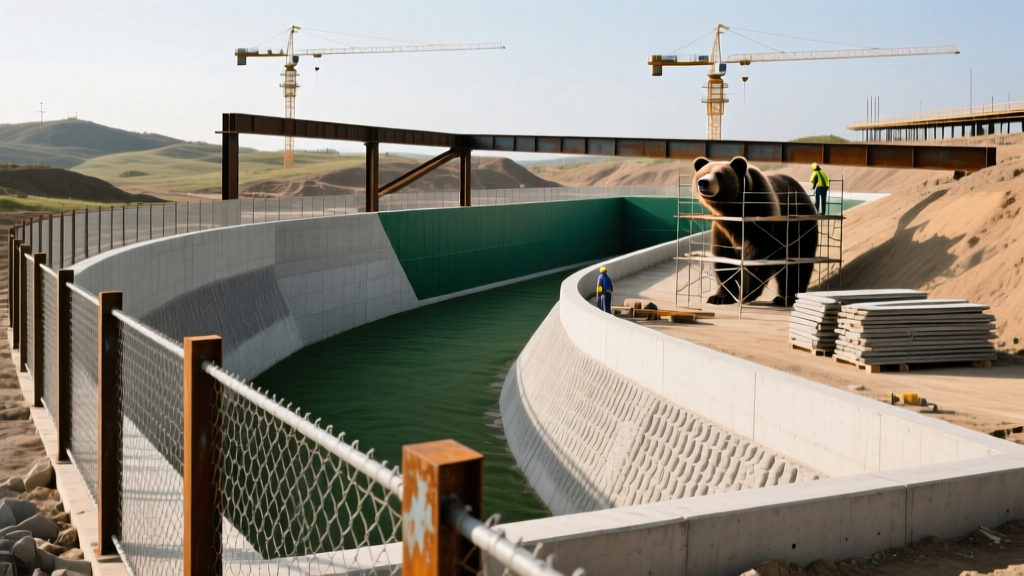
The True Capital Expenditure of Wildlife Infrastructure
Constructing a habitat for ursine species—whether for an AZA-accredited zoo, a rural wildlife sanctuary, or an eco-resort—requires specialized structural engineering far beyond standard agricultural or residential builds. When project stakeholders search for how much to build a bear cost, they are often unprepared for the stringent containment, topographical, and safety regulations that dictate the final budget. A standard agricultural pole barn might cost $25 per square foot, but a compliant bear enclosure routinely pushes capital expenditures (CapEx) to $150–$350 per square foot of usable habitat space, excluding land acquisition.
The financial scope of these projects hinges on the target species. Grizzly bears (Ursus arctos horribilis) require vastly more robust containment and larger spatial footprints than American black bears (Ursus americanus). Furthermore, the choice between meeting baseline USDA APHIS Animal Welfare Act minimums versus pursuing rigorous Association of Zoos and Aquariums (AZA) accreditation will multiply your structural budget by a factor of three to four.
Capital Expenditure Breakdown: Where the Money Goes
To accurately estimate your construction loan requirements, you must break the project down into specialized trade packages. The following table outlines 2026 average installed costs for primary containment and habitat features.
| Construction Component | Material Specifications | Estimated 2026 Installed Cost |
|---|---|---|
| Primary Perimeter Fencing | 6-gauge galvanized chain link, 12ft height | $180 – $240 per linear foot |
| Subterranean Dig Barrier | Reinforced concrete L-footer, 3ft deep x 4ft out | $95 – $130 per linear foot |
| Shotcrete Artificial Rockwork | 4000 PSI gunite over #5 rebar armature | $140 – $220 per square foot |
| Dry Containment Moat | 15ft wide, 12ft deep, textured concrete base | $350 – $450 per linear foot |
| Shift Cages & Airlocks | Heavy steel pipe, hydraulic guillotine gates | $35,000 – $60,000 per unit |
| Electric Hot-Wire Deterrent | Multi-strand high-tensile, offset insulators | $12 – $18 per linear foot |
Engineering Containment: Fencing, Moats, and Dig Barriers
Bears possess immense physical strength, an innate ability to climb, and a relentless drive to dig. Standard livestock fencing will fail catastrophically under ursine pressure. Estimators must specify 6-gauge or 4-gauge galvanized steel mesh with a minimum 2-inch by 2-inch weave to prevent paw insertion and snout leverage.
Vertical and Overhead Containment
Perimeter fences must stand at least 10 to 12 feet high. Because bears are adept climbers, the top 24 inches of the fence must feature a 45-degree inward overhang. For grizzly exhibits, many engineers now specify commercial-grade coyote rollers on the top rail, which prevent the animal from gaining the leverage needed to pull themselves over the barrier. Budget an additional 15% to your fencing package for these specialized anti-climb modifications.
The Subterranean L-Footer
A bear will dig aggressively at the base of a fence line. To prevent escape, a concrete 'L-footer' dig barrier is mandatory. This involves trenching 3 feet deep along the entire perimeter and pouring a continuous concrete footing that extends 4 feet inward into the enclosure. This requires significant earthmoving and concrete work, often accounting for 20% of the total site-work budget.
Before finalizing your L-footer pricing, mandate a geotechnical soil report. Expansive clays or high water tables will require over-excavation and the importation of structural fill, which can increase earthwork costs by $15,000 to $40,000 per acre.
Shift Cages and Sally Ports
Animal care staff must never share the same physical space as an unsecured bear. The habitat must include a hardened 'shift cage' (night house) connected to the main exhibit via a double-door airlock (sally port). These structures require 4-inch schedule 40 steel pipe framing, heavy-gauge weld mesh, and hydraulic or heavy-manual guillotine gates. A fully outfitted shift facility for two bears will easily consume $75,000 to $120,000 of your capital budget.
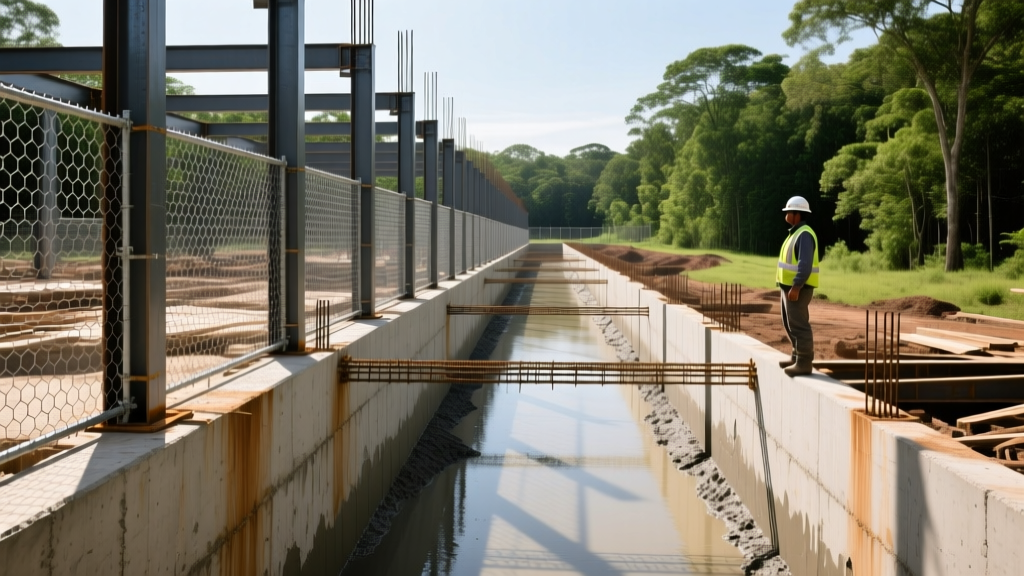
Financing Strategies for Wildlife Infrastructure
Securing capital for a non-standard, highly specialized construction project requires looking beyond traditional commercial mortgages. Lenders often view wildlife enclosures as high-risk, single-purpose assets with poor liquidation value. Therefore, sanctuary directors and zoo planners must leverage specialized financing vehicles.
1. USDA Rural Development Community Facilities Programs
For non-profit wildlife rescues and sanctuaries located in rural areas (populations under 20,000), the USDA Rural Development Community Facilities program is the premier financing tool. They offer direct low-interest loans (often fixed at 4.5% or lower for 40-year terms) and, in some cases, matching grants. The facility must serve a public or community purpose, which wildlife rehabilitation and public education satisfy. Expect the underwriting process to take 6 to 9 months, requiring extensive environmental and structural engineering documentation.
2. SBA 504 Loans for Eco-Resorts and Private Zoos
For-profit entities, such as private zoological parks or eco-tourism resorts featuring bear habitats, should utilize the Small Business Administration (SBA) 504 loan program. This allows the developer to put down as little as 10% on the land and construction, with a bank financing 50% and a Certified Development Company (CDC) financing 40% via a debenture. The specialized nature of the build means you must provide the lender with an independent third-party cost estimate and a feasibility study proving ticket-sale revenue can service the debt.
3. Phased Capital Campaigns and Bridge Financing
Many non-profits rely on a phased approach to manage cash flow without over-leveraging.
- Phase 1 (Year 1): Site clearing, perimeter fencing, and dig barriers. Financed via a short-term construction line of credit.
- Phase 2 (Year 2): Shift cages, airlocks, and basic topography. Financed via targeted donor capital campaigns.
- Phase 3 (Year 3): Shotcrete rockwork, water features, and enrichment structures. Financed via operational revenue once the facility opens to the public.
If your long-term goal is AZA accreditation, do not build to USDA minimums and attempt to retrofit later. USDA requires minimal space and basic fencing, while AZA demands complex topographical variations, multiple denning options, and advanced visual barriers. Building to AZA standards from day one costs roughly 40% more upfront but prevents the need for a total tear-down and rebuild five years later.
Comparative Scenario Matrix: Black Bear Rescue vs. Grizzly Exhibit
To illustrate how species and accreditation goals impact the final ledger, review the following comparative estimates for a 1-acre primary habitat footprint (excluding shift cages and land costs).
| Cost Category | 1-Acre Black Bear Rescue (USDA Compliant) | 1-Acre Grizzly Exhibit (AZA Target) |
|---|---|---|
| Earthwork & Grading | $45,000 | $110,000 |
| Perimeter Fencing (1,050 LF) | $126,000 (10ft, 6-gauge) | $189,000 (12ft, 4-gauge + rollers) |
| Dig Barriers (1,050 LF) | $105,000 | $136,500 |
| Rockwork & Enrichment | $30,000 (Natural boulders) | $250,000 (Custom shotcrete caves) |
| Moats & Water Features | $0 (Fence-only containment) | $180,000 (Dry moat + plunge pool) |
| Total Habitat CapEx | $306,000 | $865,500 |
Mitigating Risk in Your Construction Estimates
When finalizing your pro forma and approaching lenders, ensure your budget includes a minimum 15% contingency fund specifically allocated for wildlife containment overrides. During construction, it is common to discover that local building inspectors are unfamiliar with animal containment engineering. You may be required to bring in a specialized structural engineer to stamp the fence post footing designs or the shift cage roof loads, adding $10,000 to $20,000 in soft costs. By understanding the extreme material requirements and leveraging government-backed rural development financing, you can accurately forecast the true cost of bringing a world-class ursine habitat to life.
Written by
Priya KapoorPriya Kapoor is a real estate market analyst and construction economics researcher with expertise in housing affordability, development feasibility, and infrastructure investment. She holds a Master of Regional Planning from Cornell University and previously worked as a senior analyst at CBRE's Investment Properties group, where she modeled returns for $4B in mixed-use development pipelines. Priya now runs an independent research practice advising developers, municipalities, and REITs on construction cost forecasting and market timing. She publishes the quarterly "BuildMat Market Pulse" report tracking material price indices across 12 commodity categories. Based in Austin, TX, Priya serves on the board of Habitat for Humanity Austin and is a marathon runner.
More from Priya Kapoor
View all
Construction Cost
Cost to Build a 1600 Sq Ft Home in 2026: Full Breakdown
Accurate 2026 cost to build a 1600 sq ft home—material, labor, and regional pricing breakdowns included. Plan your budget with real-time estimates.
Aug 11, 2026

Wood & Lumber
Name the Types of Wood for Pressure Treatment and Preservation
Learn how to name the types of wood best suited for pressure treatment. Compare species treatability, chemical retention levels, and 2026 preservation costs.
Aug 4, 2026

Stone & Masonry
Stone Veneer Suppliers Lindenhurst: 2026 Cost Analysis
Analyze 2026 stone veneer costs in Lindenhurst, NY. Compare local supplier pricing, delivery fees, and Suffolk County installation labor rates.
Aug 4, 2026