Cost to Build a House in Colorado: 2026 Regional Price Guide
Discover the true cost to build a house in Colorado in 2026. Compare Front Range, Mountain, and Plains pricing, plus expansive soil and WUI code impacts.
The True Cost to Build a House in Colorado: Beyond the State Average
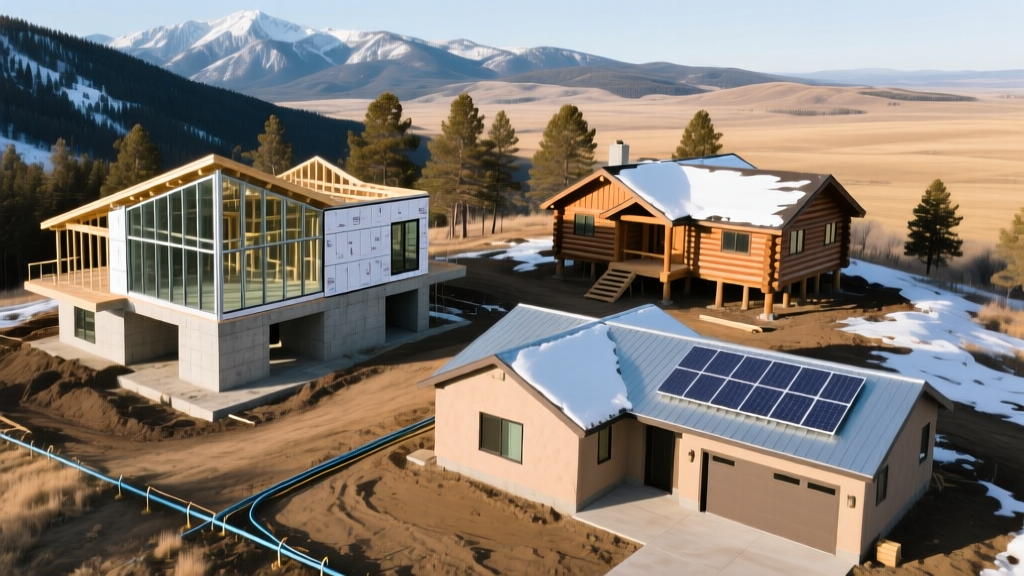
Calculating the cost to build a house in Colorado requires abandoning single-number state averages. In 2026, the baseline construction cost ranges from $145 to over $600 per square foot, depending entirely on topography, soil composition, and municipal code overlays. While national databases might cite a median of $175 per square foot, this figure fails to account for Colorado's unique geological and environmental cost drivers. From the bentonite-rich clays of the Denver Basin to the extreme snow-load engineering required in Summit County, regional variables dictate your actual budget.
2026 Colorado Construction Snapshot
- Statewide Average (Base Construction): $185 - $240 per sq. ft.
- Front Range Metro (Denver/Boulder): $210 - $310 per sq. ft.
- Mountain/Resort (Vail/Aspen/Telluride): $400 - $850+ per sq. ft.
- Eastern Plains/Western Slope: $145 - $195 per sq. ft.
- Average Water Tap Fees (Single Family): $18,000 - $45,000+
Regional Breakdown: Front Range vs. Mountains vs. Plains
To accurately estimate your budget, you must segment Colorado into its three primary construction zones. Each zone presents distinct logistical, geological, and regulatory hurdles that directly impact material and labor pricing.
| Region | Avg Cost / Sq. Ft. | Primary Cost Drivers | Standard Foundation |
|---|---|---|---|
| Front Range (Denver, Colorado Springs, Ft. Collins) | $210 - $310 | Expansive soils, high municipal tap fees, strict energy codes | Drilled concrete piers (caissons) or structural slabs |
| Mountain / Resort (Summit, Eagle, Pitkin Counties) | $400 - $850+ | Extreme snow loads, WUI fire codes, winter construction premiums, logistics | Engineered stepped footings on bedrock |
| Eastern Plains & Western Slope (Pueblo, Grand Junction, Rural) | $145 - $195 | Material transport distances, wind load engineering, well/septic installation | Standard slab-on-grade or crawlspace |
Front Range: The Expansive Soil Premium
The I-25 corridor sits atop the Denver Basin, which is notorious for Pierre Shale and highly expansive bentonite clay. When this soil absorbs moisture, it swells with enough upward pressure (up to 15,000 psf) to crack standard concrete foundations. According to local geotechnical engineers, over 70% of new builds in the Denver metro require specialized foundation systems. Builders must either over-excavate 3 to 5 feet and replace the soil with non-expansive structural fill, or drill concrete piers (caissons) down to bedrock, suspending a structural floor system above the ground. This geological reality adds $18 to $28 per square foot of footprint to your foundation costs compared to stable-soil regions.
Mountain Regions: Logistics, Snow, and Labor
Building in resort towns like Vail, Breckenridge, or Telluride introduces severe logistical multipliers. Material transport often requires CDOT-regulated escort vehicles for oversized loads on mountain passes. Furthermore, mountain construction is highly seasonal. Pouring concrete in November requires temporary enclosures, ground thawing equipment, and accelerating admixtures, adding a 15% to 25% winter construction premium. Labor is equally constrained; skilled trades often commute from lower elevations, requiring builders to factor in travel time and per diems, pushing framing labor rates 30% to 50% above Front Range averages.
Eastern Plains & Western Slope: Affordability with Caveats
Regions like Grand Junction, Pueblo, and the Eastern Plains offer the most favorable cost to build a house in Colorado. Soils are generally stable, allowing for standard monolithic slab-on-grade foundations. However, builders must account for high wind-load engineering (often 110-130 mph exposure zones) and the cost of rural infrastructure. If municipal water and sewer are unavailable, drilling a domestic water well ($8,000 - $18,000) and installing an engineered septic system ($12,000 - $25,000) will offset the savings gained from cheaper land and standard foundations.
Colorado-Specific Construction Cost Drivers
Beyond regional geography, statewide building codes and environmental factors mandate specific material upgrades that directly impact your bottom line.
Wildland-Urban Interface (WUI) Code Compliance
Following severe wildfire seasons, Colorado has aggressively adopted the International Wildland-Urban Interface Code (IWUIC). If your lot is designated in a WUI zone—which includes many foothill properties in Jefferson, Boulder, and Douglas counties—you must utilize fire-resistant materials. The Colorado State Forest Service mandates strict defensible space and structural hardening. Expect to pay a premium for:
- Class A Fire-Rated Roofing: Standing seam metal or concrete tile (e.g., Boral Roofing) instead of standard asphalt shingles. Adds $4.50 - $9.00 per sq. ft. of roof area.
- Non-Combustible Siding: Fiber cement (e.g., James Hardie HardiePlank) or stucco is mandatory. Vinyl siding is prohibited in high-severity WUI zones.
- Ember-Resistant Vents: All attic and crawlspace vents must feature 1/8-inch metal mesh to block wind-blown embers, costing roughly $85 to $150 per vent compared to $15 for standard plastic vents.
High-Altitude Energy and Snow Load Requirements
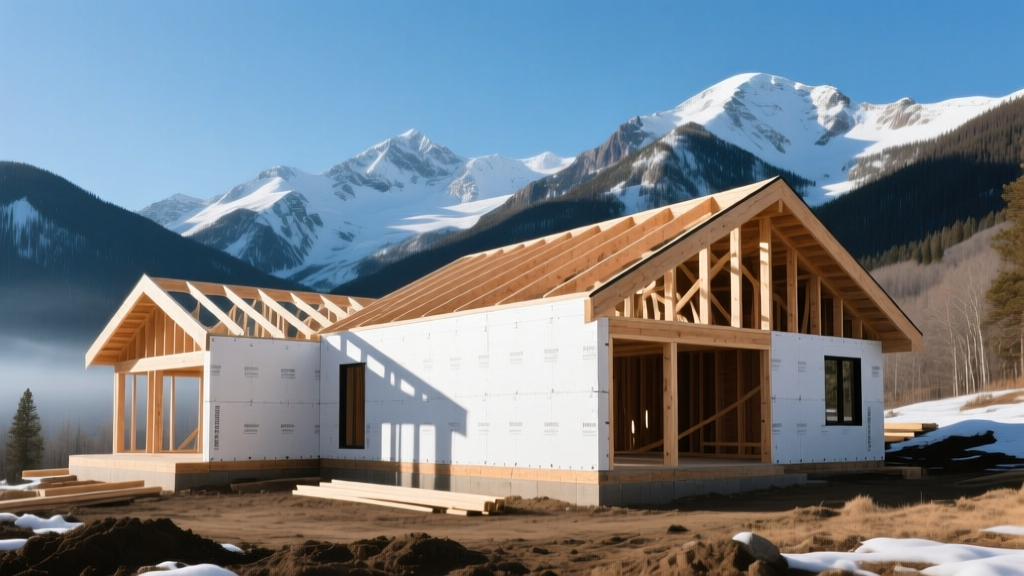
Colorado municipalities are rapidly adopting the 2021 and 2024 International Energy Conservation Code (IECC). At high altitudes, the thermal envelope must be exceptionally tight. Builders are increasingly utilizing Structural Insulated Panels (SIPs) or 2x6 framing with closed-cell spray foam and continuous exterior rigid insulation to meet mandated R-values (often R-60 for ceilings and R-23+ for walls). Additionally, roof trusses in mountain counties must be engineered for snow loads ranging from 50 psf in the foothills to over 120 psf in Summit County, requiring heavier timber chords and closer truss spacing (12-inch on-center rather than 24-inch).
The Hidden Budget Killer: Municipal Tap Fees
When evaluating the cost to build a house in Colorado, buyers frequently overlook municipal tap fees—the one-time charges levied by cities to connect a new home to water and sewer systems. According to data tracked by the National Association of Home Builders (NAHB), Colorado consistently ranks among the most expensive states for water tap fees due to severe drought conditions and the high cost of securing new water rights.
In municipalities like Castle Rock, Erie, and Thornton, single-family water and sewer tap fees frequently exceed $35,000 to $50,000 per lot. Always verify current tap fee schedules with the local public works department before purchasing vacant land, as these fees can increase annually and are rarely included in standard land listing prices.
Material & Labor Pricing Matrix (2026 Estimates)
The following matrix highlights the cost variance for core construction components between the Front Range and Mountain resort regions.
| Construction Component | Front Range Cost | Mountain Region Cost | Variance Driver |
|---|---|---|---|
| Excavation & Site Prep (per lot) | $6,500 - $12,000 | $25,000 - $60,000+ | Steep slopes, bedrock blasting, retaining walls |
| Foundation System (per sq. ft. footprint) | $18 - $28 (Caissons) | $22 - $35 (Stepped/Bedrock) | Soil expansiveness vs. slope engineering |
| Framing Labor (per sq. ft. floor area) | $8.50 - $12.00 | $14.00 - $22.00 | Travel per diems, complex timber engineering |
| Roofing (Class A Metal/Tile, installed) | $11.00 - $16.00 / sq. ft. | $18.00 - $28.00 / sq. ft. | High-pitch safety gear, crane lifts, snow guards |
Strategic Cost-Saving Frameworks for Colorado Builders
Mitigating the high cost to build a house in Colorado requires proactive design and scheduling decisions.
- Optimize the Footprint for Expansive Soils: If building on the Front Range, design a compact, rectangular footprint. Complex foundations with multiple jogs and wings exponentially increase the linear footage of grade beams and the number of drilled caissons required.
- Leverage Shoulder Season Logistics: In mountain towns, schedule site prep and foundation work for late September and October. The ground is still thawed, but the peak summer tourist traffic—which severely delays material deliveries on I-70 and Highway 9—has subsided.
- Pre-Engineer for Solar and Snow: Design south-facing roof planes with a 30- to 40-degree pitch. This specific angle naturally sheds heavy wet snow while optimizing the incident angle for photovoltaic solar arrays, allowing you to offset high utility costs without requiring expensive structural reinforcements for asymmetrical snow drifts.
Understanding these localized variables ensures your construction budget aligns with the physical and regulatory realities of the Colorado landscape, preventing catastrophic mid-build overruns.
Written by
Marcus ChenMarcus Chen is a licensed structural engineer (PE) and building materials analyst with over 12 years of experience across residential, commercial, and industrial construction. He holds a Master of Science in Civil Engineering from UC Berkeley and spent six years at Thornton Tomasetti before transitioning to independent consulting and technical writing. Marcus specializes in material selection for seismic-prone regions, concrete reinforcement strategies, and lifecycle cost analysis. His work has been cited by the American Concrete Institute (ACI) and the Structural Engineers Association of California (SEAOC). When he is not on a job site or at his desk, you will find him hiking the Sierra Nevada or restoring a 1920s craftsman bungalow in Oakland, CA.
More from Marcus Chen
View all
Construction Cost
How Much Did the Eiffel Tower Cost to Build?
How much did the Eiffel Tower cost to build in 1889? We adjust for inflation and compare its budget to modern skyscraper construction.
Aug 4, 2026

Fire Resistance
What Is a Fire Resistant Material? Testing & Certification Guide
Discover what is a fire resistant material through ASTM and UL testing. Learn how fire ratings, certifications, and assemblies work in construction.
Aug 4, 2026

Construction Cost
How Much Did the Burj Khalifa Cost to Build?
How much did the Burj Khalifa cost to build? We break down the $1.5B project and extract 5 money-saving strategies for your next build.
Jul 30, 2026