Cost to Build AR-15 From Parts in 2026: Budget Guide
Analyze the true cost to build an AR-15 from parts in 2026. Compare piecemeal builds, parts kits, and complete rifles with exact pricing data and tooling costs.
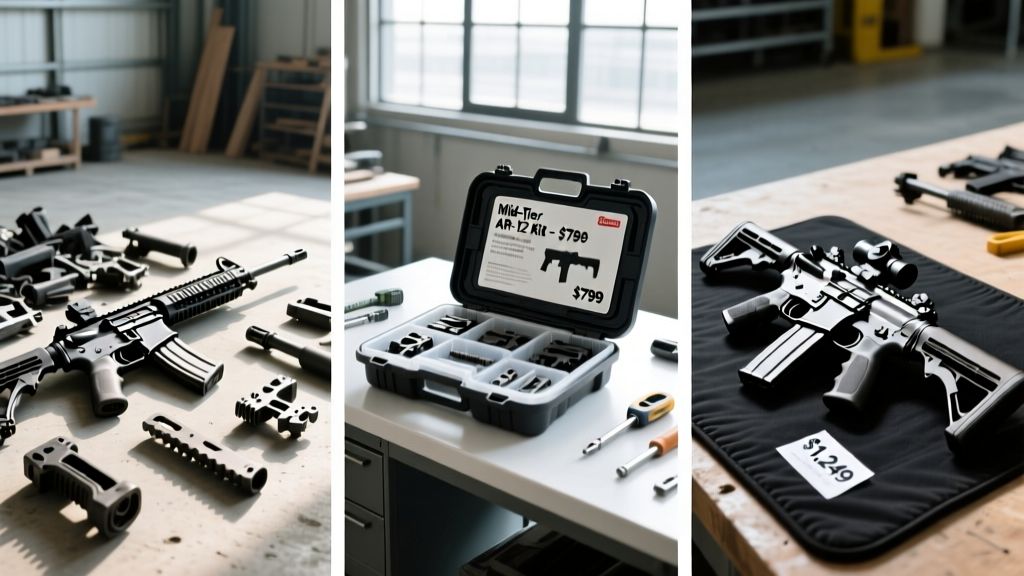
The 2026 AR-15 Build Landscape: The 'Builder's Premium' Reality
When estimating the cost to build an AR-15 from parts in 2026, the most critical concept to understand is the 'Builder's Premium.' A common misconception in the firearms community is that assembling a rifle from individual components yields a cheaper alternative to purchasing a factory-complete model. In the current market, economies of scale heavily favor large-scale manufacturers. A complete, entry-level AR-15 from a major production house (such as Palmetto State Armory or Ruger) typically retails between $600 and $750. Sourcing the exact equivalent parts individually will often exceed $900.
According to industry tracking by the National Shooting Sports Foundation (NSSF), the modern sporting rifle market has stabilized post-2024, meaning component pricing is no longer subject to the extreme volatility of previous panic-buying cycles. However, inflation in raw materials (specifically 4150 CMV steel and 7075-T6 aluminum forgings) has established a hard price floor for quality components.
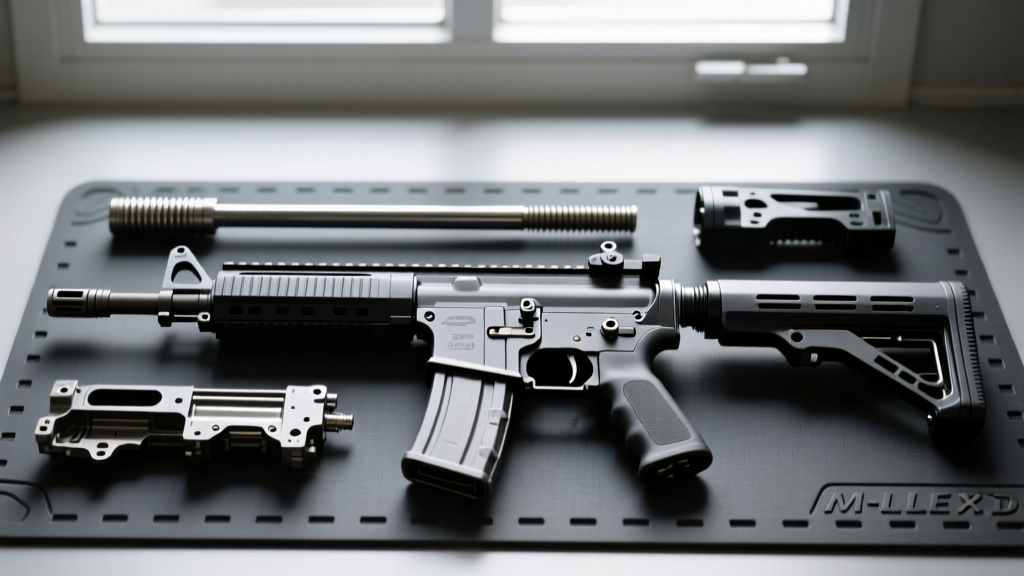
Itemized Cost Breakdown: Piecemeal Procurement
Below is a detailed cost estimate for a mid-tier, reliable 16-inch carbine build. This represents a 'sweet spot' build—avoiding ultra-cheap, out-of-spec parts while steering clear of boutique, diminishing-returns components.
| Component Category | Specific Part Requirement | Est. 2026 Cost |
|---|---|---|
| Lower Receiver | Stripped 7075-T6 Forging (e.g., Aero Precision, BCM) | $85 - $120 |
| Lower Parts Kit (LPK) | Standard Mil-Spec LPK (excluding trigger) | $45 - $65 |
| Fire Control Group | Drop-in Single-Stage or Entry Two-Stage (e.g., LaRue MBT-2S) | $110 - $160 |
| Buffer Tube Assembly | Mil-Spec Receiver Extension, H1 Buffer, Carbine Spring | $60 - $85 |
| Upper Receiver | Stripped 7075-T6 Forging with M4 Feed Ramps | $75 - $100 |
| Barrel | 16' Mid-Length Gas, 4150 CMV, 1:7 Twist, Nitride | $160 - $220 |
| Bolt Carrier Group (BCG) | Carpenter 158 Bolt, MPI/HPT, Properly Staked Gas Key | $130 - $180 |
| Handguard | 13.5' to 15' Free-Float M-LOK Aluminum | $110 - $160 |
| Gas System & Muzzle | Low-Profile Gas Block, Melonite Coated, A2 Flash Hider | $35 - $55 |
| Total Estimated Component Cost (Base Rifle, No Optic) | $810 - $1,145 | |
For detailed component compatibility checks and torque specifications during assembly, builders frequently reference the Pew Pew Tactical AR-15 Build Guide, which remains a benchmark for verifying part interoperability.
Mandatory Tooling and Hidden Amortization Costs
A frequent error in project estimation is ignoring the tooling required for assembly. If this is your first and only build, the tooling cost must be fully amortized into the project budget. If you plan to build multiple rifles or perform your own maintenance, the per-unit cost drops significantly.
Using standard open-end wrenches on AR-15 barrel nuts or castle nuts will strip the aluminum and steel components. Specialized armorer's tools are non-negotiable for a safe, reliable build.
Essential Tooling Procurement List
- Upper Receiver Vise Block / Rod: ($30 - $50) Essential for torquing the barrel nut without cracking the upper receiver indexing pin. Brands like Wheeler Engineering or Geissele are industry standards.
- Lower Receiver Magwell Vise Block: ($25 - $40) Required for installing the buffer tube and stock without stressing the lower receiver.
- Armorer's Wrench: ($25 - $45) A multi-purpose wrench designed for castle nuts, barrel nuts, and flash hiders.
- Roll Pin Punch Set: ($15 - $25) Specifically sized for the 1/16' and 5/64' roll pins used in the AR-15 platform (gas block and trigger guard).
- 1/2' Drive Torque Wrench: ($40 - $80) Barrel nuts must be torqued to exact manufacturer specifications (typically 30-80 ft-lbs depending on the proprietary nut design).
- Consumables: ($15) Aeroshell 33MS grease (for barrel nuts) and Loctite 271 (for gas block set screws).
Total Initial Tooling Investment: $150 - $255. Sourcing a comprehensive kit, such as the Brownells AR-15 armorer's tool selection, can sometimes yield a 10% discount over buying tools piecemeal.
Decision Matrix: Build Path Comparison
Not all 'builds' are created equal. The cost and time investment vary wildly depending on the procurement strategy. Use the matrix below to determine which path aligns with your budget and objectives.
| Build Path | Est. Total Cost | Customization Level | Warranty Status | Best For... |
|---|---|---|---|---|
| Complete Factory Rifle | $600 - $900 | None (As-Is) | Full Manufacturer | End-users prioritizing reliability and warranty over specific part selection. |
| Complete Parts Kit | $650 - $950 | Low (Swapping grips/stocks) | Component-Level Only | Builders who want the assembly experience without researching individual part compatibility. |
| Piecemeal Sourcing | $900 - $1,300+ | Absolute (Every part) | Component-Level Only | Enthusiasts demanding specific barrel profiles, triggers, and weight distributions. |
| 80% Lower Build | $950 - $1,400 | Absolute + Machining | None (Self-Made) | Privacy-focused builders willing to invest in router jigs and drill presses. |
Critical Component Allocation: Where to Spend and Where to Save
When managing a fixed budget for a piecemeal build, capital allocation is critical. Misallocating funds toward aesthetic parts at the expense of functional tolerances results in an unreliable platform.
Do Not Compromise: The Barrel, BCG, and Bolt
The barrel and Bolt Carrier Group (BCG) are the high-pressure containment vessels of the rifle.
The Barrel: Insist on 4150 Chrome Moly Vanadium (CMV) steel or 416R stainless. Avoid generic 4140 steel barrels that lack proper heat treatment. Ensure the barrel extension is properly headspaced by the manufacturer.
The BCG: The bolt must be Carpenter 158 steel and undergo MPI (Magnetic Particle Inspection) and HPT (High Pressure Testing). A $60 no-name BCG is a catastrophic failure risk; a $150 BCG from a reputable manufacturer (like BCM or Toolcraft) is an insurance policy. Ensure the gas key is properly staked with Grade 8 hardware.
Save Budget: Furniture and Sights
The stock, pistol grip, and handguard (assuming it is properly free-floated and rigid) do not dictate the mechanical accuracy or reliability of the rifle.
Stocks & Grips: A standard Magpul MOE stock and grip ($65 combined) offer 95% of the ergonomics of a $250 boutique setup.
Sights: Standard polymer flip-up backup iron sights (BUIS) cost $30 and serve their purpose perfectly until you are ready to invest in a high-end Low Power Variable Optic (LPVO) or red dot sight.
Written by
David NakamuraDavid Nakamura is a licensed architect (AIA) and construction technology writer focused on sustainable building methods, mass timber engineering, and high-performance building envelopes. He holds a Master of Architecture from the University of Washington and is a certified Passive House Consultant (CPHC). David spent eight years at the Seattle firm Mithun, where he led the design of three LEED Platinum projects, before founding his own practice specializing in net-zero residential design. He serves on the editorial advisory board of GreenBuilder Magazine and has authored peer-reviewed papers on cross-laminated timber (CLT) connections for the Journal of Structural Engineering. In his spare time, David teaches woodworking at Pratt Fine Arts Center and kayaks the Puget Sound.
More from David Nakamura
View all
Construction Cost
Labor Cost to Build a Deck Per Sq Ft: 2026 Installation Guide
Discover the exact labor cost to build a deck per sq ft in 2026. This installation guide breaks down contractor rates, complexity factors, and hidden fees.
Aug 4, 2026

Construction Cost
How Much Does It Cost to Build a 3 Bedroom House? Financing Guide
Learn exactly how much it costs to build a 3 bedroom house and explore 2026 financing options, construction loan types, and budget frameworks for your build.
Aug 4, 2026

Construction Cost
Cost to Build a Tennis Court: 2026 Guide
How much does it cost to build a tennis court in 2026? Breakdowns for asphalt, concrete, and synthetic surfaces plus fencing and lighting.
Jul 30, 2026