How Much Does It Cost to Build a Payment Gateway for ConTech Apps?
Discover exactly how much it costs to build a payment gateway for construction platforms, including PCI compliance, API integration, and maintenance fees.

Executive Cost Summary
Building a proprietary, PCI-DSS Level 1 compliant payment gateway from scratch costs between $150,000 and $350,000, plus $30,000+ in annual maintenance. However, leveraging white-label embedded finance APIs (like Stripe Connect or Moov) to build a custom construction-specific gateway interface reduces upfront development costs to $25,000 – $60,000, shifting the burden of compliance to the provider while retaining control over the user experience and transaction routing logic.
The ConTech Edge Case: Why Standard Gateways Fail Construction
When estimating the cost to build a payment gateway for a construction technology platform, building materials marketplace, or general contractor escrow system, standard e-commerce assumptions do not apply. The construction industry operates on high-ticket milestone draws, complex lien waiver requirements, and strict cash-flow timing.
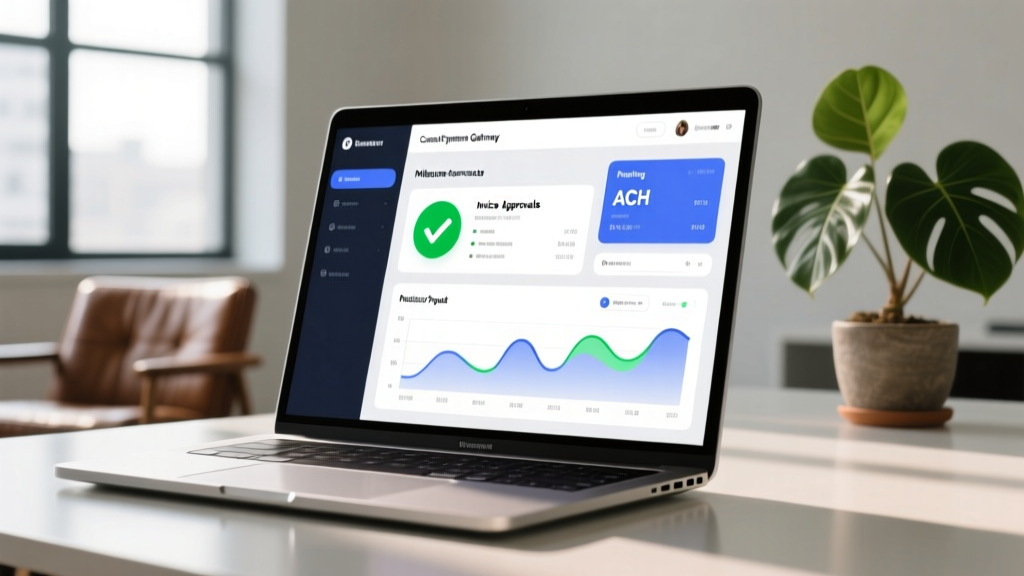
Standard aggregators charge roughly 2.9% + $0.30 per credit card transaction. On a $150,000 commercial roofing material order or a $250,000 foundation milestone draw, a 2.9% fee equates to $4,350 to $7,250 in lost margin per transaction. A custom-built gateway tailored for construction bypasses this by intelligently routing high-value transactions through ACH (Automated Clearing House) or virtual card networks, capping fees and integrating directly with document management systems to auto-release funds only when digital lien waivers are signed.
Phase-by-Phase Development Cost Matrix
The financial outlay depends heavily on whether you are building the underlying processing infrastructure (acquiring bank integration) or building the application layer on top of an existing BIN (Bank Identification Number) sponsor. The matrix below outlines the costs for building a robust, construction-focused gateway application layer utilizing a white-label processor.
| Development Phase | Core Deliverables | Estimated Cost Range | Timeline |
|---|---|---|---|
| Discovery & Architecture | API mapping, escrow logic design, ACH vs. Wire routing rules | $8,000 – $15,000 | 3–4 Weeks |
| UI/UX & Dashboard Build | Contractor portals, milestone approval workflows, payout tracking | $15,000 – $30,000 | 6–8 Weeks |
| API Integration & Routing | Connecting to Moov, Stripe Connect, or Marqeta; webhook handling | $20,000 – $45,000 | 8–10 Weeks |
| Security & PCI Compliance | Tokenization vault setup, SAQ-A or SAQ-D audit preparation | $12,000 – $25,000 | 4–6 Weeks |
| QA, Penetration Testing | Vulnerability scanning, load testing for batch ACH payouts | $8,000 – $15,000 | 3–4 Weeks |
Hidden Costs: PCI-DSS Compliance and Tokenization
The most severe cost overruns in payment gateway development stem from underestimating PCI-DSS compliance requirements. If your construction platform stores, processes, or transmits raw Primary Account Numbers (PAN), you must achieve PCI Level 1 compliance. This requires annual audits by a Qualified Security Assessor (QSA), costing $20,000 to $40,000 annually, alongside stringent network segmentation and encryption protocols.
Integrating Construction-Specific Logic
A generic gateway simply moves money from Point A to Point B. A construction gateway must handle conditional logic. Development costs increase when building custom smart contracts or escrow holds. For example, programming the gateway to automatically split a $100,000 draw: routing $80,000 to the general contractor, $15,000 to the materials supplier, and holding $5,000 in retainage until the architect signs off on the final punch list. Building this automated split-payment and retainage ledger typically adds $15,000 to $25,000 to the backend development budget.
Technical Architecture & Stack Requirements
To build a resilient gateway capable of handling batch ACH payouts to dozens of subcontractors simultaneously, your engineering team must implement a specific technology stack. According to data from the Federal Reserve regarding ACH network volumes, the sheer volume of B2B automated clearing house transfers requires robust queue management to prevent timeout failures during batch processing.
- Backend Framework: Node.js or Go (Golang) for high-concurrency webhook processing and asynchronous ACH batch handling.
- Database: PostgreSQL with ACID compliance enabled. Financial ledgers require strict transactional integrity; NoSQL databases are inappropriate for core payment routing tables.
- Queue Management: RabbitMQ or AWS SQS to manage webhook retries from payment processors when bank networks experience latency.
- Embedded Finance APIs: Stripe Connect for marketplace-style split payments, or Moov Financial for deep ACH/Wire origination capabilities tailored to B2B construction payouts.
Ongoing Maintenance and Operational Fees
The initial build is only the beginning. Operating a custom payment gateway incurs recurring monthly and annual costs that must be factored into your platform's unit economics.
'In construction tech, the cost of a failed payment isn't just a chargeback—it's a halted job site, delayed material deliveries, and fractured contractor relationships. Redundancy in your payment routing architecture is not optional; it is a critical operational requirement.'
Decision Framework: Build vs. White-Label vs. Aggregator
Before authorizing a $100,000+ development budget, platform founders must evaluate their actual market position using this decision matrix:
- Use an Aggregator (Stripe/Square/PayPal): Best for early-stage ConTech startups processing under $2M annually. High transaction fees (2.9%), but zero gateway maintenance costs. Time to market: Days.
- Build a White-Label Gateway (Moov/Marqeta + Custom UI): Best for established material marketplaces and GC platforms processing $10M–$100M annually. Allows for custom ACH routing, retainage logic, and branded UX. Moderate development cost ($40k+). Time to market: 3–5 months.
- Build Proprietary Infrastructure (Direct Bank APIs): Only viable for enterprise construction financial institutions processing $1B+ annually. Requires direct acquiring bank relationships, massive compliance overhead, and a dedicated security team. Time to market: 12–18 months.
Ultimately, accurately estimating the cost to build a payment gateway for the construction sector requires looking beyond basic API integration. It demands a deep understanding of B2B escrow mechanics, retainage tracking, and the strict compliance frameworks that govern high-value digital fund transfers. By leveraging embedded finance APIs and prioritizing ACH routing over credit card networks, construction platforms can build highly specialized gateways that protect margins and accelerate job site cash flow.
Written by
Marcus ChenMarcus Chen is a licensed structural engineer (PE) and building materials analyst with over 12 years of experience across residential, commercial, and industrial construction. He holds a Master of Science in Civil Engineering from UC Berkeley and spent six years at Thornton Tomasetti before transitioning to independent consulting and technical writing. Marcus specializes in material selection for seismic-prone regions, concrete reinforcement strategies, and lifecycle cost analysis. His work has been cited by the American Concrete Institute (ACI) and the Structural Engineers Association of California (SEAOC). When he is not on a job site or at his desk, you will find him hiking the Sierra Nevada or restoring a 1920s craftsman bungalow in Oakland, CA.
More from Marcus Chen
View all
Construction Cost
How Much Did the Eiffel Tower Cost to Build?
How much did the Eiffel Tower cost to build in 1889? We adjust for inflation and compare its budget to modern skyscraper construction.
Aug 4, 2026

Fire Resistance
What Is a Fire Resistant Material? Testing & Certification Guide
Discover what is a fire resistant material through ASTM and UL testing. Learn how fire ratings, certifications, and assemblies work in construction.
Aug 4, 2026

Construction Cost
How Much Did the Burj Khalifa Cost to Build?
How much did the Burj Khalifa cost to build? We break down the $1.5B project and extract 5 money-saving strategies for your next build.
Jul 30, 2026