Cost to Build a House Myself vs Hiring a General Contractor
Compare the true cost to build a house myself versus hiring a general contractor. Discover hidden fees, net savings, and financing realities.
The Financial Reality of Owner-Built Homes
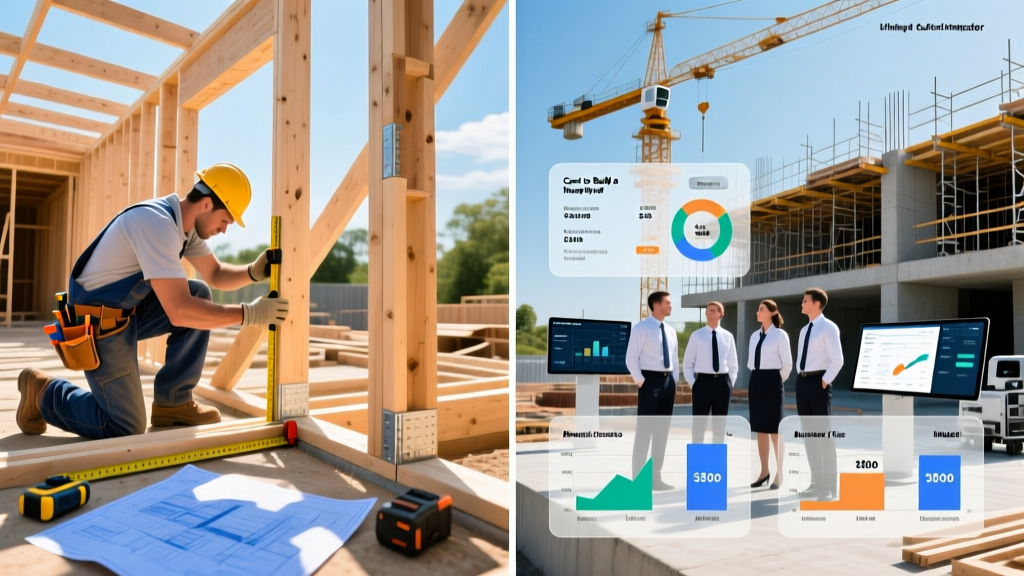
Evaluating the cost to build a house myself requires looking past the obvious elimination of a general contractor's markup. While acting as an owner-builder removes the standard 15% to 20% GC fee, it introduces new variables: lost wholesale material discounts, extended construction loan interest, and the financial impact of project delays. According to the U.S. Census Bureau's Construction Index, material volatility and labor shortages continue to compress margins for retail buyers. This guide breaks down the exact financial trade-offs between managing your own custom build and hiring a professional general contractor.
Quick Data Snapshot: 2,000 Sq. Ft. Custom Build
- Average GC Build Cost: $300 - $350 per sq. ft. ($600,000 - $700,000)
- Average Owner-Builder Cost: $240 - $280 per sq. ft. ($480,000 - $560,000)
- Gross Savings: 15% - 20%
- Net Savings (After Hidden Costs): 8% - 12%
Direct Cost Comparison: Line-Item Breakdown
To understand where your money goes, we must separate hard construction costs from soft costs and management fees. The table below models a 2,000-square-foot single-family home in a mid-cost region, comparing a turnkey GC build against an owner-managed project where the owner acts as the GC but hires subcontractors for all licensed trades.
| Cost Category | General Contractor Build | Owner-Builder (DIY GC) | Variance |
|---|---|---|---|
| Site Prep & Foundation | $45,000 | $42,500 | -$2,500 |
| Framing & Roofing | $110,000 | $98,000 | -$12,000 |
| MEP (Mechanical, Electrical, Plumbing) | $95,000 | $90,000 | -$5,000 |
| Interior Finishes & Cabinetry | $130,000 | $115,000 | -$15,000 |
| Material Procurement (Lumber, Drywall) | $85,000 (Wholesale) | $93,500 (Retail/Pro Desk) | +$8,500 |
| Permits, Insurance & Waste Removal | $18,000 | $22,000 | +$4,000 |
| GC Overhead & Profit (15-20%) | $96,600 | $0 | -$96,600 |
| Total Estimated Cost | $579,600 | $461,000 | -$118,600 |
The Material Procurement Disadvantage
The most common miscalculation in owner-builder budgets is assuming retail material costs. General contractors utilize Tier-1 wholesale accounts with lumber yards and national suppliers (e.g., 84 Lumber, Builders FirstSource), securing 15% to 25% below retail pricing. While big-box stores like Home Depot offer Pro Xtra accounts, the deepest volume discounts require annual spend thresholds exceeding $50,000. An owner-builder building a single home will typically only access a basic 5% to 8% contractor discount, resulting in a net material premium of roughly $8,000 to $12,000 on a standard build.
Where DIY Actually Saves Money (And Where It Doesn't)
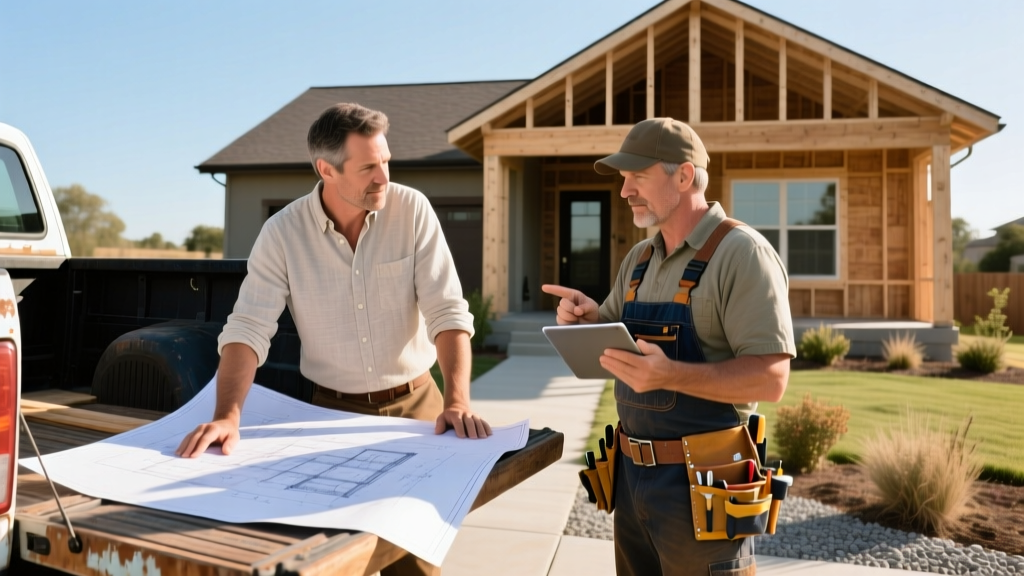
Sweat equity is highly profitable in specific trades but financially dangerous in others. Attempting to DIY complex structural or MEP (Mechanical, Electrical, Plumbing) work often leads to failed inspections, requiring expensive remediation by licensed professionals.
High-ROI DIY Tasks (Safe to Self-Perform)
- Insulation Installation: Blown-in cellulose or batt insulation requires no license. DIYing this saves $3,500 - $5,000 in labor.
- Interior Painting: Professional painters charge $2.50 to $4.00 per square foot of wall space. Doing it yourself saves $6,000+.
- Landscaping & Grading: Final grading, laying sod, and planting save $4,000 - $8,000.
- Demo & Debris Hauling: Renting a dumpster and doing your own site cleanup saves $1,500+ in GC markup on waste management.
Low-ROI / High-Risk Tasks (Hire the Pros)
- Electrical & Plumbing Rough-ins: Code violations here require tearing open finished walls. The cost to fix a failed rough-in inspection exceeds the original labor savings.
- Concrete Flatwork & Foundations: Concrete cures rapidly; a poor pour results in structural settling or cracking that costs tens of thousands to underpin later.
- Roofing: High liability risk and strict manufacturer warranty requirements (many shingle warranties are voided if not installed by a certified contractor).
The Hidden Costs of Being Your Own General Contractor
The Consumer Financial Protection Bureau notes that construction loans operate differently than traditional mortgages, carrying unique financial risks for owner-builders. When calculating the true cost to build a house myself, you must factor in the following hidden expenses:
Warning: The Time-Value of Construction Interest
Construction loans are interest-only and typically carry rates 1.0% to 1.5% higher than standard 30-year fixed mortgages. If your GC builds your home in 8 months, but your learning curve extends the timeline to 14 months, you are paying 6 extra months of interest on the drawn balance. On a $400,000 loan at 8.5%, that 6-month delay costs you an additional $17,000 in pure interest, instantly eroding a massive chunk of your DIY savings.
- Builder's Risk Insurance: GCs carry blanket liability and builder's risk policies. As an owner-builder, you must purchase a standalone Owner-Builder Builder's Risk policy, typically costing 1% to 1.5% of the total construction value ($4,000 - $6,000).
- Subcontractor Scheduling Delays: Top-tier subcontractors prioritize GCs who provide them with consistent, year-round work. An owner-builder may face 2-to-3-week scheduling gaps between the framer leaving and the roofer arriving, exposing the OSB sheathing to weather damage and potential replacement costs.
- Tool Rental and Equipment: GCs own their scissor lifts, skid steers, and scaffolding. You will need to rent these at retail daily or weekly rates, adding $2,000 to $4,000 to your site prep and framing phases.
Decision Matrix: Should You Build It Yourself?
Use this framework to determine if the cost to build a house myself aligns with your current resources. If you answer 'No' to more than two criteria in the Owner-Builder column, the financial risk outweighs the potential savings.
| Criteria | Owner-Builder Requirement | Hire a GC Requirement |
|---|---|---|
| Time Availability | 20-30 hours/week for site visits, ordering, and inspections. | 2-4 hours/week for design meetings and milestone walk-throughs. |
| Trade Network | Must source and vet 12-15 independent subcontractors. | GC utilizes their existing, vetted roster of trades. |
| Blueprint Literacy | Must read structural, electrical, and architectural plans fluently. | GC translates plans for the trades and manages RFIs (Requests for Information). |
| Risk Tolerance | High. You absorb the cost of material waste, theft, and rework. | Low. GC's overhead and profit margin act as a buffer for minor errors. |
Financing an Owner-Builder Project
Securing financing is notably more difficult for owner-builders. Traditional banks view owner-built homes as high-risk because there is no licensed professional guaranteeing the completion of the asset. According to industry data tracked by the National Association of Home Builders, many conventional lenders outright refuse to issue construction-to-permanent loans to owner-builders.
Viable Loan Structures
- FHA One-Time Close Construction Loan: This is the most accessible route for owner-builders. It allows you to roll the construction loan and the permanent mortgage into a single closing, saving thousands in duplicate origination fees. However, you must prove you have sufficient construction experience or hire a licensed consultant to oversee the draws.
- VA Construction Loan: Available to eligible veterans, VA loans allow owner-builders to finance construction with zero down payment. The catch is that the VA requires a strict compliance inspection schedule, and you must submit a detailed, professional-grade line-item budget to the VA appraiser before approval.
- Portfolio Lenders / Credit Unions: Local credit unions often hold their construction loans in-house (portfolio loans) rather than selling them on the secondary market. They are more willing to underwrite an owner-builder if you have significant equity in the land (usually 20% to 30% equity post-closing).
Final Cost Verdict
The cost to build a house myself yields a net savings of 8% to 12% on the total project budget, provided you strictly manage the schedule and avoid DIYing licensed trades. On a $500,000 build, this equates to $40,000 to $60,000 in your pocket. However, this savings is essentially compensation for taking on a part-time, high-stress project management job that lasts 9 to 14 months. If your primary profession yields a higher hourly rate than the implied savings, or if you lack the time to manage daily site logistics, hiring a general contractor remains the more financially sound and risk-averse strategy.
Written by
Marcus ChenMarcus Chen is a licensed structural engineer (PE) and building materials analyst with over 12 years of experience across residential, commercial, and industrial construction. He holds a Master of Science in Civil Engineering from UC Berkeley and spent six years at Thornton Tomasetti before transitioning to independent consulting and technical writing. Marcus specializes in material selection for seismic-prone regions, concrete reinforcement strategies, and lifecycle cost analysis. His work has been cited by the American Concrete Institute (ACI) and the Structural Engineers Association of California (SEAOC). When he is not on a job site or at his desk, you will find him hiking the Sierra Nevada or restoring a 1920s craftsman bungalow in Oakland, CA.
More from Marcus Chen
View all
Construction Cost
How Much Did the Eiffel Tower Cost to Build?
How much did the Eiffel Tower cost to build in 1889? We adjust for inflation and compare its budget to modern skyscraper construction.
Aug 4, 2026

Fire Resistance
What Is a Fire Resistant Material? Testing & Certification Guide
Discover what is a fire resistant material through ASTM and UL testing. Learn how fire ratings, certifications, and assemblies work in construction.
Aug 4, 2026

Construction Cost
How Much Did the Burj Khalifa Cost to Build?
How much did the Burj Khalifa cost to build? We break down the $1.5B project and extract 5 money-saving strategies for your next build.
Jul 30, 2026