Cost to Build a House in Washington State: 2026 Breakdown
Discover the true cost to build a house in Washington State in 2026. Detailed regional pricing, WSEC energy code impacts, and hidden site fees.
The 2026 Washington State Construction Cost Landscape
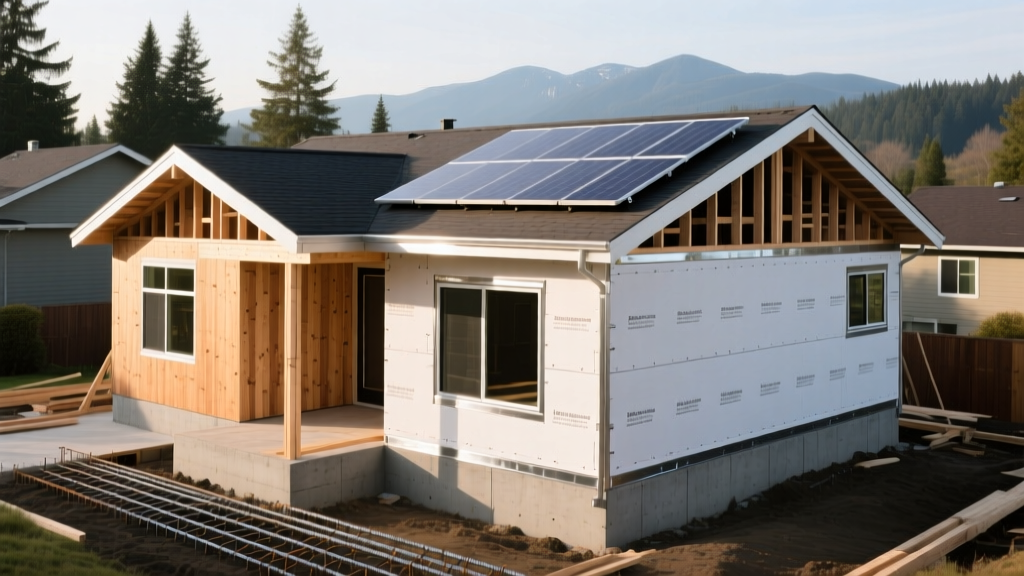
Estimating the cost to build a house in Washington State requires navigating a complex matrix of micro-economies, stringent environmental codes, and distinct geological zones. As of 2026, the statewide average for custom residential construction hovers between $225 and $380 per square foot, but this metric is highly deceptive without regional context. A 2,500-square-foot home in Spokane might cost $550,000 to complete, while the identical floor plan in Bellevue or Mercer Island can easily exceed $1.1 million due to labor premiums, impact fees, and site-preparation mandates.
According to the National Association of Home Builders (NAHB), hard construction costs (materials and labor) account for roughly 61% of the total project budget, with land, site work, and permitting absorbing the rest. In Washington, the regulatory burden—specifically the Washington State Energy Code (WSEC) and local Critical Areas Ordinances (CAO)—pushes soft costs and site-work expenses significantly higher than the national average.
Regional Cost Matrix: Western vs. Eastern Washington
The Cascade Mountain range effectively splits the state into two distinct construction markets. Western Washington is defined by high labor costs, seismic engineering requirements, and intense stormwater management regulations. Eastern Washington is driven by snow-load engineering, agricultural land conversion, and extreme temperature insulation requirements.
| Region | Avg Cost / Sq. Ft. (2026) | Labor Index | Primary Cost Drivers & Code Focus |
|---|---|---|---|
| Seattle Metro (King/Snohomish) | $320 - $450+ | Very High | High impact fees, steep slope engineering, prevailing wage adjacency, WSEC electrification mandates. |
| Puget Sound (Tacoma/Olympia) | $260 - $340 | High | Marine clay soil mitigation, stormwater bioswales, moderate seismic detailing. |
| Eastern WA (Spokane/Yakima) | $190 - $260 | Moderate | Heavy snow-load roof trusses (50-70 PSF), wildfire-resistant exterior materials (WUI zones). |
| Rural & Islands (San Juans/Kitsap) | $350 - $500+ | High (Logistics) | Ferry transport for materials, off-grid septic/well systems, limited local subcontractor pools. |
Mandatory Code Upgrades Driving WA Building Costs
Washington State has some of the most aggressive building codes in the United States. When budgeting your build, you must account for specific structural and mechanical mandates that are non-negotiable in 2026.
Washington State Energy Code (WSEC) Electrification
The Washington State Department of Commerce enforces the WSEC, which has effectively banned natural gas in most new residential construction. To comply, builders must install high-efficiency cold-climate ducted or ductless heat pumps. Furthermore, the code mandates continuous exterior insulation (often requiring R-20 to R-38 rigid foam or mineral wool over sheathing) to eliminate thermal bridging. Expect to pay a 12% to 18% premium on your insulation and HVAC budget compared to baseline national averages to meet these strict U-factor and R-value thresholds.
Seismic and Wind Shear Detailing (West of Cascades)
In the Puget Sound region, seismic risk dictates foundation and framing costs. Standard anchor bolts are insufficient for modern code compliance on anything other than simple slab-on-grade foundations. Engineers routinely specify Simpson Strong-Tie HDU series hold-downs, continuous tie-rod systems, and engineered structural wood shear walls. This specialized hardware and the increased framing labor add approximately $8,000 to $15,000 to the structural shell of a typical 2,500-square-foot home.
Line-Item Cost Breakdown: 2,500 Sq. Ft. Custom Home (Western WA)
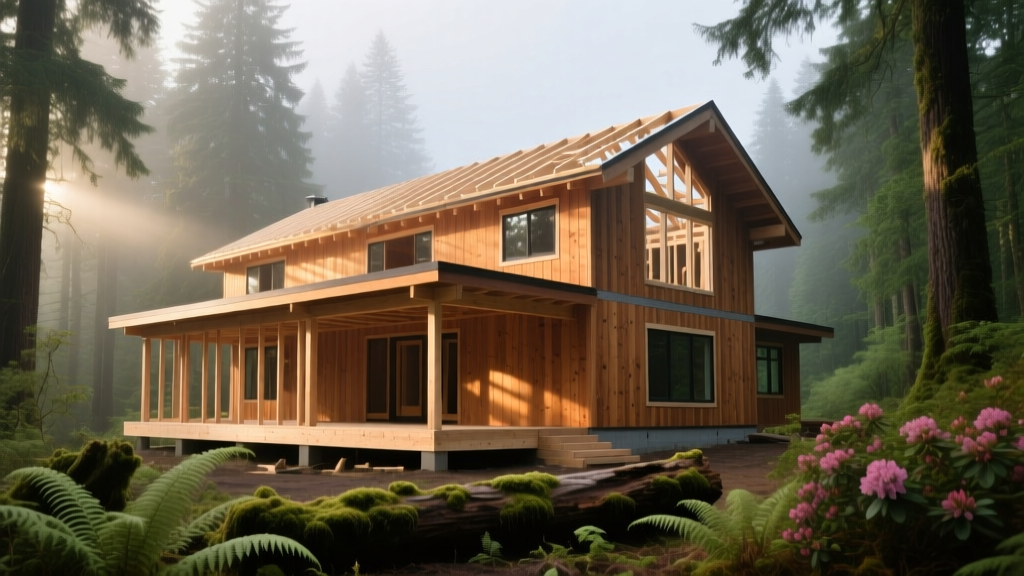
The following breakdown illustrates the hard and soft costs for a 2,500-square-foot custom home in a suburban Western Washington jurisdiction (e.g., Pierce or South King County) in 2026. Total project cost: $885,000 ($354/sq. ft.).
| Construction Phase | Estimated Cost | % of Total | WA-Specific Notes |
|---|---|---|---|
| Site Prep & Foundation | $115,000 | 13% | Includes geotech report, engineered fill, and daylight basement retaining walls for sloped lots. |
| Framing & Exterior Shell | $230,000 | 26% | Engineered lumber (LVL/PSL), continuous exterior insulation, Class A roofing. |
| Major Systems (MEP) | $145,000 | 16% | Heat pump, HRV/ERV system, EV-ready panel upgrade (mandatory in many jurisdictions). |
| Interior Finishes | $215,000 | 24% | Hardwood/LVP flooring, custom cabinetry, quartz counters, low-VOC paints. |
| Permits, Impact Fees & Design | $95,000 | 11% | Architectural plans, structural engineering, school/park impact fees ($30k-$50k in King Co). |
| Landscaping & Flatwork | $85,000 | 10% | Permeable pavers, rain gardens, and bioswales required by local stormwater manuals. |
Hidden Site-Work Costs Unique to Washington
Out-of-state builders and first-time owner-builders frequently underestimate site-work in Washington. The state's diverse topography and aggressive environmental protection laws create several hidden cost traps.
- Critical Areas Ordinance (CAO) Studies: If your lot contains wetlands, steep slopes (over 15%), or is near a stream, the county will require a CAO assessment. Hiring a certified wetland biologist or geotechnical engineer to map these boundaries costs $4,000 to $9,000 before a permit application is even accepted.
- Stormwater Mitigation: Western Washington counties enforce strict post-construction runoff limits. You cannot simply pipe roof water to the street. You must install on-site infiltration systems, such as crushed rock dry wells, rain gardens, or permeable concrete driveways, adding $12,000 to $25,000 to sitework.
- Rural Water and Septic: In unincorporated areas, connecting to municipal utilities is impossible. Drilling a 300-foot well in the fractured bedrock of the Cascades averages $22,000 to $35,000. If your soil percolation test fails (common in heavy marine clays), you will need an engineered mound septic system or a Glendon biofilter, pushing septic costs from a standard $15,000 to over $45,000.
Value-Engineering Framework for Washington Builds
To keep the cost to build a house in Washington State under control without sacrificing durability or code compliance, apply these targeted value-engineering strategies during the design phase:
- Optimize the Roof Pitch and Planes: Complex rooflines with multiple valleys and dormers increase framing labor and create thermal bridges. In Western WA, a simple shed or single-gable roof with deep overhangs (24+ inches) protects the siding from driving rain while minimizing structural complexity. In Eastern WA, ensure the pitch is at least 6:12 to shed heavy snow loads without requiring expensive structural reinforcement.
- Consolidate Plumbing Cores: Design kitchens, laundry rooms, and bathrooms back-to-back or stacked directly above one another. This reduces PEX or copper home-run manifold lengths, minimizes heat loss in hot water lines, and drastically cuts plumbing labor hours.
- Leverage Advanced Framing Techniques: Also known as Optimum Value Engineering (OVE), spacing wall studs at 24 inches on-center (rather than 16 inches) and using two-stud corners reduces lumber usage by up to 15%. More importantly, it creates deeper, uninterrupted cavities for spray foam or dense-pack cellulose insulation, making it easier to hit the stringent WSEC R-value targets without adding expensive exterior continuous insulation.
Final Permitting Advice
Before purchasing land, always pull a preliminary title report and schedule a pre-application meeting with the local planning department. According to U.S. Census Bureau construction data, permitting delays are a leading cause of budget overruns in custom residential builds. In jurisdictions like King or Whatcom County, securing a clearing and grading permit can take 6 to 12 months. Factoring these soft costs and holding expenses into your initial budget is the only way to achieve an accurate estimate for your Washington State build.
Written by
Marcus ChenMarcus Chen is a licensed structural engineer (PE) and building materials analyst with over 12 years of experience across residential, commercial, and industrial construction. He holds a Master of Science in Civil Engineering from UC Berkeley and spent six years at Thornton Tomasetti before transitioning to independent consulting and technical writing. Marcus specializes in material selection for seismic-prone regions, concrete reinforcement strategies, and lifecycle cost analysis. His work has been cited by the American Concrete Institute (ACI) and the Structural Engineers Association of California (SEAOC). When he is not on a job site or at his desk, you will find him hiking the Sierra Nevada or restoring a 1920s craftsman bungalow in Oakland, CA.
More from Marcus Chen
View all
Construction Cost
How Much Did the Eiffel Tower Cost to Build?
How much did the Eiffel Tower cost to build in 1889? We adjust for inflation and compare its budget to modern skyscraper construction.
Aug 4, 2026

Fire Resistance
What Is a Fire Resistant Material? Testing & Certification Guide
Discover what is a fire resistant material through ASTM and UL testing. Learn how fire ratings, certifications, and assemblies work in construction.
Aug 4, 2026

Construction Cost
How Much Did the Burj Khalifa Cost to Build?
How much did the Burj Khalifa cost to build? We break down the $1.5B project and extract 5 money-saving strategies for your next build.
Jul 30, 2026