How Much Does It Cost to Build a McDonald's? 2026 Guide
Discover how much it costs to build a McDonald's in 2026. Explore construction expenses, SBA financing, liquidity rules, and QSR build-out strategies.
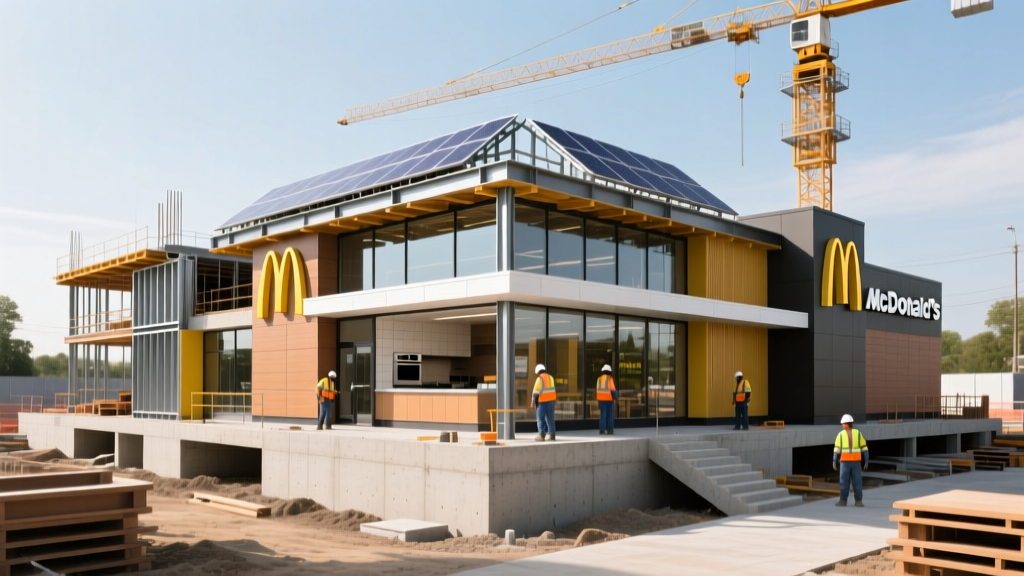
The True Capital Requirements of a McDonald's Build
Securing the capital to build a global quick-service restaurant (QSR) powerhouse is one of the most rigorous financial hurdles in the commercial construction and franchising industry. Unlike smaller franchise models that offer in-house financing or turnkey build-outs, McDonald's requires franchisees to secure third-party funding for the bulk of the construction, land acquisition, and equipment packages. When evaluating how much does it cost to build a McDonald's, the total initial investment typically ranges from $1.3 million to over $2.5 million for a traditional freestanding location with a drive-thru in 2026.
Understanding the exact breakdown of these costs is vital for structuring your commercial real estate (CRE) loans and presenting a viable business plan to commercial lenders. The financial commitment extends far beyond the initial $45,000 franchise fee, diving deep into specialized commercial construction, heavy-duty MEP (mechanical, electrical, plumbing) engineering, and proprietary technology integration.
Itemized Construction and Build-Out Costs
Building a modern McDonald's requires adhering to the brand's 'Experience of the Future' (EOTF) design standards, which mandate specific architectural finishes, digital integrations, and kitchen workflows. Below is a detailed estimation of the hard and soft costs associated with a new ground-up freestanding build in 2026.
| Cost Category | Estimated Range (2026) | Key Variables & Specifications |
|---|---|---|
| Initial Franchise Fee | $45,000 | Fixed corporate fee, non-negotiable, paid upfront. |
| Site Work & Utilities | $150,000 - $350,000 | Soil remediation, municipal tap fees, curb cuts, retaining walls. |
| Building Shell & Core | $500,000 - $850,000 | Masonry vs. metal stud, roof span, energy-efficient glazing. |
| Kitchen & HVAC Equipment | $1,100,000 - $1,400,000 | Type 1 hoods, makeup air units (MAUs), commercial refrigeration. |
| Drive-Thru & Digital Tech | $120,000 - $220,000 | Dual-lane configurations, AI voice ordering, digital menu boards. |
| Signage & Interior Decor | $90,000 - $150,000 | Monument signs, EOTF interior finishes, seating layouts. |
| Pre-Opening & Working Capital | $100,000 - $250,000 | Staff training, initial inventory, 3-month cash reserve. |
Financing Structures for QSR Construction
Because McDonald's Corporation does not provide direct financing for initial restaurant construction, franchisees must navigate the commercial lending market. Structuring the debt correctly is critical to maintaining cash flow during the 6-to-9-month build phase.
SBA 7(a) Loans vs. Conventional CRE Loans
The most common route for franchisees is leveraging the U.S. Small Business Administration (SBA) loan programs. The SBA 7(a) loan is highly favored for QSR builds because it offers longer amortization periods (up to 10 years for working capital and equipment, and up to 25 years if real estate is included) and lower down payment requirements (typically 10% to 15%). However, SBA loans require extensive documentation, including a comprehensive business plan, personal financial statements, and proof of the $500,000 liquidity requirement.
Conventional commercial real estate loans, offered by regional and national banks, may close faster but generally require a 20% to 30% down payment and feature shorter amortization schedules with balloon payments. For a $2 million build, a conventional loan might require $400,000 to $600,000 in cash equity, which, combined with the corporate liquidity requirement, demands immense personal net worth.
Equipment Leasing and Sale-Leaseback Strategies
With the kitchen and HVAC equipment package frequently exceeding $1.2 million, tying up cash in depreciating assets is inefficient. Savvy franchisees utilize equipment leasing to preserve working capital. By leasing commercial fryers, walk-in coolers, and point-of-sale (POS) systems, operators can reduce their initial cash outlay by 30% to 40%. Furthermore, some developers utilize a sale-leaseback model for the real estate: they build the structure, sell it to a real estate investment trust (REIT), and lease the building back, freeing up millions in capital for operational expansion.
The Construction Draw Schedule: Managing Cash Flow
Commercial construction loans are not disbursed as a lump sum. Funds are released in 'draws' based on the percentage of completion, verified by a third-party inspector. Mismanaging this schedule is a primary cause of QSR construction failure.
- Draw 1 (15%): Site Preparation. Clearing, grading, underground utilities, and pouring the foundation slab.
- Draw 2 (25%): Framing and Shell. Erecting structural steel or wood framing, exterior sheathing, and roof installation.
- Draw 3 (20%): Dry-In and MEP Rough-Ins. Windows, doors, and the rough-in of plumbing, electrical, and heavy-duty HVAC ductwork for kitchen exhaust.
- Draw 4 (20%): Interior Finishes. Drywall, flooring (quarry tile in kitchens), ceiling grids, and EOTF decorative elements.
- Draw 5 (15%): Equipment Installation. Setting kitchen lines, walk-in coolers, drive-thru tech, and digital menu boards.
- Draw 6 (5%): Retainage and Final Sign-Off. Released after the Certificate of Occupancy (CO) is issued and municipal health inspections are passed.
Pro Tip for Franchisees: Always negotiate a 30-day interest reserve into your construction loan. Delays in municipal permitting or supply chain bottlenecks for specialized kitchen hoods can push your opening date back by months. An interest reserve ensures your loan payments are covered while the building sits unfinished, protecting your personal liquidity.
Hidden Costs and Edge Cases in QSR Construction
When calculating how much it costs to build a McDonald's, standard cost-per-square-foot metrics often fail to capture site-specific edge cases that can blow up a construction budget.
Grease Interceptors & Water
Municipalities require massive commercial grease traps for QSRs. Installing an underground 2,000-gallon grease interceptor can cost between $15,000 and $30,000, especially if existing sewer lines require tapping or upgrading.
Acoustic & Traffic Mitigation
If your site borders a residential zone, local zoning boards may mandate sound attenuation walls to block drive-thru noise and HVAC hum. Additionally, traffic impact studies may force you to fund the installation of a new municipal turn lane or traffic signal, adding $50,000 to $150,000 to site work.
Frequently Asked Questions (FAQ)
Does McDonald's provide financing to build the restaurant?
No. Unlike some franchisors that offer in-house lending, McDonald's requires franchisees to secure their own third-party financing for construction, equipment, and real estate. The International Franchise Association (IFA) maintains resources to help franchisees connect with SBA-approved lenders who specialize in QSR builds.
Can I build a smaller, cheaper McDonald's format?
Yes. McDonald's has been expanding alternative formats, including small-footprint kiosks, food-court locations, and delivery-only hubs. These models can reduce the total investment to the $800,000 to $1.2 million range by eliminating the need for a full dining room, extensive parking lot paving, and large-scale exterior signage.
How long does the construction process take?
From groundbreaking to the grand opening, a traditional freestanding McDonald's takes between 6 to 9 months to build. However, the pre-construction phase—including municipal zoning approvals, environmental site assessments, and architectural permitting—can easily add another 6 to 12 months before a shovel ever hits the dirt.
Building a McDonald's is a masterclass in commercial construction management and high-stakes financial structuring. By meticulously planning for heavy MEP requirements, leveraging equipment leasing, and strictly adhering to corporate liquidity mandates, investors can successfully navigate the capital-intensive journey of launching a premier global franchise.
Written by
Sarah WhitfieldSarah Whitfield is a chartered quantity surveyor (MRICS) and construction cost analyst with 15 years of experience in material pricing, procurement strategy, and project budgeting. She earned her degree in Construction Management from the University of Reading (UK) and has worked on projects ranging from $2M custom homes to $180M mixed-use developments across North America and Europe. Sarah currently leads cost estimating for BuildMat Insight, maintaining a proprietary database of 4,000+ material price points updated quarterly. She is a frequent contributor to RSMeans cost data panels and has presented at the International Cost Engineering Council (ICEC) congress. Based in Denver, CO, Sarah is an avid trail runner and volunteer mentor for Women in Construction.
More from Sarah Whitfield
View all
Wood & Lumber
What Are the Different Types of Wood? A Builder's Guide
Compare structural softwoods, finish hardwoods, and engineered lumber. Analyze Janka ratings, MOE values, and 2026 pricing for construction.
Aug 4, 2026

Walls & Panels
Steel Framing vs Wood Framing: Corrosion and Moisture Defense
Compare steel framing vs wood framing for moisture resistance. Learn about galvanized coatings, condensation risks, and corrosion protection strategies.
Jul 21, 2026

Stone & Masonry
How to Cut Stone Veneer: Wet Saw vs Grinder Comparison
Compare the best tools for cutting stone veneer. We review wet saws, angle grinders, and chop saws to help you achieve clean, chip-free cuts.
Jul 21, 2026