How Much Does It Cost to Build a NASCAR Cup Series Race Car?
Discover exactly how much it costs to build a NASCAR Cup Series race car from scratch, including Next Gen chassis, engine, and assembly budgets.
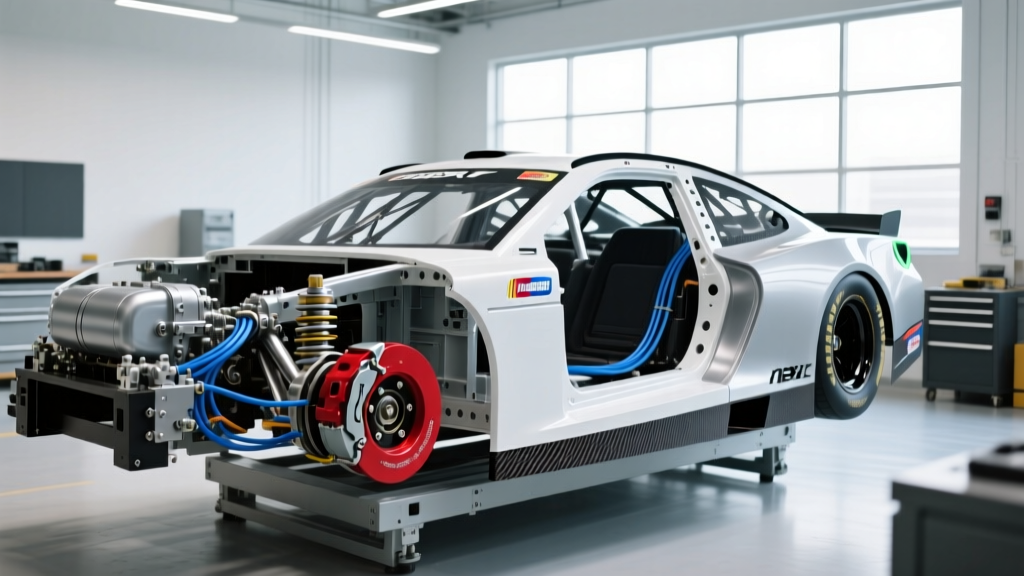
The True Capital Requirement of a Next Gen Build
When budget planning for elite motorsport engineering, the question of how much does it cost to build a nascar requires moving beyond surface-level estimates. Constructing a modern NASCAR Cup Series race car—specifically the current Next Gen platform introduced to modernize the sport and control costs—is an exercise in precision fabrication, specialized procurement, and rigorous safety compliance. While operating a full-time Cup team requires a $20 million to $30 million annual budget, the physical construction of a single, race-ready chassis from bare metal to rolling prototype demands a highly specific capital allocation.
As of the 2026 season, the base cost to build a single Next Gen Cup car from the ground up ranges between $350,000 and $450,000. However, this figure fluctuates based on whether a team fabricates components in-house or purchases turnkey assemblies from approved vendors. Understanding the line-item costs of the chassis, powertrain, telemetry, and composite body panels is critical for team owners, technical directors, and motorsport investors mapping out their capital expenditures.
Chassis Architecture: Spec Modules vs. In-House Fabrication
The most significant shift in modern stock car construction is the modular chassis design. Unlike the previous Generation 6 cars, which were built entirely from raw chromoly steel tubing by each individual team, the Next Gen chassis is divided into three distinct sections: the center section, the front clip, and the rear clip.
The Spec Center Section
To ensure parity and reduce R&D expenditures, NASCAR mandates that the center section (the main roll cage and driver survival cell) be purchased from an approved, spec-builder. Technique Inc., based in Michigan, is the primary supplier for these units. The center section is constructed from high-strength chromoly steel and features extensive laser-cut and CNC-bent tubing to guarantee exact dimensional tolerances across the grid.
- Material: TIG-welded 4130 chromoly steel tubing.
- Cost: Approximately $65,000 to $75,000 per bare center section.
- Lifespan: 4 to 6 years, subject to annual technical re-certification and crash damage.
Front and Rear Clip Fabrication
Teams retain the intellectual property and fabrication rights for the front and rear clips. These sub-assemblies bolt onto the spec center section using standardized mating flanges. The front clip houses the rack-and-pinion steering, the independent front suspension (a first for the Cup Series), and the crash-attenuating bumper structure. The rear clip houses the independent rear suspension and the transaxle mounting points. Fabricating both clips in-house requires a dedicated tube-bending and welding shop, adding roughly $40,000 in raw materials and direct labor per chassis.
Powertrain and Drivetrain Engineering
The heart of the build is the 5.86-liter (358 cubic inch) pushrod V8 engine. Despite the Next Gen car's modern exterior, the powerplant remains a traditional, naturally aspirated, fuel-injected V8 producing roughly 670 horsepower. Teams do not typically cast their own blocks; they source specialized racing blocks and cylinder heads from manufacturers like Roush Yates Engines or Hendrick Motorsports.
According to Roush Yates Engines, a premier supplier of Cup Series powerplants, a fully dressed, dyno-tuned race engine requires over 150 hours of assembly and machining. The engine block, forged internals, EFI system, and custom exhaust headers push the cost of a single race engine to between $90,000 and $120,000.
Backing the engine is a massive departure from historical stock car builds: the Xtrac 6-speed sequential transaxle. This unit integrates the transmission, differential, and rear axle housing into a single, rigid casing, which serves as a stressed member of the rear suspension. As detailed in Xtrac's NASCAR engineering documentation, this transaxle improves rear-end stiffness and allows for independent rear suspension geometry. A single Xtrac transaxle unit costs approximately $35,000 and requires a complete teardown and rebuild every 1,500 race miles.
Component Cost Matrix and Rebuild Cycles
| Component | Estimated Build Cost | Rebuild/Replace Cycle | Procurement Type |
|---|---|---|---|
| Spec Center Section (Roll Cage) | $70,000 | 4-6 Years / Post-Crash | Spec Vendor (Technique Inc.) |
| Front & Rear Clips (Fabricated) | $40,000 | 1-2 Years / Post-Crash | In-House Fabrication |
| 5.86L V8 Engine (Fully Dressed) | $110,000 | 1,500 - 2,500 Miles | Approved Engine Builder |
| Xtrac 6-Speed Transaxle | $35,000 | 1,500 Miles | Spec Vendor (Xtrac) |
| Composite Body Panels (Full Set) | $35,000 | Per Race (Damage dependent) | Spec Vendor (Five Star) |
| McLaren ECU & Telemetry Suite | $18,000 | 3-5 Years | Spec Vendor (McLaren) |
| Safety Systems (Halo Seat, Suppression) | $22,000 | Annual Certification | Approved Safety Vendors |
Aerodynamics and Composite Body Integration
Gone are the days of hammering sheet metal over wooden bucks. The Next Gen body is constructed from a specialized blend of carbon fiber and Kevlar composites. This material choice drastically reduces weight, lowers the center of gravity, and provides immense impact resistance. The body panels are highly modular, featuring a symmetrical design that allows left-side and right-side panels to be interchanged, cutting inventory costs in half for minor side-impact repairs.
The front splitter, rear diffuser, and rocker panel extensions are critical aerodynamic components that must be manufactured to exact NASCAR homologation templates. A complete set of composite body panels, including the hood, roof, decklid, and side panels, costs approximately $35,000. Because these panels are designed to shatter and absorb energy during high-speed impacts, budget planning must account for replacing 20% to 30% of the body inventory after every superspeedway race.
If you are planning to build a car for exhibition or non-sanctioned racing, you might consider designing your own aerodynamic profiles to save money. However, if you intend to race in any NASCAR-sanctioned event, every aerodynamic surface must pass wind-tunnel and laser-scanning homologation. The R&D cost to develop, test, and certify a proprietary body shape exceeds $2 million. Always purchase spec body panels from approved vendors like Five Star Race Car Bodies to remain compliant and financially solvent.
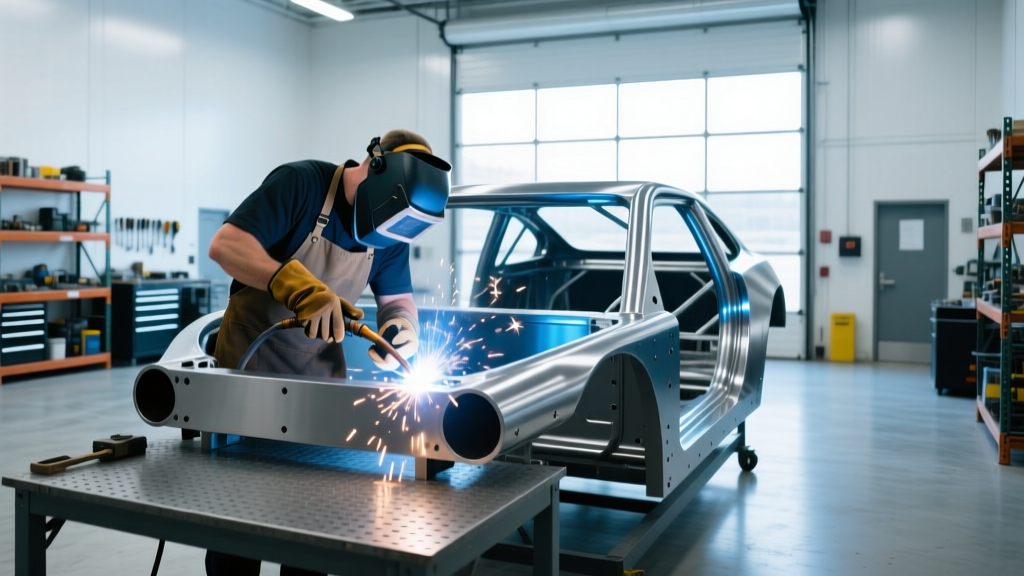
Electronics, Telemetry, and Safety Systems
The Next Gen car relies on a standardized McLaren Electronics Engine Control Unit (ECU). Unlike open-wheel series where teams spend millions on proprietary software mapping, NASCAR utilizes a spec ECU to control the fuel injection, ignition timing, and data logging. The ECU, combined with the mandated driver telemetry suite and in-car camera systems, costs roughly $18,000.
Safety systems represent a non-negotiable line item. The driver's survival cell includes a custom-molded carbon fiber Halo seat, a HANS (Head and Neck Support) device tethering system, an onboard fire suppression system plumbed directly into the cockpit and engine bay, and a specialized window net. According to NASCAR's official Next Gen technical overview, the integration of the single-piece carbon fiber seat and enhanced roof rails was specifically engineered to dissipate lateral G-forces during wall impacts. Budget $22,000 for the initial safety hardware, plus $5,000 annually for SFI Foundation re-certifications and fluid replacements.
Budget Planning Framework: Lease, Buy, or Fabricate?
When determining how to allocate your construction budget, team principals must choose between three distinct operational models. The right choice depends on your technical staff's capabilities and your long-term competitive goals.
1. The Turnkey Lease Route (Best for New Entrants)
For a newly formed team or a part-time entry, purchasing a fully assembled, rolling chassis from an established organization (like Stewart-Haas Racing or Hendrick Motorsports) is the most capital-efficient route. You lease or buy a ready-to-race car for approximately $250,000 per season. This eliminates the need for a $2 million in-house fabrication shop and allows you to focus your budget on trackside engineering and driver development.
2. The Spec-Assembly Route (Best for Mid-Tier Teams)
This is the standard operating procedure for most Cup teams. You purchase the spec center section, transaxle, and body panels from approved vendors, but you fabricate the front and rear clips, assemble the suspension, and install the powertrain in-house. This requires a capital expenditure of roughly $400,000 per car, plus the overhead of maintaining a 15,000-square-foot fabrication facility and a staff of specialized welders and machinists.
3. The Full In-House Fabrication Route (Best for OEM-Backed Teams)
Only teams with massive OEM backing (e.g., Ford, Chevrolet, Toyota) and deep technical partnerships attempt to machine their own suspension uprights, design custom cooling packages, and build their own engine blocks from raw billet aluminum. While this yields the highest potential for competitive advantage, the initial R&D and tooling budget easily exceeds $5 million before the first car ever touches the asphalt.
Building the car is only the initial capital expenditure. A Cup Series car consumes roughly 12 sets of Goodyear racing slicks ($3,500 per set) and 100 gallons of Sunoco Green E15 race fuel per race weekend. When planning your annual budget, multiply your base build cost by a factor of 3.5 to account for the consumables, spare parts inventory, and logistics required to keep the car on the grid for a full 36-race season.
Written by
David NakamuraDavid Nakamura is a licensed architect (AIA) and construction technology writer focused on sustainable building methods, mass timber engineering, and high-performance building envelopes. He holds a Master of Architecture from the University of Washington and is a certified Passive House Consultant (CPHC). David spent eight years at the Seattle firm Mithun, where he led the design of three LEED Platinum projects, before founding his own practice specializing in net-zero residential design. He serves on the editorial advisory board of GreenBuilder Magazine and has authored peer-reviewed papers on cross-laminated timber (CLT) connections for the Journal of Structural Engineering. In his spare time, David teaches woodworking at Pratt Fine Arts Center and kayaks the Puget Sound.
More from David Nakamura
View all
Construction Cost
Labor Cost to Build a Deck Per Sq Ft: 2026 Installation Guide
Discover the exact labor cost to build a deck per sq ft in 2026. This installation guide breaks down contractor rates, complexity factors, and hidden fees.
Aug 4, 2026

Construction Cost
How Much Does It Cost to Build a 3 Bedroom House? Financing Guide
Learn exactly how much it costs to build a 3 bedroom house and explore 2026 financing options, construction loan types, and budget frameworks for your build.
Aug 4, 2026

Construction Cost
Cost to Build a Tennis Court: 2026 Guide
How much does it cost to build a tennis court in 2026? Breakdowns for asphalt, concrete, and synthetic surfaces plus fencing and lighting.
Jul 30, 2026