Cost to Build a Nuclear Plant: Size & Scope Estimator
Estimate the cost to build a nuclear plant using our size and scope calculator. Break down CAPEX for Gen III+ reactors and SMRs per kW.
The Baseline: Understanding Nuclear CAPEX Metrics
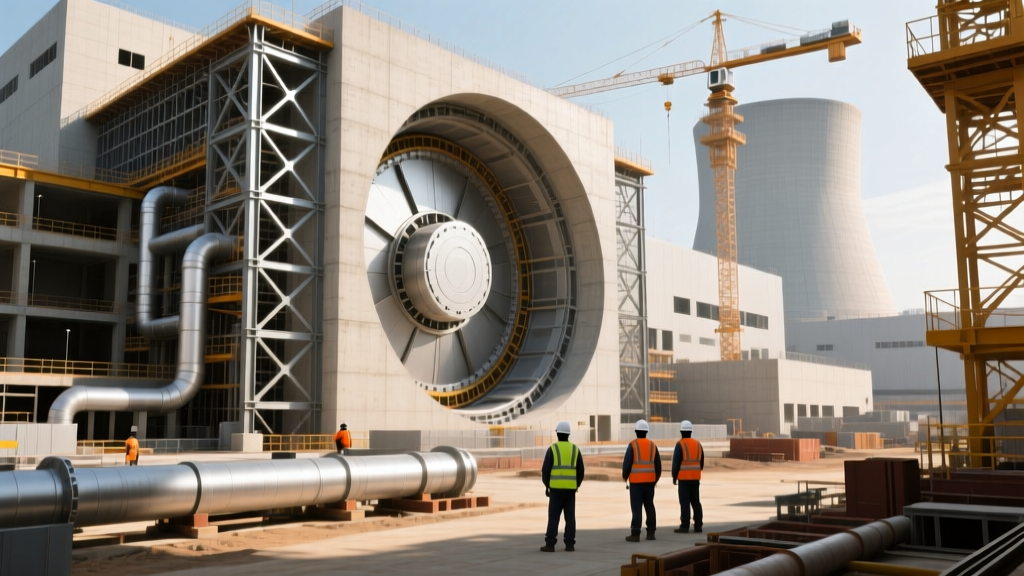
Nuclear power plant construction represents the apex of civil engineering and capital deployment. Unlike commercial real estate, where costs scale linearly with square footage, the cost to build a nuclear plant scales exponentially with regulatory complexity, safety redundancies, and thermodynamic capacity. When estimating the capital expenditure (CAPEX) for a new nuclear facility in 2026, estimators must abandon standard per-square-foot metrics and instead rely on the industry-standard overnight capital cost per kilowatt ($/kW).
The 'overnight cost' assumes the plant is built instantaneously, excluding financing costs. According to the U.S. Energy Information Administration (EIA), baseline overnight costs for new nuclear capacity vary wildly based on reactor generation, supply chain maturity, and site-specific seismic requirements. However, the true cost to build a nuclear plant must also factor in Interest During Construction (IDC), which can add 30% to 60% to the final price tag depending on the build timeline and weighted average cost of capital (WACC).
Traditional Gen III+ vs. Small Modular Reactors (SMRs)
The most critical scope variable in modern nuclear estimating is the reactor architecture. The industry is currently bifurcated between massive Generation III+ light water reactors and emerging Small Modular Reactors (SMRs). Understanding the cost divergence between these two pathways is essential for accurate scope calculation.
| Parameter | Gen III+ (e.g., Westinghouse AP1000) | SMR (e.g., GE Hitachi BWRX-300) |
|---|---|---|
| Typical Net Capacity | 1,000 MWe – 1,200 MWe | 50 MWe – 300 MWe |
| Estimated Overnight CAPEX | $6,500 – $9,500 per kW | $4,500 – $7,000 per kW (NOAK) |
| Total Plant Cost (Single Unit) | $6.5 Billion – $11.4 Billion | $350 Million – $1.8 Billion |
| Construction Timeline | 7 – 10 Years | 3 – 5 Years |
| Cooling System Scope | Massive cooling towers or once-through water | Modular air-cooled or compact water systems |
| Grid Infrastructure Needs | Requires massive 500kV+ substations | Can integrate into existing 115kV-230kV grids |
As detailed by the World Nuclear Association, SMRs promise lower absolute capital outlays and reduced financing risk due to shorter build times. However, Gen III+ reactors offer superior economies of scale once operational, producing baseload power at a lower marginal cost per megawatt-hour over a 60-to-80-year lifespan.
The Size & Scope Calculator: Core Variables
To accurately model the cost to build a nuclear plant, estimators must input the following scope multipliers into their feasibility models:
- Seismic Site Classification: Building on bedrock (Site Class A/B) requires standard foundational damping. Building on softer soils (Site Class D/E) necessitates massive base-isolation systems and deeper pilings, increasing civil works costs by 15% to 25%.
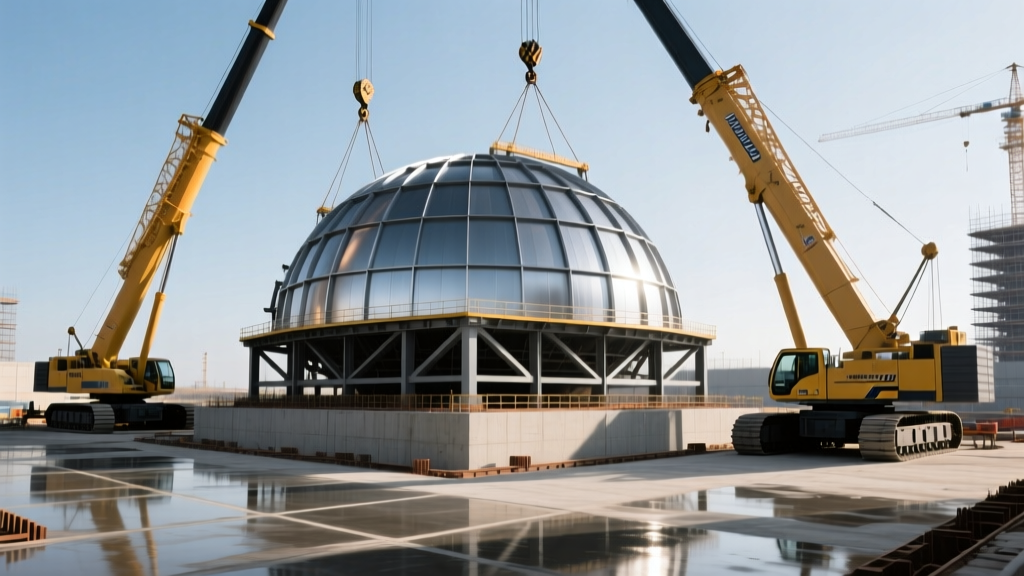
- Containment Architecture: Traditional pressurized water reactors (PWRs) require massive post-tensioned concrete containment domes lined with 1.5-inch steel plates. Advanced designs utilizing passive safety systems can reduce the physical footprint and concrete volume of the containment structure by up to 40%.
- Modularization Level: The degree to which components are fabricated off-site in controlled environments and shipped via heavy-haul rail or barge. Higher modularization reduces on-site labor hours but requires massive heavy-lift crawler cranes (e.g., Liebherr LR 13000) and specialized transport infrastructure.
- Multi-Unit Standardization: Building twin units (e.g., Units 1 and 2 simultaneously) allows for shared heavy-lift infrastructure, shared turbine halls, and optimized labor sequencing, typically reducing the per-kW cost of the second unit by 15% to 20%.
CAPEX Breakdown: Where the Billions Go
A common misconception is that the nuclear island (the reactor and primary coolant loop) dominates the budget. In reality, the balance of plant (BOP) and indirect costs consume a massive share of the capital. Below is a standard cost allocation for a 1,200 MWe Gen III+ facility:
| Cost Category | Percentage of Total CAPEX | Primary Cost Drivers |
|---|---|---|
| Civil & Structural Works | 25% - 30% | Nuclear-grade concrete, ultra-heavy rebar, base isolation |
| Mechanical Systems (Nuclear Island) | 20% - 25% | Reactor pressure vessel, steam generators, primary coolant pumps |
| Balance of Plant (BOP) | 20% - 25% | Turbine generators, condensers, cooling towers, switchyards |
| Electrical & I&C (Instrumentation) | 10% - 15% | Redundant safety-grade cabling, digital control systems |
| Indirect Costs & QA | 15% - 20% | Engineering, NRC licensing, nuclear-grade QA/QC oversight |
Hidden Scope Creep Triggers in Nuclear Construction
Nuclear mega-projects are notorious for cost overruns. Estimators must build contingencies for specific, non-obvious failure modes that routinely inflate the final cost to build a nuclear plant.
⚠️ Warning: The FOAK vs. NOAK Cost Chasm
First-of-a-Kind (FOAK) deployments suffer from severe supply chain learning curves and engineering rework. The Vogtle Units 3 and 4 project in Georgia demonstrated that FOAK Gen III+ builds can exceed $13,000 per kW due to schedule delays and supply chain bottlenecks. Estimators must apply a 20% to 35% cost reduction factor when modeling Nth-of-a-Kind (NOAK) standardized deployments, assuming a mature supply chain and standardized NRC design certification.
🛑 Critical Bottleneck: Ultra-Heavy Forgings
The reactor pressure vessel (RPV) requires massive, ultra-low-carbon steel forgings that weigh upwards of 500 tons. Globally, only a handful of facilities (such as Japan Steel Works) possess the forging presses and metallurgical expertise to cast these components to ASME Boiler and Pressure Vessel Code (BPVC) Section III standards. A 24-to-36-month lead time for RPV forgings is standard; failure to secure slotting early will guarantee severe schedule delays and subsequent financing cost overruns.
The Heavy Water Impact: Financing and IDC
No scope calculator for nuclear infrastructure is complete without modeling Interest During Construction (IDC). Because nuclear plants take 5 to 10 years to build, capital accumulates interest before the asset generates a single watt of revenue. According to the U.S. Department of Energy Office of Nuclear Energy, reducing the construction timeline is the single most effective method for lowering the levelized cost of electricity (LCOE).
If a $8 billion nuclear plant is financed at a 7% WACC over an 8-year build schedule, the IDC alone will add roughly $2.2 billion to $2.8 billion to the final capitalized cost. This is why the industry is aggressively pursuing SMRs and modular construction techniques: shrinking the build window from 8 years to 4 years effectively slashes the financing burden in half, fundamentally altering the project's economic viability.
Estimator Action Plan
When scoping a new nuclear build, estimators must first lock in the reactor vendor's Design Certification (DC) status with the Nuclear Regulatory Commission (NRC). Utilizing an uncertified design triggers a full 10 CFR Part 52 Combined License (COL) review, adding 3 to 5 years of pre-construction engineering costs. Always model your CAPEX with a minimum 25% contingency for FOAK civil works, and secure heavy-forging supply chain contracts a minimum of 36 months prior to the planned first-pour of nuclear-grade concrete.
Written by
Priya KapoorPriya Kapoor is a real estate market analyst and construction economics researcher with expertise in housing affordability, development feasibility, and infrastructure investment. She holds a Master of Regional Planning from Cornell University and previously worked as a senior analyst at CBRE's Investment Properties group, where she modeled returns for $4B in mixed-use development pipelines. Priya now runs an independent research practice advising developers, municipalities, and REITs on construction cost forecasting and market timing. She publishes the quarterly "BuildMat Market Pulse" report tracking material price indices across 12 commodity categories. Based in Austin, TX, Priya serves on the board of Habitat for Humanity Austin and is a marathon runner.
More from Priya Kapoor
View all
Construction Cost
Cost to Build a 1600 Sq Ft Home in 2026: Full Breakdown
Accurate 2026 cost to build a 1600 sq ft home—material, labor, and regional pricing breakdowns included. Plan your budget with real-time estimates.
Aug 11, 2026

Wood & Lumber
Name the Types of Wood for Pressure Treatment and Preservation
Learn how to name the types of wood best suited for pressure treatment. Compare species treatability, chemical retention levels, and 2026 preservation costs.
Aug 4, 2026

Stone & Masonry
Stone Veneer Suppliers Lindenhurst: 2026 Cost Analysis
Analyze 2026 stone veneer costs in Lindenhurst, NY. Compare local supplier pricing, delivery fees, and Suffolk County installation labor rates.
Aug 4, 2026