Cost Per Square Foot to Build a House in NC: 2026 Budget Guide
Plan your 2026 budget with our detailed breakdown of the cost per square foot to build a house in NC, including regional variances and hidden site fees.
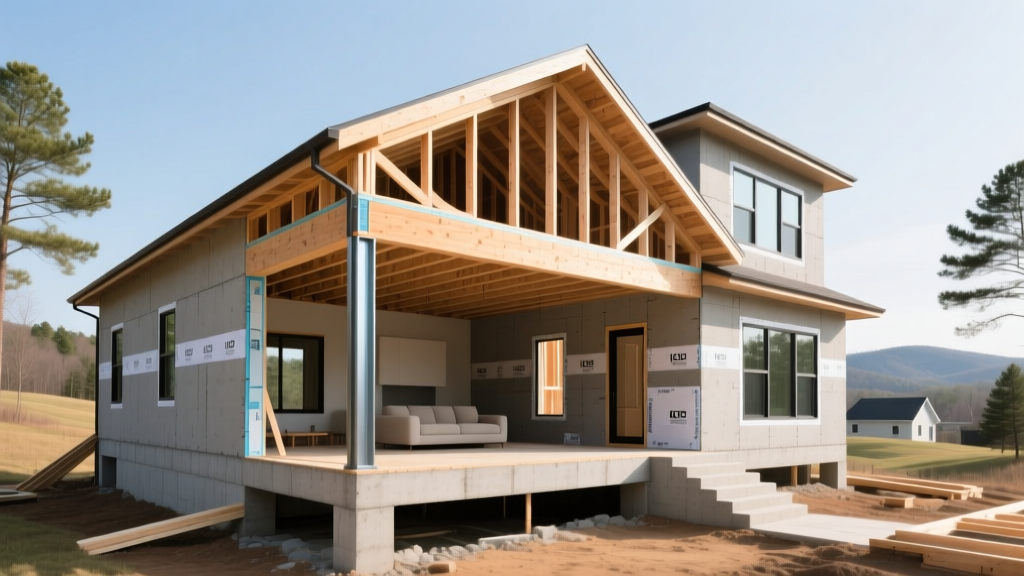
The Baseline: Average Cost Per Square Foot to Build a House in NC
When calculating the cost per square foot to build a house in NC for your 2026 budget, relying on national averages will lead to severe undercapitalization. North Carolina's diverse topography—from the coastal plains to the Appalachian mountains—creates massive localized cost variances. Based on current contractor bids and U.S. Census Bureau New Residential Construction data, the statewide baseline for a standard, builder-grade single-family home sits between $165 and $210 per square foot. Custom builds range from $225 to $310, while luxury specifications easily exceed $375 per square foot.
2026 NC Construction Cost Snapshot (Hard Costs Only)
- Production/Tract Homes: $165 - $195 / sq. ft.
- Semi-Custom (Modified Plans): $200 - $250 / sq. ft.
- Full Custom (Architect-Designed): $260 - $340+ / sq. ft.
- Statewide Average Soft Costs (Permits, Design, Engineering): Adds 12% to 18% to hard costs.
These figures represent vertical construction (hard costs). They do not include land acquisition, site development, or impact fees, which in high-growth NC corridors like the Research Triangle or Charlotte metro can add $40,000 to $85,000 to your total project budget before a single foundation wall is poured.
Regional Price Variances Across North Carolina
The cost per square foot to build a house in NC fluctuates drastically depending on the county and local labor market dynamics. A home built in rural Halifax County will cost significantly less than the exact same floor plan built in downtown Asheville or coastal Wilmington.
| NC Region | Avg. Custom Cost / Sq. Ft. | Primary Cost Drivers & Constraints |
|---|---|---|
| Research Triangle (Wake/Durham/Orange) | $240 - $290 | High labor demand, strict municipal impact fees, complex stormwater management requirements. |
| Charlotte Metro (Mecklenburg/Union) | $235 - $285 | Premium lot costs, dense soil (requiring over-excavation), high tap fees for water/sewer. |
| Coastal (Wilmington/Outer Banks) | $260 - $350+ | Elevated foundations (pilings), hurricane-rated impact glass, windstorm engineering, salt-air corrosion protection. |
| Mountains (Asheville/Boone) | $250 - $320 | Steep slope grading, retaining walls, rock blasting, limited winter building windows, septic engineering. |
| Rural Piedmont & Coastal Plain | $175 - $220 | Lower labor rates, easier site access, well/septic systems required (lower municipal tap fees). |
Hidden Site Prep Costs Unique to NC Soil and Topography
Budget planning fails when builders treat site prep as a generic line item. North Carolina's geology presents specific, expensive challenges that must be accounted for in your cost per square foot calculations.
The Piedmont Rock Problem
The central Piedmont region is underlain by the Carolina Slate Belt and saprolite (decomposed rock). It is incredibly common to strike solid diabase or granite just 18 inches below the topsoil. If your homesite requires rock blasting or heavy ripping to dig a basement or crawlspace, expect to pay $8 to $14 per cubic yard for mechanical hammering and blasting. A standard basement excavation that hits bedrock can easily trigger a $6,500 to $12,000 change order.
Coastal Flood Zones and High Water Tables
Building east of I-95 often means dealing with a high water table and FEMA designated flood zones. If your lot is in an AE or VE flood zone, a standard slab-on-grade or block crawlspace is prohibited. You will be required to build on timber pilings driven to refusal or helical piers, adding $18,000 to $35,000 to your foundation budget. Furthermore, coastal counties mandate breakaway walls below the Base Flood Elevation (BFE), which alters your structural engineering costs.
Mountain Steep Slope Ordinances
Counties like Buncombe and Watauga enforce strict steep slope ordinances. Building on a lot with a gradient exceeding 30% requires specialized geotechnical engineering and Mechanically Stabilized Earth (MSE) retaining walls. A single 12-foot high engineered retaining wall can cost upwards of $250 per linear foot, drastically inflating the effective cost per square foot of the home above it.
Material Selections for the NC Climate
North Carolina's climate is defined by high summer humidity, intense UV exposure, and severe weather events ranging from hurricanes on the coast to ice storms in the mountains. Value engineering must prioritize moisture management and thermal envelope integrity.
Expert Warning: HVAC Sizing in NC
Do not allow your HVAC contractor to use 'rules of thumb' (e.g., 1 ton per 500 sq ft) for sizing. NC's high latent heat (humidity) requires a strict ACCA Manual J calculation. Oversized units will short-cycle, cooling the air without removing humidity, leading to mold growth inside the drywall cavity. Specify a variable-speed compressor with a minimum SEER2 rating of 16.0 and a dedicated dehumidification mode.
Siding and Cladding Matrix
| Material | Installed Cost / Sq. Ft. | NC Climate Suitability | Best Application |
|---|---|---|---|
| Fiber Cement (HardiePlank) | $11.50 - $15.00 | Excellent. Impervious to rot and termites; handles high humidity well. | Statewide, especially coastal and humid Piedmont. |
| Engineered Wood (LP SmartSide) | $8.50 - $12.00 | Very Good. Treated against termites and fungal decay. Lighter than fiber cement. | Mountain and Piedmont regions; budget-conscious custom builds. |
| Vinyl Siding (Insulated) | $6.00 - $9.00 | Fair. Can crack in mountain freeze-thaw cycles; vulnerable to high coastal winds. | Production homes, rural inland builds. |
| Brick Veneer (Full) | $16.00 - $22.00 | Excellent. Superior thermal mass, zero rot risk, high wind resistance. | Charlotte and Raleigh luxury custom markets. |
Budgeting for NC Permitting and Impact Fees
Soft costs in North Carolina have surged. Municipalities use impact fees to fund infrastructure strained by rapid population growth. When budgeting your cost per square foot, allocate specific funds for these non-negotiable local fees:
- Water and Sewer Tap Fees: In Mecklenburg County, a standard 3/4-inch residential water tap and sewer connection can exceed $4,500. In Wake County, capacity fees alone can push this past $5,200.
- School and Park Impact Fees: Counties like Cabarrus and Union charge residential impact fees ranging from $2,800 to $4,100 per single-family lot to offset the burden on public schools.
- Erosion and Sedimentation Control: Required on almost all NC lots disturbing over 10,000 square feet. Budget $1,500 to $3,000 for the engineering plan, silt fencing, and inlet protection.
- Energy Code Compliance: NC enforces the 2018 IECC (with state amendments). You will need a certified rater to perform blower door and duct blaster testing, costing $450 to $700.
Step-by-Step Budget Allocation Framework
To maintain strict financial control over your NC build, structure your capital allocation using this percentage-based framework. This assumes a $400,000 total construction budget (excluding land acquisition) for a 2,000 sq. ft. semi-custom home in the Piedmont region.
- Site Work & Foundation (14% - $56,000): Clearing, grading, well/septic or tap fees, footings, and slab/crawlspace. Hold a 10% contingency here specifically for rock or water table surprises.
- Framing & Exterior Dry-In (26% - $104,000): Lumber packages, engineered trusses, roof decking, architectural shingles (e.g., Owens Corning Duration), windows, and exterior cladding.
- Major Systems (MEP) (16% - $64,000): HVAC (variable speed), rough plumbing (PEX-A), electrical (200-amp service minimum), and low-voltage pre-wiring.
- Interior Finishes (28% - $112,000): Drywall, interior trim, cabinetry, countertops, flooring, and painting. This is where cost per square foot fluctuates most based on owner selections.
- Soft Costs & Permitting (10% - $40,000): Architectural plans, structural engineering, surveys, municipal permits, impact fees, and builder overhead/profit.
- Project Contingency (6% - $24,000): Untouchable reserve for material price escalations, weather delays, or change orders.
Frequently Asked Questions
Is it cheaper to buy an existing home or build in NC right now?
As of early 2026, building a new custom home in high-demand NC markets like Cary or Davidson often costs 10% to 15% more per square foot than buying a comparable 5-year-old resale. However, building allows you to avoid the immediate capital expenditures that resale buyers face, such as replacing aging HVAC systems or upgrading poor insulation, ultimately evening out the 10-year cost of ownership.
How much do builder premiums add to the cost per square foot?
Production builders in NC typically quote a low base price, then charge 25% to 45% premiums on design center upgrades. Upgrading from builder-grade carpet to engineered hardwood, or standard cabinets to soft-close custom cabinetry, can add $35 to $60 per square foot to your final contract price. Always request the 'allowance sheet' before signing a contract to verify if the baseline material budgets are realistic.
Do I need a windstorm mitigation inspection for coastal NC builds?
Yes. If you are building in the 18 coastal counties designated by the NC Department of Insurance, your roof framing, nailing patterns (e.g., 8d ring-shank nails at 4-inch spacing), and window protections must pass a specific windstorm inspection to qualify for the NC Joint Underwriting Association (NCJUA) or standard private wind/hail coverage. Failing to engineer for 130+ mph wind loads will result in uninsurable properties.
Written by
Priya KapoorPriya Kapoor is a real estate market analyst and construction economics researcher with expertise in housing affordability, development feasibility, and infrastructure investment. She holds a Master of Regional Planning from Cornell University and previously worked as a senior analyst at CBRE's Investment Properties group, where she modeled returns for $4B in mixed-use development pipelines. Priya now runs an independent research practice advising developers, municipalities, and REITs on construction cost forecasting and market timing. She publishes the quarterly "BuildMat Market Pulse" report tracking material price indices across 12 commodity categories. Based in Austin, TX, Priya serves on the board of Habitat for Humanity Austin and is a marathon runner.
More from Priya Kapoor
View all
Construction Cost
Cost to Build a 1600 Sq Ft Home in 2026: Full Breakdown
Accurate 2026 cost to build a 1600 sq ft home—material, labor, and regional pricing breakdowns included. Plan your budget with real-time estimates.
Aug 11, 2026

Wood & Lumber
Name the Types of Wood for Pressure Treatment and Preservation
Learn how to name the types of wood best suited for pressure treatment. Compare species treatability, chemical retention levels, and 2026 preservation costs.
Aug 4, 2026

Stone & Masonry
Stone Veneer Suppliers Lindenhurst: 2026 Cost Analysis
Analyze 2026 stone veneer costs in Lindenhurst, NY. Compare local supplier pricing, delivery fees, and Suffolk County installation labor rates.
Aug 4, 2026