Cost to Build a Yurt in 2026: Kit vs Custom Pricing
Compare the true cost to build a yurt in 2026. Break down kit, turnkey, and custom pricing, plus platform and utility expenses.
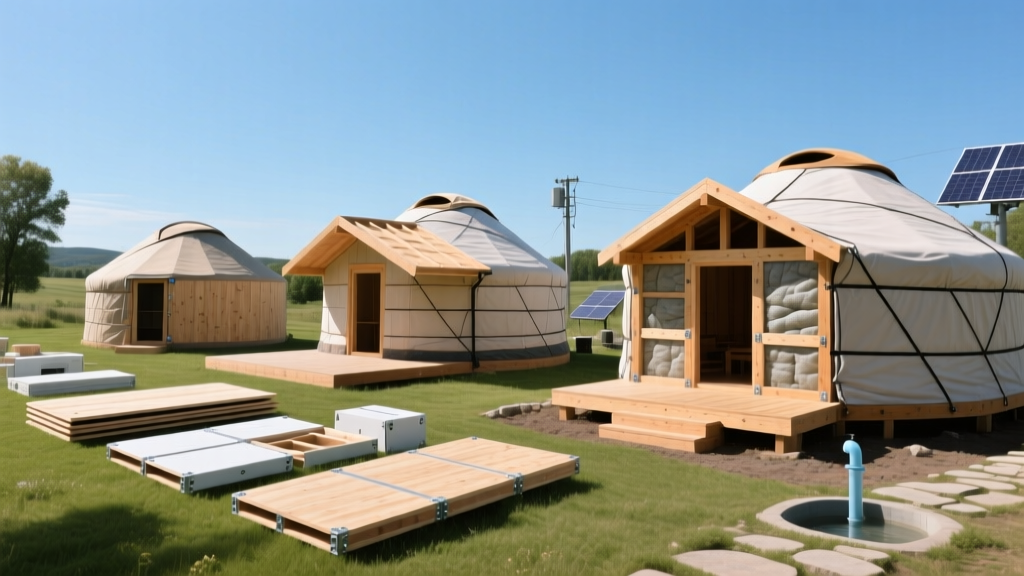
The Real Cost to Build a Yurt: Beyond the Kit Price
When evaluating the cost to build a yurt, most buyers focus exclusively on the canvas and lattice kit. This is a critical financial blind spot. In 2026, the yurt kit itself typically accounts for only 25% to 35% of the total project budget. The remaining capital is consumed by site preparation, circular deck engineering, utility trenching, and interior finishing. A 27-foot yurt kit (providing 572 square feet of living space) might cost $14,000, but the turnkey project to make it a code-compliant, four-season dwelling routinely ranges from $65,000 to $110,000.
• DIY Kit Build: $35,000 - $55,000
• Turnkey Contractor Build: $75,000 - $120,000
• Custom Architectural Yurt: $130,000 - $200,000+
• Average Cost Per Square Foot: $115 - $240
Understanding where these numbers come from requires dissecting the build methodology. Below is a structural comparison of the three primary paths to yurt ownership.
Yurt Kit vs. Turnkey vs. Custom: A Cost Comparison Matrix
| Build Method | Kit/Materials | Labor & Site Work | Total Estimate (27ft) | Best Use Case |
|---|---|---|---|---|
| DIY Kit Build | $12,000 - $18,000 | $20,000 - $35,000 | $35,000 - $55,000 | Off-grid, owner-builder, rural zoning |
| Turnkey Builder | $15,000 - $25,000 | $60,000 - $95,000 | $75,000 - $120,000 | Primary residence, suburban permits |
| Custom/Architectural | $40,000 - $80,000 | $90,000 - $150,000 | $130,000 - $200,000+ | Luxury eco-resorts, extreme climates |
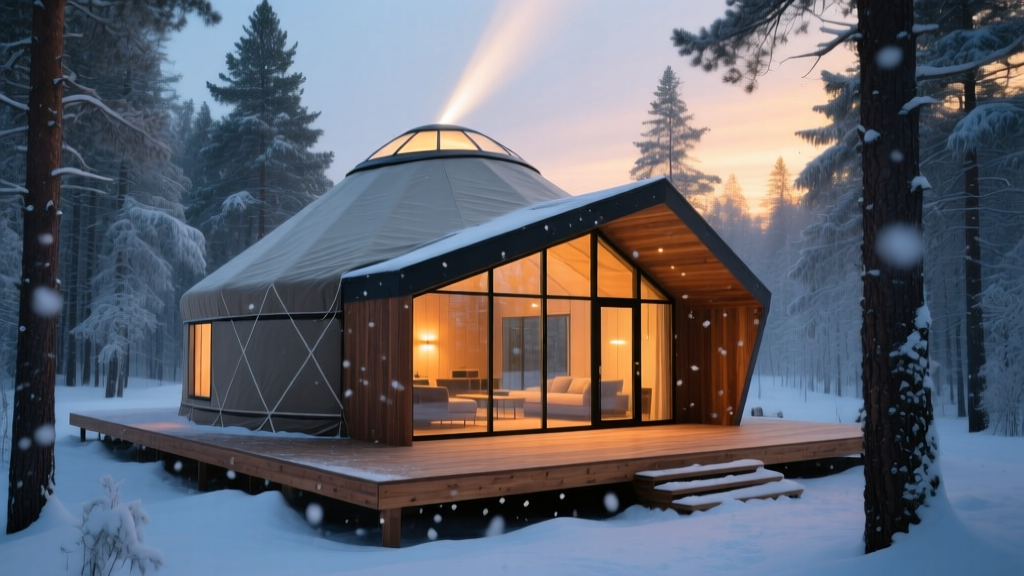
Breaking Down the Hidden Costs of Yurt Construction
The Platform: Engineering a Circular Foundation
You cannot install a modern, code-compliant yurt on raw earth or a simple gravel pad. The structure requires a perfectly level, raised circular platform to manage moisture, accommodate insulation, and anchor the tension cable. Building a round deck is inherently more labor-intensive and wasteful than a rectangular one due to the cutting angles required for the joists and decking.
- Pressure-Treated Wood Deck (Pier Blocks): $45 - $70 per sq. ft. A 27-foot yurt requires roughly 572 sq. ft., totaling $25,700 - $40,000. This is the most common route for mild climates and well-draining soils.
- Continuous Stem Wall (Concrete): $85 - $130 per sq. ft. ($48,600 - $74,300). Required by many municipal building codes for permanent habitable dwellings to prevent frost heave and rodent intrusion.
- Helical Piers: If your site is on a steep slope or features expansive clay soils, helical piers cost $300 - $450 per pier installed. A 27-foot platform typically requires 24 to 30 piers, adding $7,200 - $13,500 to your foundation budget before the wooden subfloor is even framed.
Insulation and Energy Efficiency Upgrades
Standard yurt kits utilize reflective foil insulation (often branded as Aerolam), which provides an R-value of roughly R-8 to R-15. While adequate for summer glamping or mild coastal climates, it is entirely insufficient for four-season living in regions with freezing winters. According to the U.S. Department of Energy, proper thermal envelopes are critical for alternative housing. Upgrading to Structural Insulated Panels (SIPs) for the roof and walls increases the R-value to R-25 or higher, but it transitions the project from a 'tent' assembly to a heavy timber-frame structure, adding $15,000 to $25,000 to the material and crane-rental costs.
Permits, Zoning, and the ICC Code Hurdle
The most frequent budget-killer in yurt construction is failing to research local zoning ordinances before purchasing a kit. Many county building departments do not have a specific classification for yurts. Instead, they are evaluated under the International Code Council (ICC) guidelines for 'Alternative Materials and Methods' (Section 104.11). To get a yurt permitted as a primary residence, you will likely need to hire a licensed structural engineer to stamp your platform plans and wind-load calculations. Expect to pay $2,500 to $5,000 for these engineered drawings. Furthermore, if your county mandates fire-resistant exterior materials (common in Wildland-Urban Interface zones), standard vinyl and canvas covers will be rejected, forcing you to pivot to a custom architectural yurt with hard-sided exterior cladding.
How Yurt Costs Compare to Traditional Tiny Homes and Cabins
Is a yurt actually cheaper than a stick-built cabin? The answer depends entirely on your finish-out expectations. Below is a comparative framework to help you decide which structure aligns with your capital.
Yurt (27ft / 572 sq ft)
Total Cost: $75,000 - $120,000
Cost/Sq Ft: $131 - $209
Pros: Rapid assembly (the shell goes up in 2-3 days), open-concept vaulted ceilings, high natural light via the center ring, significantly lower material waste.
Cons: Difficult to partition into multiple private rooms, exterior canvas requires re-coating every 3-5 years, lower resale value in traditional real estate markets.
Stick-Built Cabin (600 sq ft)
Total Cost: $120,000 - $180,000
Cost/Sq Ft: $200 - $300
Pros: Standard mortgage and insurance eligibility, easy to partition into bedrooms/bathrooms, high resale value, familiar to all local contractors.
Cons: Months-long construction timeline, high material waste, susceptible to standard stick-frame thermal bridging.
Climate and Engineering Upgrades That Impact Your Budget
Leading manufacturers like Pacific Yurts and the Colorado Yurt Company offer highly specific engineering upgrades that drastically alter the base kit price. You must spec your yurt based on your exact GPS coordinates, not just general regional assumptions.
- Snow Load Upgrades: Standard roof rafters handle 15-30 lbs per square foot (psf). If you are building in the Rockies or the Northeast, you will need engineered steel brackets, thicker laminated rafters, and interior support columns to handle 75 to 100 psf. This upgrade adds $2,500 to $4,500 to the kit.
- Wind Ratings: Standard tension cables and lattice walls withstand 80 mph winds. Upgrading to a 100 mph or 142 mph wind rating (required for coastal or high-plains sites) requires heavy-duty aircraft cable, upgraded anchor points, and reinforced door frames, adding $1,200 to $2,800.
- Seismic Upgrades: In active fault zones, the connection between the circular deck and the yurt wall must allow for lateral movement without snapping the tension cable. Specialized seismic hold-downs add roughly $800 to $1,500.
Expert Tips for Keeping Your Yurt Build on Budget
The Maintenance Reality Check
Do not conflate low initial material costs with zero long-term maintenance. The acrylic or vinyl roof and wall covers of a fabric yurt are exposed to intense UV radiation. Even premium architectural fabrics will degrade. You must budget for a roof re-coating (using products like TopChote) every 3 to 5 years, which costs about $400 in materials and a weekend of labor. Complete roof fabric replacement is required every 12 to 15 years, costing between $3,500 and $6,000 depending on the diameter. If you want a zero-maintenance exterior, you must abandon the fabric yurt model entirely and invest in a custom hard-sided timber yurt, which shifts the budget firmly into the $150,000+ territory.
Ultimately, the cost to build a yurt is highly elastic. By treating the kit purchase as just the first phase of a broader construction project, accurately pricing your circular foundation, and respecting local building codes, you can leverage the yurt's architectural efficiency to create a stunning, cost-effective dwelling that undercuts traditional stick-built pricing by 30% to 40%.
Written by
Marcus ChenMarcus Chen is a licensed structural engineer (PE) and building materials analyst with over 12 years of experience across residential, commercial, and industrial construction. He holds a Master of Science in Civil Engineering from UC Berkeley and spent six years at Thornton Tomasetti before transitioning to independent consulting and technical writing. Marcus specializes in material selection for seismic-prone regions, concrete reinforcement strategies, and lifecycle cost analysis. His work has been cited by the American Concrete Institute (ACI) and the Structural Engineers Association of California (SEAOC). When he is not on a job site or at his desk, you will find him hiking the Sierra Nevada or restoring a 1920s craftsman bungalow in Oakland, CA.
More from Marcus Chen
View all
Construction Cost
How Much Did the Eiffel Tower Cost to Build?
How much did the Eiffel Tower cost to build in 1889? We adjust for inflation and compare its budget to modern skyscraper construction.
Aug 4, 2026

Fire Resistance
What Is a Fire Resistant Material? Testing & Certification Guide
Discover what is a fire resistant material through ASTM and UL testing. Learn how fire ratings, certifications, and assemblies work in construction.
Aug 4, 2026

Construction Cost
How Much Did the Burj Khalifa Cost to Build?
How much did the Burj Khalifa cost to build? We break down the $1.5B project and extract 5 money-saving strategies for your next build.
Jul 30, 2026