How Much Does It Cost to Build Air Force One? VC-25B Breakdown
Discover how much it costs to build Air Force One. We break down the $5.3B VC-25B program, comparing commercial airframes to militarized specs.
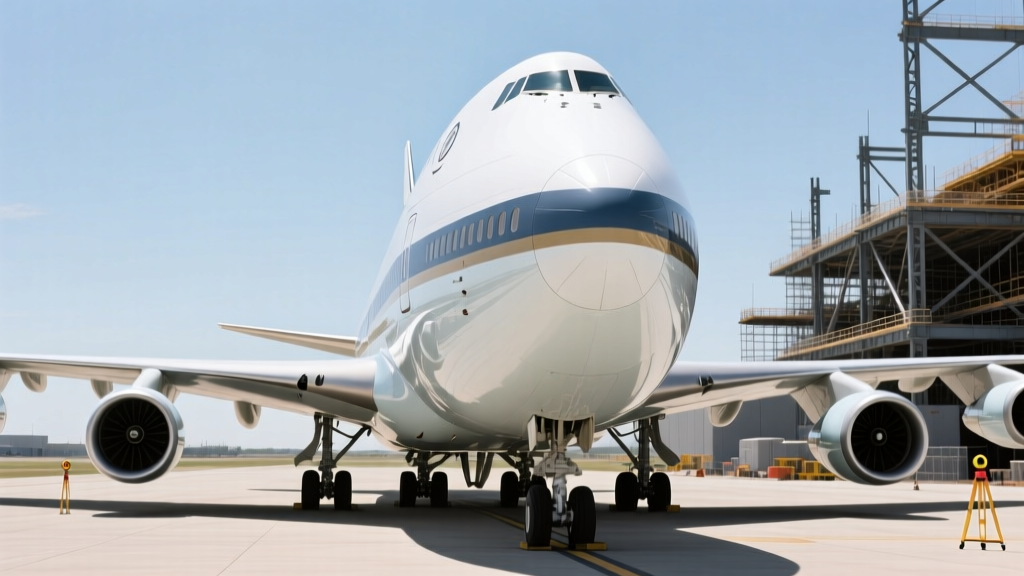
The True Price Tag of the Flying White House
When analyzing extreme-end construction and aerospace manufacturing costs, no single project eclipses the presidential aircraft fleet. While 'Air Force One' is technically the radio callsign for any U.S. Air Force aircraft carrying the President, the public uses it to refer to the heavily modified, militarized Boeing 747s that serve as the mobile White House. As of 2026, the U.S. Air Force is in the final, complex integration phases of the VC-25B program—two next-generation Boeing 747-8i airframes designed to replace the aging VC-25A fleet.
Answering the question of how much it costs to build Air Force One requires separating the commercial airframe value from the staggering expense of militarization, secure communications, and survivability hardening. The VC-25B program is a masterclass in cost overruns, fixed-price contract risks, and the immense premium placed on national security infrastructure.
VC-25B Program Financial Snapshot
- Base Fixed-Price Contract (2018): $3.9 Billion
- Total Program Acquisition Cost: ~$5.3 Billion (Includes R&D, spares, infrastructure)
- Cost Per Flyaway Aircraft: ~$1.95 Billion (Fully militarized)
- Commercial 747-8i Baseline Value: ~$418 Million (List price prior to production end)
- Militarization Premium: ~$1.53 Billion per airframe
Commercial Airframe vs. Militarized Fortress: A Cost Matrix
To understand the financial leap from a commercial airliner to a survivable military command post, we must compare the baseline Boeing 747-8i with the fully integrated VC-25B. Interestingly, the two airframes currently being modified were originally manufactured for the Russian carrier Transaero. When the airline went bankrupt in 2015, the aircraft were stored in the Mojave Desert before Boeing repurchased them for the USAF program.
| Cost Category | Commercial 747-8i | VC-25B (Air Force One) |
|---|---|---|
| Base Airframe & Engines | $418 Million | $418 Million |
| Avionics & Flight Systems | Included in base | $280 Million (Military-grade redundancy) |
| EMP & Survivability Hardening | $0 | $450 Million |
| Secure SATCOM & Networking | $2 Million (Commercial Wi-Fi) | $385 Million (Raytheon/Space Force integration) |
| Power Generation (APUs) | Standard APU | $120 Million (Dual auxiliary power units) |
| Interior & Medical Suite | $15 Million (VIP Config) | $95 Million (Operating room, quarters) |
| Defensive Countermeasures | $0 | $210 Million (Classified jamming/flares) |
Where the Billions Go: System-by-System Breakdown
The transformation from a commercial airliner to a flying military command center is executed primarily by L3Harris at their specialized integration facility in San Antonio, Texas. The airframe is essentially gutted and rebuilt from the wiring up. Here is where the massive militarization premium is allocated:
Electromagnetic Pulse (EMP) Hardening
Unlike commercial aircraft, the VC-25B must survive a high-altitude electromagnetic pulse generated by a nuclear detonation. This requires shielding every inch of the aircraft's wiring, installing specialized Faraday cages within the fuselage, and utilizing military-specification circuit breakers that prevent cascading electrical failures. This single requirement adds hundreds of millions to the build cost and adds thousands of pounds of weight to the airframe.
Next-Generation Secure Communications
The President must be able to authorize military strikes, communicate with the Pentagon, and address the nation from 40,000 feet. The VC-25B features a multi-band, jam-resistant satellite communications (SATCOM) array integrated with the Space Force's Advanced Extremely High Frequency (AEHF) network. The cryptographic hardware and physical antenna domes are custom-machined to maintain the 747's aerodynamic profile while housing military-grade transceivers.
Redundant Power Generation
A standard 747 relies on its main engines and a single Auxiliary Power Unit (APU). The VC-25B is equipped with heavily modified, high-output dual APUs and independent backup generators. This ensures that if the aircraft loses all main engine power or takes battle damage to the primary electrical buses, the secure communications and flight computers remain operational indefinitely.
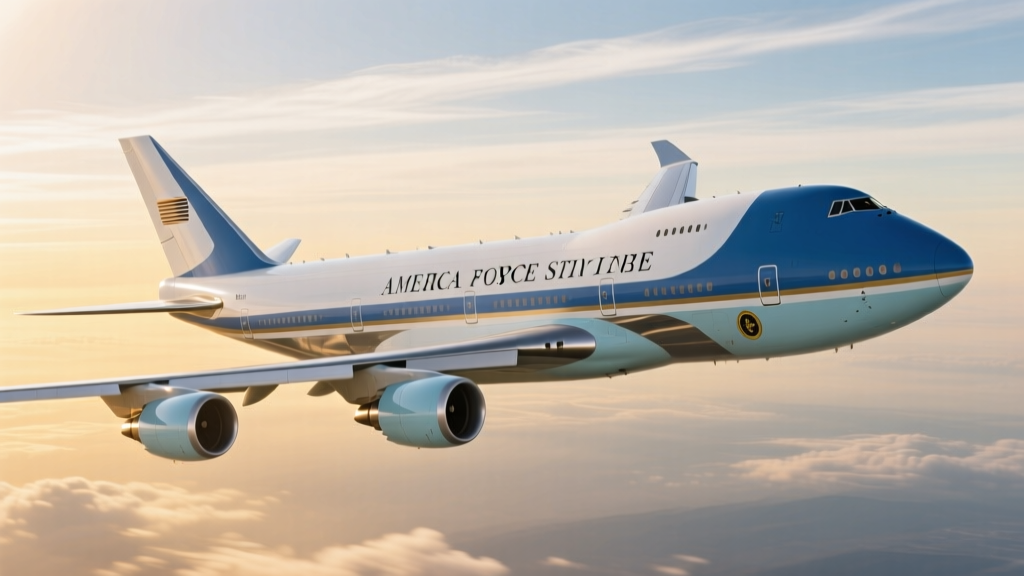
The Hidden Costs of Fixed-Price Contracts
The financial history of the VC-25B program is a textbook case study in the dangers of fixed-price defense contracts for developmental hardware. In 2018, Boeing signed a $3.9 billion fixed-price contract with the Air Force to deliver the two aircraft. Because the price was locked, any cost overruns due to supply chain disruptions, engineering challenges, or inflation had to be absorbed by the manufacturer.
'The VC-25B program has experienced significant schedule delays and cost growth. Boeing has recognized over $1.1 billion in cumulative losses on the program due to supply chain shortages, late supplier deliveries, and the complexity of integrating military systems into a commercial derivative airframe.' — Government Accountability Office (GAO) Weapons Systems Annual Assessment
According to financial disclosures reported by Reuters, Boeing was forced to take multiple massive financial charges against the program, including a $482 million charge in 2022 and subsequent write-downs as the delivery timeline slipped. The complexity of stripping a commercial airliner down to its ribs and reinstalling classified military wiring harnesses proved far more labor-intensive than Boeing's initial 2015 estimates.
VC-25A (Legacy) vs. VC-25B (Next-Gen) Operating Costs
While the acquisition cost of the VC-25B is staggering, the Air Force justified the expense by pointing to the unsustainable lifecycle and maintenance costs of the legacy VC-25A fleet (based on the 1990s-era Boeing 747-200). As of 2026, maintaining the VC-25A requires custom-fabricating obsolete parts, leading to exorbitant hourly flight costs.
Legacy VC-25A (747-200)
- Cost Per Flight Hour: ~$206,000
- Maintenance Downtime: High (obsolete parts sourcing)
- Fuel Efficiency: Older Pratt & Whitney JT9D engines
- Range: ~7,800 nautical miles (unrefueled)
Next-Gen VC-25B (747-8i)
- Cost Per Flight Hour: ~$145,000 (Projected)
- Maintenance Downtime: Lower (modern supply chain)
- Fuel Efficiency: GEnx-2B engines (16% more efficient)
- Range: ~8,900 nautical miles (unrefueled)
As noted by Defense News, the transition to the VC-25B is expected to drastically reduce the logistical footprint required to keep the President airborne, even though the initial procurement delays pushed the first delivery into the 2027–2028 window.
Frequently Asked Questions
Why doesn't the Air Force use a smaller, cheaper jet like the Boeing 757 or Airbus A330?
The VC-25B must serve as a mobile White House and military command center. This requires the physical square footage to house a medical operating suite, secure conference rooms, Secret Service detail quarters, and massive server racks for encrypted communications. Furthermore, the 747-8's four-engine configuration provides the redundancy and heavy-lift payload capacity required to carry the extensive EMP shielding and dual APUs without compromising intercontinental range.
Who actually builds the interior of Air Force One?
Boeing manufactures the 'green' (unfinished) airframe and performs the initial structural teardown. However, the heavy integration, militarization, and interior outfitting are handled by L3Harris Technologies at their specialized modification center in San Antonio, Texas. Subcontractors like Raytheon and Collins Aerospace provide the specific avionics and defensive suites.
Will the VC-25B feature an in-flight refueling boom?
No. While early conceptual discussions included an aerial refueling receptacle to allow the President to remain airborne indefinitely during a nuclear crisis, the Air Force ultimately scrapped the requirement. Adding the refueling boom would have required extensive structural reinforcement to the upper fuselage, added significant weight, and introduced complex maintenance requirements that outweighed the tactical benefits, given the VC-25B's already massive 8,900-mile unrefueled range.
Written by
James ThorntonJames Thornton is a construction industry veteran with 25 years of hands-on experience in wood framing, lumber grading, and residential building codes. He started as a framing carpenter in rural Oregon, earned his ICC Residential Building Inspector certification, and eventually became a senior plan reviewer for the City of Portland Bureau of Development Services. James holds a B.S. in Wood Science & Technology from Oregon State University and is a certified lumber grader through the West Coast Lumber Inspection Bureau (WCLIB). He has inspected over 3,000 residential construction sites and authored the city's internal guide on advanced framing techniques (2x6 at 24" O.C.). James lives in Bend, OR, where he builds custom timber-frame cabins and competes in lumberjack sports.
More from James Thornton
View all
Insulation
Best Home Insulation Materials: Complete 2026 Guide
Compare top home insulation materials for 2026. Find R-values, installed costs per square foot, and best uses for fiberglass, spray foam, and mineral wool.
Aug 4, 2026

Sustainable Building
Certify Your Green Building Material for LEED and WELL
Step-by-step guide to certifying a green building material for LEED v5 and WELL v2. Master EPDs, HPDs, and VOC limits for 2026 project specifications.
Aug 4, 2026

Stone & Masonry
Veneer Stacked Stone Panels: Interior Design & Style Showcase
Discover how veneer stacked stone panels transform interiors. Explore modern design profiles, material pairings, and technical installation specs.
Aug 4, 2026