Estimating the Cost to Build Titanic Today: A 2026 Budget Guide
Discover the estimated cost to build Titanic today. We break down 2026 maritime construction budgets, steel pricing, SOLAS compliance, and propulsion systems.
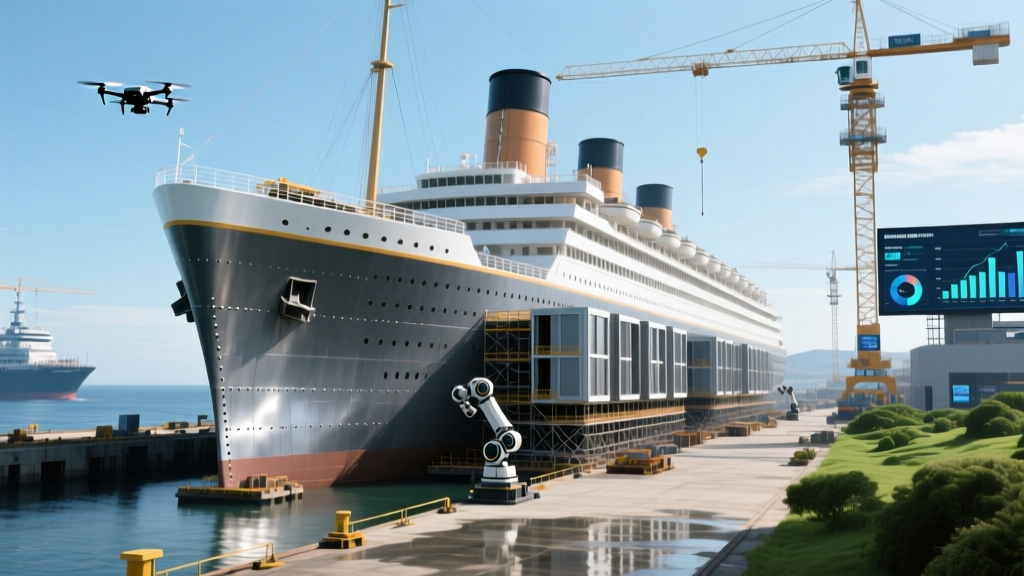
The Megaproject Premise: Defining the Scope
When naval architects and maritime project managers discuss historical vessels, the RMS Titanic remains the ultimate benchmark for scale and complexity. But from a strict budget planning perspective, estimating the cost to build Titanic in the modern era requires stripping away the romance and focusing on raw material economics, labor rates, and contemporary regulatory frameworks. To accurately price this megaproject in 2026, we must define the baseline specifications: a vessel measuring 882 feet 9 inches in length, with a 92-foot beam, and a gross tonnage (GT) of 46,328. While modern cruise ships dwarf these dimensions (often exceeding 230,000 GT), building a 46,000 GT passenger vessel today involves vastly different cost drivers than those present in 1912. This analysis deconstructs the hypothetical budget required to construct a Titanic-equivalent ocean liner using current maritime supply chains and engineering standards.
Historical Baseline vs. Modern Replacement Value
The original Harland & Wolff construction cost for the Titanic was approximately £1.5 million in 1912 (roughly $7.5 million USD at the time). A common mistake in budget planning is simply applying a standard consumer price index (CPI) inflation calculator to this figure. Doing so yields a misleadingly low estimate of around $230 million to $250 million in 2026 dollars. Shipbuilding economics do not track with consumer inflation. The transition from riveted iron/steel to welded high-tensile steel, alongside the explosion in mechanical and electrical (M&E) complexity, means the actual replacement value is exponentially higher. According to data trends in the UNCTAD Review of Maritime Transport, modern passenger vessel construction costs average between $8,000 and $12,000 per gross ton for mid-sized luxury ships, placing the baseline modern equivalent far beyond simple inflation adjustments.
| Metric | 1912 Original | CPI Inflation-Adjusted | 2026 True Replacement Cost |
|---|---|---|---|
| Total Project Cost | $7.5 Million | ~$240 Million | $585 Million - $640 Million |
| Cost per Gross Ton | $162 / GT | $5,180 / GT | $12,600 - $13,800 / GT |
| Construction Timeline | ~3 Years | N/A | 3.5 - 4.5 Years |
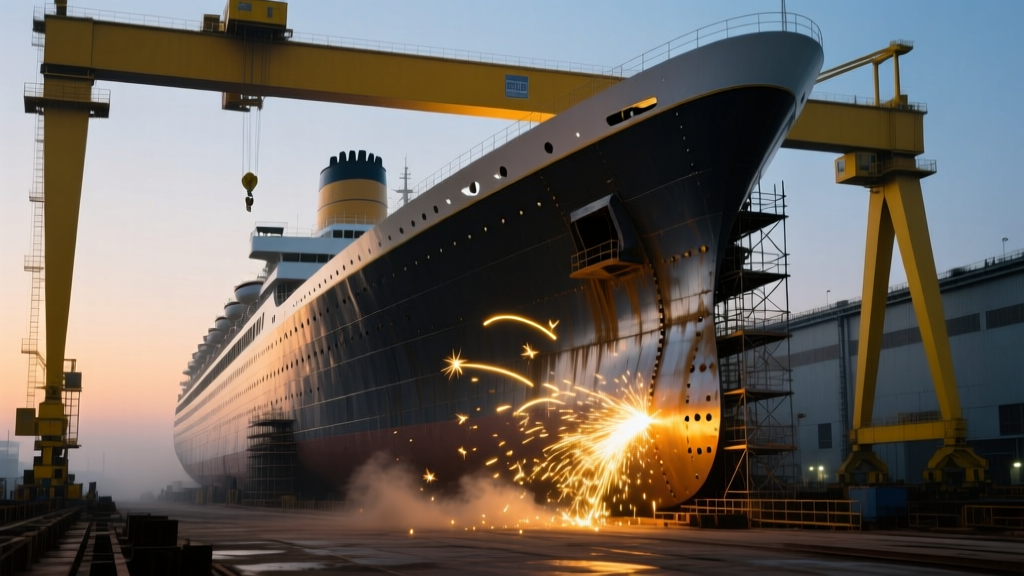
Hull Fabrication and Marine-Grade Steel Costs
The Titanic’s hull required roughly 2,000 tons of raw steel and iron, assembled using over 3 million rivets. Modern shipbuilding relies entirely on welded modular construction using specialized marine-grade steel. For a 52,000-ton displacement vessel today, naval architects specify AH36 and DH36 high-tensile shipbuilding steel, which offers superior yield strength and cold-temperature fracture resistance compared to the mild steel used in 1912.
Material and Labor Breakdown
- Raw Steel Procurement: In 2026, AH36 marine steel plates trade between $850 and $1,050 per metric ton. For a 52,000-ton hull, raw material costs approach $45 million to $55 million.
- Block Assembly and Welding: Modern shipyards construct vessels in massive pre-outfitted blocks. The labor, robotic welding equipment, and heavy-lift gantry cranes required to assemble these blocks add approximately $110 million to the hull budget.
- Drydock and Slipway Leasing: Securing a building berth at a top-tier shipyard (such as those in South Korea, Italy, or Germany) for a 4-year build cycle commands a premium, adding roughly $35 million in facility overhead.
Propulsion: From Coal-Fired Boilers to Dual-Fuel Engines
The most drastic budget shift between 1912 and 2026 lies in the engine room. The original Titanic utilized 29 coal-fired Scotch boilers and 159 furnaces to drive two massive four-cylinder triple-expansion steam engines and one low-pressure Parsons turbine. Replicating this today is not only illegal under modern emissions standards but economically unviable.
A modern equivalent requires a diesel-electric or dual-fuel propulsion plant. To achieve the Titanic’s 21-knot service speed with modern efficiency, the budget must account for:
- Main Generators: Four Wärtsilä 31DF dual-fuel engines (capable of running on LNG or marine diesel) cost approximately $12 million each, totaling $48 million.
- Propulsion Drives: Two ABB Azipod azimuthing thruster units, which eliminate the need for traditional rudders and shafts, cost roughly $18 million per unit ($36 million total).
- Emissions Compliance: Exhaust Gas Cleaning Systems (scrubbers) and Ballast Water Treatment Systems (BWTS) required by MARPOL regulations add another $14 million to the mechanical budget.
Budget Planning Insight: The Fuel Contingency
When budgeting for modern marine propulsion, project managers must allocate a 12% to 15% contingency specifically for fuel system integration. Dual-fuel LNG systems require cryogenic storage tanks and specialized vaporization units that frequently trigger supply chain delays and cost overruns during the outfitting phase.
The SOLAS Multiplier: Safety and Outfitting
The sinking of the original Titanic directly resulted in the creation of the International Convention for the Safety of Life at Sea (SOLAS). As outlined by the International Maritime Organization (IMO), modern SOLAS regulations dictate that a vessel of this size must feature redundant watertight compartments, advanced fire suppression systems, and lifeboat capacity for 125% of the maximum passenger and crew complement.
The "SOLAS Multiplier" is a recognized phenomenon in naval architecture where safety and regulatory compliance can account for up to 30% of a passenger vessel's total outfitting budget. For our 46,000 GT equivalent, this includes:
- Life-Saving Appliances (LSA): Enclosed motor lifeboats and marine evacuation systems ($8.5 million).
- Fire Protection: Hi-fog water mist systems, automated fire doors, and intumescent bulkhead coatings ($16 million).
- Navigation and Comms: Integrated bridge systems, dual-redundant GPS/Radar arrays, and GMDSS satellite communications ($6 million).
Comprehensive 2026 Budget Matrix
To synthesize these variables into a usable budget planning framework, the following matrix outlines the estimated capital expenditure (CAPEX) required to deliver the vessel from keel-laying to sea trials.
| Cost Center | Estimated Budget (USD) | Percentage of Total |
|---|---|---|
| Hull Steel & Block Assembly | $165,000,000 | 27.5% |
| Propulsion & Mechanical (M&E) | $115,000,000 | 19.2% |
| Electrical, HVAC & Piping | $85,000,000 | 14.2% |
| Interior Outfitting (Luxury Cabins) | $130,000,000 | 21.7% |
| SOLAS Safety & Navigation Systems | $45,000,000 | 7.5% |
| Naval Architecture & Engineering Fees | $30,000,000 | 5.0% |
| Project Contingency (8%) | $45,600,000 | 4.9% |
| Total Estimated Project Cost | $615,600,000 | 100% |
Strategic Budget Planning for Naval Architects
Estimating the cost to build Titanic today reveals that the primary budget drivers have shifted from raw material volume to systems integration and regulatory compliance. For project managers overseeing modern maritime megaprojects, three strategic imperatives emerge from this analysis:
- Front-Load Engineering Capital: Do not underfund the naval architecture and 3D modeling phase. Modern clash-detection software prevents millions in rework during the M&E installation phase, particularly in the cramped engine rooms required by dual-fuel propulsion systems.
- Lock in Steel and Equipment Early: Marine-grade steel and specialized propulsion units (like Azipods) are subject to volatile global supply chains. Budget planning must include forward-purchasing agreements to hedge against commodity spikes.
- Treat SOLAS as a Design Constraint, Not an Add-On: Integrating fire suppression and watertight integrity into the initial block design is vastly cheaper than retrofitting these systems during the outfitting phase. Safety compliance must dictate the hull architecture from day one.
While the RMS Titanic remains a relic of the past, the exercise of pricing her modern equivalent provides a masterclass in contemporary maritime budget planning, highlighting the immense capital required to merge luxury passenger transport with uncompromising 21st-century safety standards.
Written by
Priya KapoorPriya Kapoor is a real estate market analyst and construction economics researcher with expertise in housing affordability, development feasibility, and infrastructure investment. She holds a Master of Regional Planning from Cornell University and previously worked as a senior analyst at CBRE's Investment Properties group, where she modeled returns for $4B in mixed-use development pipelines. Priya now runs an independent research practice advising developers, municipalities, and REITs on construction cost forecasting and market timing. She publishes the quarterly "BuildMat Market Pulse" report tracking material price indices across 12 commodity categories. Based in Austin, TX, Priya serves on the board of Habitat for Humanity Austin and is a marathon runner.
More from Priya Kapoor
View all
Construction Cost
Cost to Build a 1600 Sq Ft Home in 2026: Full Breakdown
Accurate 2026 cost to build a 1600 sq ft home—material, labor, and regional pricing breakdowns included. Plan your budget with real-time estimates.
Aug 11, 2026

Wood & Lumber
Name the Types of Wood for Pressure Treatment and Preservation
Learn how to name the types of wood best suited for pressure treatment. Compare species treatability, chemical retention levels, and 2026 preservation costs.
Aug 4, 2026

Stone & Masonry
Stone Veneer Suppliers Lindenhurst: 2026 Cost Analysis
Analyze 2026 stone veneer costs in Lindenhurst, NY. Compare local supplier pricing, delivery fees, and Suffolk County installation labor rates.
Aug 4, 2026