How Much Does It Cost to Build a Shed Yourself? Detailed Breakdown
Discover exactly how much it costs to build a shed yourself. Get a detailed line-item material breakdown, hidden fees, and DIY vs. kit comparisons.
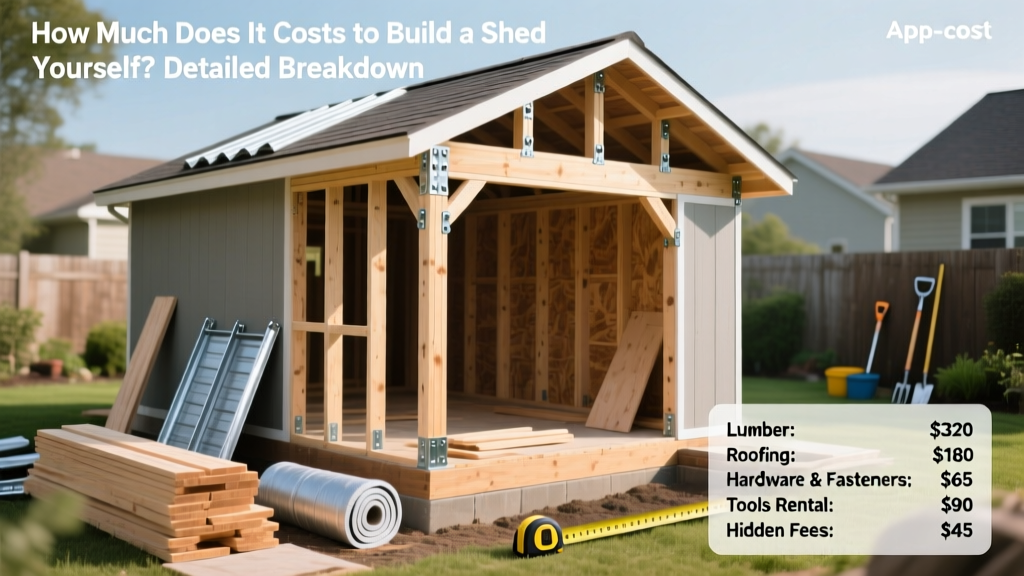
The True Cost of DIY Shed Construction
When calculating how much it does it cost to build a shed yourself, the final price tag hinges entirely on your material selections, site preparation requirements, and structural dimensions. For a standard 10x12 foot stick-built storage shed (120 square feet), DIY builders typically spend between $2,400 and $4,200 on materials alone. This assumes a skid foundation, standard asphalt roofing, and engineered wood siding. According to construction cost indices tracked by the National Association of Home Builders (NAHB), softwood lumber and engineered wood products have stabilized, but specialized fasteners and moisture-resistant barriers continue to see incremental price increases.
Quick Cost Baseline by Size (Materials Only)
- 8x10 (80 sq ft): $1,600 – $2,800
- 10x12 (120 sq ft): $2,400 – $4,200
- 12x16 (192 sq ft): $3,800 – $6,500
*Ranges reflect 2026 retail pricing for mid-grade materials. Labor is excluded as this is a DIY cost analysis.
Material Breakdown: Where Your Money Actually Goes
To build a structurally sound shed that resists moisture intrusion and wind shear, you must allocate your budget across five primary construction phases. Cutting corners on the foundation or weather barrier will result in catastrophic failure modes like floor joist rot or siding delamination within three to five years.
Foundation and Flooring Systems
The most cost-effective and durable foundation for a DIY shed is a crushed stone pad with pressure-treated timber skids. You will need 4 to 6 inches of 3/4-inch clean crushed gravel (typically $40 to $60 per ton) to ensure proper drainage. For the skids, use 4x4 pressure-treated Southern Yellow Pine rated for ground contact (UC4A).
For the floor joists, 2x6 pressure-treated lumber spaced 16 inches on center (O.C.) is the industry standard. Do not use standard OSB for the subfloor; it will swell and degrade if exposed to rain during construction or from stored damp equipment. Instead, invest in 3/4-inch tongue-and-groove AdvanTech subflooring or pressure-treated 3/4-inch plywood. According to the USDA Forest Products Laboratory, proper wood preservative retention levels and moisture barriers are critical for ground-proximate structures to prevent fungal decay.
Framing and Siding Selection
Wall framing utilizes standard SPF (Spruce-Pine-Fir) #2 or better 2x4 lumber. While 24-inch O.C. spacing is permitted by some local codes for sheds, 16-inch O.C. provides a vastly superior nailing surface for heavy siding and shelving loads.
For siding, LP SmartSide ExpertFinish lap or panel siding is the premier choice for DIYers. It costs roughly $45 to $65 per 4x8 panel (or equivalent linear footage for lap). It resists impact and moisture far better than traditional T1-11 plywood siding, which is notorious for wicking moisture at the bottom edge and delaminating. If you choose T1-11 to save roughly 15% upfront, you must install a Z-flashing drip edge at the bottom and maintain a strict 3-year painting cycle.
Roofing and Weatherproofing
A standard gable roof with a 4/12 or 5/12 pitch is the most economical to frame and shingle. Use 1/2-inch CDX plywood or OSB for the roof decking. For underlayment, skip traditional asphalt felt paper; synthetic underlayment (like Owens Corning ProArmor or TigerPaw) costs only $30 more per roll but offers vastly superior tear resistance while you work. Finish with architectural asphalt shingles (e.g., GAF Timberline HDZ), which cost about $130 to $160 per square (100 sq ft) and provide a 30-year limited warranty.
Line-Item Cost Table: 10x12 Stick-Built Shed
| Component | Material Specification | Est. Cost |
|---|---|---|
| Site Prep & Skids | 3 tons gravel, (3) 4x4x12 PT skids, weed barrier | $285 |
| Floor System | (12) 2x6x12 PT joists, (4) 3/4" AdvanTech panels | $540 |
| Wall Framing | SPF 2x4x8 studs, double top plates, 16" O.C. | $410 |
| Siding & Trim | LP SmartSide panels, 1x4 PT corner trim | $680 |
| Roof System | Pre-fab trusses or site-built rafters, 5/8" OSB | $550 |
| Roofing Materials | Synthetic underlayment, drip edge, architectural shingles | $320 |
| Doors & Windows | Custom double barn doors, (1) 24x36 slider window | $380 |
| Hardware & Fasteners | Simpson Strong-Tie hangers, HDG nails, structural screws | $210 |
| Total Estimated Material Cost | $3,375 | |
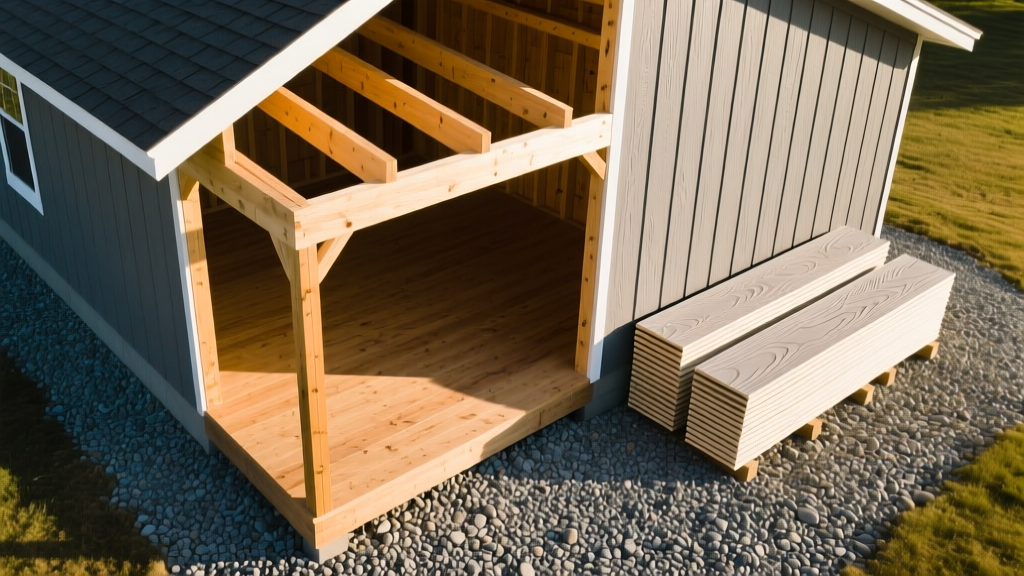
Hidden Costs and Tool Rentals Often Overlooked
First-time DIY builders frequently underestimate the ancillary expenses required to execute the build. When budgeting, add a 15% contingency for the following hidden costs:
- Lumber Delivery Fees: Unless you own a heavy-duty truck and trailer, you will need flatbed delivery from your local big-box store or lumberyard. Expect to pay $75 to $150 per drop.
- Permit and Zoning Fees: Most municipalities require a building permit for sheds over 120 square feet, and some require them for any structure over 60 square feet. Permit fees typically range from $50 to $250. Furthermore, you may need to pay for a property line survey ($400+) if you are building close to the required 3-to-5-foot setback boundaries.
- Specialized Fasteners: Standard electroplated nails will corrode rapidly when in contact with modern pressure-treated lumber (which uses copper-based preservatives like ACQ or CA-C). You must purchase hot-dipped galvanized (HDG) or stainless steel fasteners, which cost 30% to 50% more than standard framing nails.
- Concrete for Footings: If your local frost line code requires concrete sonotube footings instead of a gravel pad, a short-load concrete delivery (under 3 cubic yards) often carries a $150 to $250 'short load' surcharge from batch plants.
DIY Stick-Built vs. Prefab Kits vs. Professional Build
Understanding how much it costs to build a shed yourself requires comparing your stick-built budget against market alternatives. Use this decision matrix to determine the best route for your specific constraints.
DIY Stick-Built
Cost: $2,400 - $4,200
Time: 40 - 60 hours
Pros: Total customization, highest structural integrity, use of premium materials.
Cons: Requires advanced carpentry skills, highest physical labor, longest timeline.
Prefab Wood Kit
Cost: $2,800 - $5,000
Time: 20 - 30 hours
Pros: Pre-cut materials, included hardware, simplified instructions.
Cons: Often uses lower-grade 2x3 framing, thin OSB siding, limited design flexibility.
Pro-Built (Amish/Local)
Cost: $5,500 - $9,000+
Time: 1 - 2 days (on-site)
Pros: Zero labor for you, delivered fully assembled or built rapidly on-site, warranty included.
Cons: Massive premium on labor, requires crane/forklift access for pre-built delivery.
Step-by-Step Sourcing Strategy for Maximum Savings
To keep your DIY shed build under budget, avoid buying all materials in a single trip. Follow this procurement sequence:
- Source Heavy/Bulky Items First: Order gravel and pressure-treated timbers from a local landscape supply yard rather than a big-box store. Landscape yards often deliver 5 tons of gravel for the price of 2 tons at retail home centers.
- Leverage Lumberyard Pro-Desks: Create a detailed cut list using software like SketchUp. Take this list to a dedicated lumberyard (e.g., 84 Lumber, Carter Lumber) rather than a retail chain. Lumberyards will frequently offer a 10% to 15% discount on 'whole-house' or 'whole-project' package quotes, even for sheds.
- Buy Roofing in Bundles, Not Pallets: A 10x12 shed requires roughly 1.5 to 2 squares of shingles (including waste factor). Buy exactly the bundles you need. Pallets are priced for full residential homes and will leave you with $200 worth of unusable surplus shingles.
- Check Habitat for Humanity ReStores: For doors, windows, and interior shelving, check local architectural salvage or ReStore locations. You can frequently find brand-new, mis-ordered exterior doors or vinyl sliding windows for 60% off retail pricing.
Frequently Asked Questions
Do I need a permit to build a shed myself?
Permit requirements are dictated by local zoning ordinances, not state or federal law. Generally, sheds under 120 square feet (sometimes 200 sq ft in rural zones) do not require a structural building permit, but they almost always require a 'zoning location permit' to verify setback compliance. Always call your local building department before digging or pouring gravel.
How much does it cost to build a shed yourself if I use metal instead of wood?
Stick-built steel framing (using light-gauge steel studs) and metal siding/roofing typically increases material costs by 15% to 25% compared to wood. However, metal eliminates the risk of rot and termite damage, potentially lowering long-term maintenance costs to near zero.
Written by
Priya KapoorPriya Kapoor is a real estate market analyst and construction economics researcher with expertise in housing affordability, development feasibility, and infrastructure investment. She holds a Master of Regional Planning from Cornell University and previously worked as a senior analyst at CBRE's Investment Properties group, where she modeled returns for $4B in mixed-use development pipelines. Priya now runs an independent research practice advising developers, municipalities, and REITs on construction cost forecasting and market timing. She publishes the quarterly "BuildMat Market Pulse" report tracking material price indices across 12 commodity categories. Based in Austin, TX, Priya serves on the board of Habitat for Humanity Austin and is a marathon runner.
More from Priya Kapoor
View all
Construction Cost
Cost to Build a 1600 Sq Ft Home in 2026: Full Breakdown
Accurate 2026 cost to build a 1600 sq ft home—material, labor, and regional pricing breakdowns included. Plan your budget with real-time estimates.
Aug 11, 2026

Wood & Lumber
Name the Types of Wood for Pressure Treatment and Preservation
Learn how to name the types of wood best suited for pressure treatment. Compare species treatability, chemical retention levels, and 2026 preservation costs.
Aug 4, 2026

Stone & Masonry
Stone Veneer Suppliers Lindenhurst: 2026 Cost Analysis
Analyze 2026 stone veneer costs in Lindenhurst, NY. Compare local supplier pricing, delivery fees, and Suffolk County installation labor rates.
Aug 4, 2026