How to Finance the Average Cost to Build a 2 Car Garage in 2026
Discover the average cost to build a 2 car garage in 2026 and explore expert financing options, from HELOCs to construction loans, to fund your project.
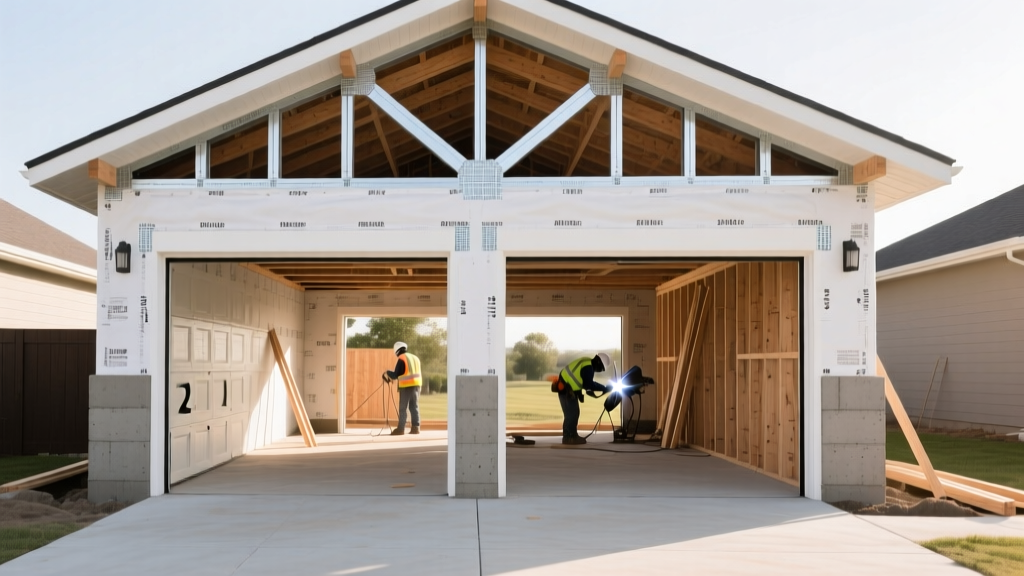
The True Average Cost to Build a 2 Car Garage in 2026
Before approaching a lender, you must establish a precise, data-backed budget. The average cost to build a 2 car garage in 2026 ranges from $48,000 to $85,000 for an attached structure, and $62,000 to $105,000 for a detached build. These figures assume a standard 24x24-foot footprint (576 square feet) and account for current material stabilization and localized labor rates.
A standard 24x24 footprint accommodates two mid-size sedans, but if you own full-size SUVs or trucks, upgrading to a 26x26 or 28x24 footprint is highly recommended. This adds roughly 15% to your total foundation and framing costs but prevents door dings and provides necessary clearance.
Itemized Cost Breakdown for a 24x24 Attached Garage
| Construction Phase | Material & Labor Cost Range | Key Specifications (2026 Standards) |
|---|---|---|
| Site Prep & Foundation | $8,500 - $14,000 | 4000 PSI concrete mix, 4-inch slab with 6x6 W1.4 welded wire mesh, thickened edge footings. |
| Framing & Sheathing | $12,000 - $18,500 | 2x6 exterior walls (for R-19+ insulation), engineered roof trusses spaced 24' on center, 1/2-inch OSB sheathing. |
| Roofing & Siding | $7,500 - $12,000 | 30-year architectural asphalt shingles, LP SmartSide or James Hardie fiber cement lap siding to match main house. |
| Garage Doors & Hardware | $4,200 - $7,800 | Two 9x7 or one 16x7 insulated steel doors (polyurethane core, R-value 16+), belt-drive smart openers. |
| Electrical & Lighting | $3,500 - $6,000 | 200-amp subpanel, Level 2 EV charging outlet (NEMA 14-50), LED high-bay shop lights, exterior motion security. |
| Interior Finishing | $6,000 - $11,000 | 5/8-inch Type X fire-rated drywall (required on shared house walls), epoxy floor coating, basic trim. |
| Permits & Architecture | $2,500 - $5,500 | Municipal building permits, structural engineering stamps, impact fees. |
If your lot requires significant grading, retaining walls, or blasting through bedrock, site preparation costs can easily double. Always mandate a geotechnical soil test ($800-$1,500) before finalizing your loan amount to avoid mid-project budget shortfalls.
Evaluating Your Financing Options for Garage Construction
With the total average cost to build a 2 car garage frequently exceeding $60,000, paying in cash is not feasible for most homeowners. The 2026 lending environment requires strategic selection of debt instruments based on your current equity, credit profile, and project timeline.
1. Home Equity Line of Credit (HELOC)
A HELOC remains the most popular vehicle for financing detached structures and attached additions. According to the Consumer Financial Protection Bureau, a HELOC allows you to borrow against your home's equity with a variable interest rate, drawing funds only as needed during the construction phases. In 2026, prime HELOC rates generally track 1.5% to 3.0% above the prime rate. This is ideal if you are acting as an owner-builder or paying a contractor in scheduled draws.
2. Cash-Out Refinance
If you currently hold a mortgage with an interest rate significantly lower than current market rates, a cash-out refinance is likely mathematically unfavorable. However, if you own your home outright or have a massive equity position and need a fixed rate, rolling the garage construction into a new first mortgage provides predictable, amortized payments over 15 to 30 years.
3. Single-Close Construction-to-Permanent Loans
For high-end, custom detached garages (e.g., those including an ADU, second-story workshop, or luxury car lift), a construction loan is necessary. As detailed by Investopedia's construction lending guidelines, these loans cover the building phase with interest-only payments, then automatically convert to a standard mortgage upon completion. They require rigorous architectural plans and a licensed general contractor; owner-builders rarely qualify.
Financing Comparison Matrix
| Loan Type | Estimated 2026 Rate Range | Best Use Case | Primary Drawback |
|---|---|---|---|
| HELOC | 8.5% - 11.0% (Variable) | Standard attached/detached 2-car garages; phased contractor payments. | Variable rates expose you to payment shocks if the Fed raises rates. |
| Home Equity Loan | 7.5% - 9.5% (Fixed) | Lump-sum contractor contracts; predictable budgeting. | You pay interest on the full amount immediately, even if funds sit in escrow. |
| Personal Loan | 10.0% - 16.0% (Fixed) | Small budgets, prefab garage kits, or homeowners with low equity. | High interest rates; short repayment terms (3-7 years) mean high monthly payments. |
| Construction Loan | 9.0% - 12.0% (Variable to Fixed) | Complex builds, ADU-integrated garages, high-end custom designs. | Strict underwriting, high closing costs, requires 20-25% down payment. |
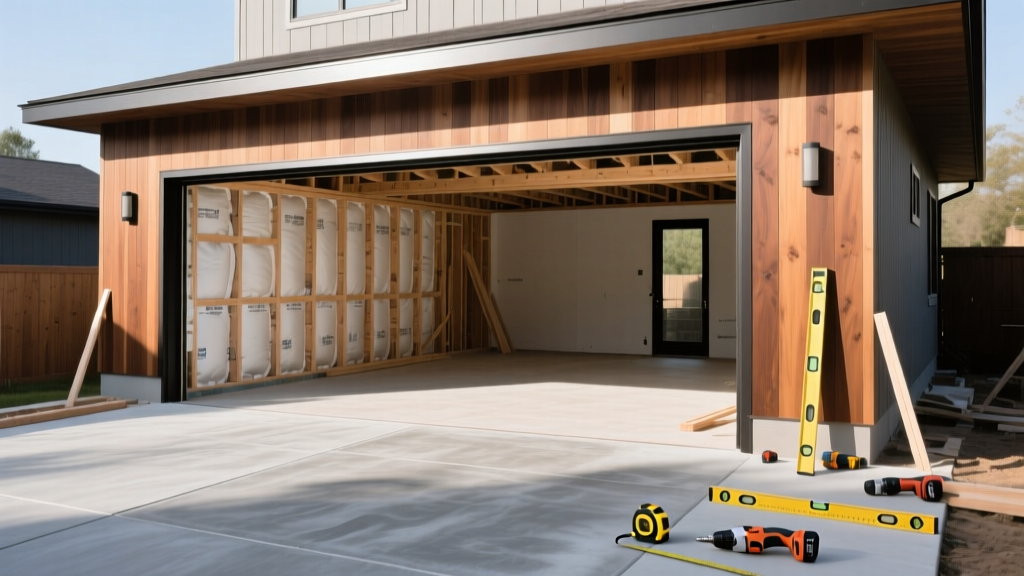
Step-by-Step Budgeting and Loan Approval Strategy
Securing financing is not just about applying; it is about structuring the deal to protect your capital. Follow this sequence to ensure your loan covers the actual average cost to build a 2 car garage without leaving you exposed to overages.
- Procure Three Itemized Bids: Do not accept lump-sum quotes. Require contractors to break down costs by foundation, framing, electrical, and finishes. This allows your loan underwriter to verify the budget and protects you from front-loaded payment schedules.
- Calculate Your True LTV: Lenders will finance based on the future appraised value of your home post-construction, not just the current value. Ensure your total projected mortgage balance (including the new garage funds) does not exceed 80% to 85% of the projected appraisal to avoid Private Mortgage Insurance (PMI) or loan denial.
- Negotiate a 10% Contingency Holdback: When finalizing your loan amount, add a strict 10% to 15% contingency line item. Lumber and concrete prices remain susceptible to supply chain disruptions. If you do not use the contingency, the funds are applied directly to your principal balance at closing.
- Structure Contractor Draws Around Inspections: Never release more than 10% upfront. Tie subsequent draws to municipal inspection approvals (e.g., post-footing inspection, post-dry-in). The Federal Trade Commission explicitly advises against paying for the entire project upfront to protect against contractor default.
Appraisers typically credit only 60% to 75% of the raw construction cost for a garage addition to your home's overall value. To bridge this gap, ensure the garage's exterior finishes, roof pitch, and siding perfectly match the primary residence. A detached garage that looks like an afterthought will yield a lower appraisal, potentially complicating future refinancing.
Maximizing ROI: Where to Allocate Your Financed Funds
When financing the average cost to build a 2 car garage, every dollar borrowed costs interest. Therefore, capital must be allocated toward features that yield functional utility and long-term property value.
- High-ROI Allocations: Upgrading from a standard 100-amp electrical feed to a dedicated 200-amp subpanel with a 50-amp EV charger circuit costs an additional $1,200 to $1,800 but drastically increases the property's appeal to future buyers. Similarly, investing in R-19+ insulated walls and a mini-split HVAC system ($3,500) transforms the space into a year-round workshop, maximizing utility.
- Low-ROI Allocations: Avoid over-financing high-end interior finishes like custom cabinetry or luxury flooring. A standard polyaspartic or epoxy floor coating ($2,500) provides 90% of the durability of premium flake systems at half the cost. Standard builder-grade shelving and pegboard offer superior flexibility compared to built-in millwork, which rarely returns its investment in a garage space.
Frequently Asked Questions
Does adding a 2-car garage increase property taxes?
Yes. Because you are adding significant square footage and improving the utility of the property, the county assessor will reassess your home's value upon completion of the permitted work. Expect your annual property tax burden to increase proportionally to the added appraised value of the garage structure.
Can I use an FHA 203(k) loan to build a garage?
A standard FHA 203(k) rehabilitation loan is designed for repairing or modernizing existing structures. It generally cannot be used to build a completely new detached structure from scratch unless it is part of a massive, whole-property gut rehabilitation. For new garage construction on an existing home, HELOCs or conventional construction loans are the appropriate vehicles.
How long does it take to build a 2-car garage?
The physical construction of a standard 24x24 attached garage typically takes 6 to 10 weeks from site excavation to final electrical trim. However, the pre-construction phase—securing architectural drawings, HOA approvals, and municipal permits—can add 2 to 4 months to the overall timeline. Factor this delay into your loan lock-in periods to avoid rate expiration penalties.
Written by
Sarah WhitfieldSarah Whitfield is a chartered quantity surveyor (MRICS) and construction cost analyst with 15 years of experience in material pricing, procurement strategy, and project budgeting. She earned her degree in Construction Management from the University of Reading (UK) and has worked on projects ranging from $2M custom homes to $180M mixed-use developments across North America and Europe. Sarah currently leads cost estimating for BuildMat Insight, maintaining a proprietary database of 4,000+ material price points updated quarterly. She is a frequent contributor to RSMeans cost data panels and has presented at the International Cost Engineering Council (ICEC) congress. Based in Denver, CO, Sarah is an avid trail runner and volunteer mentor for Women in Construction.
More from Sarah Whitfield
View all
Wood & Lumber
What Are the Different Types of Wood? A Builder's Guide
Compare structural softwoods, finish hardwoods, and engineered lumber. Analyze Janka ratings, MOE values, and 2026 pricing for construction.
Aug 4, 2026

Walls & Panels
Steel Framing vs Wood Framing: Corrosion and Moisture Defense
Compare steel framing vs wood framing for moisture resistance. Learn about galvanized coatings, condensation risks, and corrosion protection strategies.
Jul 21, 2026

Stone & Masonry
How to Cut Stone Veneer: Wet Saw vs Grinder Comparison
Compare the best tools for cutting stone veneer. We review wet saws, angle grinders, and chop saws to help you achieve clean, chip-free cuts.
Jul 21, 2026