Financing the Cost to Build Casita Additions in 2026
Discover how to finance the cost to build casita additions. Compare ADU loans, HELOCs, and construction financing options for your 2026 backyard project.
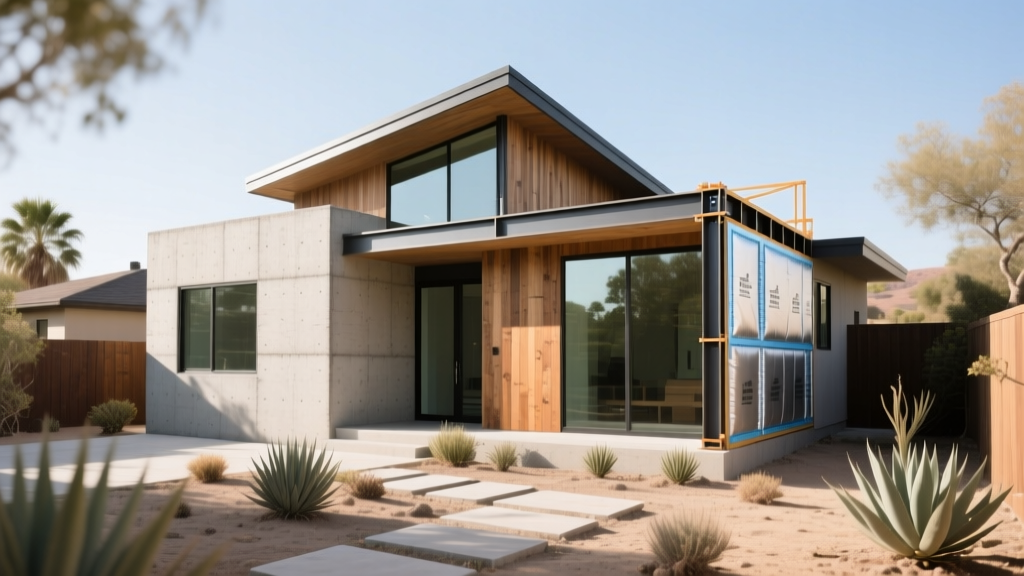
Adding an accessory dwelling unit (ADU) to your property is one of the most effective ways to generate rental income or house extended family, but the upfront capital required is substantial. Understanding the true cost to build casita structures is only the first step; securing the right capital to fund the project without over-leveraging your primary residence requires navigating a complex landscape of renovation loans, equity lines, and specialized ADU financing. This guide breaks down the exact financing vehicles available in 2026, the loan-to-value (LTV) limits you will face, and the appraisal hurdles unique to backyard cottages.
The True Cost to Build Casita Units: Establishing Your Loan Baseline
Before approaching a lender, you must establish a realistic construction budget. Lenders will require detailed architectural plans and contractor bids to underwrite your loan. The cost to build casita additions varies wildly based on whether you choose traditional stick-built construction, modular prefabrication, or garage conversions.
| Casita Type | Average Size | Cost Per Sq. Ft. (2026) | Total Estimated Cost |
|---|---|---|---|
| Garage Conversion | 400 - 600 sq ft | $150 - $220 | $60,000 - $132,000 |
| Prefab / Modular ADU | 500 - 800 sq ft | $250 - $350 | $125,000 - $280,000 |
| Custom Stick-Built (1 Bed) | 600 - 800 sq ft | $350 - $450 | $210,000 - $360,000 |
| Custom Stick-Built (2 Bed) | 800 - 1,200 sq ft | $325 - $425 | $260,000 - $510,000 |
Top 5 Financing Vehicles for Casita Construction
1. ADU-Specific Renovation Loans (FHA 203k & Fannie Mae HomeStyle)
Government-backed renovation loans allow you to borrow against the future appraised value of your property once the casita is completed. The HUD's FHA 203(k) Rehabilitation Mortgage Insurance program is ideal for borrowers with lower credit scores (minimum 620-640) and allows up to 96.5% LTV. The Fannie Mae HomeStyle Renovation loan is better for those with stronger credit (680+) and higher loan limits, accommodating luxury casita finishes that FHA structural guidelines might restrict.
2. Home Equity Line of Credit (HELOC)
If you have substantial equity built up in your primary residence, a HELOC offers a flexible, draw-as-you-need funding source. According to the Consumer Financial Protection Bureau (CFPB), HELOCs typically feature a 10-year draw period followed by a 20-year repayment period. In 2026, HELOC rates are generally variable, priced at the Prime Rate plus a margin of 1.5% to 3.5%. This is highly cost-effective for phased casita builds where you are paying contractors in stages.
3. Cash-Out Refinance
If current mortgage rates are favorable or you have an adjustable-rate mortgage you wish to lock in, a cash-out refinance replaces your existing mortgage with a larger one, handing you the difference in cash. While closing costs are higher (typically 2% to 5% of the loan amount), you secure a fixed rate for the entire mortgage balance, providing payment stability over the 15 to 30-year term.
4. Standalone Construction-to-Permanent Loans
For borrowers who do not want to tap their primary mortgage, standalone construction loans are an option. These are short-term (12 to 18 months), interest-only loans that convert to a traditional mortgage upon completion. The major drawback is the draw schedule: lenders disburse funds in 4 to 6 tranches, requiring municipal inspections between each phase. Furthermore, lenders hold a 10% retention on each draw until final lien waivers are signed.
5. After-Rehab Value (ARV) Fintech Loans
Specialized ADU lenders (like RenoFi or similar fintech platforms) underwrite loans based on the After-Rehab Value (ARV) rather than your current home value. If your home is currently worth $600,000 but will be worth $850,000 with the casita, these lenders may allow you to borrow up to 90% of the $850,000 ARV, vastly increasing your borrowing power compared to traditional HELOCs capped at 80% of current value.
Decision Matrix: Matching Your Equity Position to the Right Loan
Selecting the right financing depends heavily on your current Loan-to-Value (LTV) ratio and how quickly you need to access funds.
| Financing Type | Best For... | Max LTV Limit | Estimated Closing Costs | Time to Fund |
|---|---|---|---|---|
| FHA 203(k) / HomeStyle | Low equity, high-cost builds | 95% - 96.5% (ARV) | 2% - 4% | 45 - 60 Days |
| HELOC | High equity, phased payments | 80% - 85% (Current) | $0 - $500 | 14 - 21 Days |
| Cash-Out Refinance | High equity, rate consolidation | 80% (Current) | 2% - 5% | 30 - 45 Days |
| ARV Fintech ADU Loan | Low current equity, high ARV | 90% (ARV) | 1% - 3% | 30 - 45 Days |
The Appraisal Hurdle: Proving Post-Construction Value
The most frequent point of failure in casita financing is the appraisal. Lenders must justify the loan amount based on the property's value. Traditional appraisals rely on the 'sales comparison approach,' but finding comparable properties with permitted ADUs in your immediate neighborhood can be nearly impossible.
To solve this, ensure your appraiser utilizes the Income Approach. By documenting projected rental income for the casita (e.g., $2,200/month) and applying the local Gross Rent Multiplier (GRM), the appraiser can mathematically add the capitalized rental value to your primary home's baseline value. Always provide your appraiser with a localized rent comp report and the approved municipal ADU permits prior to their site visit to prevent a low-ball valuation that could derail your funding.
Step-by-Step Execution Plan
- Month 1: Design & Permitting. Hire an architect and submit plans to your local planning department. Secure municipal approval and final building permits.
- Month 2: Contractor Bidding. Obtain at least three fixed-price bids from licensed general contractors. Ensure bids include site work, utility tie-ins, and finish materials.
- Month 3: Loan Application & Appraisal. Submit your permit package and contractor bids to your chosen lender. Order an 'As-Completed' appraisal to establish the ARV.
- Month 4: Closing & First Draw. Close on the loan. The lender will fund the initial 15-20% draw to cover mobilization, demolition, and foundation pouring.
- Months 5-9: Construction & Inspections. Manage the build schedule. Coordinate municipal framing, electrical, and plumbing inspections to trigger subsequent lender fund disbursements.
- Month 10: Final Certification. Obtain the Certificate of Occupancy (CO) from the city. Submit final lien waivers to the lender to release the 10% retention holdback.
Frequently Asked Questions
Can I use a personal loan to finance a casita?
While technically possible, it is highly discouraged. Personal loans in 2026 carry interest rates between 10% and 24%, and terms rarely exceed 7 years. Financing a $200,000 casita via a personal loan would result in crippling monthly payments compared to a 30-year HELOC or renovation mortgage.
Do I need a separate meter for the casita to get financing?
No, most lenders and municipal codes do not require separate utility meters for ADUs. However, installing a sub-panel for electrical and a dedicated water heater is usually required to pass building inspections, which will factor into your construction loan budget.
What happens if my casita construction goes over budget?
Renovation loans like the FHA 203(k) include a mandatory 10% to 15% contingency reserve built directly into the loan amount. If you exhaust the contingency, you will need to cover the overage out-of-pocket or apply for a secondary HELOC, as the primary construction loan cannot be modified mid-build.
Written by
Elena RodriguezElena Rodriguez is a civil engineer and technical writer specializing in concrete technology, masonry systems, and ASTM/ACI compliance. She earned her B.S. in Civil Engineering from Texas A&M University and spent a decade at a materials testing laboratory, performing over 2,000 concrete compressive strength tests and masonry prism evaluations. Elena is an ACI-certified Field Testing Technician (Grade I) and a member of ASTM Committee C12 on Natural Building Stone. She currently consults on forensic engineering cases involving concrete failures and moisture intrusion. Based in San Antonio, TX, Elena is a proud member of the Society of Women Engineers (SWE) and coaches her daughter's FIRST Robotics team.
More from Elena Rodriguez
View all
Walls & Panels
Cost Analysis: Light Gauge Steel Framing Advantages and Disadvantages
Evaluate light gauge steel framing advantages and disadvantages through a strict cost analysis lens, comparing material, labor, and lifecycle expenses.
Aug 4, 2026

Walls & Panels
Gypsum Board Types: Exact Specifications, Thickness & Dimensions
Compare standard, Type X, and moisture-resistant gypsum board types. Get exact specifications, thicknesses, dimensions, and ASTM standards for your project.
Aug 4, 2026

Fire Resistance
Best Fire-Resistant Outdoor Decking Materials: 2026 Buyer Guide
Discover the best fire-resistant outdoor decking materials for 2026. Compare Class A PVC, aluminum, and hardwood options for WUI compliance and safety.
Aug 4, 2026