Financing the Cost to Build a Home in the Poconos: Loans & Hidden Fees
Discover how to finance the cost to build a home in the Poconos. Learn about construction loans, rural USDA options, and hidden site prep expenses.
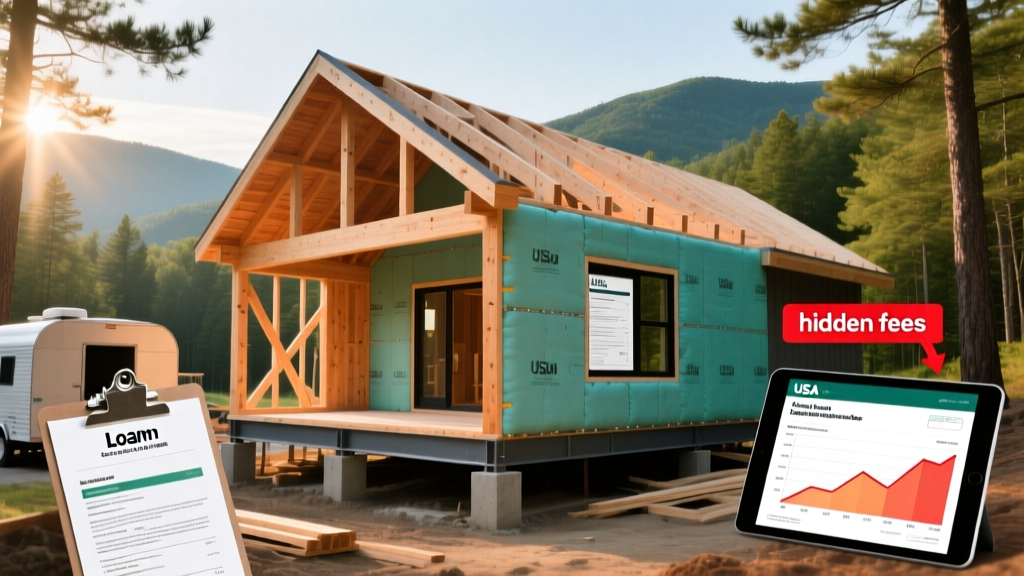
The Financial Reality of Pocono Mountain Construction
Securing financing for the cost to build a home in the Poconos requires more than a standard mortgage pre-approval. The mountainous terrain across Monroe, Pike, Wayne, and Carbon counties introduces severe site-preparation variables that traditional appraisers and out-of-area lenders frequently underestimate. A standard 2,000-square-foot stick-built home in northeastern Pennsylvania might range from $175 to $275 per square foot for vertical construction, but the horizontal costs—land clearing, bedrock blasting, and specialized septic systems—can easily add $50,000 to $120,000 to your total project budget. Understanding how to structure your construction loan to absorb these rural building premiums is the difference between a successful build and a stalled project.
Breaking Down the True Cost to Build a Home in the Poconos
Before approaching a lender, you must establish a realistic, localized budget. Lenders will require a line-item breakdown from your general contractor to approve draw schedules. Below is a realistic cost matrix for a 2,000-square-foot primary residence on an unimproved, wooded 2-acre lot in Pike County.
| Cost Category | Pocono-Specific Details | Estimated Range |
|---|---|---|
| Unimproved Land | 2-5 wooded acres (varies heavily by lake proximity) | $45,000 - $120,000 |
| Site Prep & Clearing | Tree removal, stump grinding, driveway grading | $12,000 - $25,000 |
| Excavation & Blasting | Sandstone bedrock and glacial till removal for foundation | $15,000 - $45,000 |
| Well Drilling | Deep bedrock well (300-500 ft) with holding tank | $18,000 - $28,000 |
| Septic System | Engineered sand mound system (common in poor perc soils) | $22,000 - $38,000 |
| Vertical Construction | 2,000 sq ft at $200/sq ft (moderate finishes) | $400,000 - $450,000 |
| Soft Costs & Permits | Architect, engineer, township permits, impact fees | $15,000 - $25,000 |
| Total Project Cost | Excluding land acquisition financing | $527,000 - $731,000 |
Site Preparation: The Pocono Budget Killer
The most common reason Pocono construction loans run out of funds before the house is framed is site preparation. The region's geology is defined by glacial till and shallow sandstone bedrock. If your homesite requires a full basement, excavators will likely hit rock within the first three feet.
Never close on unimproved Pocono land without a passed percolation (perc) test and a valid septic design approved under the Pennsylvania Sewage Facilities Act (Act 537). According to the PA Department of Environmental Protection, local townships mandate strict adherence to on-lot sewage disposal. If the soil fails a standard perc test, you will be forced to install an engineered sand mound or aerobic treatment unit, which costs 200% to 300% more than a conventional trench system. Ensure your land purchase contract includes a septic feasibility contingency.
Water Access and Well Financing
Municipal water is rare outside of borough limits like Stroudsburg or Milford. You will rely on a private well. In the Poconos, shallow wells are highly susceptible to seasonal droughts and surface contamination. Drillers typically target deep bedrock aquifers, often drilling 300 to 500 feet to guarantee a sustainable yield of at least 3 to 5 gallons per minute. As noted by Penn State Extension, deep bedrock wells require specialized rotary air-hammer drilling rigs, which increases the per-foot cost significantly compared to shallow sedimentary wells in other parts of the state. Budget at least $45 to $65 per drilled foot, plus $5,000 for the pump, pressure tank, and trenching to the house.
Financing Options for Rural PA Construction
Standard mortgages do not cover dirt and framing. You need a specialized loan product that converts land equity and construction draws into a permanent mortgage. Here are the primary vehicles used in the Poconos.
1. Construction-to-Permanent (Single-Close) Loans
This is the most common instrument for custom builds. The lender approves you for the total project cost (land + construction). During the build (typically 9 to 12 months), you only pay interest on the funds drawn. Once the certificate of occupancy (CO) is issued, the loan automatically modifies into a standard 30-year fixed or adjustable mortgage without requiring a second closing.
- Down Payment: Typically 15% to 20% of the total project cost.
- Draw Schedule: Funds are released in 5 to 7 phases (e.g., Foundation, Framing, Mechanicals, Drywall, Completion). The lender sends an inspector to verify work before releasing the next tranche.
- Pocono Advantage: Locks in your permanent interest rate upfront, protecting you from rate hikes during a long mountain build.
2. USDA Rural Development Construction Loans
If you are building in Pike, Wayne, or rural parts of Monroe and Carbon counties, you may qualify for a USDA Single-Close Construction Loan. This program is designed specifically for rural areas and offers massive financial leverage.
The USDA Rural Development Guaranteed Loan Program allows for 100% financing (zero down payment) for eligible borrowers meeting income limits. The loan covers land acquisition, site prep, and vertical construction in a single close. However, the builder must be on the USDA approved list, and the appraisal must meet strict rural property guidelines.
3. Land Loan + Cash Build (The High-Risk Route)
Some buyers secure a raw land loan (requiring 25% to 50% down) and attempt to pay subcontractors out-of-pocket. This is highly discouraged in the Poconos due to the unpredictable nature of site prep costs. If you hit a massive bedrock shelf and your excavation budget balloons by $30,000, your cash reserves will dry up, leaving you with an unfinished foundation and a land loan that cannot be converted to a mortgage.
Navigating the Interest Reserve and Winter Delays
Construction loans include an "interest reserve"—a portion of the loan amount set aside to pay your monthly interest-only bills during the build. In flat, temperate regions, a 9-month build schedule is standard. In the Poconos, winter changes the math.
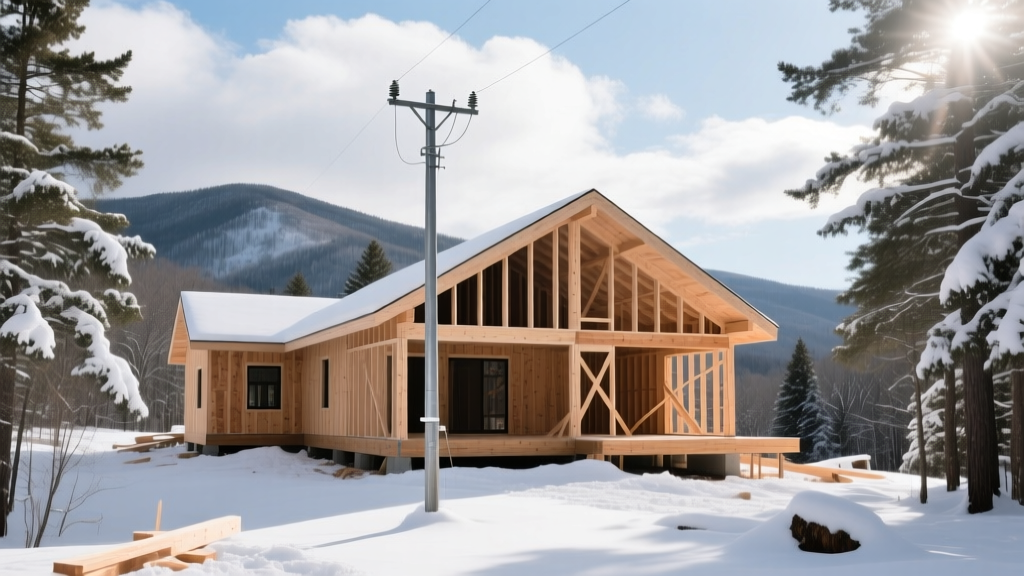
Ground freeze typically sets in by late November and lasts through March. Pouring concrete footers and frost walls in sub-freezing temperatures requires ground-thawing equipment, insulated blankets, and chemical accelerators, adding 5% to 10% to your foundation costs. Furthermore, heavy snow and mud season (March/April) can halt heavy equipment access, delaying framing draws. If your build stretches from 9 months to 14 months, your interest reserve will deplete, and you will be forced to pay monthly interest out-of-pocket. Always structure your Pocono construction loan with a 12-to-15-month interest reserve buffer to account for alpine weather delays.
Step-by-Step Loan Approval Strategy
To secure financing without last-minute underwriting denials, follow this sequence:
- Verify Land Feasibility First: Before applying for a loan, secure the septic design, well location, and driveway right-of-way. Lenders will not underwrite unimproved land without proof of legal and physical access to utilities.
- Hire a Local Builder: Out-of-state or valley-based builders often underestimate Pocono logistics (e.g., concrete pump trucks required for steep-slope pours). Lenders require your builder to have a proven track record, proper PA licensing, and adequate liability insurance.
- Submit Detailed Plans and Specs: The appraiser will use your blueprints and a "cost approach" to determine the future value of the home. If your finishes are vague, the appraisal will come in low, reducing your loan amount.
- Lock the Rate Early: With single-close loans, you can often lock your permanent mortgage rate at closing. Pay the extension fee if necessary to cover a 12-month build window.
Frequently Asked Questions
Can I use a HELOC on my current home to build in the Poconos?
Yes, if you have substantial equity in your primary residence, a Home Equity Line of Credit (HELOC) can fund the land purchase and site prep. However, using a HELOC for the entire vertical construction is risky. HELOC rates are typically variable and higher than first-mortgage rates. Most financial advisors recommend using a HELOC only for the down payment and land acquisition, then rolling it into a Construction-to-Permanent loan for the actual build.
Do Pocono HOA communities affect construction financing?
Yes. If you are building in a development like Arrowhead Lake, Pocono Farms, or Pine Ridge, the HOA will have strict architectural review boards (ARB) and building timelines. Lenders will require HOA approval letters before funding. Additionally, HOA-mandated setbacks, specific siding materials (e.g., cedar or fiber cement), and required landscaping can increase your hard costs by 10% to 15%, which must be reflected in your initial loan application.
What happens if my builder goes bankrupt during the draw schedule?
>Construction loans are disbursed in arrears. The bank inspector verifies that the roof is actually on before releasing the framing draw. If your builder defaults, the undisbursed funds remain with the lender. You can then use those remaining funds to hire a replacement contractor, though you may need to renegotiate the loan terms if the new builder's costs exceed the original budget.Written by
David NakamuraDavid Nakamura is a licensed architect (AIA) and construction technology writer focused on sustainable building methods, mass timber engineering, and high-performance building envelopes. He holds a Master of Architecture from the University of Washington and is a certified Passive House Consultant (CPHC). David spent eight years at the Seattle firm Mithun, where he led the design of three LEED Platinum projects, before founding his own practice specializing in net-zero residential design. He serves on the editorial advisory board of GreenBuilder Magazine and has authored peer-reviewed papers on cross-laminated timber (CLT) connections for the Journal of Structural Engineering. In his spare time, David teaches woodworking at Pratt Fine Arts Center and kayaks the Puget Sound.
More from David Nakamura
View all
Construction Cost
Labor Cost to Build a Deck Per Sq Ft: 2026 Installation Guide
Discover the exact labor cost to build a deck per sq ft in 2026. This installation guide breaks down contractor rates, complexity factors, and hidden fees.
Aug 4, 2026

Construction Cost
How Much Does It Cost to Build a 3 Bedroom House? Financing Guide
Learn exactly how much it costs to build a 3 bedroom house and explore 2026 financing options, construction loan types, and budget frameworks for your build.
Aug 4, 2026

Construction Cost
Cost to Build a Tennis Court: 2026 Guide
How much does it cost to build a tennis court in 2026? Breakdowns for asphalt, concrete, and synthetic surfaces plus fencing and lighting.
Jul 30, 2026