Cost to Build a Golf Course: 18-Hole vs 9-Hole Comparison
Compare the cost to build a golf course in 2026. Detailed breakdown of 18-hole, 9-hole, and par-3 budgets, including earthwork, irrigation, and turf.
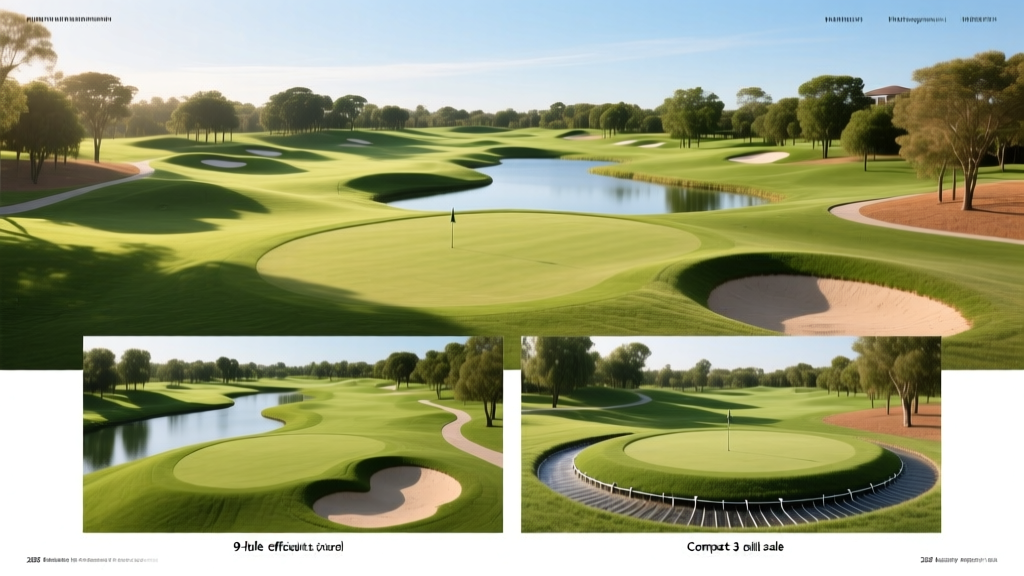
The Baseline: What is the Cost to Build a Golf Course?
Estimating the cost to build a golf course requires moving beyond simplistic per-hole averages. In 2026, the total capital expenditure is dictated by site topography, soil composition, environmental mitigation requirements, and the architectural complexity of the routing. While a rudimentary 9-hole executive course might be completed for $4.5 million, a pristine 18-hole championship layout on challenging terrain routinely exceeds $18 million. According to the American Society of Golf Course Architects (ASGCA), the median cost for a new 18-hole facility in North America currently sits between $12 million and $16 million, excluding land acquisition and clubhouse construction.
- 18-Hole Championship: $12,000,000 – $22,000,000+
- 9-Hole Executive / Regulation: $3,500,000 – $7,500,000
- 18-Hole Par-3 / Pitch & Putt: $1,200,000 – $3,000,000
- Driving Range & Practice Facility: $1,500,000 – $4,000,000

Head-to-Head Comparison: 18-Hole vs. 9-Hole vs. Par-3
When evaluating the cost to build a golf course, developers must align the facility type with the target demographic and available acreage. The table below contrasts the physical requirements and capital outlays for the three most common course configurations.
| Course Type | Required Acreage | Earthwork & Shaping | Irrigation System | Total Estimated Cost |
|---|---|---|---|---|
| 18-Hole Championship | 150 – 200 acres | $3.5M – $6.0M | $2.0M – $3.5M | $12M – $22M+ |
| 9-Hole Executive | 60 – 90 acres | $1.0M – $2.0M | $800k – $1.4M | $3.5M – $7.5M |
| 18-Hole Par-3 | 30 – 50 acres | $300k – $700k | $400k – $800k | $1.2M – $3.0M |
Breaking Down the Major Cost Centers
To accurately forecast the budget, you must dissect the construction process into its primary cost centers. The USGA Green Section provides rigorous guidelines that heavily influence these material and labor costs.
1. Earthwork, Shaping, and Drainage (25% – 35% of Budget)
Earthmoving is the most volatile variable in golf course construction. A flat, sandy site in Florida requires minimal cut-and-fill, whereas a rocky, sloping site in the Pacific Northwest demands extensive blasting, rock ripping, and retaining wall construction. Modern shaping relies on GPS-guided Caterpillar D6 dozers and excavators to achieve precise sub-grade tolerances.
Drainage is non-negotiable. Fairway drainage typically involves herringbone patterns of 4-inch corrugated perforated pipes wrapped in geotextile fabric, surrounded by washed gravel. Expect to pay $15,000 to $25,000 per hole for comprehensive fairway and bunker drainage systems.
2. Irrigation Infrastructure (15% – 20% of Budget)
A championship 18-hole course requires a sophisticated, variable-frequency drive (VFD) pump station and miles of PVC piping. In 2026, systems like the Toro Lynx or Rain Bird IC Series are industry standards, utilizing individual head control to minimize water waste and reduce long-term operational expenses.
The pump station alone, including VFD technology, filtration, and a 2-million-gallon irrigation lake liner (EPDM or reinforced concrete), will cost between $450,000 and $850,000. The piping network and decoder wiring for an 18-hole layout typically add $1.5 million to $2.5 million.
3. USGA Spec Greens and Turfgrass Establishment
Putting greens are the most expensive per-square-foot real estate on the property. A strict USGA-recommended green profile requires a 12-inch rootzone mix (typically 80% washed silica sand and 20% peat moss) placed over a 4-inch gravel drainage layer.
Cost per Green: Building a 6,500-square-foot USGA spec green costs between $14 and $20 per square foot, totaling $91,000 to $130,000 per green. For 18 holes, the greens complex alone consumes $1.6 million to $2.3 million of the budget.
- Bermudagrass (e.g., Tifway 419, Latitude 36): Ideal for southern climates. Sprigging costs $3,500 – $5,000 per acre. Establishes in 60-90 days.
- Creeping Bentgrass (e.g., A1/A4, 007): The standard for northern and transition-zone greens. Seeding costs $2,000 – $3,500 per acre. Requires intense fungicide and moisture management during establishment.
- Zoysiagrass (e.g., Zeon, Zorro): Excellent for fairways in transition zones. Sodding costs $35,000 – $45,000 per acre but provides immediate playability and superior drought tolerance.
Hidden Costs That Destroy Golf Course Budgets
Developers frequently underestimate site-specific anomalies that trigger massive change orders. When calculating the cost to build a golf course, allocate a minimum 15% contingency fund for the following edge cases:
- Wetland Mitigation and Environmental Permitting: If the routing impacts jurisdictional wetlands, the Army Corps of Engineers may require off-site mitigation. Purchasing mitigation bank credits can cost $40,000 to $100,000 per impacted acre.
- Water Rights and Well Drilling: In arid regions like the American Southwest, securing agricultural water rights or drilling high-capacity irrigation wells (yielding 1,500+ GPM) can add $500,000 to $1.5 million before a single sprinkler head is installed.
- Unforeseen Subsurface Rock: Geotechnical borings only tell part of the story. Hitting unfractured bedrock during bunker or lake excavation requires heavy ripping or blasting, escalating earthwork costs by $50 to $120 per cubic yard.
- Archaeological or Biological Surveys: Discovering protected species (e.g., the Eastern Indigo Snake or specific tortoise habitats) can halt construction for months, leading to severe equipment standby charges and redesign fees.
Decision Framework: Maximizing ROI in 2026
The National Golf Foundation (NGF) notes a distinct shift in consumer behavior over the last decade. The traditional 18-hole, 7,200-yard championship model is no longer the automatic default for new developments due to high land costs, massive water requirements, and the 4.5-hour time commitment.
When to Build a 9-Hole or Par-3 Layout
If your land parcel is under 100 acres, or if the site is heavily constrained by residential property lines and environmental buffers, a 9-hole executive or 18-hole par-3 layout offers a superior return on investment. These formats require 40% less irrigation infrastructure, drastically lower fertilizer and chemical inputs, and appeal to the rapidly growing demographic of beginners, juniors, and time-constrained professionals. A well-designed short course built for $2.5 million can generate comparable net operating income to a struggling $15 million championship layout by maximizing throughput and minimizing agronomic overhead.
When to Build an 18-Hole Championship Course
An 18-hole championship layout is only financially viable if the project is tied to high-end real estate development (where lot premiums offset course construction costs) or if it is situated in a premier destination market capable of commanding $250+ daily green fees. In these scenarios, investing heavily in USGA greens, sophisticated irrigation, and premium bunker liners (such as Capillary Concrete or Better Billy Bunker) is essential to meet the expectations of the modern golfer.
"The most successful modern golf developments do not view the course as a standalone profit center, but as a premium amenity that drives adjacent real estate absorption rates and hospitality revenue." — Industry consensus on 2026 golf facility economics.
Ultimately, accurately forecasting the cost to build a golf course demands a site-specific feasibility study conducted by a licensed golf course architect and a specialized agronomist. Relying on national averages without accounting for local soil profiles, water availability, and topographical challenges is the fastest way to turn a promising development into a capital sinkhole.
Written by
Elena RodriguezElena Rodriguez is a civil engineer and technical writer specializing in concrete technology, masonry systems, and ASTM/ACI compliance. She earned her B.S. in Civil Engineering from Texas A&M University and spent a decade at a materials testing laboratory, performing over 2,000 concrete compressive strength tests and masonry prism evaluations. Elena is an ACI-certified Field Testing Technician (Grade I) and a member of ASTM Committee C12 on Natural Building Stone. She currently consults on forensic engineering cases involving concrete failures and moisture intrusion. Based in San Antonio, TX, Elena is a proud member of the Society of Women Engineers (SWE) and coaches her daughter's FIRST Robotics team.
More from Elena Rodriguez
View all
Walls & Panels
Cost Analysis: Light Gauge Steel Framing Advantages and Disadvantages
Evaluate light gauge steel framing advantages and disadvantages through a strict cost analysis lens, comparing material, labor, and lifecycle expenses.
Aug 4, 2026

Walls & Panels
Gypsum Board Types: Exact Specifications, Thickness & Dimensions
Compare standard, Type X, and moisture-resistant gypsum board types. Get exact specifications, thicknesses, dimensions, and ASTM standards for your project.
Aug 4, 2026

Fire Resistance
Best Fire-Resistant Outdoor Decking Materials: 2026 Buyer Guide
Discover the best fire-resistant outdoor decking materials for 2026. Compare Class A PVC, aluminum, and hardwood options for WUI compliance and safety.
Aug 4, 2026