Frank Lloyd Wright River Rock House Cost
Discover the 2026 river rock house cost to build, inspired by Frank Lloyd Wright's organic designs. Get pricing, masonry tips, and comparisons.
Key Takeaways
- Average Cost: $180 to $350 per square foot for complete construction.
- Material Cost: River rock averages $120 to $180 per ton, with each pallet weighing approximately 4,500 pounds.
- Labor Premium: Expect a 15% structural premium over standard wood framing due to specialized masonry labor.
- Lifespan: Properly sealed river rock exteriors easily exceed a 100-year lifespan with minimal maintenance.
The Frank Lloyd Wright Connection to Organic Stone Architecture
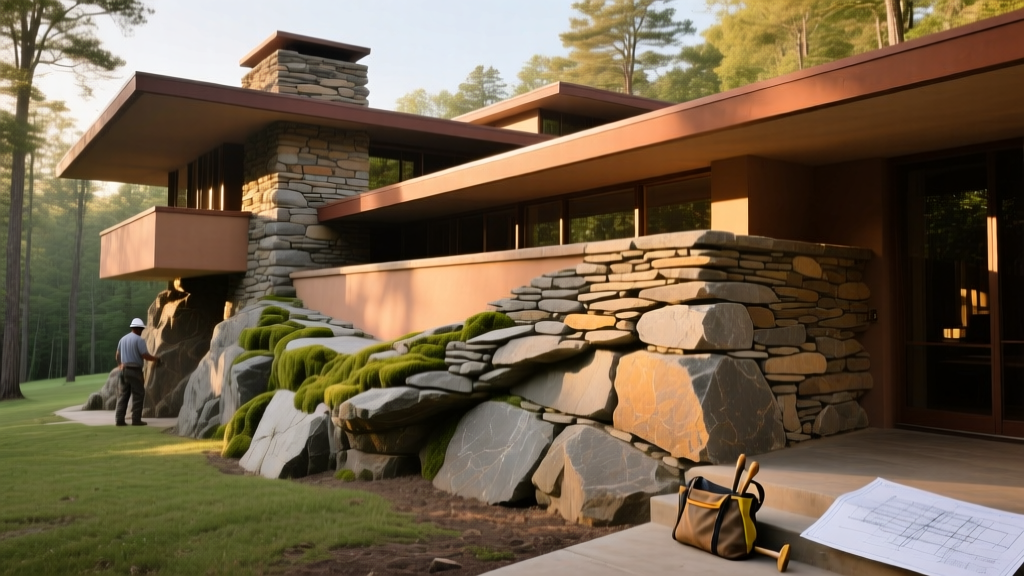
Frank Lloyd Wright pioneered the use of local stone to erase the boundary between a building and its site. His designs relied on materials sourced directly from the build location to create a sense of permanence and environmental harmony. The Frank Lloyd Wright Foundation notes that this organic approach requires the structure to grow naturally from its environment.
Usonian Architecture: A residential design philosophy coined by Frank Lloyd Wright to describe his vision for affordable, middle-class American homes that utilize local materials, flat roofs, and radiant floor heating to harmonize seamlessly with the surrounding natural landscape.
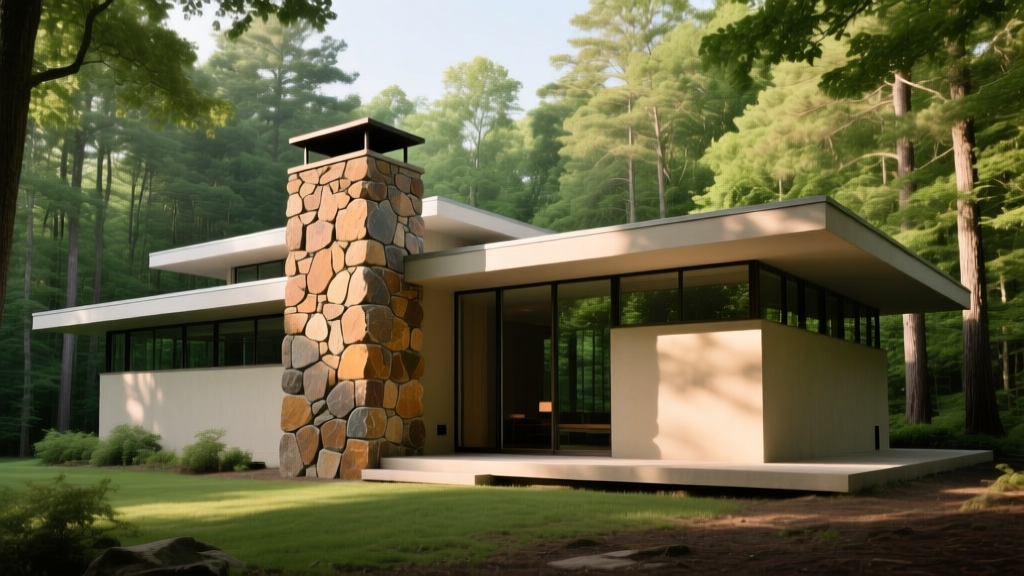
Modern builders replicating this aesthetic must source high-quality river rock and employ skilled masons. The visual continuity Wright achieved requires precise stone selection and mortar coloring, which directly impacts the overall budget.
Breaking Down the River Rock House Cost to Build
Material and Labor Expenses
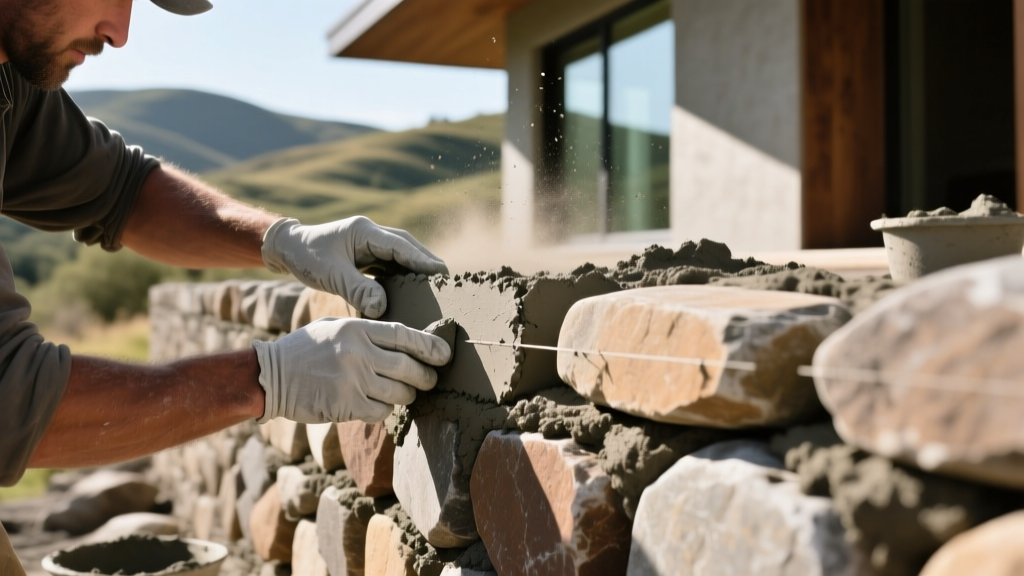
The cost of river rock masonry per square foot ranges from $45 to $85 for the exterior cladding alone. This price includes the stone, mortar, and specialized labor required to lay irregular, rounded shapes. According to 2026 data from the National Association of Home Builders, masonry labor rates have increased due to a shortage of skilled tradespeople.
Harvesting and transporting the stone adds significant logistical expenses. River rock averages $120 to $180 per ton, and a single pallet typically weighs 4,500 pounds. Freight costs can double the material price if the stone is not sourced within a 100-mile radius of the construction site.
Foundation and Structural Requirements
A river rock wall assembly is substantially heavier than standard siding. A typical 14-inch thick stone wall exerts immense downward force, requiring an engineered reinforced concrete foundation. This structural requirement adds a 15% premium to the initial site preparation and foundation pouring phases.
River Rock Masonry: A specialized construction technique utilizing naturally smoothed, water-tumbled stones harvested from riverbeds, laid in mortar to create durable, textured exterior and interior walls that emphasize organic architectural integration and natural thermal mass properties.
River Rock vs. Traditional Exterior Materials
Evaluating the river rock house cost to build requires comparing it against conventional alternatives. The table below illustrates the financial and performance differences across standard exterior cladding options in 2026.
| Material | Installed Cost (Per Sq Ft) | Expected Lifespan | Maintenance Level |
|---|---|---|---|
| River Rock Masonry | $45 - $85 | 100+ Years | Low |
| Traditional Clay Brick | $25 - $45 | 50 - 75 Years | Medium |
| Fiber Cement Siding | $10 - $18 | 30 - 50 Years | High |
| Natural Wood Siding | $12 - $22 | 20 - 40 Years | Very High |
Long-Term Maintenance and Durability
The maintenance costs of river rock exteriors are exceptionally low compared to wood or synthetic alternatives. Stone does not rot, warp, or attract wood-destroying insects. The Masonry Society recommends inspecting mortar joints every 25 years and applying a breathable silane-siloxane sealer to prevent moisture intrusion in freeze-thaw climates.
While the initial investment is high, the lifecycle cost of a river rock house is highly competitive. Homeowners avoid the recurring expenses of painting, staining, or replacing damaged panels that plague other exterior materials.
Frequently Asked Questions
Is a river rock house more expensive than brick?
Yes, a river rock house is generally 30% to 50% more expensive to build than a traditional clay brick home. The premium stems from the irregular shape of river rocks, which requires significantly more time and skill to lay securely compared to uniform, rectangular bricks.
Can river rock be used as a structural load-bearing material?
River rock can be used in load-bearing walls, but modern building codes typically require a reinforced concrete or structural steel core. The river rock is then applied as a structural veneer or integrated into a reinforced masonry assembly to meet seismic and wind-load requirements.
How does climate affect river rock construction costs?
Building in regions with severe freeze-thaw cycles increases costs by 5% to 10%. Builders must use specialized Type S mortar and install continuous insulation behind the masonry to prevent water from penetrating the stone and expanding during freezing temperatures.
Conclusion and Next Steps
The river rock house cost to build reflects a premium investment in organic architecture, durability, and timeless design inspired by Frank Lloyd Wright. While the upfront expenses for materials and specialized masonry labor are substantial, the century-long lifespan and minimal maintenance requirements provide exceptional long-term value. To move forward, consult a licensed masonry contractor who specializes in natural stone to obtain a site-specific structural assessment and precise material quote for your build.
Written by
Elena RodriguezElena Rodriguez is a civil engineer and technical writer specializing in concrete technology, masonry systems, and ASTM/ACI compliance. She earned her B.S. in Civil Engineering from Texas A&M University and spent a decade at a materials testing laboratory, performing over 2,000 concrete compressive strength tests and masonry prism evaluations. Elena is an ACI-certified Field Testing Technician (Grade I) and a member of ASTM Committee C12 on Natural Building Stone. She currently consults on forensic engineering cases involving concrete failures and moisture intrusion. Based in San Antonio, TX, Elena is a proud member of the Society of Women Engineers (SWE) and coaches her daughter's FIRST Robotics team.
More from Elena Rodriguez
View all
Walls & Panels
Cost Analysis: Light Gauge Steel Framing Advantages and Disadvantages
Evaluate light gauge steel framing advantages and disadvantages through a strict cost analysis lens, comparing material, labor, and lifecycle expenses.
Aug 4, 2026

Walls & Panels
Gypsum Board Types: Exact Specifications, Thickness & Dimensions
Compare standard, Type X, and moisture-resistant gypsum board types. Get exact specifications, thicknesses, dimensions, and ASTM standards for your project.
Aug 4, 2026

Fire Resistance
Best Fire-Resistant Outdoor Decking Materials: 2026 Buyer Guide
Discover the best fire-resistant outdoor decking materials for 2026. Compare Class A PVC, aluminum, and hardwood options for WUI compliance and safety.
Aug 4, 2026