Smart Strategies to Lower the Cost to Build a Car Wash
Discover proven strategies to reduce the cost to build a car wash. Learn budget-friendly equipment choices, site prep tips, and layout optimizations.
The True Baseline: Breaking Down Car Wash Construction Costs
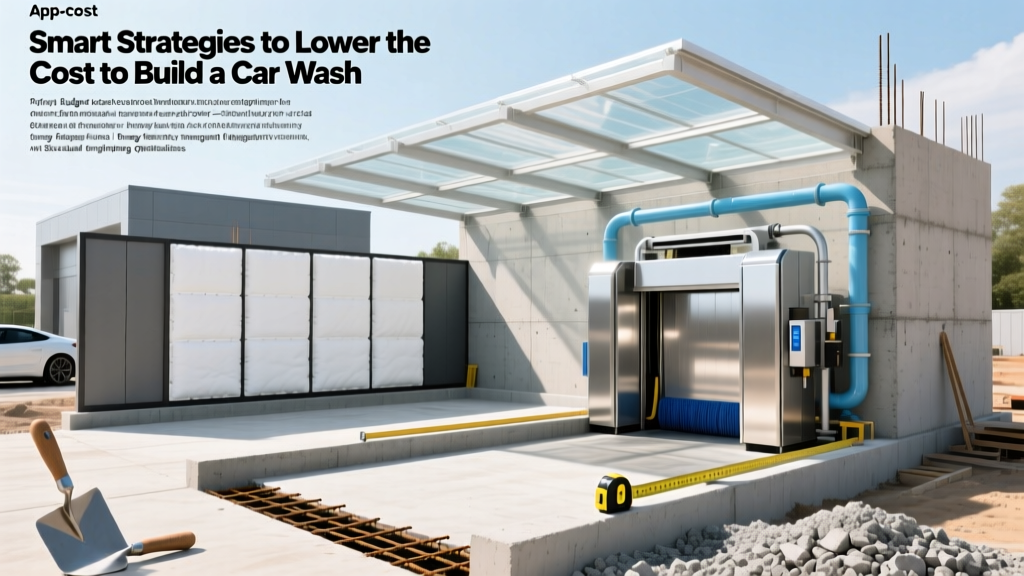
Estimating the cost to build a car wash requires moving beyond generic square-foot averages. In 2026, the capital expenditure for a modern express exterior tunnel ranges from $3.2 million to $4.8 million, while an in-bay automatic (IBA) facility typically falls between $250,000 and $450,000. These figures encompass land acquisition, site work, building shell, equipment, and utility hookups. However, developers who treat these numbers as fixed leave hundreds of thousands of dollars on the table. By strategically targeting specific line items—namely earthwork, equipment procurement, and utility infrastructure—you can reduce your initial capital outlay by 12% to 18% without compromising wash quality or throughput.
- Express Exterior Tunnel (100-130 ft): $3.2M - $4.8M
- In-Bay Automatic (Touchless/Friction): $250,000 - $450,000
- Self-Serve Wand Bays: $35,000 - $55,000 per bay
- Site Work & Utilities (Average): $400,000 - $800,000
Site Selection & Earthwork: Where Budgets Bleed
The most catastrophic cost overruns in car wash construction occur below grade. Car washes require massive volumes of water and heavy chemical storage, necessitating deep trenching for sewer lines, large-capacity oil-water separators, and expansive concrete reclaim pits. If you encounter unanticipated bedrock or expansive clay during excavation, your site work budget can double overnight.
Mandatory Geotechnical Testing
Never skip a comprehensive geotechnical soil report. Spending $4,000 to $7,000 on deep soil borings (minimum 15 feet deep across the wash bay footprint) before purchasing the land is non-negotiable. According to industry data tracked by the International Carwash Association, unanticipated rock blasting or soil stabilization (such as lime or cement mixing) adds an average of $85,000 to site prep costs. If the soil report reveals a high water table, you will need to engineer a deeper, heavier concrete pit to prevent hydrostatic uplift, which increases concrete and rebar costs by roughly 20%.
Optimizing the Site Layout
To minimize paving and concrete costs, design a tight, continuous traffic flow. A standard express tunnel requires a stacking queue of at least 15 to 20 cars. Instead of paving a massive 60-foot-wide concrete apron, use a single-lane stacking design (12 feet wide) with curved, stamped concrete or paver islands to guide traffic. This reduces the total square footage of 6-inch thick, 4,000 PSI concrete paving by up to 30%, saving approximately $12 to $18 per square foot in material and labor.
Equipment Procurement: Refurbished vs. New
The wash equipment itself represents 25% to 35% of the total project cost. While buying brand-new OEM equipment from manufacturers like Sonny's, MacNeil, or PDQ provides peace of mind, it is not always the most financially sound strategy. The secondary market for car wash equipment has matured significantly, offering certified refurbished alternatives that perform identically to new units at a fraction of the cost.
| Equipment Category | New OEM Cost | Certified Refurbished | Warranty Impact |
|---|---|---|---|
| Friction Tunnel (100ft) | $450,000 - $600,000 | $280,000 - $350,000 | 1-year vs 3-year |
| Touchless IBA System | $140,000 - $180,000 | $85,000 - $110,000 | 1-year vs 2-year |
| Water Reclaim System (50 GPM) | $45,000 - $65,000 | $25,000 - $35,000 | 6-month vs 1-year |
| POS & Payment Terminals (4 kiosks) | $32,000 - $40,000 | N/A (Always buy new) | Full OEM Support |
Strategic Rule of Thumb: Buy the mechanical wash equipment (conveyors, arches, blowers) refurbished, but always purchase the Point of Sale (POS) kiosks, payment terminals, and chemical dosing pumps brand new. Electronics and payment processors degrade quickly and require ongoing software support that refurbished units cannot guarantee.
Water Reclamation & Utility Savings
Municipal water and sewer rates are climbing, making water reclamation a mandatory investment rather than an optional upgrade. The EPA WaterSense program highlights that commercial facilities can reduce water consumption by up to 30% through efficient fixtures and reclaim systems. In a car wash, a properly sized reclaim system can push that number to 80%.
Sizing the Reclaim Pit Correctly
A standard 100-foot tunnel requires a 3,000-gallon, three-chamber concrete reclaim pit (settling, aeration, and clear water). Do not oversize this pit 'just in case.' Over-engineering a 5,000-gallon pit when your 50 GPM (gallons per minute) system only requires 3,000 gallons will cost an extra $15,000 in excavation and concrete. Furthermore, ensure the pit is poured with 5,000 PSI concrete and treated with a silane-siloxane penetrating sealer. Car wash soaps are highly acidic (pH 2.0 to 3.0) and alkaline (pH 11.0 to 12.0); without a sealer, the chemicals will degrade the concrete matrix, leading to catastrophic pit failure within five years.
Variable Frequency Drives (VFDs)
Install VFDs on all major electric motors, particularly the 20HP to 30HP vacuum pumps and high-pressure water pumps. A VFD allows the motor to run at partial speed when full capacity isn't needed, reducing electrical draw by up to 40%. While adding VFDs increases upfront electrical panel costs by roughly $8,000, the reduction in monthly utility bills typically yields a return on investment in under 14 months.
Building Envelope & Material Hacks
The physical structure housing the wash bay and equipment room offers significant opportunities for cost reduction without sacrificing durability or aesthetic appeal.
- Pre-Engineered Metal Buildings (PEMB): Opt for a PEMB rather than traditional Concrete Masonry Units (CMU) or tilt-wall construction. A PEMB reduces the building shell cost by 20% to 30% and accelerates the construction timeline by 4 to 6 weeks. Use 26-gauge R-panel metal siding with a PVDF (Kynar) paint finish to resist fading and chemical corrosion.
- Polycarbonate Glazing: Instead of expensive commercial glass storefronts, use multi-wall polycarbonate panels for the upper walls and fascia. This material costs roughly 40% less than insulated glass, provides excellent natural daylighting (reducing LED lighting costs during the day), and is virtually unbreakable.
- Flooring Choices: Avoid epoxy coatings in the wash bay. The constant exposure to water, silt, and harsh chemicals will cause epoxy to peel and delaminate within two years. Instead, specify a power-troweled, hard-trowel finish with an integral metallic aggregate hardener. It costs less upfront and provides superior slip resistance and chemical durability.
Electrical & Plumbing Specifications
Car washes are incredibly harsh environments for electrical components. The combination of high humidity, temperature fluctuations, and airborne chemical mist destroys standard electrical gear. To avoid costly replacements and fire hazards, specify NEMA 4X (watertight and corrosion-resistant) enclosures for all electrical panels, motor starters, and PLCs located inside the equipment room. While NEMA 4X panels cost about 15% more than standard NEMA 1 or 3R panels, they prevent the $5,000+ cost of replacing corroded contactors and breakers annually.
For plumbing, never use Schedule 40 PVC for chemical distribution lines. The high pressure and aggressive nature of triple-foam and tire shine chemicals will cause Schedule 40 joints to fail. Mandate Schedule 80 PVC or flexible braided stainless steel hoses for all chemical lines. This simple specification change prevents thousands of dollars in chemical spill cleanup fees and facility downtime.
Frequently Asked Questions
What is the most cost-effective car wash model to build?
The In-Bay Automatic (IBA) is the most cost-effective model, with total project costs ranging from $250,000 to $450,000. It requires less land (typically 15,000 to 20,000 square feet), a smaller building footprint, and minimal staffing compared to an express tunnel. However, the revenue ceiling is lower due to slower throughput (15-20 cars per hour vs. 80-100 for a tunnel).
How much does it cost to tap into municipal water and sewer?
Utility tap fees vary wildly by municipality, but you should budget between $40,000 and $120,000 for water and sewer capacity fees. Car washes are classified as high-volume commercial users, and many cities charge exorbitant impact fees. Always verify the exact tap fees and required meter sizes (typically a 2-inch or 3-inch water meter) with the local public works department before purchasing a parcel of land.
Can I build a car wash on a brownfield or previously developed site?
Yes, and doing so can actually lower your site work costs. Repurposing an existing gas station or retail pad often means the heavy civil work—such as curb cuts, stormwater retention ponds, and heavy-duty paving—is already in place. However, you must conduct a Phase II Environmental Site Assessment to ensure the existing soil is not contaminated, which could trigger expensive remediation requirements.
Written by
Marcus ChenMarcus Chen is a licensed structural engineer (PE) and building materials analyst with over 12 years of experience across residential, commercial, and industrial construction. He holds a Master of Science in Civil Engineering from UC Berkeley and spent six years at Thornton Tomasetti before transitioning to independent consulting and technical writing. Marcus specializes in material selection for seismic-prone regions, concrete reinforcement strategies, and lifecycle cost analysis. His work has been cited by the American Concrete Institute (ACI) and the Structural Engineers Association of California (SEAOC). When he is not on a job site or at his desk, you will find him hiking the Sierra Nevada or restoring a 1920s craftsman bungalow in Oakland, CA.
More from Marcus Chen
View all
Construction Cost
How Much Did the Eiffel Tower Cost to Build?
How much did the Eiffel Tower cost to build in 1889? We adjust for inflation and compare its budget to modern skyscraper construction.
Aug 4, 2026

Fire Resistance
What Is a Fire Resistant Material? Testing & Certification Guide
Discover what is a fire resistant material through ASTM and UL testing. Learn how fire ratings, certifications, and assemblies work in construction.
Aug 4, 2026

Construction Cost
How Much Did the Burj Khalifa Cost to Build?
How much did the Burj Khalifa cost to build? We break down the $1.5B project and extract 5 money-saving strategies for your next build.
Jul 30, 2026