How to Reduce the Cost to Build Gravel Driveway Installations
Discover proven strategies to reduce the cost to build gravel driveway installations. Learn material hacks, phasing tips, and base prep methods to save.
The True Breakdown of Gravel Driveway Expenses
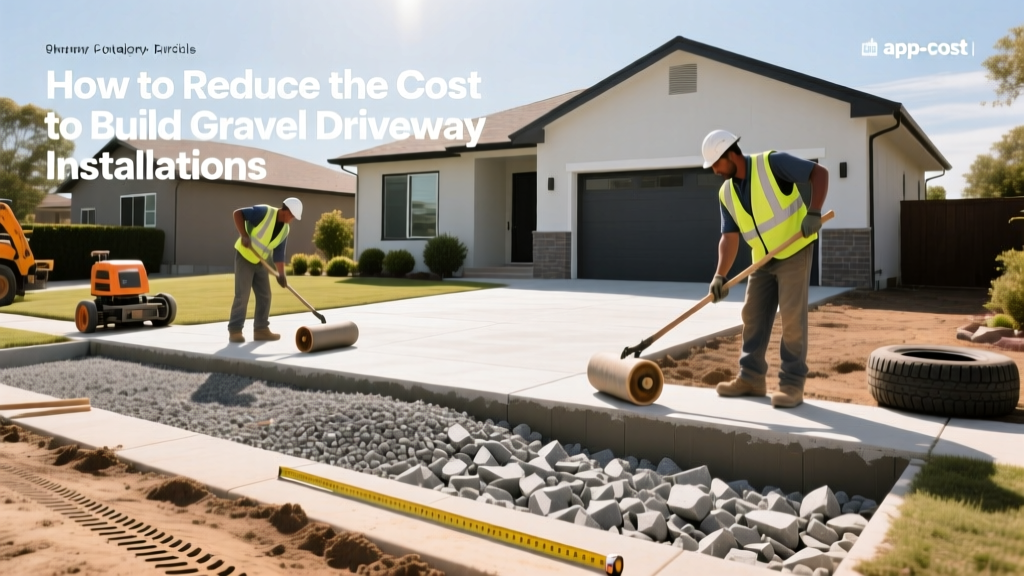
Understanding where your money goes is the first step in reducing the overall cost to build gravel driveway installations. A standard 12-foot by 50-foot single-car driveway (600 square feet) typically ranges from $1,500 to $4,500 in 2026, depending on site conditions and material choices. However, this wide variance is not just about regional labor rates; it is heavily dictated by subgrade preparation and aggregate selection.
According to data from the USGS Mineral Commodity Summaries, crushed stone and gravel prices fluctuate based on local quarry proximity, making transportation often more expensive than the material itself. Below is a realistic cost matrix for a 600-square-foot driveway project.
| Project Component | Material / Service | Estimated Cost (2026) | % of Total Budget |
|---|---|---|---|
| Site Clearing & Grubbing | Manual or light machinery | $300 - $800 | 15% |
| Subgrade Excavation | Skid steer / Mini excavator | $600 - $1,200 | 25% |
| Geotextile Fabric | 4 oz non-woven (e.g., MIRAFI) | $150 - $300 | 5% |
| Base Layer (Item 4) | Crusher run (4-6 inches) | $400 - $700 | 20% |
| Topcoat Layer (#57) | Washed clean stone (2-3 inches) | $350 - $600 | 15% |
| Compaction & Grading | Vibratory roller rental / Labor | $400 - $900 | 20% |
5 High-Impact Strategies to Slash Installation Costs
1. Opt for Crusher Run Over Decorative Aggregates
The most common mistake homeowners make is selecting round or decorative stones like pea gravel or river rock for the entire driveway depth. Round stones lack mechanical interlock; they shift under tire friction, leading to severe rutting and requiring constant re-grading. Crusher run (also known as Item 4, quarry process, or dense-grade aggregate) contains a mix of crushed stone and stone dust. When compacted, the dust acts as a natural binder, creating a semi-solid surface that rivals asphalt in stability. By utilizing crusher run for both your base and your topcoat, you eliminate the need for a separate, more expensive washed topcoat layer, instantly reducing your material costs by 15% to 20%.
2. Install Non-Woven Geotextile Fabric (The Hidden Saver)
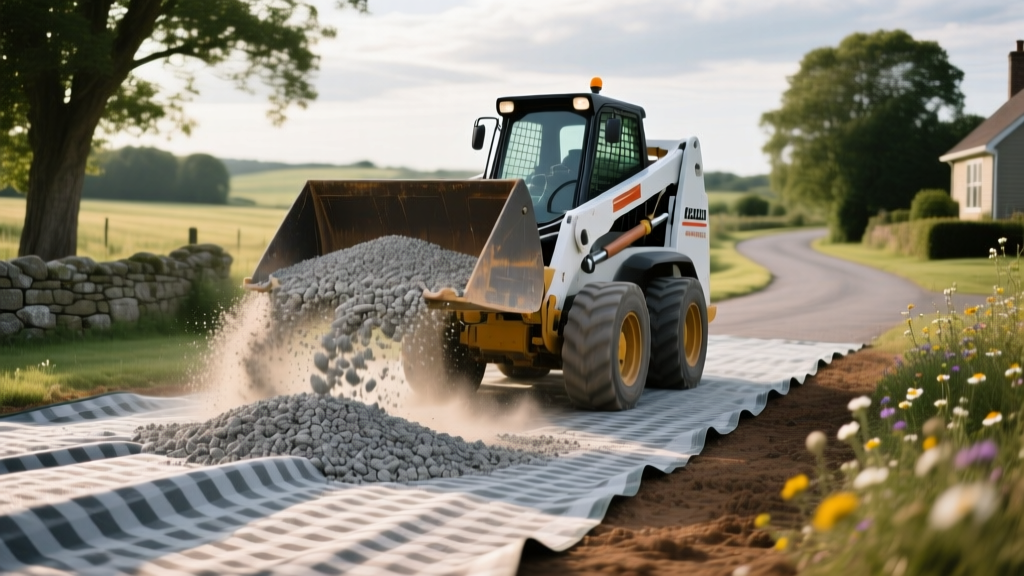
Skipping geotextile fabric to save $200 upfront is a critical error that will cost you thousands over the next decade. If your driveway sits on a clay or silt-heavy subgrade, the weight of vehicles will push the gravel down into the mud and pull the mud up into the gravel (a process called pumping). The Penn State Extension emphasizes that separating the subgrade from the aggregate base is mandatory for unpaved road longevity. Invest in a heavy-duty, non-woven geotextile fabric (minimum 4 oz per square yard). This single layer prevents aggregate loss, meaning you will not need to purchase and spread replacement gravel every two to three years.
3. Right-Size the Driveway Footprint
Many property owners default to a 20-foot-wide double-lane driveway out of habit, not necessity. A 20-foot width requires 1,000 square feet of materials for a 50-foot run. By narrowing the driveway to a 10-foot or 12-foot single-lane footprint with occasional 20-foot turnout passing pads, you cut your excavation, fabric, and gravel volume in half. For most rural or suburban lots, a 12-foot width provides ample clearance for standard vehicles and delivery trucks while drastically lowering the cost to build gravel driveway surfaces.
4. Phase the Base and Topcoat Layers
If your budget is strictly capped, phase your installation. Focus your initial budget entirely on deep excavation, geotextile fabric, and a thick 6-to-8-inch base layer of large, angular crusher run. Allow this base to settle and cure under traffic for six to twelve months. This reveals any soft spots or drainage issues that can be corrected cheaply before the final aesthetic layer is applied. Once the base is fully stabilized, you can order a smaller, 2-inch topcoat of #57 washed stone or fine crusher run in the following season, spreading the financial burden across two fiscal years.
5. Strategic DIY: Renting vs. Hiring for Earthwork
Labor accounts for up to 50% of professional driveway installation quotes. You can reclaim a massive portion of this budget by handling the earthwork yourself. Renting a compact track loader (skid steer) with a grading bucket and a tow-behind vibratory roller typically costs between $350 and $500 per day in 2026. If you are comfortable operating heavy machinery, you can complete the excavation, fabric laying, and base spreading for a 600-square-foot driveway in a single weekend. Leave the final laser-grading and crown-sloping to a professional if you lack experience, but doing the heavy lifting yourself saves $1,500 to $2,500 in contractor markup.
Never use pea gravel for a driveway surface. Despite its low initial cost and attractive appearance, its smooth, round edges offer zero shear strength. Tires will spin, snowplows will strip it down to the dirt in a single pass, and it will migrate into your lawn. The National Stone, Sand & Gravel Association (NSSGA) strictly recommends angular, crushed aggregates with fines for any surface subjected to vehicular shear forces.
Long-Term Maintenance: Where Budget Driveways Fail
Cutting costs during installation should never compromise the fundamental drainage engineering of the driveway. A gravel driveway must be built with a 'crown'—a center peak that slopes downward toward the edges to shed water. The industry standard is a minimum slope of 1/4 inch per foot from the center to the edge. If you build a flat driveway to save on grading time, water will pool, freeze, and thaw, destroying your base layer from the inside out.
Additionally, install shallow V-ditches or French drains along the low side of the driveway to catch runoff. Failing to manage edge water will result in 'alligator cracking' and edge sloughing, forcing you to hire a grader and buy new stone annually. Proper crown sloping and edge drainage are non-negotiable investments that protect your initial capital.
Frequently Asked Questions
How thick should a gravel driveway be?
A properly constructed gravel driveway requires a total compacted thickness of 8 to 12 inches. This is typically achieved using a 6-to-8-inch base layer of large, angular stone (like Item 4 or 2.5-inch crusher run) for structural load distribution, topped with a 2-to-4-inch surface layer of smaller aggregate (like #57 stone or fine crusher run) for a smooth driving surface and water shedding.
Does a gravel driveway increase property value?
While a gravel driveway does not yield the same direct ROI as a paved asphalt or concrete driveway, a well-maintained, properly drained, and crowned gravel driveway significantly improves curb appeal and accessibility compared to a dirt path. It prevents vehicle damage and mud tracking, which are critical factors for rural property buyers.
What is the cheapest gravel for a driveway?
Locally sourced crusher run (quarry process) is universally the most cost-effective option. Because it includes stone dust, it compacts into a hard, cement-like surface without requiring expensive chemical binders or resin coatings. Sourcing from the nearest quarry minimizes the heavy-haul freight surcharges that artificially inflate the price of decorative or washed stones.
Written by
David NakamuraDavid Nakamura is a licensed architect (AIA) and construction technology writer focused on sustainable building methods, mass timber engineering, and high-performance building envelopes. He holds a Master of Architecture from the University of Washington and is a certified Passive House Consultant (CPHC). David spent eight years at the Seattle firm Mithun, where he led the design of three LEED Platinum projects, before founding his own practice specializing in net-zero residential design. He serves on the editorial advisory board of GreenBuilder Magazine and has authored peer-reviewed papers on cross-laminated timber (CLT) connections for the Journal of Structural Engineering. In his spare time, David teaches woodworking at Pratt Fine Arts Center and kayaks the Puget Sound.
More from David Nakamura
View all
Construction Cost
Labor Cost to Build a Deck Per Sq Ft: 2026 Installation Guide
Discover the exact labor cost to build a deck per sq ft in 2026. This installation guide breaks down contractor rates, complexity factors, and hidden fees.
Aug 4, 2026

Construction Cost
How Much Does It Cost to Build a 3 Bedroom House? Financing Guide
Learn exactly how much it costs to build a 3 bedroom house and explore 2026 financing options, construction loan types, and budget frameworks for your build.
Aug 4, 2026

Construction Cost
Cost to Build a Tennis Court: 2026 Guide
How much does it cost to build a tennis court in 2026? Breakdowns for asphalt, concrete, and synthetic surfaces plus fencing and lighting.
Jul 30, 2026