How Much Does It Cost to Build a Prefab House? Cost & Savings Guide
Learn exactly how much it costs to build a prefab house and discover actionable money-saving strategies to reduce your modular home budget in 2026.
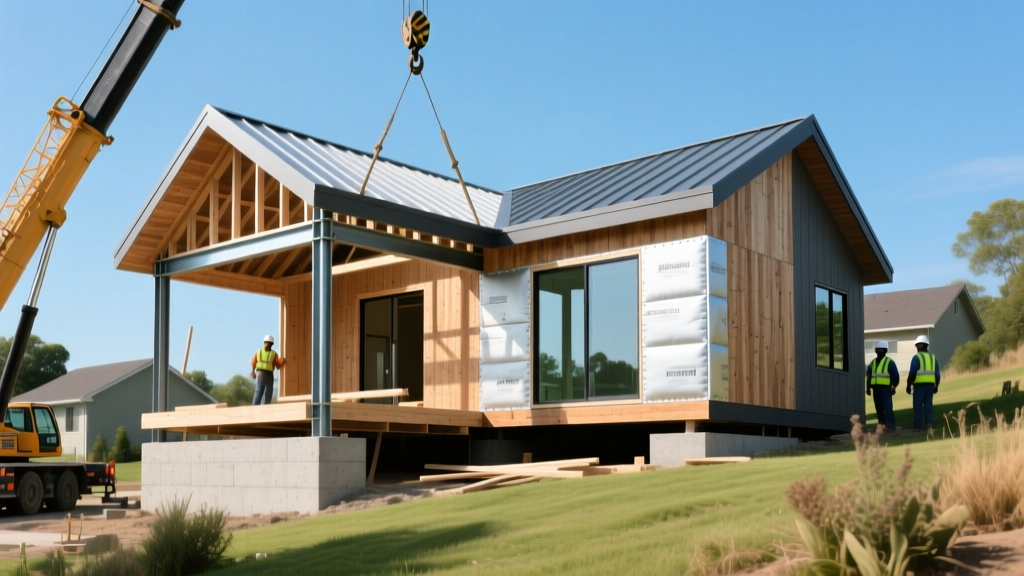
The True Cost to Build a Prefab House: Base vs. Turnkey
When homeowners ask, "how much does it cost to build a prefab house?", the answer depends entirely on whether they are looking at the factory base price or the final turnkey price. As of 2026, supply chain stabilizations have normalized modular manufacturing costs, but site-work expenses remain highly variable based on local labor rates and topography.
According to data from the National Association of Home Builders (NAHB), the national average for a fully completed modular home ranges from $150 to $250 per square foot. However, this figure masks the distinct financial phases of a prefab build. To effectively manage your budget, you must understand the 60/20/20 rule of prefab construction: 60% of your budget goes to the factory-built modules, 20% to site preparation and foundation, and 20% to assembly, utility hookups, and interior finishing.
Average Prefab Cost Breakdown (2,000 Sq. Ft. Home)
| Cost Category | Estimated Price Range | Cost Per Sq. Ft. |
|---|---|---|
| Base Factory Modules | $140,000 - $200,000 | $70 - $100 |
| Site Prep & Foundation | $25,000 - $55,000 | $12.50 - $27.50 |
| Crane & Assembly Labor | $15,000 - $30,000 | $7.50 - $15.00 |
| Utility Hookups & Permits | $15,000 - $35,000 | $7.50 - $17.50 |
| Interior Finishes & Upgrades | $30,000 - $60,000 | $15.00 - $30.00 |
| Total Turnkey Cost | $225,000 - $380,000 | $112.50 - $190.00 |
5 Proven Money-Saving Strategies for Prefab Construction
Building a modular home inherently saves 10% to 20% compared to traditional stick-built construction due to factory efficiency and reduced material waste. However, you can drive costs down even further by optimizing the site-work and design phases.
1. Optimize the "Set Day" Crane Logistics
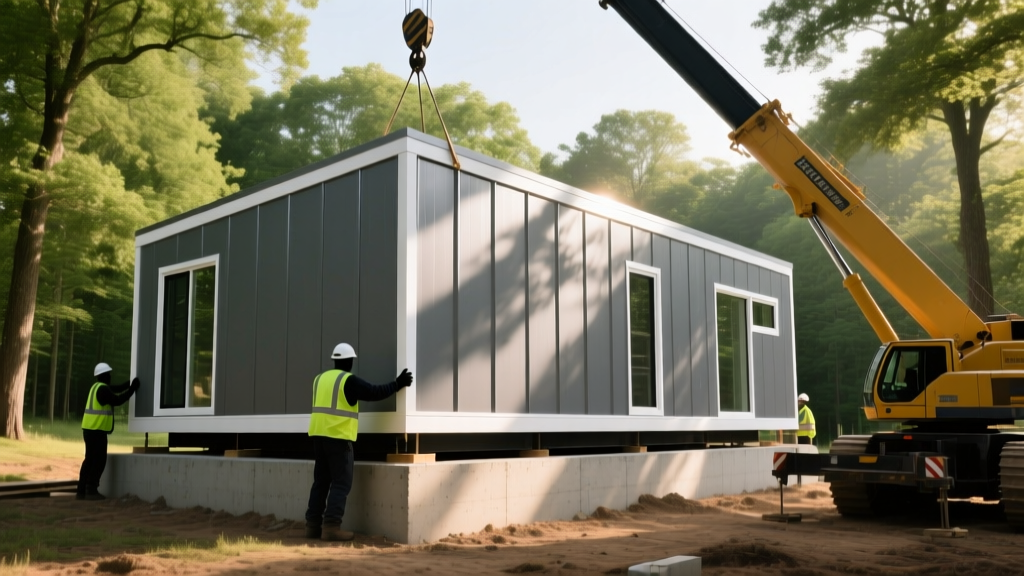
The day your modules are lifted onto the foundation (Set Day) is the most expensive single day of your build. Mobile crane rentals typically cost $150 to $250 per hour, with a mandatory 4-hour or 8-hour minimum. If your site requires a 100-ton all-terrain crane because of soft soil or tight turning radiuses, you will pay a premium. The Savings Strategy: Design your home to be set in a single 8-hour shift. Work with your manufacturer to ensure modules are sequenced on the delivery trucks in the exact reverse order they will be craned. A well-planned 1-day set versus a disorganized 2-day set saves $2,000 to $4,000 in crane and crew overtime fees.
2. Choose a Slab-on-Grade or Crawlspace Foundation
While a full walk-out basement adds valuable living space, it is the ultimate budget killer. Excavation, reinforced concrete pouring, and waterproofing for a full basement on a 2,000 sq. ft. footprint will cost between $35,000 and $60,000. The Savings Strategy: Opt for a monolithic slab-on-grade foundation ($8,000 - $15,000) or a block crawlspace ($12,000 - $18,000). If you choose a slab, ensure your manufacturer routes all plumbing through interior partition walls rather than the floor joists to prevent costly concrete trenching later.
3. Standardize Rooflines and Avoid Site-Built Additions
Prefab homes are shipped with the roof already attached to the modules. If you design a home with complex hips, valleys, or dormers that cannot be folded for transport, those sections must be stick-built on-site. Site-built roofing labor costs $15 to $25 per square foot. The Savings Strategy: Stick to simple gable or shed rooflines that fold flat for transport and unfold on the foundation. Keep porches and garages as separate, post-frame structures built after the main set, which allows you to use cheaper local pole-building contractors rather than your premium modular general contractor.
4. Act as Your Own General Contractor (With Caveats)
Hiring a turnkey modular GC adds a 15% to 20% project management fee to your total build. If you have construction experience or the time to manage subcontractors, acting as an owner-builder can save $30,000 to $50,000 on a $250,000 project. You will need to secure your own construction-to-permanent loan and coordinate the excavation, foundation pouring, utility trenching, and crane scheduling. Only attempt this if you have a reliable network of licensed subcontractors.
5. Leverage Factory "Remnant" or "Spec" Upgrades
Manufacturers often have surplus high-end materials from larger commercial projects or cancelled custom orders. Ask your sales rep about upgrading your countertops to quartz or your flooring to engineered hardwood using factory remnants. You can often secure $15,000 worth of premium finishes for $5,000 simply by being flexible on color and pattern selections.
Hidden Costs That Destroy Prefab Budgets
According to the U.S. Department of Housing and Urban Development (HUD), inadequate site evaluation is the leading cause of budget overruns in manufactured and modular housing. Before purchasing land, budget for these frequently overlooked expenses:
- Utility Trenching: If your municipal water and sewer taps are at the street, trenching 150 feet to your homesite costs $25 to $45 per linear foot ($3,750 - $6,750).
- Crane Mats and Ground Prep: Heavy cranes sink in soft soil. Renting timber crane mats to stabilize the lift zone costs $1,500 to $3,000.
- Marriage Wall Finishing: The drywall seam where two modules meet requires specialized taping and mudding to prevent cracking as the house settles. Budget $1,500 for a specialized drywall finisher.
- Permit Expediting: Modular homes require both state-level factory inspection approvals and local municipal building permits. Delays in local zoning can cost thousands in crane rescheduling fees.
Material Selection: Where to Splurge and Where to Save
To maximize your budget, allocate your funds toward structural longevity and energy efficiency, while saving on cosmetic elements that are easily swapped out later.
| Component | Where to Save (Budget Option) | Where to Splurge (ROI Option) |
|---|---|---|
| Insulation | Standard Fiberglass Batts (R-19) | Closed-Cell Spray Foam (R-38+). Reduces HVAC sizing and monthly energy bills. |
| Windows | Standard Vinyl Double-Pane | Fiberglass frames with Low-E argon gas. Prevents warping and air leakage over time. |
| Flooring | Luxury Vinyl Plank (LVP) | Engineered Hardwood. LVP is highly durable and saves $4-$6 per sq. ft. over hardwood. |
| Cabinetry | Factory-Standard MDF/Particleboard | Custom plywood boxes. Factory cabinets often fail at the hinges after 5-7 years. |
| Plumbing | PEX Piping | Copper. PEX is the industry standard, freezes less easily, and saves 40% on labor. |
"The greatest financial advantage of a prefab home isn't just the speed of construction; it's the predictability of the factory contract. By locking in 60% of your material and labor costs before ground is even broken, you are insulated from the seasonal price volatility that plagues traditional stick-builders."
Finalizing Your Prefab Budget
Understanding how much it costs to build a prefab house requires looking past the glossy brochure prices. By focusing your budget on a simple footprint, optimizing crane logistics, and making strategic material substitutions, you can build a high-quality modular home for 15% to 20% less than comparable site-built alternatives. Secure your land, conduct a thorough soil and utility survey, and demand a line-item turnkey estimate from your manufacturer before signing any paperwork.
Written by
Sarah WhitfieldSarah Whitfield is a chartered quantity surveyor (MRICS) and construction cost analyst with 15 years of experience in material pricing, procurement strategy, and project budgeting. She earned her degree in Construction Management from the University of Reading (UK) and has worked on projects ranging from $2M custom homes to $180M mixed-use developments across North America and Europe. Sarah currently leads cost estimating for BuildMat Insight, maintaining a proprietary database of 4,000+ material price points updated quarterly. She is a frequent contributor to RSMeans cost data panels and has presented at the International Cost Engineering Council (ICEC) congress. Based in Denver, CO, Sarah is an avid trail runner and volunteer mentor for Women in Construction.
More from Sarah Whitfield
View all
Wood & Lumber
What Are the Different Types of Wood? A Builder's Guide
Compare structural softwoods, finish hardwoods, and engineered lumber. Analyze Janka ratings, MOE values, and 2026 pricing for construction.
Aug 4, 2026

Walls & Panels
Steel Framing vs Wood Framing: Corrosion and Moisture Defense
Compare steel framing vs wood framing for moisture resistance. Learn about galvanized coatings, condensation risks, and corrosion protection strategies.
Jul 21, 2026

Stone & Masonry
How to Cut Stone Veneer: Wet Saw vs Grinder Comparison
Compare the best tools for cutting stone veneer. We review wet saws, angle grinders, and chop saws to help you achieve clean, chip-free cuts.
Jul 21, 2026