Regional Cost to Build a Padel Court: 2026 Price Analysis
Analyze the regional cost to build a padel court in 2026. Compare material specs, foundation requirements, and turnkey prices across US climates.
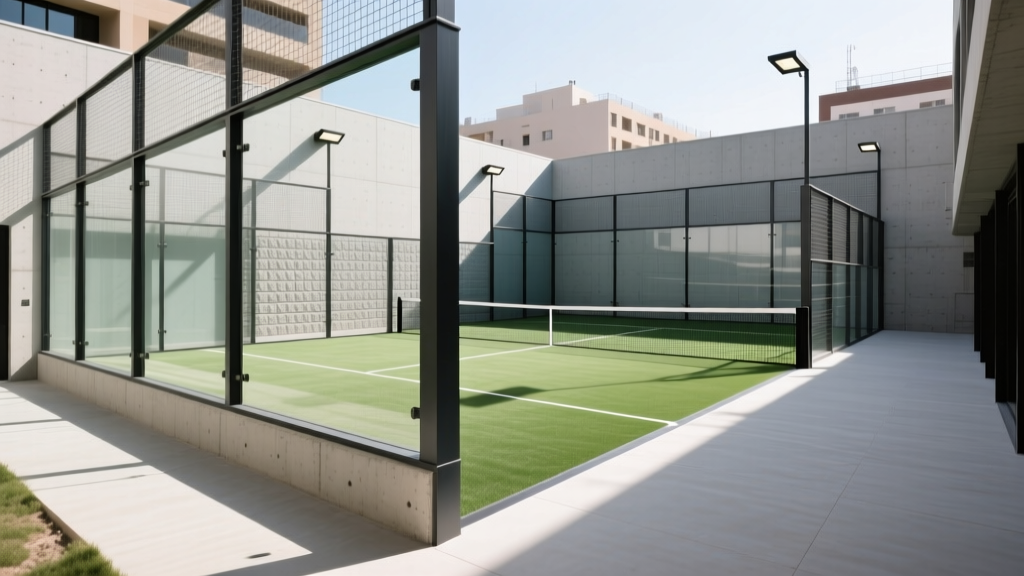
The True Cost to Build a Padel Court: A Regional Breakdown
Padel is no longer a niche European export; it is the fastest-growing racket sport in North America, driving massive demand for commercial and residential court installations. However, the cost to build a padel court varies wildly depending on your geographic location, local climate, and site-specific engineering requirements. A turnkey outdoor court in Florida faces entirely different structural challenges than an indoor facility in Illinois.
In 2026, the national average for a single, commercial-grade outdoor padel court ranges from $75,000 to $115,000. But treating this as a flat national rate is a budgeting error. Regional labor disparities, frost-line foundation requirements, and coastal corrosion mandates can swing your final invoice by over 40%. This guide dissects the exact material specifications, regional cost modifiers, and hidden site-prep expenses you must account for.
Material Baseline: What You Are Actually Paying For
Before analyzing regional labor and site prep, you must understand the baseline material costs. Cutting corners on materials to save $5,000 upfront will result in glass shattering under wind load or turf degrading in two seasons. According to the International Padel Federation (FIP) Court Regulations, structural integrity and surface consistency are non-negotiable for sanctioned play.
| Component | 2026 Specification Standard | Estimated Material Cost |
|---|---|---|
| Steel Structure | Hot-dip galvanized, 3mm-4mm thickness, powder-coated (80-100 microns) | $12,000 - $15,500 |
| Glass Panels | 12mm tempered safety glass (panoramic), 18 panels, UV-bonded | $8,500 - $11,000 |
| Electro-welded Mesh | 3mm wire, 50x50mm diamond/square pattern, anti-cut edges | $3,200 - $4,500 |
| Artificial Turf | 12mm textured monofilament polyethylene, WPA-approved | $4,800 - $6,200 |
| Silica Sand Infill | 12-15 kg per square meter (rounded, washed silica) | $800 - $1,200 |
| LED Lighting | 4x 200W or 2x 400W LED fixtures, 500 lux average, anti-glare | $2,500 - $3,800 |
The Turf and Infill Equation
Do not use standard landscaping turf. Padel requires a 12mm pile height with a high-density stitch rate to ensure consistent ball bounce (between 135cm and 145cm when dropped from 3 meters). The 15 kg/sqm silica sand infill is critical; it weighs down the turf, protects the backing from UV degradation, and provides the necessary traction for players. Budget $1,000 per court just for the washed silica sand and the mechanical brushing required to distribute it evenly.
Regional Price Matrix: Where Your Money Goes
Site preparation, concrete pouring, and assembly labor are where regional economics drastically alter the cost to build a padel court. Below is a comparative analysis of turnkey costs across four distinct US climate zones.
| Region | Primary Cost Drivers | Turnkey Cost Range (Single Court) | Foundation Specifics |
|---|---|---|---|
| Sunbelt (FL, TX, AZ) | High water table drainage, UV-resistant coatings, expansive clay mitigation. | $82,000 - $98,000 | Post-tensioned slab with deep French drains; 1% to 1.5% cross-slope. |
| Northeast (NY, MA, PA) | Frost walls, union labor rates, winterization, indoor dome requirements. | $115,000 - $145,000+ | 4-foot frost walls, 6-inch reinforced slab with radiant heating conduits. |
| Midwest (IL, OH, MI) | Freeze-thaw cycles, soil stabilization, wind-load engineering for open plains. | $95,000 - $120,000 | Thickened edge slabs, sub-grade gravel base (min 8 inches) for frost heave prevention. |
| West Coast (CA, WA) | Seismic structural engineering, Title 24 lighting compliance, marine-grade steel. | $105,000 - $135,000 | Seismic-tied rebar grid; marine-grade zinc coating for coastal salt air. |
Foundation and Climate Taxes
The most common point of failure in padel court construction is the concrete slab. A standard 4-inch residential driveway pour will crack under the differential settling of a 650-square-foot steel and glass structure. You must pour a minimum 5-inch to 6-inch steel-reinforced concrete slab (3,000 to 4,000 PSI).
The Frost Line Premium
In the Northeast and Midwest, the ground freezes and thaws, causing soil to expand and contract. If your court's perimeter footings do not extend below the local frost line (which can be 48 inches deep in parts of New York), the slab will heave, pulling the steel posts out of plumb and causing the 12mm glass panels to shatter under torsion stress. Digging 4-foot frost walls adds $8,000 to $14,000 to your site-prep budget compared to a shallow slab in Florida.
Coastal Corrosion and Seismic Mandates
If you are building within 5 miles of the ocean in California or the Eastern Seaboard, standard powder-coated steel will rust from the inside out within three years. You must specify hot-dip galvanized steel with a marine-grade epoxy topcoat. Furthermore, California's seismic codes require structural engineers to stamp the footing plans, ensuring the steel posts can withstand lateral shear forces during an earthquake without transferring stress to the glass.
"We see developers attempt to save money by importing non-galvanized steel frames from overseas. In humid or coastal environments, rust bleeds through the powder coating in 18 months, compromising the structural welds. Always demand mill certificates proving hot-dip galvanization to ISO 1461 standards."
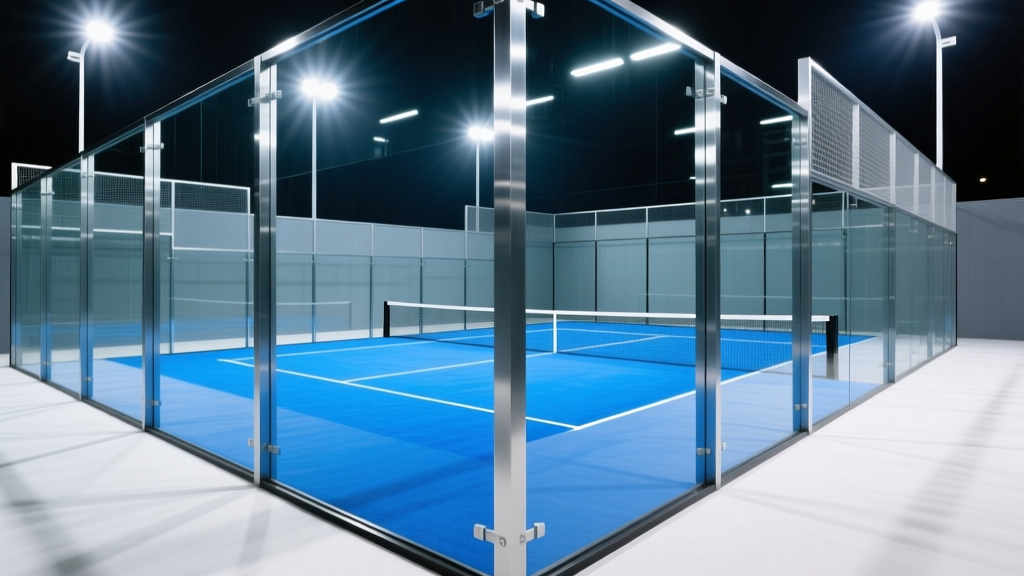
Indoor vs. Outdoor: The Climate Enclosure Cost
In regions with harsh winters, outdoor courts sit unused for four to five months, destroying your ROI. To achieve year-round revenue, Northern operators must enclose their courts. According to facility guidelines tracked by organizations like Sport England Facility Design and Cost Guidance, enclosing racket sports facilities requires specialized HVAC and structural considerations.
- Air-Supported Domes (Bubbles): The most cost-effective winterization. An automated pressurized dome with an airlock entrance costs $45,000 to $70,000 per court. It requires a continuous run blower motor and a backup diesel generator.
- Pre-Engineered Metal Buildings: A permanent steel building with insulated panels and HVAC. Budget $150 to $220 per square foot. For a single court (including required 3m runoff), expect to pay $250,000 to $350,000 just for the shell and slab.
- Tensile Fabric Structures: Semi-permanent aluminum frames with PVC tensioned membranes. Costs roughly $90,000 to $130,000 per court. Excellent for letting in natural light while blocking wind and rain.
Hidden Costs That Blow Up Padel Court Budgets
When calculating the cost to build a padel court, developers frequently overlook secondary infrastructure and regulatory hurdles.
1. Acoustic Mitigation in Residential Zones
The sound of a solid EVA foam padel ball striking 12mm tempered glass and a steel frame generates sharp, high-decibel impulsive noise. If your court is within 500 feet of residential property lines, local zoning boards will likely require an acoustic study. Mitigation strategies include installing acoustic dampening mesh behind the glass, building earth-berm sound walls, or planting dense everwind windbreaks. Budget $5,000 to $15,000 for acoustic mitigation if you are not in an industrial or commercial zone.
2. Wind Load Engineering
A panoramic padel court (which uses no back mesh, only glass) acts as a massive sail. In hurricane-prone regions (Florida, Gulf Coast) or high-wind plains (Texas, Oklahoma), structural engineers must calculate wind shear loads up to 140 mph. This requires larger, deeper concrete pier footings for the corner posts, adding $3,000 to $6,000 in concrete and rebar costs per court.
3. Electrical and Lighting Upgrades
Standard 500 lux lighting is fine for recreational play, but if you plan to host tournaments or stream matches, you need 1,000+ lux with a specialized anti-flicker driver for cameras. Furthermore, running a dedicated 3-phase electrical line to a remote corner of a park or country club can cost $25 to $50 per linear foot if trenching through existing landscaping or hardscape is required.
ROI and Payback Timelines by Region
The capital expenditure of a padel court is only half the equation; the regional demand dictates your payback period. In high-density Sunbelt markets like Austin, Miami, and Scottsdale, prime-time court rentals (6 PM - 10 PM) command $60 to $90 per hour. With four courts generating $120,000 in gross annual revenue and a build cost of $350,000, the hard-cost payback period is roughly 2.5 to 3 years, assuming a 40% net operating margin.
In the Northeast, where outdoor seasons are limited to May through October, operators must rely heavily on coaching clinics, corporate leagues, and high-priced indoor winter memberships to achieve a similar ROI. The higher upfront cost to build a padel court in these regions is offset by the premium pricing that a captive, year-round indoor market will bear. Always align your structural budget with the realistic revenue ceiling of your specific zip code.
Written by
Sarah WhitfieldSarah Whitfield is a chartered quantity surveyor (MRICS) and construction cost analyst with 15 years of experience in material pricing, procurement strategy, and project budgeting. She earned her degree in Construction Management from the University of Reading (UK) and has worked on projects ranging from $2M custom homes to $180M mixed-use developments across North America and Europe. Sarah currently leads cost estimating for BuildMat Insight, maintaining a proprietary database of 4,000+ material price points updated quarterly. She is a frequent contributor to RSMeans cost data panels and has presented at the International Cost Engineering Council (ICEC) congress. Based in Denver, CO, Sarah is an avid trail runner and volunteer mentor for Women in Construction.
More from Sarah Whitfield
View all
Wood & Lumber
What Are the Different Types of Wood? A Builder's Guide
Compare structural softwoods, finish hardwoods, and engineered lumber. Analyze Janka ratings, MOE values, and 2026 pricing for construction.
Aug 4, 2026

Walls & Panels
Steel Framing vs Wood Framing: Corrosion and Moisture Defense
Compare steel framing vs wood framing for moisture resistance. Learn about galvanized coatings, condensation risks, and corrosion protection strategies.
Jul 21, 2026

Stone & Masonry
How to Cut Stone Veneer: Wet Saw vs Grinder Comparison
Compare the best tools for cutting stone veneer. We review wet saws, angle grinders, and chop saws to help you achieve clean, chip-free cuts.
Jul 21, 2026