Regional Cost to Build Nuclear Power Plant: 2026 Guide
Analyze the regional cost to build nuclear power plant in 2026. Compare US, European, and Asian pricing, SMR economics, and capital breakdowns.
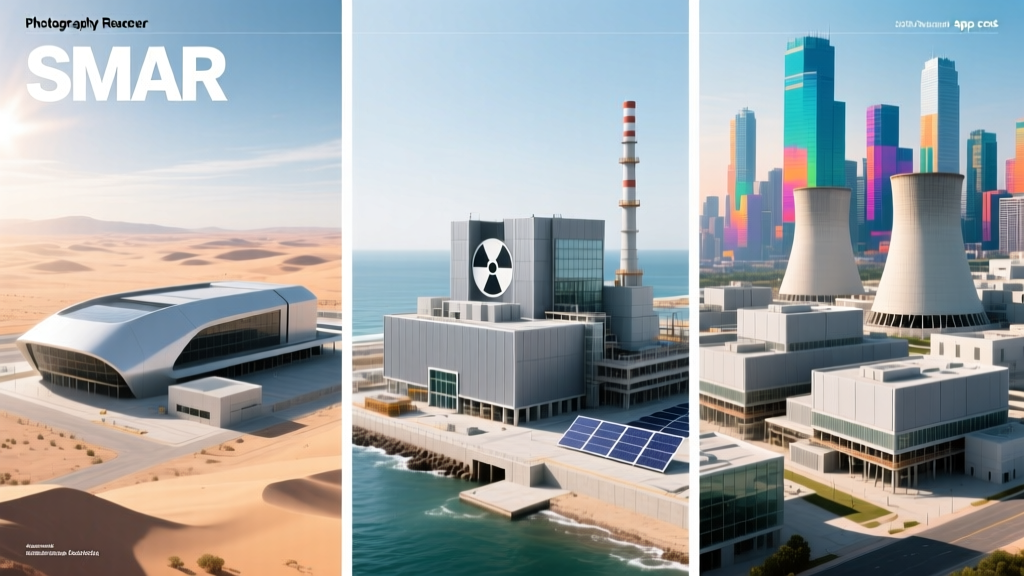
Estimating the cost to build nuclear power plant infrastructure requires navigating a labyrinth of macroeconomic variables, regulatory frameworks, and specialized supply chains. Unlike commercial real estate or standard industrial facilities, nuclear mega-projects are uniquely sensitive to geographic location. A Gen III+ reactor that costs $4,000 per kilowatt (kW) in East Asia can easily exceed $16,000 per kW in North America or Western Europe. This massive divergence is not driven by the cost of uranium or the fundamental physics of the reactor, but by regional differences in first-of-a-kind (FOAK) engineering, nuclear-grade supply chain maturity, labor productivity, and the cost of capital.
The Architecture of Nuclear Capital Costs
To accurately estimate nuclear construction costs, estimators must separate Overnight Capital Cost (OCC) from All-In Costs. The OCC represents the direct and indirect costs of construction if the plant were built instantaneously. However, nuclear plants take 7 to 12 years to build in Western markets, meaning Interest During Construction (IDC) and financing costs drastically inflate the final price tag.
- Overnight Capital Cost (OCC): Materials, labor, engineering, procurement, and construction (EPC) without financing.
- Interest During Construction (IDC): The cost of debt and equity accrued over the multi-year build period.
- Levelized Cost of Energy (LCOE): The per-megawatt-hour cost required to break even over the plant's 60-to-80-year lifespan.
According to the U.S. Energy Information Administration (EIA), the baseline OCC for advanced nuclear technologies in the United States remains substantially higher than natural gas combined cycle (NGCC) or utility-scale solar, primarily due to stringent quality assurance (QA) requirements and specialized material procurement.
North America & Europe: The High-Cost Tier
In the United States and Western Europe, the cost to build nuclear power plant facilities is dominated by indirect costs and financing. The recent completion of Vogtle Units 3 and 4 in Georgia (using the Westinghouse AP1000 design) provides a stark benchmark. The final all-in cost reached approximately $36.8 billion for 2,234 MW of capacity, translating to roughly $16,700 per kW. A significant portion of this overage was driven by FOAK engineering challenges, supply chain bottlenecks for nuclear-grade forgings, and high interest rates that ballooned the IDC.
Similarly, Europe's flagship EPR (European Pressurized Reactor) projects have faced severe cost escalations. Hinkley Point C in the UK, currently under construction with a 3,260 MW capacity, has seen its estimated budget swell past £46 billion ($58 billion USD equivalent), pushing the capital cost well over $17,000 per kW. The World Nuclear Association notes that Western regulatory ratcheting—the continuous addition of new safety and seismic requirements post-Fukushima—has increased the volume of nuclear-grade concrete and reinforcing steel required per megawatt by up to 30% compared to 1990s designs.
Primary Western Cost Drivers:
- Labor Productivity: Strict union agreements, specialized welding certifications (e.g., ASME Section IX), and overlapping trade jurisdictions slow down critical path activities.
- Supply Chain Atrophy: The US and Europe lack domestic heavy forging capacity for reactor pressure vessels (RPVs), relying on limited global suppliers like Japan Steel Works or importing from South Korea.
- Regulatory Hold Points: Thousands of mandatory inspection hold points by the NRC or ONR require work stoppages, extending the construction schedule and increasing financing costs.
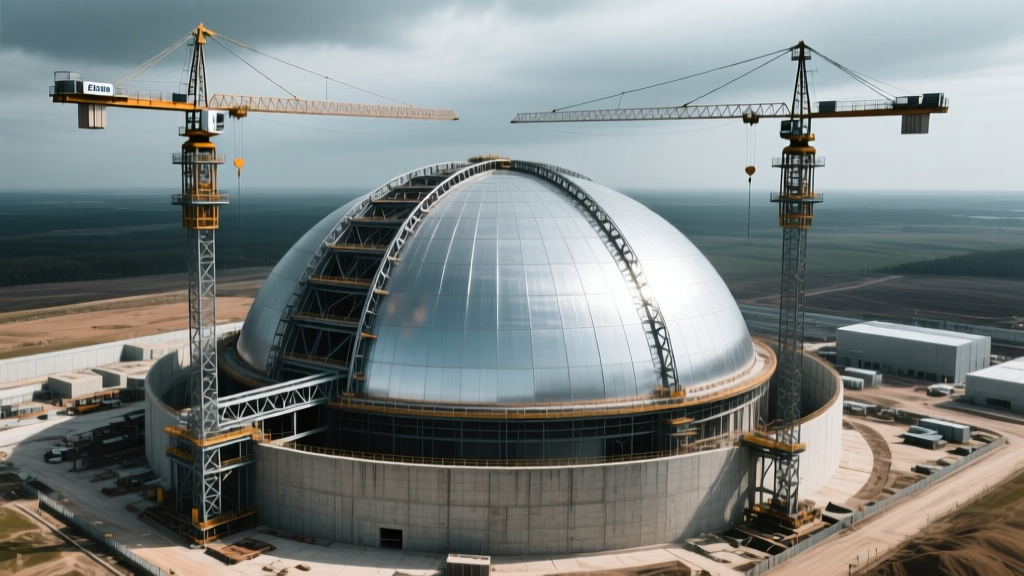
Asia & The Middle East: Standardized Fleet Economics
Conversely, the cost to build nuclear power plant infrastructure in Asia and the Middle East benefits from continuous fleet deployment, standardized designs, and state-backed financing. In these regions, nuclear construction is treated as a repetitive industrial process rather than a bespoke engineering experiment.
The Barakah Nuclear Energy Plant in the United Arab Emirates, featuring four South Korean APR-1400 reactors, was completed for approximately $24.4 billion (5,600 MW total), yielding an all-in cost of roughly $4,300 per kW. South Korea's domestic builds, such as the Shin-Kori units, routinely achieve OCCs below $3,500 per kW. China's aggressive deployment of the Hualong One and CAP1400 designs leverages a fully localized supply chain, including domestic production of SA-508 Gr. 3 Cl. 1 forged steel and specialized nuclear-grade concrete aggregates, keeping costs near $2,800 per kW.
| Region / Project | Reactor Design | Est. Cost per kW (USD) | Avg. Build Time | Primary Cost Advantage / Disadvantage |
|---|---|---|---|---|
| US (Vogtle 3 & 4) | AP1000 | $16,700 | 14+ Years | FOAK delays, high IDC, supply chain gaps |
| UK (Hinkley Point C) | EPR | $17,800+ | 12+ Years | Regulatory ratcheting, complex EPC contracts |
| UAE (Barakah) | APR-1400 | $4,350 | 10 Years | Standardized design, turnkey EPC, state financing |
| South Korea (Shin-Kori) | APR-1400 | $3,200 | 7-8 Years | Continuous build cycle, domestic supply chain |
| China (Fangchenggang) | Hualong One | $2,800 | 6-7 Years | Fully localized manufacturing, low labor costs |
Material & Labor Constraints Driving Regional Divergence
Estimators must account for the hyper-specific material requirements that dictate regional pricing. Nuclear-grade concrete is not a commodity product. It requires stringent aggregate sizing, low water-cement ratios, and continuous pouring techniques to prevent cold joints, which can compromise radiation shielding and structural integrity under seismic loads. In regions with an active nuclear pipeline (China, India), batching plants and specialized formwork crews are permanently mobilized, driving down unit costs. In the West, mobilizing these resources for a single, isolated project incurs massive premium charges.
Furthermore, the reactor pressure vessel (RPV) requires massive steel forgings that must be manufactured in a single pour to avoid weld seams in high-radiation zones. Only a handful of facilities globally possess the 10,000-ton hydraulic presses required for this work. Western developers often face 3-to-4-year lead times and premium pricing to secure forging slots, whereas Chinese developers utilize domestic heavy industry giants like China First Heavy Industries (CFHI) on a continuous, subsidized basis.
The SMR Variable: Factory vs. Field
Small Modular Reactors (SMRs) are frequently pitched as the solution to Western nuclear cost overruns. The economic thesis relies on shifting construction from the field to the factory. By manufacturing 300 MW to 500 MW modules in controlled shipyard-like environments, developers aim to reduce onsite labor hours by 60% and compress construction schedules to 3 or 4 years.
Gen III+ Large Scale (1000+ MW)
- Pros: High thermal efficiency, proven physics, massive baseload output.
- Cons: Massive upfront capital, 10+ year build time, bespoke site engineering.
- Best For: State-backed utilities, grid baseload replacement.
SMR Fleet (300-500 MW Modules)
- Pros: Factory fabrication, scalable deployment, lower initial capital outlay.
- Cons: Unproven FOAK supply chain, lower thermal efficiency, regulatory licensing delays.
- Best For: Industrial heat, remote grids, private capital syndicates.
However, recent 2025 and 2026 market realities have tempered SMR optimism. The cancellation of the UAMPS Carbon Free Power Project (using NuScale technology) highlighted that until SMRs achieve nth-of-a-kind (NOAK) production volumes, the per-kW capital cost remains uncompetitive against subsidized renewables paired with battery storage. Estimators must apply a heavy FOAK premium to SMR cost models until a minimum of 10 to 15 identical modules have been successfully deployed and licensed.
Strategic Estimating: Mitigating Regional Risk
Accurately forecasting the cost to build nuclear power plant infrastructure requires a dynamic risk-adjusted model. Estimators should implement the following framework:
- Baseline OCC Adjustment: Start with the vendor's quoted OCC, then apply a regional labor productivity index (e.g., multiplying by 1.8 for US Gulf Coast vs. South Korean baseline).
- Supply Chain Lead-Time Modeling: Factor in 24-to-36-month holding costs for critical long-lead items (RPVs, steam generators, main coolant pumps) to secure manufacturing slots.
- Financing Sensitivity Analysis: Model the IDC across interest rate scenarios ranging from 4% to 9%. A 200-basis-point increase in the weighted average cost of capital (WACC) can add billions to the final all-in cost of a 2 GW facility.
- Contingency Allocation: Western FOAK projects require a minimum 30% to 40% contingency overlay on direct costs to absorb inevitable regulatory design changes and rework.
Ultimately, the economics of nuclear construction are less about the technology itself and entirely about the industrial ecosystem surrounding it. Regions that treat nuclear energy as a continuous manufacturing enterprise will maintain a structural cost advantage over regions that approach each plant as a bespoke, first-of-a-kind scientific experiment.
Written by
Priya KapoorPriya Kapoor is a real estate market analyst and construction economics researcher with expertise in housing affordability, development feasibility, and infrastructure investment. She holds a Master of Regional Planning from Cornell University and previously worked as a senior analyst at CBRE's Investment Properties group, where she modeled returns for $4B in mixed-use development pipelines. Priya now runs an independent research practice advising developers, municipalities, and REITs on construction cost forecasting and market timing. She publishes the quarterly "BuildMat Market Pulse" report tracking material price indices across 12 commodity categories. Based in Austin, TX, Priya serves on the board of Habitat for Humanity Austin and is a marathon runner.
More from Priya Kapoor
View all
Construction Cost
Cost to Build a 1600 Sq Ft Home in 2026: Full Breakdown
Accurate 2026 cost to build a 1600 sq ft home—material, labor, and regional pricing breakdowns included. Plan your budget with real-time estimates.
Aug 11, 2026

Wood & Lumber
Name the Types of Wood for Pressure Treatment and Preservation
Learn how to name the types of wood best suited for pressure treatment. Compare species treatability, chemical retention levels, and 2026 preservation costs.
Aug 4, 2026

Stone & Masonry
Stone Veneer Suppliers Lindenhurst: 2026 Cost Analysis
Analyze 2026 stone veneer costs in Lindenhurst, NY. Compare local supplier pricing, delivery fees, and Suffolk County installation labor rates.
Aug 4, 2026