How Much Does a Swimming Pool Cost to Build by Region in 2026?
Discover how much a swimming pool costs to build across different US regions. Compare concrete, fiberglass, and vinyl prices, soil challenges, and labor rates.
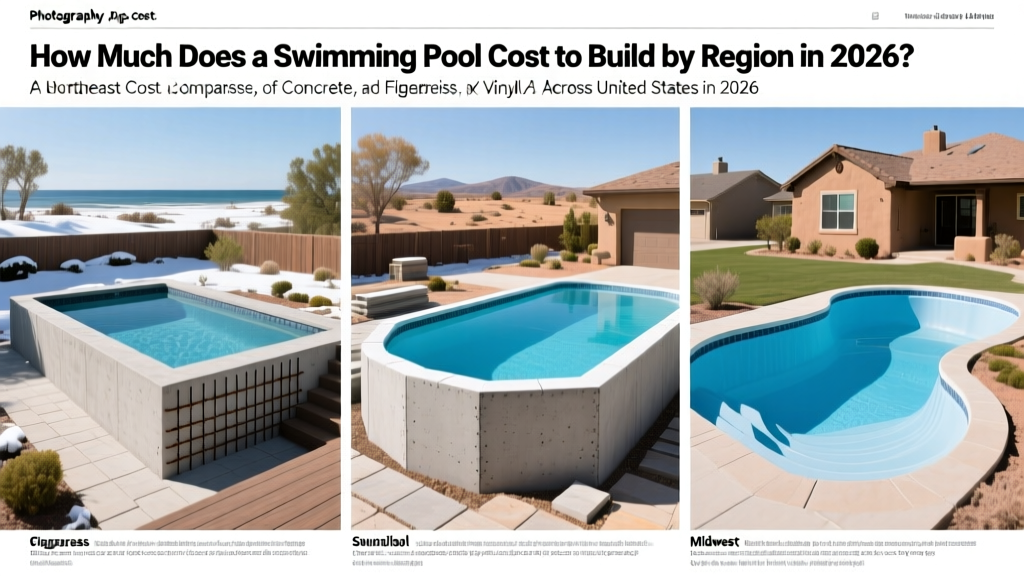
The Baseline: Why National Averages Mislead Homeowners
If you search for national pool construction averages, you will typically see figures ranging from $50,000 to $75,000 for a standard 14x28-foot gunite pool. However, relying on a national average is one of the most expensive mistakes a homeowner can make. Construction costs are hyper-local, driven by regional labor rates, municipal permitting fees, climate-specific engineering codes, and, most importantly, subsurface soil conditions.
To accurately budget for your project, you must understand how geography dictates the price of excavation, materials, and structural reinforcement. Below, we break down the true regional costs and the hidden variables that inflate your final bill.
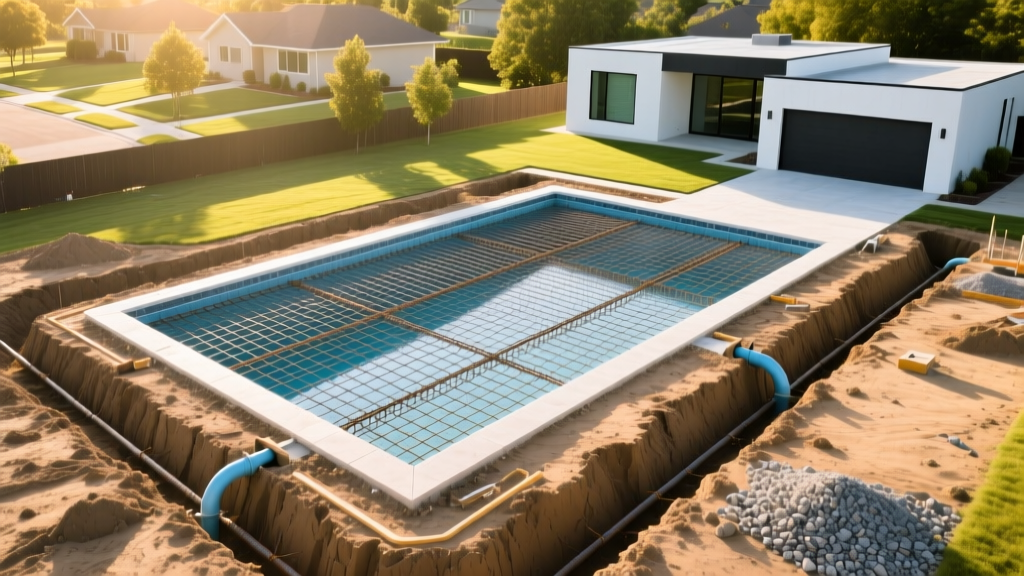
How Much Does a Swimming Pool Cost to Build Across Different US Regions?
The cost to build a standard 14x28-foot inground gunite (concrete) pool varies drastically depending on your zip code. The following matrix outlines the 2026 baseline costs for a turnkey build, including standard coping, basic waterline tile, a single-speed or standard variable-speed pump, and a basic plaster finish (like PebbleTec or standard white marcite).
| US Region | Avg. Cost Range (14x28 Gunite) | Primary Cost Driver | Common Subsurface Challenge |
|---|---|---|---|
| Northeast (NY, MA, PA) | $85,000 - $120,000 | Short building season, high union labor rates, deep frost-line engineering. | Glacial till and bedrock requiring blasting or heavy mechanical breaking. |
| Southeast (FL, GA, SC) | $55,000 - $75,000 | Lower labor costs, high competition among builders, year-round construction. | High water table and sugar sand requiring dewatering and soil stabilization. |
| Southwest (TX, AZ, NV) | $65,000 - $90,000 | Expansive soil engineering, extreme heat surcharges for concrete curing. | Caliche rock (AZ) and expansive clay (TX) requiring over-excavation and piers. |
| West Coast (CA, WA, OR) | $95,000 - $140,000+ | Strict seismic codes, Title 24 energy mandates, high cost of living/labor. | Coastal bluff erosion, hillside grading, and stringent runoff management. |
| Midwest (IL, OH, MI) | $70,000 - $100,000 | Freeze-thaw structural requirements, winterization plumbing complexity. | Heavy clay soils and seasonal frost heave requiring deeper structural footings. |
Deep Dive: The Hidden Regional Variables That Spike Your Bill
The base price of a pool shell is only half the story. Regional geology and local building codes introduce mandatory costs that rarely appear in initial marketing brochures.
1. The 'Rock Clause' in the Southwest and Northeast
In regions like the Texas Hill Country, Arizona, and upstate New York, builders cannot guarantee what lies beneath the topsoil. Most contracts include a 'rock excavation clause.' If the excavator hits caliche or solid bedrock, the builder will charge an additional $40 to $85 per cubic yard for rock-breaking equipment (like a hydraulic hammer or hoe ram). In Austin, TX, hitting limestone shelves can easily add $8,000 to $15,000 to your final invoice. Always negotiate a capped rock clause or require a geotechnical soil boring test ($800-$1,200) before signing.
2. High Water Tables and Dewatering in the Southeast
In Florida and coastal Georgia, the water table can be just a few feet below the surface. When excavating a 6-foot-deep pool, the hole will rapidly fill with groundwater. Builders must install a 'wellpoint dewatering system'—a network of shallow wells and pumps that run 24/7 to keep the hole dry while the gunite is applied and cures. This adds $2,500 to $5,000 to the project and requires careful management to prevent washing out neighboring properties or violating local stormwater discharge ordinances.
In high water table regions, fiberglass pools (from brands like Latham or Viking) are highly susceptible to 'floating' or popping out of the ground if the pool is drained for maintenance. To prevent this, builders must install a gravel underbedding and a permanent hydrostatic relief valve in the sump pit, adding $1,500 to $3,000 to the installation cost.
3. Seismic and Energy Codes on the West Coast
California's building codes heavily influence pool costs. Under Title 24 energy efficiency standards, single-speed pumps are effectively banned. Builders must install advanced variable-speed pumps (such as the Pentair IntelliFlo3 VSF), which cost $1,800 to $2,500 more upfront but save on long-term energy use. Furthermore, in seismic zones, the steel rebar cage must be engineered with thicker #4 or #5 rebar tied at tighter 6-inch intervals, increasing steel and labor costs by 15% to 20% compared to Sunbelt states.
Material Selection by Climate: Concrete vs. Fiberglass vs. Vinyl
Regional climate doesn't just affect labor; it dictates which pool material will survive long-term without catastrophic failure.
- Gunite/Shotcrete (Best for Southwest & West Coast): The gold standard for custom shapes and durability. In expansive clay soils (like Dallas or Denver), engineers can design the gunite shell with integrated grade beams and helical piers to prevent the shell from cracking as the soil swells and shrinks. Expect to pay a 20% premium over other materials.
- Vinyl Liner (Best for Northeast & Midwest): Vinyl pools (using kits from manufacturers like Kafko or Latham) are highly popular in freeze-thaw climates. The flexible vinyl liner accommodates minor ground shifting and frost heave better than rigid concrete. Additionally, winterizing a vinyl pool is simpler, and replacing a torn liner every 7-10 years ($4,500-$6,500) is often cheaper than repairing frost-damaged gunite.
- Fiberglass (Best for Southeast & Mid-Atlantic): Fiberglass shells offer the fastest installation (often 3-4 weeks) and a non-porous surface that resists algae in humid, high-heat climates. However, they are limited to manufacturer molds (usually maxing out at 16x40 feet) and require massive crane access, which can be impossible in densely packed suburban lots.
Actionable Framework: How to Get an Accurate Local Quote
Do not accept a flat-rate estimate over the phone. Follow this four-step framework to force builders to provide accurate, localized pricing.
- Call 811 Before the Site Visit: Have your utility lines marked. If a builder knows exactly where the sewer lateral and gas lines are, they can accurately price the plumbing trenching and avoid 'unforeseen utility reroute' change orders later.
- Demand an Itemized 'Dig and Shell' Bid: Separate the excavation, steel, plumbing, and gunite costs from the decking and equipment. This allows you to see exactly how much the builder is charging for the structural shell versus the aesthetic finishes.
- Verify the Equipment Pad Specs: Ensure the quote includes a poured concrete equipment pad (minimum 4 inches thick with rebar) and specifies the exact make and model of the pump, filter, and heater. Vague terms like 'industry-standard pump' are a red flag for cheap, builder-grade equipment.
- Check Municipal Setbacks and Easements: According to the Pool & Hot Tub Alliance (PHTA), failing to check local zoning setbacks is a leading cause of project delays. If your planned pool encroaches on a utility easement, you will pay thousands in legal fees for a variance or be forced to redesign the pool entirely.
Frequently Asked Questions
Does adding a pool increase my property tax?
Yes, in most municipalities. An inground pool is considered a permanent structural improvement. Depending on your county's assessment rate, a $80,000 pool could increase your annual property tax bill by $800 to $2,500. Check with your local county tax assessor's office for the exact millage rate applied to outdoor improvements.
Which region has the highest pool maintenance costs?
The Southwest (Arizona, Nevada, Southern California) typically sees the highest ongoing maintenance and utility costs. Extreme summer evaporation rates require constant water top-offs, while high mineral content in municipal water leads to calcium scaling, requiring frequent acid washing and specialized chelating chemicals. The U.S. Department of Energy notes that using a liquid solar cover or automatic pool cover in these regions can reduce evaporation and heating costs by up to 50%.
Is it cheaper to build a pool in the winter?
In the Southeast and Southwest, building during the 'off-season' (November through February) can yield discounts of 5% to 10%, as builders are desperate to keep their crews employed. However, in the Midwest and Northeast, winter builds are rarely recommended; frozen ground makes excavation dangerous, and pouring gunite in sub-freezing temperatures requires expensive accelerating admixtures and insulating blankets to ensure proper structural curing.
Written by
James ThorntonJames Thornton is a construction industry veteran with 25 years of hands-on experience in wood framing, lumber grading, and residential building codes. He started as a framing carpenter in rural Oregon, earned his ICC Residential Building Inspector certification, and eventually became a senior plan reviewer for the City of Portland Bureau of Development Services. James holds a B.S. in Wood Science & Technology from Oregon State University and is a certified lumber grader through the West Coast Lumber Inspection Bureau (WCLIB). He has inspected over 3,000 residential construction sites and authored the city's internal guide on advanced framing techniques (2x6 at 24" O.C.). James lives in Bend, OR, where he builds custom timber-frame cabins and competes in lumberjack sports.
More from James Thornton
View all
Insulation
Best Home Insulation Materials: Complete 2026 Guide
Compare top home insulation materials for 2026. Find R-values, installed costs per square foot, and best uses for fiberglass, spray foam, and mineral wool.
Aug 4, 2026

Sustainable Building
Certify Your Green Building Material for LEED and WELL
Step-by-step guide to certifying a green building material for LEED v5 and WELL v2. Master EPDs, HPDs, and VOC limits for 2026 project specifications.
Aug 4, 2026

Stone & Masonry
Veneer Stacked Stone Panels: Interior Design & Style Showcase
Discover how veneer stacked stone panels transform interiors. Explore modern design profiles, material pairings, and technical installation specs.
Aug 4, 2026