Swimming Pool Cost to Build: 2026 Regional Price Analysis
Discover the true swimming pool cost to build across US regions in 2026. Compare excavation, materials, and labor rates to budget your backyard project.
The Baseline: National Averages vs. Regional Realities
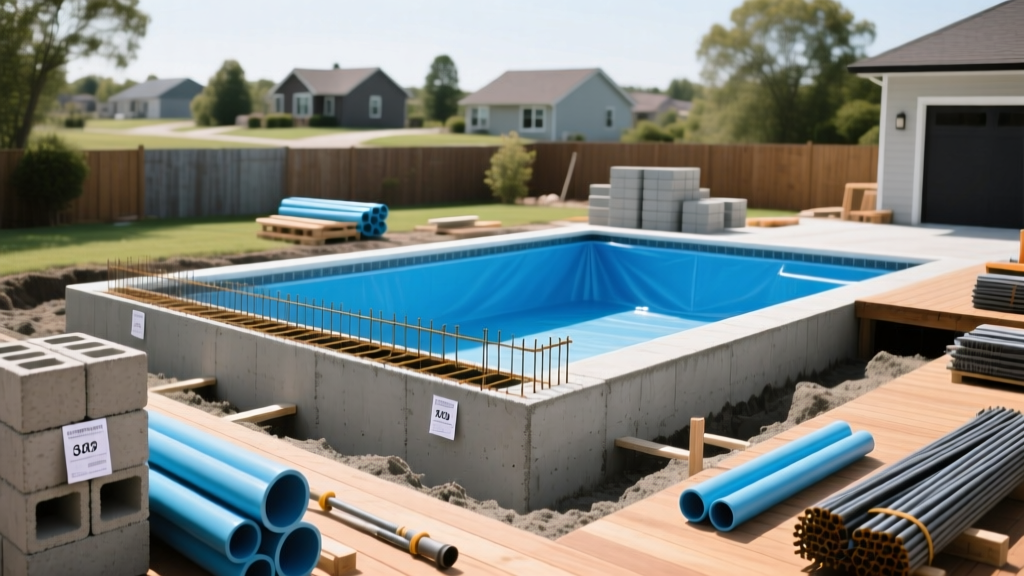
Quoting a national average for inground pool construction is practically useless for precise budgeting. While the baseline swimming pool cost to build in the United States sits between $55,000 and $115,000 for a standard 14x28-foot gunite shell, local geology, municipal codes, and union labor rates can swing your final invoice by 40% or more. A fiberglass pool that costs $65,000 in Georgia might push $95,000 in Southern California due to permitting, soil conditions, and crane access requirements.
- Gunite/Shotcrete: $70,000 – $125,000+
- Fiberglass Shell: $55,000 – $90,000
- Vinyl Liner: $45,000 – $75,000
To accurately forecast your project, we must break down the regional variables that dictate excavation complexity, material logistics, and labor overhead. The Pool & Hot Tub Alliance (PHTA) consistently highlights that site-specific engineering—not just the pool shell itself—drives the largest cost variances across state lines.
Regional Breakdown: Swimming Pool Cost to Build by Zone
Northeast & Mid-Atlantic: Frost Lines and Union Labor
Building a pool in states like New York, Massachusetts, or Pennsylvania introduces severe weather-related engineering requirements. The primary cost driver here is the frost line. Plumbing lines and pool shells must be engineered to withstand deep freeze-thaw cycles. Trenching plumbing to a 42-to-48-inch depth (compared to the 12-inch trenches used in the South) adds $2,500 to $4,500 in excavation and backfill labor. Furthermore, the building season is strictly compressed between May and October. High demand during this narrow window, combined with prevailing union labor rates ($85 to $130 per hour for skilled trades), pushes the regional average for a gunite pool to $95,000 – $140,000.
Southeast: High Water Tables and Sandy Soils
States like Florida, Georgia, and the Carolinas offer year-round construction schedules and lower baseline labor rates ($50 to $80 per hour). However, the coastal and inland sandy soils present unique challenges. In Florida, a high water table frequently requires continuous dewatering pumps during the excavation and steel-tying phases, adding $1,500 to $3,000 to the site prep budget. Additionally, sandy soil lacks structural cohesion, requiring denser steel rebar grids (often #4 rebar spaced at 8 inches rather than 12 inches) and thicker gunite application to prevent shell shifting. Expect a regional average of $65,000 to $105,000 for a standard inground build.
Midwest: Expansive Clay and Deep Excavation
The Midwest (Illinois, Ohio, Missouri) battles expansive clay soils that swell when wet and shrink when dry. This soil type exerts massive lateral pressure on pool walls. To prevent structural failure and heaving, contractors must over-excavate the hole by 12 to 18 inches and backfill with clean, compacted gravel before shooting the gunite. This material and labor addition typically costs $3,000 to $5,500. Like the Northeast, the Midwest also requires deep frost-line plumbing trenching. The regional swimming pool cost to build averages $75,000 to $115,000, with vinyl liner pools being particularly popular here due to their flexible walls that tolerate minor soil movement better than rigid fiberglass.
West & Southwest: Caliche Rock and Strict Permitting
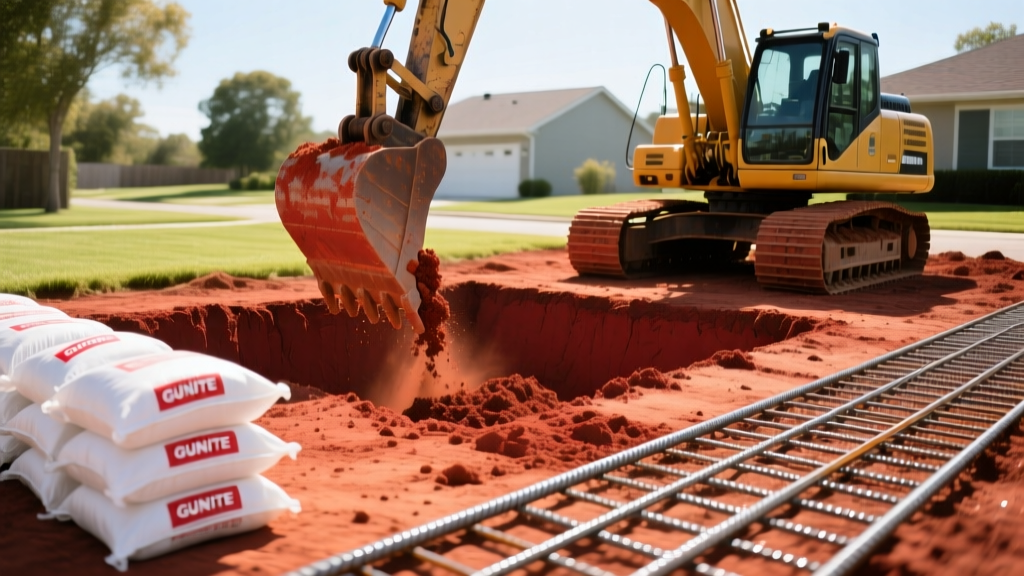
Arizona, Nevada, and Southern California feature some of the highest pool construction costs in the country, frequently exceeding $120,000 for custom gunite builds. The culprit is often caliche—a rock-hard layer of clay and calcium carbonate that sits just below the topsoil. Standard excavators cannot dig through caliche; contractors must bring in heavy rock-breaking equipment or blasting crews, adding $4,000 to $9,000 to the excavation phase. Furthermore, municipalities in this region enforce strict zoning, high permit fees ($1,200 to $2,500+), and rigorous water usage ordinances. The EPA WaterSense guidelines heavily influence local codes here, often mandating specific pool covers and variable-speed pumps to minimize evaporation, adding $2,000 to $3,500 in mandatory equipment upgrades.
Material Selection Impact on Regional Pricing
The pool shell material you choose interacts differently with regional supply chains. Fiberglass shells, for example, are manufactured in centralized plants (primarily in the Southeast and Midwest). If you live in Washington State or Maine, the freight cost to transport a 16x32-foot fiberglass shell on a wide-load flatbed can add $6,000 to $12,000 to your invoice compared to a buyer in Texas.
| Region | Gunite/Shotcrete Premium | Fiberglass Freight Surcharge | Primary Cost Driver |
|---|---|---|---|
| Northeast | + 25% (Union Labor) | + $4,000 - $7,000 | Frost line trenching, short season |
| Southeast | Baseline | $0 (Local Mfg) | Dewatering, high water table |
| Midwest | + 15% (Over-excavation) | + $2,000 - $4,000 | Expansive clay backfill |
| West/Southwest | + 35% (Permits/Code) | + $8,000 - $12,000 | Caliche rock breaking, water codes |
Hidden Regional Cost Drivers to Budget For
When calculating your swimming pool cost to build, the shell and the pump are only the beginning. Regional infrastructure and local governance introduce hidden line items that frequently blow up preliminary budgets.
In older Northeastern and Midwestern suburbs, underground utility lines (gas, sewer, electric) are often poorly mapped. Hitting an unmapped line or needing to reroute a sewer main to accommodate the pool footprint can instantly add $3,500 to $8,000 to your project. Always pay for a private ground-penetrating radar (GPR) scan ($400-$600) before signing an excavation contract.
- Permitting and Impact Fees: Rural counties in Texas or Florida may charge a flat $250 permit fee. Conversely, Los Angeles County or coastal Massachusetts municipalities can charge $1,500 to $3,000+ in permit, zoning review, and environmental impact fees.
- HOA Architectural Reviews: In planned communities (highly prevalent in the Southeast and Southwest), HOAs often mandate specific fencing materials (e.g., wrought iron instead of chain link) and require expensive landscaping screens to hide pool equipment, adding $4,000 to $10,000 in peripheral costs.
- Crane Access and Setbacks: If you live in a dense urban area or a property with narrow side-yard setbacks (common in the Northeast and California), a standard forklift cannot deliver a fiberglass shell or large pallets of stone. You will need to hire a mobile crane to lift materials over your house, costing $1,500 to $3,500 per day.
Frequently Asked Questions
Does the time of year I sign the contract affect the cost?
Yes, significantly in seasonal climates. In the Midwest and Northeast, signing a contract in January or February for a spring build often secures a 5% to 10% discount on the total package, as contractors are trying to lock in their early-season schedule. In the Sunbelt (Arizona, Florida, Texas), the best pricing is usually found in late summer (August/September) when the peak demand rush has subsided and builders are trying to hit annual volume targets before the holidays.
How do local water restrictions impact long-term pool costs?
In drought-prone regions like the Southwest and parts of California, municipalities may charge exorbitant water tap fees to fill a new pool, or restrict filling to specific hours. Furthermore, local codes often mandate the installation of automatic pool covers (costing $6,000 to $12,000) to prevent evaporation. While expensive upfront, these covers reduce annual water and chemical replacement costs by up to 50%, aligning with regional conservation mandates.
Is a vinyl liner pool cheaper to build in cold climates?
Initially, yes. A vinyl liner pool in the Midwest or Northeast will cost 20% to 30% less upfront than a gunite equivalent because the pre-fabricated steel or polymer walls are faster to install and require less specialized labor. However, the liner must be replaced every 7 to 12 years at a cost of $4,000 to $6,000. Over a 30-year lifespan, the maintenance and replacement costs of a vinyl liner often equalize with the higher initial investment of a gunite shell.
Written by
David NakamuraDavid Nakamura is a licensed architect (AIA) and construction technology writer focused on sustainable building methods, mass timber engineering, and high-performance building envelopes. He holds a Master of Architecture from the University of Washington and is a certified Passive House Consultant (CPHC). David spent eight years at the Seattle firm Mithun, where he led the design of three LEED Platinum projects, before founding his own practice specializing in net-zero residential design. He serves on the editorial advisory board of GreenBuilder Magazine and has authored peer-reviewed papers on cross-laminated timber (CLT) connections for the Journal of Structural Engineering. In his spare time, David teaches woodworking at Pratt Fine Arts Center and kayaks the Puget Sound.
More from David Nakamura
View all
Construction Cost
Labor Cost to Build a Deck Per Sq Ft: 2026 Installation Guide
Discover the exact labor cost to build a deck per sq ft in 2026. This installation guide breaks down contractor rates, complexity factors, and hidden fees.
Aug 4, 2026

Construction Cost
How Much Does It Cost to Build a 3 Bedroom House? Financing Guide
Learn exactly how much it costs to build a 3 bedroom house and explore 2026 financing options, construction loan types, and budget frameworks for your build.
Aug 4, 2026

Construction Cost
Cost to Build a Tennis Court: 2026 Guide
How much does it cost to build a tennis court in 2026? Breakdowns for asphalt, concrete, and synthetic surfaces plus fencing and lighting.
Jul 30, 2026