How Much It Costs to Build a Tennis Court: 2026 Financing Guide
Discover how much it costs to build a tennis court in 2026. Explore financing options, HELOCs, construction loans, and ROI for residential and HOA projects.
The True Cost Breakdown: What You Are Actually Financing
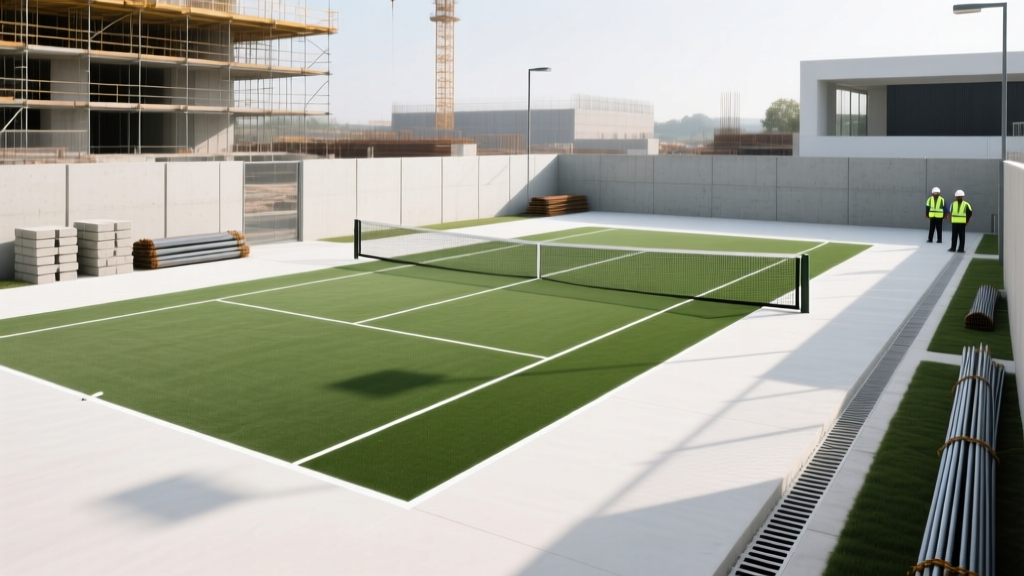
Building a regulation tennis court is a major capital improvement that extends far beyond pouring a slab of concrete and painting lines. A standard court footprint measures 60 by 120 feet (7,200 square feet) to accommodate necessary run-off areas, even though the actual playing surface is only 36 by 78 feet. When evaluating how much it costs to build a tennis court, homeowners and facility managers must structure a financing plan that accounts for geotechnical site preparation, specialized base materials, surfacing, and peripheral infrastructure.
According to the United States Tennis Association (USTA) facility planning guidelines, proper drainage and base stability are the primary determinants of a court's lifespan. Lenders evaluating your construction loan will scrutinize these exact line items, as a failing base renders the entire asset worthless.
| Construction Phase | 2026 Estimated Cost Range | Financing Consideration |
|---|---|---|
| Geotechnical Soil Report & Permits | $2,500 - $5,000 | Required upfront; rarely covered by standard home equity draws. |
| Earthwork, Grading & Drainage | $15,000 - $35,000 | Highly variable based on site slope and soil type (e.g., expansive clay). |
| Base Construction (Asphalt or Concrete) | $30,000 - $65,000 | The core collateral value of the project. |
| Acrylic Surfacing & Color Coating | $9,000 - $16,000 | Depreciating asset; requires 5-to-8 year maintenance reserves. |
| 10-ft Fencing (2-inch mesh) | $8,000 - $14,000 | Permanent fixture; adds to property appraisal value. |
| LED Lighting (4-Pole System) | $18,000 - $28,000 | Requires electrical trenching; high ROI for evening usability. |
| Total Average Project Cost | $82,500 - $163,000 | Total loan amount should include a 10% contingency buffer. |
Base Materials and Lender Collateral Risk
Financial institutions view tennis courts as 'lifestyle improvements' rather than essential structural additions, meaning they do not always yield a 1:1 return on property appraisals. To mitigate this, the choice of base material directly impacts your financing terms and the asset's depreciation schedule.
Asphalt vs. Post-Tension Concrete
Traditional asphalt bases cost between $30,000 and $45,000 but are highly susceptible to thermal cracking and frost heave. Because asphalt requires a structural overlay every 12 to 15 years, specialized construction lenders often classify it as a depreciating asset. Conversely, Post-Tension Concrete (PTC) costs $45,000 to $65,000 upfront. PTC utilizes 1/2-inch steel cables tensioned to 33,000 pounds, compressing the slab and preventing structural cracks even in expansive clay soils. Lenders and appraisers view PTC as a permanent, zero-depreciation fixture, which can improve your loan-to-value (LTV) ratio during the underwriting process.
Residential Financing Strategies for 2026
For private homeowners, financing a $100,000+ outdoor sports facility requires leveraging existing equity or securing specialized unsecured debt. Here is how the primary financing vehicles compare in the current rate environment.
1. Home Equity Line of Credit (HELOC)
A HELOC is the most common vehicle for residential tennis court construction because it allows you to draw funds in stages as the contractor completes specific milestones (e.g., drawing 20% for earthwork, 40% for the base pour). According to the Consumer Financial Protection Bureau (CFPB), HELOCs offer variable rates tied to the prime rate. In 2026, borrowers with excellent credit (740+) can expect HELOC rates between 7.5% and 9.0%.
Best for: Projects with phased construction timelines where interest-only payments during the draw period ease cash flow.
2. Fixed-Rate Home Equity Loan
If your contractor requires a massive upfront deposit for materials (common with modular tile systems like Mateflex or Sport Court), a fixed-rate home equity loan provides a lump sum with a predictable amortization schedule. Rates typically sit 0.5% to 1.0% lower than HELOC introductory rates.
3. Cash-Out Refinance
If your existing mortgage rate is significantly lower than current market rates, a cash-out refinance is generally a poor choice for a tennis court. However, if you are already planning to refinance to consolidate other high-interest debt, rolling the $80,000 court construction into a 30-year mortgage spreads the cost out to roughly $500 per month, making it highly manageable compared to a 10-year home equity loan.
Commercial, HOA, and Club Financing Mechanisms
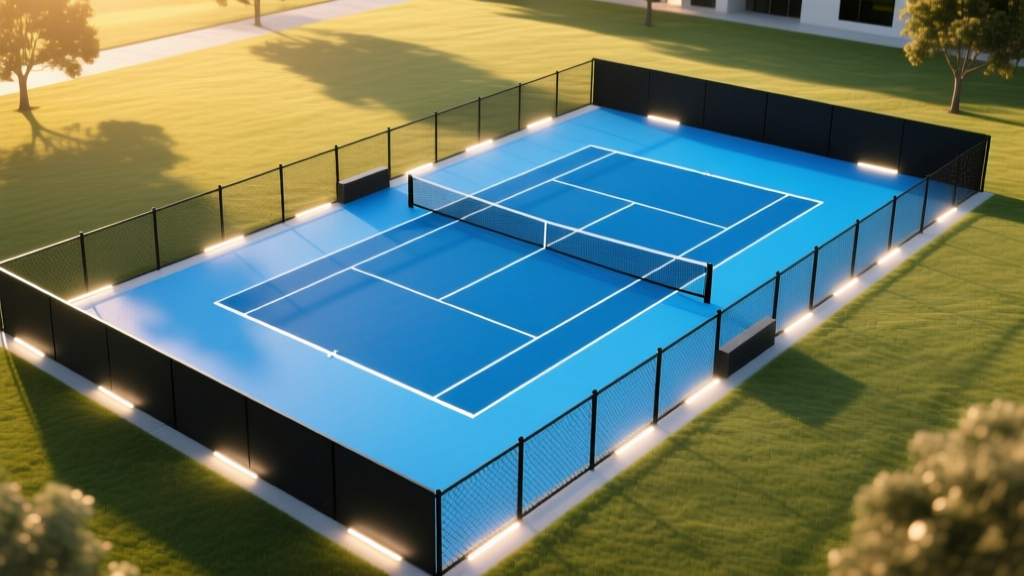
Homeowners Associations and private tennis clubs face different underwriting criteria. A community tennis court is a revenue-generating or amenity-driving asset, which opens up commercial lending avenues.
- SBA 504 Loans: Private tennis clubs operating as for-profit entities can utilize Small Business Administration 504 loans to finance land acquisition and court construction. These require a 10% down payment and offer fixed-rate, long-term (20-year) financing for the concrete and site work.
- Municipal Leases and Bonds: For HOAs and community development districts (CDDs), issuing a special assessment bond allows the community to finance the $150,000 construction cost across all 200 homeowners, adding roughly $60 to each household's annual HOA fee rather than demanding a massive lump-sum special assessment.
- Vendor Financing: Some large-scale modular surface manufacturers offer direct vendor financing for the surfacing and lighting packages, allowing the HOA to pay off the aesthetic elements over 5 years while using a traditional bank loan for the permanent concrete substrate.
What Lenders Require for Loan Approval
Because a tennis court is a highly specialized improvement, standard bank appraisers often lack the expertise to value it correctly. To ensure your construction loan or HELOC draw is approved without valuation disputes, provide your lender with the following documentation:
- USTA/ASBA Compliance Certificate: Ensure your contractor's plans explicitly state compliance with the American Sports Builders Association (ASBA) guidelines, specifically the 1% to 1.5% planar slope requirement for drainage.
- Geotechnical Engineering Report: A $2,500 soil boring report proves to the lender that the site can support the load of a post-tension slab without requiring $40,000 in deep soil stabilization.
- Setback and Zoning Approvals: Courts require massive footprints. Lenders will not fund earthwork until you provide municipal approval proving the 60x120 footprint does not violate local easement or noise-ordinance setback laws.
Funding the Maintenance Sinking Fund
A critical mistake borrowers make is financing only the initial construction. Acrylic surfacing degrades under UV exposure and heavy play, requiring a complete mill-and-overlay or resurfacing every 5 to 8 years at a cost of $9,000 to $14,000. Furthermore, LED lighting systems, while rated for 50,000 hours, require photocell and driver replacements.
When calculating your total loan amount, increase your principal request by 10% to 15% and place those funds into a high-yield escrow or sinking fund. This ensures that when the court requires its first major resurfacing in 2032, the capital is already secured and paid for, preventing the need to take on high-interest secondary debt to maintain the asset's structural integrity and playability.
Written by
Elena RodriguezElena Rodriguez is a civil engineer and technical writer specializing in concrete technology, masonry systems, and ASTM/ACI compliance. She earned her B.S. in Civil Engineering from Texas A&M University and spent a decade at a materials testing laboratory, performing over 2,000 concrete compressive strength tests and masonry prism evaluations. Elena is an ACI-certified Field Testing Technician (Grade I) and a member of ASTM Committee C12 on Natural Building Stone. She currently consults on forensic engineering cases involving concrete failures and moisture intrusion. Based in San Antonio, TX, Elena is a proud member of the Society of Women Engineers (SWE) and coaches her daughter's FIRST Robotics team.
More from Elena Rodriguez
View all
Walls & Panels
Cost Analysis: Light Gauge Steel Framing Advantages and Disadvantages
Evaluate light gauge steel framing advantages and disadvantages through a strict cost analysis lens, comparing material, labor, and lifecycle expenses.
Aug 4, 2026

Walls & Panels
Gypsum Board Types: Exact Specifications, Thickness & Dimensions
Compare standard, Type X, and moisture-resistant gypsum board types. Get exact specifications, thicknesses, dimensions, and ASTM standards for your project.
Aug 4, 2026

Fire Resistance
Best Fire-Resistant Outdoor Decking Materials: 2026 Buyer Guide
Discover the best fire-resistant outdoor decking materials for 2026. Compare Class A PVC, aluminum, and hardwood options for WUI compliance and safety.
Aug 4, 2026