How Much Did It Cost to Build Titanic? Cost Estimating Lessons
Discover how much it cost to build Titanic, adjusted for inflation, and learn money-saving construction strategies for modern mega-projects.
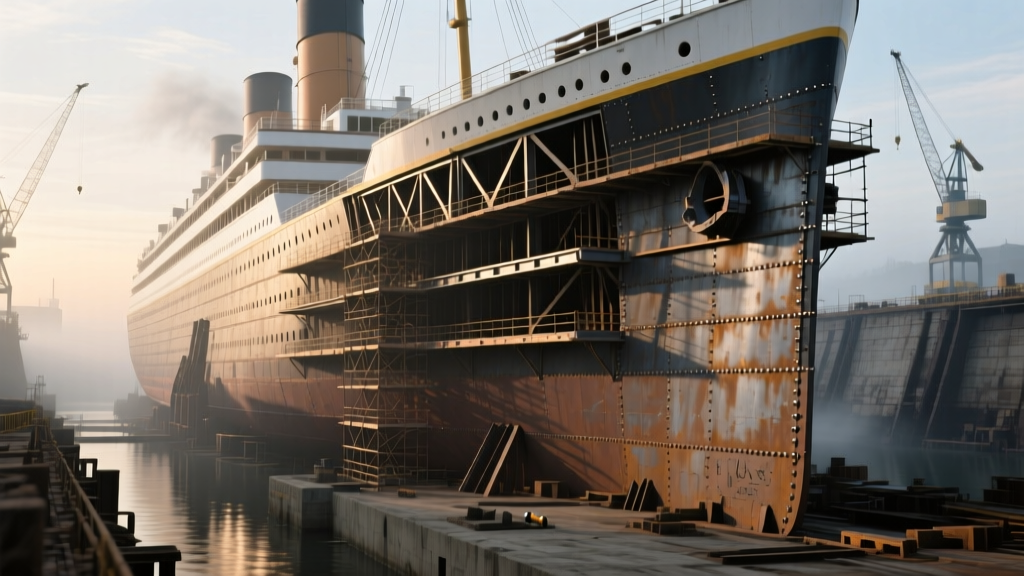
The True Price of the Unsinkable: Breaking Down the 1912 Budget
When analyzing historical mega-projects to inform modern construction cost estimating, one question frequently arises among historians and project managers alike: how much did it cost to build titanic? The RMS Titanic was commissioned by the White Star Line and constructed at the Harland and Wolff shipyard in Belfast. The original contracted price was £1.5 million, which translated to approximately $7.5 million USD in 1912. However, looking at raw historical numbers provides little value for today's builders without adjusting for economic shifts.
Using the U.S. Bureau of Labor Statistics CPI Inflation Calculator, that $7.5 million equates to roughly $235 million in 2026 purchasing power. Yet, if you were to build a functionally equivalent ocean liner today using modern maritime safety regulations, labor rates, and material standards, the cost would easily exceed $1.2 billion. This massive discrepancy between inflation-adjusted historical costs and modern replacement costs highlights a critical lesson in construction estimating: technological complexity and regulatory compliance drive budgets far more than raw material inflation.
Original 1912 Cost Breakdown vs. Modern Equivalents
| Construction Phase | 1912 Cost (USD) | 2026 Inflation-Adjusted | Modern Equivalent Build Cost |
|---|---|---|---|
| Hull & Structural Steel | $3,500,000 | $110,000,000 | $350,000,000+ |
| Machinery & Propulsion | $2,000,000 | $63,000,000 | $400,000,000+ |
| Interior Fittings & Finish | $1,500,000 | $47,000,000 | $300,000,000+ |
| Labor & Overhead | $500,000 | $15,000,000 | $150,000,000+ |
| Total Estimated Cost | $7,500,000 | $235,000,000 | $1,200,000,000+ |
Note: Modern equivalent costs reflect current commercial maritime and large-scale hospitality construction metrics.

Where the Budget Sank: Identifying 'Gold-Plating' in Construction
The Titanic's budget overruns were not primarily driven by structural necessities, but by what modern project managers call 'gold-plating'—the addition of features that exceed the original scope without adding proportional functional value. According to archives detailed by Encyclopedia Titanica, the First-Class accommodations consumed a wildly disproportionate amount of the interior finishing budget.
The Grand Staircase, featuring carved oak paneling, wrought-iron grilles, and a custom bronze dome, was a masterpiece of craftsmanship. However, from a strict cost-estimating perspective, it was a budget black hole. The White Star Line insisted on bespoke, hand-carved materials for First-Class suites while utilizing standardized, mass-produced fittings for Third-Class. This lack of standardization across the project fragmented the supply chain, increased custom fabrication times, and drove up labor costs exponentially.
In modern residential and commercial construction, 'gold-plating' occurs when clients upgrade high-visibility areas (foyers, master baths) with bespoke materials while ignoring the compounding costs of custom millwork. A single custom curved staircase in a modern luxury home can add $85,000 to $120,000 to the framing and finishing budget, yielding zero return on structural integrity or energy efficiency.
Money-Saving Strategies Inspired by Historical Mega-Projects
According to research on capital projects by McKinsey & Company, large-scale projects historically run up to 80% over budget. To avoid Titanic-scale financial disasters in modern barndominiums, commercial structures, and custom homes, estimators must apply rigorous value engineering.
1. Implement Strict Value Engineering (VE) on Finishes
Value engineering is not about buying cheap materials; it is about finding alternatives that deliver the same aesthetic and performance at a lower lifecycle cost. The Titanic used solid oak and marble extensively. Today, we can achieve identical visual results using engineered alternatives.
- Flooring: Swap solid hardwood ($12–$18/sq. ft. installed) for luxury vinyl plank (LVP) with rigid core technology ($5–$8/sq. ft.). Modern LVP offers 100% waterproofing and a 20-mil wear layer, outperforming wood in high-traffic commercial or residential zones.
- Wall Cladding: Replace natural stone veneer ($25–$40/sq. ft.) with high-density polyurethane stone panels ($10–$14/sq. ft.). These panels interlock, reducing installation labor by up to 60% while maintaining Class A fire ratings.
2. Standardize Component Sizing
Harland and Wolff saved money on the Titanic's hull by using standardized steel plate sizes, but they lost those savings on custom interior doors and windows. In modern construction, custom-sized windows and non-standard door heights (e.g., 8-foot doors instead of the standard 6-foot-8-inch) trigger massive upcharges.
Actionable Rule: Design your floor plan around the manufacturer's standard rough openings. Using standard 36x80 interior doors and standard 48x60 vinyl windows can reduce the fenestration and millwork budget by 22% to 35% compared to custom architectural orders.
3. Allocate a Phased Contingency Fund
The Titanic's builders faced severe financial pressure as design changes were made mid-construction. Modern estimating requires a phased contingency approach. Instead of a flat 10% contingency, allocate funds based on project risk phases:
- Site Work & Foundation (15% Contingency): Highest risk for unforeseen soil conditions, rock excavation, or water table issues.
- Framing & Drying In (5% Contingency): Lowest risk; materials are highly predictable and standardized.
- MEP Rough-in & Finishes (10% Contingency): Medium risk; supply chain delays and client change-orders frequently occur here.
Modern Material Substitution Matrix
To prevent scope creep from destroying your budget, use this substitution matrix during the pre-construction estimating phase. These swaps maintain high-end aesthetics while protecting your bottom line.
| Design Element | 'Titanic' Luxury Choice (High Cost) | Modern Value-Engineered Swap | Estimated Savings |
|---|---|---|---|
| Exterior Siding | Natural Cedar Shingles ($18/sq. ft.) | LP SmartSide ExpertFinish ($9/sq. ft.) | 50% Material/Labor |
| Kitchen Counters | Imported Calacatta Marble ($150/sq. ft.) | Engineered Quartz ($65/sq. ft.) | 56% Material |
| Interior Trim | Solid Poplar Paint-Grade ($4.50/lin. ft.) | MDF Primed Colonial ($1.80/lin. ft.) | 60% Material |
| Roofing | Natural Slate ($35/sq. ft.) | Synthetic Slate (DaVinci) ($14/sq. ft.) | 60% Material/Weight |
Applying Historical Estimating to Modern Builds
The ultimate lesson from analyzing the financial history of early 20th-century mega-projects is that prestige and bespoke customization are the primary enemies of budget adherence. Whether you are estimating a 4,000-square-foot custom barndominium or a 10,000-square-foot commercial retail space, the math remains the same. Every deviation from standardized manufacturing processes introduces labor friction, material waste, and schedule delays.
By locking in standard material dimensions, utilizing modern composite materials that mimic historical luxury, and enforcing strict change-order protocols, modern builders can achieve the visual grandeur of a First-Class suite without sinking the project's financial viability.
Frequently Asked Questions
How long did it take to build the Titanic, and how does that affect modern labor costs?
Construction took roughly three years (1909 to 1912) with a peak workforce of 14,000 men. In modern construction, labor rates are significantly higher, and safety regulations (like OSHA compliance) reduce the speed of structural assembly. A modern equivalent project would rely heavily on prefabrication and modular construction to compress the timeline and mitigate hourly labor overruns.
What was the biggest hidden cost in the Titanic's construction?
The watertight compartment system and the sheer volume of custom electrical wiring were massive hidden costs. Today, the modern equivalent is low-voltage smart home wiring and commercial HVAC zoning. These behind-the-wall systems often see 30% cost overruns if not detailed precisely in the initial BIM (Building Information Modeling) phase.
Can I use historical construction costs to estimate my modern home build?
No. Historical costs only provide context for inflation. Modern building codes (IRC/IBC), energy efficiency mandates (like IECC 2024 standards), and seismic/wind load requirements mean that a modern structure requires vastly more engineering, insulation, and specialized fasteners than a 1912 structure. Always use current regional RSMeans data or local contractor bids for accurate estimating.
Written by
David NakamuraDavid Nakamura is a licensed architect (AIA) and construction technology writer focused on sustainable building methods, mass timber engineering, and high-performance building envelopes. He holds a Master of Architecture from the University of Washington and is a certified Passive House Consultant (CPHC). David spent eight years at the Seattle firm Mithun, where he led the design of three LEED Platinum projects, before founding his own practice specializing in net-zero residential design. He serves on the editorial advisory board of GreenBuilder Magazine and has authored peer-reviewed papers on cross-laminated timber (CLT) connections for the Journal of Structural Engineering. In his spare time, David teaches woodworking at Pratt Fine Arts Center and kayaks the Puget Sound.
More from David Nakamura
View all
Construction Cost
Labor Cost to Build a Deck Per Sq Ft: 2026 Installation Guide
Discover the exact labor cost to build a deck per sq ft in 2026. This installation guide breaks down contractor rates, complexity factors, and hidden fees.
Aug 4, 2026

Construction Cost
How Much Does It Cost to Build a 3 Bedroom House? Financing Guide
Learn exactly how much it costs to build a 3 bedroom house and explore 2026 financing options, construction loan types, and budget frameworks for your build.
Aug 4, 2026

Construction Cost
Cost to Build a Tennis Court: 2026 Guide
How much does it cost to build a tennis court in 2026? Breakdowns for asphalt, concrete, and synthetic surfaces plus fencing and lighting.
Jul 30, 2026