How Much Did Versailles Cost to Build? Historical Budget Analysis
Discover how much Versailles cost to build, adjusted for modern construction. Learn historical budget lessons for luxury mega-projects and estate planning.
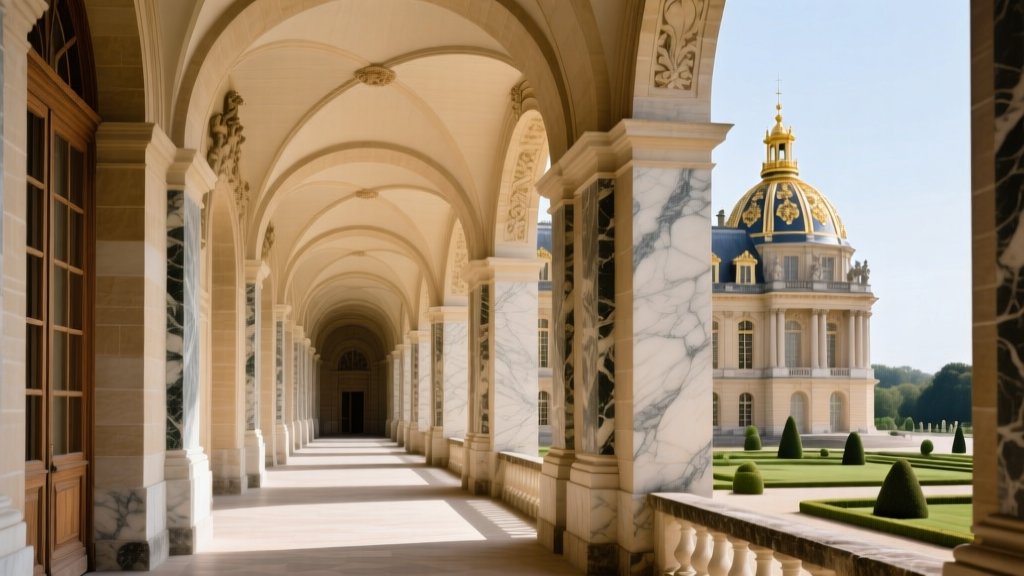
The True Cost of the Sun King’s Mega-Project
When evaluating historical construction economics, one question dominates architectural and budgetary discussions: how much did Versailles cost to build? The Château de Versailles is the ultimate case study in luxury mega-project estimation, scope creep, and material scaling. According to the Château de Versailles official archives, the total recorded expenditure from the commencement of major works in 1661 until the death of Louis XIV in 1715 was approximately 1.16 billion livres tournois.
Translating 17th-century currency into modern construction metrics requires adjusting for labor value, material scarcity, and purchasing power parity rather than simple consumer price inflation. When adjusted for the real cost of skilled masonry, artisan labor, and raw material extraction, the 1.16 billion livres equates to an estimated $2.8 billion to $3.2 billion in 2026 construction dollars. This figure covers the structural envelope, interior fit-outs, and the initial hydraulic and landscaping infrastructure, though it excludes the incalculable value of the movable art and furnishings acquired over the centuries.
Data Highlight: The Versailles Ledger
Total Historical Spend (1661–1715): 1,160,000,000 Livres Tournois
2026 Equivalent (Labor & Material Index): ~$3.05 Billion USD
Peak Annual Construction Budget: ~11 Million Livres (1685)
Peak Workforce Size: ~36,000 laborers, artisans, and military engineers
Breaking Down the Historical Budget Allocation
Modern budget planning for luxury estates requires strict categorization of hard costs, soft costs, and site work. The Versailles ledger reveals a heavy skew toward site work and specialized artisan labor, a common trait in modern ultra-high-net-worth (UHNW) residential builds.
| Construction Category | Historical Allocation (%) | 2026 Luxury Estate Equivalent |
|---|---|---|
| Masonry & Structural Envelope | 32% | Cut limestone, structural steel, custom brick |
| Hydraulics & Landscaping | 28% | Advanced irrigation, earthmoving, mature tree relocation |
| Interior Artisan Fit-Outs | 22% | Custom millwork, plasterwork, rare stone cladding |
| Roofing & Leadwork | 10% | Slate, copper flashing, custom gutters |
| Logistics & Labor Camps | 8% | Site security, temporary utilities, crew housing |
As noted in the Economic History Encyclopedia, the French crown heavily subsidized the logistics of material transport, essentially absorbing infrastructure costs that modern developers must price directly into their site-development budgets. The diversion of the Eure river to feed the estate's fountains alone consumed nearly a third of the peak annual budget, mirroring modern challenges where municipal utility tie-ins for remote mega-estates can consume 20% or more of initial capital.
The Anatomy of Scope Creep in Luxury Construction
Versailles is the historical gold standard for scope creep. Originally intended as a modest expansion of Louis XIII’s hunting lodge, the project underwent three massive redesign phases under architects Louis Le Vau, François d'Orbay, and Jules Hardouin-Mansart. The decision to enclose the original lodge rather than demolish it (the "enveloppe" design) created severe structural compromises and necessitated endless, costly retrofitting.
⚠️ The Versailles Trap: A Warning for Modern Estimators
When clients refuse to demolish existing structures to accommodate new luxury footprints, the cost of structural integration frequently exceeds the cost of new construction. Hardouin-Mansart’s addition of the Mansard roof and the Hall of Mirrors required tearing down newly completed terraces and reinforcing foundations that were not engineered for the additional load. In 2026 luxury builds, retaining legacy structures for sentimental reasons typically triggers a 35% to 50% contingency draw on structural engineering and foundation retrofitting.
Furthermore, the Hall of Mirrors (Galerie des Glaces) exemplifies the cost of pioneering technology. In the 1680s, large-format plate glass was a heavily guarded Venetian monopoly. By establishing the Manufacture Royale de Glaces de Miroirs, the French broke the monopoly, but the initial yield failure rate for casting 357 massive mirrors was extraordinarily high. Modern equivalents include sourcing custom low-iron architectural glass or large-format sintered stone slabs, where fabrication breakage during transit and installation must be factored into the estimator's waste percentage at a minimum of 12-15%.
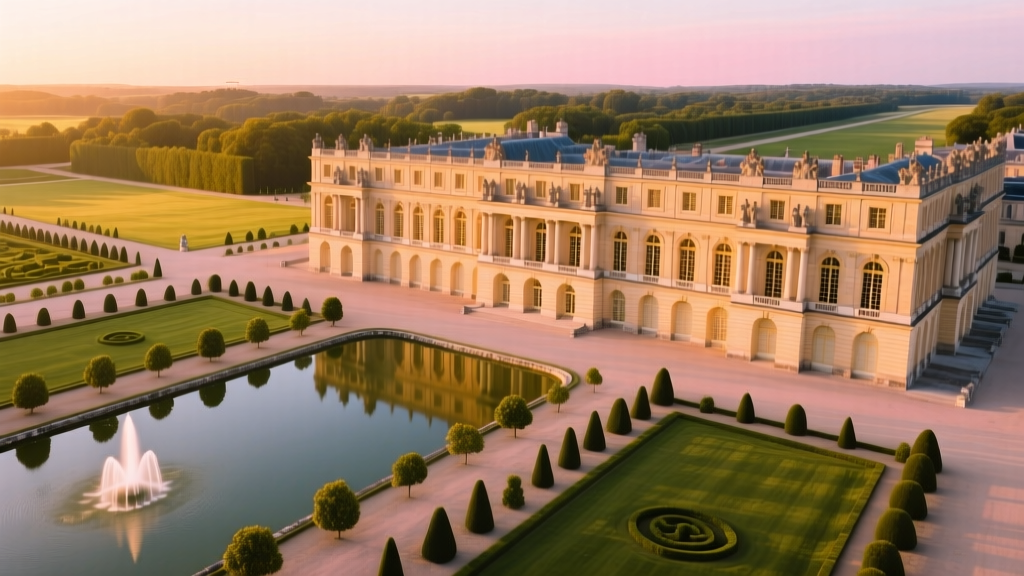
Translating Royal Materials to 2026 Equivalents
To apply the lessons of Versailles to modern budget planning, estimators must map 17th-century royal materials to current luxury market equivalents. The table below provides actionable 2026 pricing for materials that mimic the Versailles aesthetic, allowing project managers to build accurate estimates for heritage-style or ultra-luxury residential builds.
| Historical Material | 2026 Luxury Equivalent | Estimated 2026 Installed Cost |
|---|---|---|
| Rueil & Languedoc Marble | Calacatta Gold or Rouge Languedoc (Imported) | $180 - $320 per sq. ft. |
| Venetian Cast Mirrors | Custom Low-Iron Starphire Glass (1/2" thick) | $90 - $140 per sq. ft. |
| 23-Karat Gold Leaf Gilding | 23.75K Patent Leaf (Water Gilding Technique) | $45 - $85 per sq. ft. (Labor intensive) |
| Hand-Carved Lime Plaster | Venetian Plaster / Marmorino with custom molds | $35 - $65 per sq. ft. |
| Massive Timber Beams (Oak) | Reclaimed European White Oak or Glulam | $120 - $250 per linear ft. |
Budget Planning Frameworks for Modern Mega-Estates
The primary failure of the Versailles budget was the lack of a locked scope and the absence of a unified general contractor; the King’s minister, Colbert, managed competing guilds directly. Modern luxury construction requires a rigid framework to prevent similar financial hemorrhaging.
- Implement a Phase-Gate Approval Process: Do not release funds for interior fit-out until the structural envelope and MEP (Mechanical, Electrical, Plumbing) rough-ins are 100% verified. Versailles suffered from water damage to early interior frescoes because the roof was not fully sealed when interior artisans began work.
- Mandate a 30% UHNW Contingency: Standard commercial builds carry a 10% contingency. Ultra-luxury residential builds with custom, non-standard materials require a minimum 30% contingency to account for artisan delays, material yield failures, and client-driven design pivots.
- Consolidate Specialty Subcontractors: Instead of hiring separate vendors for plasterwork, gilding, and millwork, contract a single heritage-fit-out firm. This eliminates the finger-pointing and schedule gaps that plagued the overlapping guilds at Versailles.
- Front-Load Logistics and Site Infrastructure: Allocate 15% of the total budget to temporary roads, heavy-duty crane pads, and climate-controlled material storage before breaking ground. The muddy, chaotic logistics of the Versailles site destroyed countless materials before they were ever installed.
Frequently Asked Questions: Historical Construction Economics
Did the construction of Versailles bankrupt France?
While Versailles consumed an enormous percentage of the royal building budget (often exceeding 60% of all state building expenditures), it did not single-handedly bankrupt France. The true financial ruin stemmed from prolonged, unfunded military campaigns like the War of the Spanish Succession. However, the estate's ongoing maintenance and the sheer scale of the initial capital outlay severely restricted the crown's liquidity during agricultural crises.
How long did it take to build the Palace of Versailles?
Construction was essentially continuous from 1661 to 1715, spanning 54 years. However, the core structural envelope and the primary facade were largely completed during the intense building phase between 1669 and 1684. The continuous timeline was driven by endless expansions rather than the original build schedule.
What is the modern replacement cost of Versailles?
Estimating the 2026 replacement cost of the structural envelope, landscaping, and integrated architectural finishes (excluding movable fine art and historical artifacts) yields a figure between $8 billion and $12 billion. This accounts for the impossibility of sourcing certain materials at the original scale, the cost of modern seismic and climate-control retrofitting required for heritage preservation, and the premium on specialized artisan labor.
Written by
Marcus ChenMarcus Chen is a licensed structural engineer (PE) and building materials analyst with over 12 years of experience across residential, commercial, and industrial construction. He holds a Master of Science in Civil Engineering from UC Berkeley and spent six years at Thornton Tomasetti before transitioning to independent consulting and technical writing. Marcus specializes in material selection for seismic-prone regions, concrete reinforcement strategies, and lifecycle cost analysis. His work has been cited by the American Concrete Institute (ACI) and the Structural Engineers Association of California (SEAOC). When he is not on a job site or at his desk, you will find him hiking the Sierra Nevada or restoring a 1920s craftsman bungalow in Oakland, CA.
More from Marcus Chen
View all
Construction Cost
How Much Did the Eiffel Tower Cost to Build?
How much did the Eiffel Tower cost to build in 1889? We adjust for inflation and compare its budget to modern skyscraper construction.
Aug 4, 2026

Fire Resistance
What Is a Fire Resistant Material? Testing & Certification Guide
Discover what is a fire resistant material through ASTM and UL testing. Learn how fire ratings, certifications, and assemblies work in construction.
Aug 4, 2026

Construction Cost
How Much Did the Burj Khalifa Cost to Build?
How much did the Burj Khalifa cost to build? We break down the $1.5B project and extract 5 money-saving strategies for your next build.
Jul 30, 2026