Best Green Flooring Options for Eco-Homes in 2026
Discover the best green flooring options for 2026. Compare costs, durability, and VOC emissions for bamboo, cork, linoleum, and reclaimed hardwood.
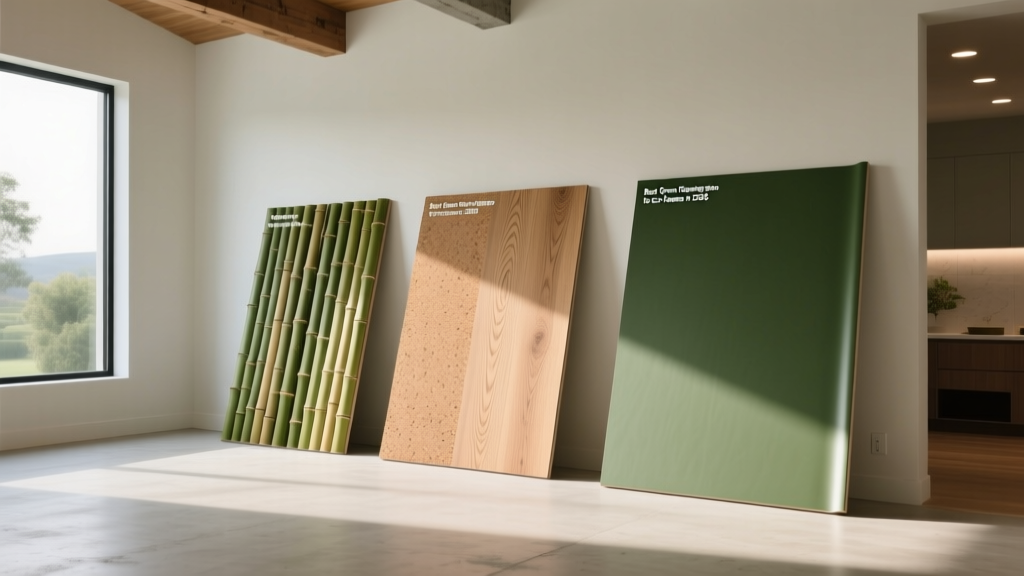
The True Definition of Sustainable Flooring
When evaluating green flooring options, the industry standard extends far beyond the raw material's origin. True sustainability in 2026 requires a holistic lifecycle assessment encompassing three critical vectors: responsible harvesting or recycling, low-emission manufacturing, and end-of-life biodegradability or recyclability. A floor material might be rapidly renewable, but if it is bound with urea-formaldehyde resins or shipped across multiple continents using heavy freight, its net environmental benefit is severely compromised.
The most reliable metric for indoor air quality is the FloorScore certification, administered by SCS Global Services. This standard rigorously tests flooring products for volatile organic compound (VOC) emissions, ensuring they meet strict California Section 01350 requirements. According to the Environmental Protection Agency (EPA), indoor VOC levels can be up to five times higher than outdoor levels, making third-party flooring certifications non-negotiable for healthy home environments.
Material Deep-Dive: Performance & Cost Matrix
The following matrix breaks down the top four sustainable flooring categories by their structural durability, material costs, and optimal use cases. Note that installation costs typically add $3.00 to $8.00 per square foot depending on subfloor preparation requirements.
| Material | Janka Hardness | Material Cost (per sq ft) | Best Application |
|---|---|---|---|
| FSC-Reclaimed Hardwood | 1,290 - 1,360 lbf (Oak) | $9.00 - $16.00 | Living areas, dining rooms |
| Strand-Woven Bamboo | 3,000+ lbf | $5.50 - $10.00 | High-traffic zones, kitchens |
| Natural Linoleum | N/A (Resilient) | $5.00 - $8.50 | Kitchens, bathrooms, mudrooms |
| Harvested Cork | 200 - 1,220 lbf (varies) | $6.50 - $12.00 | Bedrooms, home offices |
1. FSC-Certified Reclaimed Hardwood
Reclaimed hardwood offers the highest carbon-sequestration value among wood floors, as the timber has already been harvested and processed. When sourcing, demand Forest Stewardship Council (FSC) Recycled certification to verify the wood's origin. Reclaimed white oak and heart pine are industry favorites due to their tight growth rings and natural stability.
Technical Edge Case: Reclaimed wood must be kiln-dried to a moisture content (MC) of 6% to 9% to match modern interior climate conditions. Installing air-dried reclaimed wood with an MC of 12% or higher in a climate-controlled home will result in severe gapping and structural failure within the first heating season. Always require a pinless moisture meter reading upon delivery.
2. Natural Linoleum (Not Vinyl)
Often confused with PVC vinyl, true natural linoleum is a bio-based product invented in 1860. Brands like Forbo Marmoleum manufacture it using oxidized linseed oil, pine rosin, wood flour, and jute backing. It is naturally bacteriostatic and biodegradable.
Installation Gotcha: Linoleum is highly sensitive to alkaline moisture. If installing over a concrete subfloor, you must perform a calcium chloride test and a pH test. The concrete pH must be below 9.0. If the pH is higher, alkaline salts will saponify the linseed oil in the adhesive, causing the floor to delaminate and emit a rancid odor. Use an alkaline-resistant adhesive like Forbo L910 and apply a moisture mitigation system if necessary.
3. Strand-Woven Bamboo
Bamboo is a rapidly renewable grass that matures in 3 to 5 years. However, traditional horizontal or vertical bamboo is relatively soft (approx. 1,380 lbf). For flooring, specify strand-woven bamboo, where the fibers are shredded, mixed with a phenolic resin, and compressed under extreme heat and pressure. This yields a Janka hardness exceeding 3,000 lbf, making it harder than most domestic hardwoods.
Acclimation Protocol: Strand-woven bamboo is highly reactive to humidity fluctuations. It requires a strict 72-hour acclimation period in the installation room, with the HVAC system running to maintain 60°F–80°F and 35%–65% relative humidity. Failure to acclimate properly is the leading cause of edge-cupping in bamboo installations.
4. Harvested Cork
Cork is harvested by stripping the bark from cork oak trees (Quercus suber) without killing the tree, allowing the bark to regenerate every nine years. The material contains suberin, a natural waxy substance that repels water and insects, providing excellent thermal and acoustic insulation.
UV Degradation Warning: Natural cork is highly susceptible to ultraviolet light. Unprotected cork floors exposed to direct sunlight through south-facing windows will oxidize and yellow unevenly within 6 to 12 months. To prevent this, specify factory-finished cork with UV-inhibiting water-based polyurethane topcoats, and install UV-blocking window films (minimum 99% UV rejection) in sun-drenched rooms.
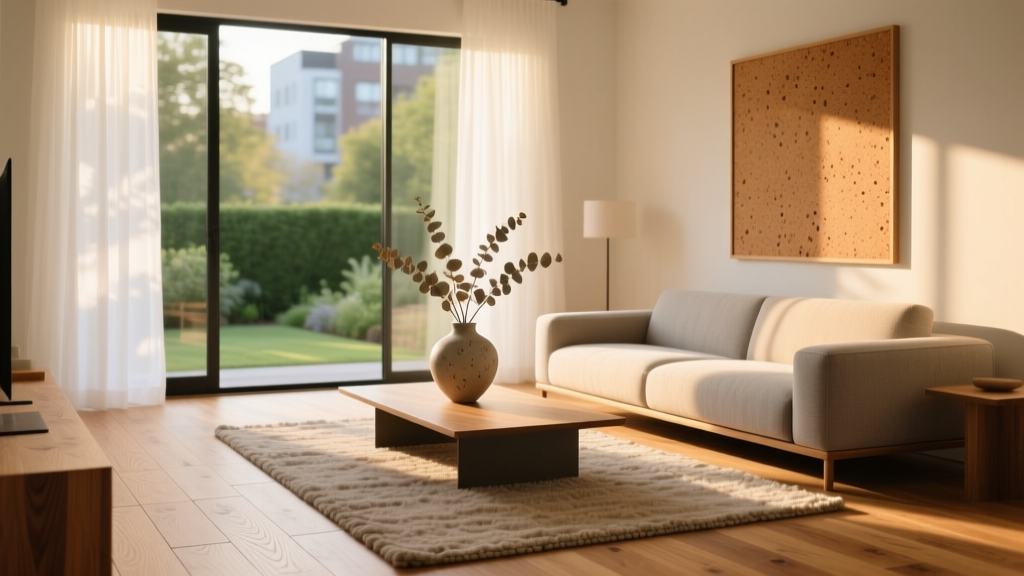
The Hidden Culprit: Installation Adhesives
The most sustainable flooring material becomes a health hazard if installed with high-VOC solvent-based adhesives. As of 2026, the industry standard for green flooring installation mandates the use of zero-VOC or ultra-low-VOC adhesives that carry the FloorScore or GREENGUARD Gold certification.
- For Wood and Bamboo: Use silane-modified polymer (SMP) adhesives like Bostik GreenForce or Taylor 2071. These provide strong moisture barriers and contain zero solvents.
- For Cork and Linoleum: Use acrylic-based, non-solvent adhesives specifically formulated for porous, bio-based materials to prevent chemical reactions with natural resins.
Decision Framework: Choosing by Room Profile
Selecting the right green flooring option requires matching the material's physical properties to the room's specific environmental stressors.
High-Moisture & Spill Zones (Kitchens, Mudrooms)
Winner: Natural Linoleum. Its seamless sheet installation (when heat-welded) prevents water infiltration, and its bio-based composition resists mold growth better than wood or bamboo.
Heavy Traffic & Pet Zones (Hallways, Living Rooms)
Winner: Strand-Woven Bamboo. The 3,000+ lbf Janka rating resists denting from dog claws and dropped objects, while the pre-finished aluminum oxide topcoats withstand heavy abrasion.
Acoustic & Comfort Zones (Bedrooms, Home Offices)
Winner: Cork. The cellular structure of cork compresses underfoot and absorbs impact noise, reducing sound transmission to rooms below by up to 22 decibels compared to hard surface alternatives.
Lifecycle Maintenance and End-of-Life
The environmental footprint of a floor includes how it is maintained over its 20- to 50-year lifespan. Avoid harsh chemical cleaners that strip natural finishes and require frequent re-sealing. For reclaimed wood and cork, use pH-neutral, plant-based cleaners like Bona Hardwood Floor Cleaner or Forbo's Neutral Cleaner.
At the end of its lifecycle, natural linoleum and untreated cork can be commercially composted or ground into agricultural mulch. Reclaimed hardwood can be de-nailed and re-milled for a third lifecycle. Bamboo, due to its resin binders, is typically downcycled into biomass fuel, making it the least circular option of the four, though still vastly superior to petroleum-based vinyl alternatives.
Written by
James ThorntonJames Thornton is a construction industry veteran with 25 years of hands-on experience in wood framing, lumber grading, and residential building codes. He started as a framing carpenter in rural Oregon, earned his ICC Residential Building Inspector certification, and eventually became a senior plan reviewer for the City of Portland Bureau of Development Services. James holds a B.S. in Wood Science & Technology from Oregon State University and is a certified lumber grader through the West Coast Lumber Inspection Bureau (WCLIB). He has inspected over 3,000 residential construction sites and authored the city's internal guide on advanced framing techniques (2x6 at 24" O.C.). James lives in Bend, OR, where he builds custom timber-frame cabins and competes in lumberjack sports.
More from James Thornton
View all
Insulation
Best Home Insulation Materials: Complete 2026 Guide
Compare top home insulation materials for 2026. Find R-values, installed costs per square foot, and best uses for fiberglass, spray foam, and mineral wool.
Aug 4, 2026

Sustainable Building
Certify Your Green Building Material for LEED and WELL
Step-by-step guide to certifying a green building material for LEED v5 and WELL v2. Master EPDs, HPDs, and VOC limits for 2026 project specifications.
Aug 4, 2026

Stone & Masonry
Veneer Stacked Stone Panels: Interior Design & Style Showcase
Discover how veneer stacked stone panels transform interiors. Explore modern design profiles, material pairings, and technical installation specs.
Aug 4, 2026