Average Cost for Foundation Repair in Texas: 2026 Pricing Guide
Discover the 2026 average cost for foundation repair in Texas. Compare pier, foam, and mudjacking prices, plus regional soil factors and hidden fees.
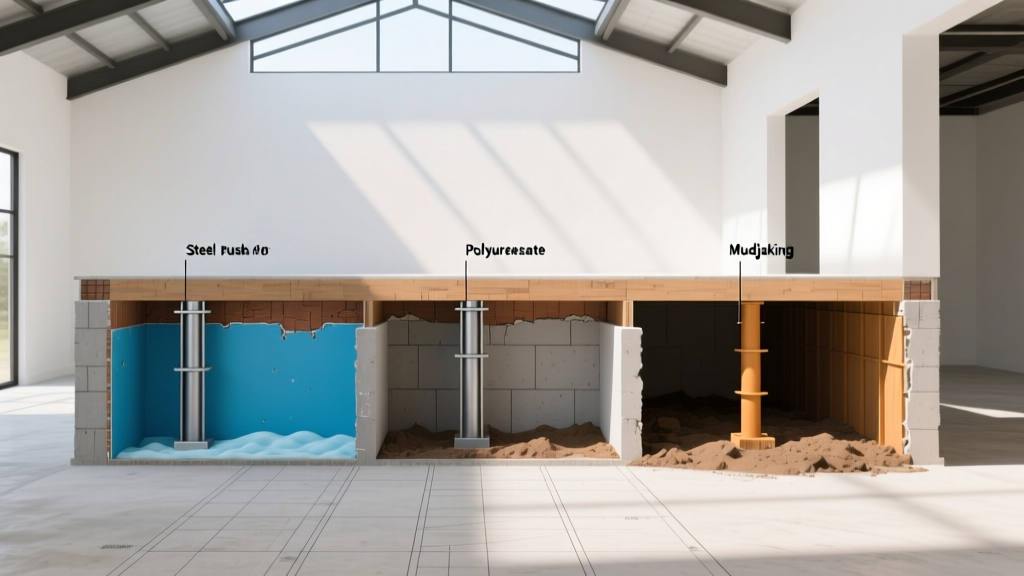
The True Average Cost for Foundation Repair in Texas
As of 2026, the average cost for foundation repair in Texas ranges from $5,200 to $14,500 for standard slab-on-grade residential structures. However, this baseline figure obscures the extreme variance driven by soil plasticity, structural load, and the specific underpinning method required. Severe differential settlement in multi-story homes or properties with deep pier-and-beam crawlspaces frequently pushes total project costs between $22,000 and $45,000.
2026 Texas Foundation Cost Benchmarks
- Minor Slab Cracks & Epoxy Injection: $600 – $1,500
- Standard Slab Underpinning (6-10 Piers): $9,000 – $18,000
- Severe Structural Failure (20+ Piers): $30,000 – $55,000+
- Crawlspace Shimming & Beam Replacement: $4,000 – $12,000
Texas leads the nation in foundation failure claims due to its vast expanses of highly expansive clays. Understanding where your money goes requires breaking down the specific engineering solutions contractors deploy to stabilize these volatile soil profiles.
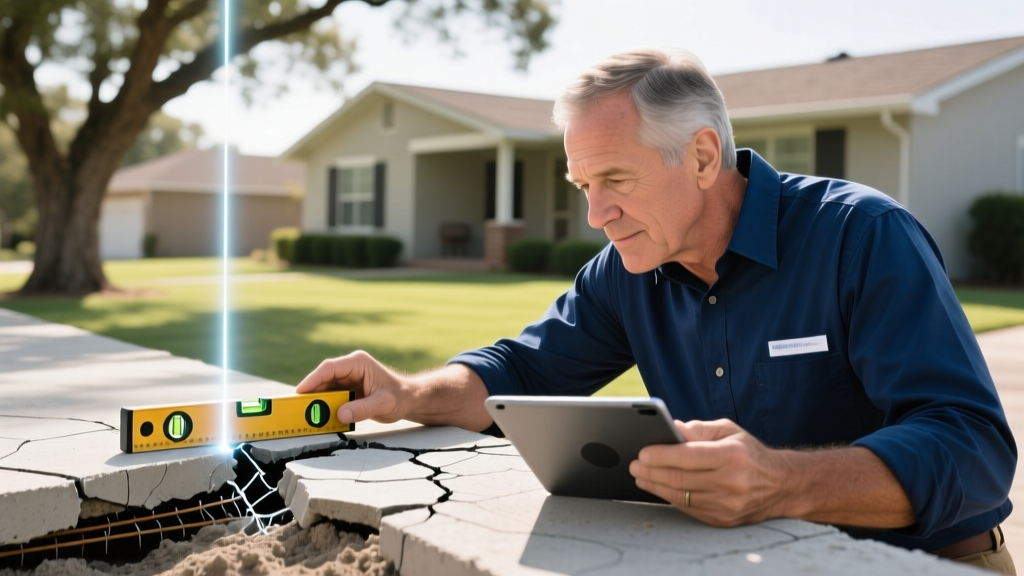
Cost Breakdown by Repair Method
Contractors typically price foundation stabilization either by the square foot (for surface void filling) or by the pier (for deep structural underpinning). The table below outlines current 2026 market rates for the most common techniques.
| Repair Method | Pricing Metric | 2026 Cost Range | Best Application |
|---|---|---|---|
| Steel Push Piers | Per Pier | $1,600 – $2,800 | Heavy structural loads, reaching deep bedrock |
| Helical Piers | Per Pier | $1,900 – $3,200 | Lighter loads, new construction, tension resistance |
| Polyurethane Foam | Per Sq. Ft. | $8 – $22 | Slab void filling, minor lifting, moisture sealing |
| Mudjacking (Slabjacking) | Per Sq. Ft. | $4 – $9 | Driveways, patios, non-structural flatwork |
| Root Barriers | Per Linear Ft. | $65 – $110 | Preventing tree root moisture extraction near slabs |
Deep Dive: Steel Push Piers vs. Helical Piers
For severe structural settlement in Texas, deep foundation underpinning is mandatory. Steel push piers utilize the weight of the structure itself to drive 2 7/8-inch or 3 1/2-inch outside diameter (OD) high-strength steel tubing through unstable clay until it refuses on load-bearing strata or bedrock. They are generally more cost-effective for heavy, multi-story masonry homes.
Helical piers, featuring steel shafts with helical bearing plates, are mechanically torqued into the ground. The installation torque directly correlates to the pier's load capacity (verified via hydraulic torque motor readouts). Helical piers cost roughly 15-20% more than push piers but are required for lighter structures (like single-story wood-frame homes) that lack the dead weight necessary to drive push piers to refusal.
Regional Soil Factors Driving Texas Foundation Costs
The average cost for foundation repair in Texas fluctuates wildly depending on the local geology. Expansive soils swell when wet and shrink during droughts, creating differential settlement that snaps post-tension cables and fractures concrete slabs.
- Dallas-Fort Worth (Blackland Prairie): Characterized by deep, highly plastic clays with a Plasticity Index (PI) frequently exceeding 45. The extreme shrink-swell potential here often requires push piers driven 30 to 50 feet deep to reach the Austin Chalk or Eagle Ford Shale formations, increasing per-pier labor and material costs.
- Houston (Gulf Coast): Dominated by Beaumont and Montgomery clay formations. The high water table and poor surface drainage mean foundations suffer from both expansion and hydrostatic pressure. Repairs here often necessitate extensive French drain integration and sump pump installations alongside underpinning, adding $3,000 to $7,000 to the baseline project cost.
- Austin & San Antonio (Edwards Plateau): Soils are generally shallower, transitioning quickly into limestone bedrock. While the clay is less expansive than in DFW, the rocky terrain makes excavation for helical piers or bell-bottom piers highly labor-intensive, often requiring specialized rock-drilling equipment that drives up mobilization fees.
According to soil research published by the Texas A&M AgriLife Extension, maintaining a consistent moisture level around the foundation perimeter via automated soaker hoses or subsurface drip irrigation is the most effective preventative measure against the state's expansive soil cycles.
Hidden Costs and Edge Cases
Before lifting a settled slab, contractors must perform a hydrostatic plumbing test. Lifting a foundation can shear cast-iron or PVC waste lines embedded in the slab. If a leak is detected, a plumber must tunnel under the slab or break through the concrete to repair the line before underpinning can proceed. This frequently adds $2,500 to $6,000 to the final invoice.
Homeowners budgeting for foundation stabilization must also account for secondary cosmetic and structural repairs that the foundation contractor will not cover:
- Independent Engineering Reports ($600 – $1,500): Never rely solely on a contractor's free inspection. Hire an independent, licensed Professional Engineer (PE) to conduct a manhole survey, floor-elevation mapping, and soil boring analysis to dictate the exact pier placement plan.
- Masonry Veneer Repair ($1,500 – $4,000): As the slab is lifted, brick veneer can buckle or separate. Rebuilding brick columns, installing new corrugated brick ties, and tuckpointing mortar joints are billed separately by masons.
- Landscaping and Concrete Removal ($1,000 – $3,500): Installing exterior piers requires a 3-foot clearance from the foundation. This means demolishing and later replacing sidewalks, patios, and removing mature shrubs planted too close to the slab.
Insurance Realities and Contractor Vetting
A common misconception is that homeowners insurance will cover foundation damage. Standard HO-3 policies explicitly exclude 'earth movement,' which encompasses soil expansion, contraction, and settling. Insurance will only cover foundation repair if the damage is the direct, sudden result of a covered peril, such as a plumbing leak originating from a burst pipe beneath the slab. Even then, the payout is usually limited to the cost of tearing out and replacing the slab to access the pipe, not the structural underpinning itself.
When selecting a contractor, the Federal Trade Commission (FTC) advises verifying state-specific licensing, though Texas notably does not require a state-level 'foundation repair license.' Instead, you must verify the following:
- Membership in the American Society of Civil Engineers (ASCE) or the Foundation Repair Association (FRA).
- Proof of a $1,000,000+ general liability policy and active workers' compensation coverage.
- A transferable lifetime warranty that is backed by a third-party insurance trust, not just the company's internal promise (which becomes void if the company goes bankrupt).
- That the proposed repair plan is stamped and approved by an independent Texas-licensed Professional Engineer (PE).
Securing multiple bids based on an independent PE's engineering report—not the contractors' own assessments—ensures you are comparing identical scopes of work and prevents contractors from over-prescribing piers to inflate the final contract price.
Written by
James ThorntonJames Thornton is a construction industry veteran with 25 years of hands-on experience in wood framing, lumber grading, and residential building codes. He started as a framing carpenter in rural Oregon, earned his ICC Residential Building Inspector certification, and eventually became a senior plan reviewer for the City of Portland Bureau of Development Services. James holds a B.S. in Wood Science & Technology from Oregon State University and is a certified lumber grader through the West Coast Lumber Inspection Bureau (WCLIB). He has inspected over 3,000 residential construction sites and authored the city's internal guide on advanced framing techniques (2x6 at 24" O.C.). James lives in Bend, OR, where he builds custom timber-frame cabins and competes in lumberjack sports.
More from James Thornton
View all
Insulation
Best Home Insulation Materials: Complete 2026 Guide
Compare top home insulation materials for 2026. Find R-values, installed costs per square foot, and best uses for fiberglass, spray foam, and mineral wool.
Aug 4, 2026

Sustainable Building
Certify Your Green Building Material for LEED and WELL
Step-by-step guide to certifying a green building material for LEED v5 and WELL v2. Master EPDs, HPDs, and VOC limits for 2026 project specifications.
Aug 4, 2026

Stone & Masonry
Veneer Stacked Stone Panels: Interior Design & Style Showcase
Discover how veneer stacked stone panels transform interiors. Explore modern design profiles, material pairings, and technical installation specs.
Aug 4, 2026