Crawl Space Foundation Repair Cost: 2026 Pricing & Failure Guide
Analyze the true crawl space foundation repair cost in 2026. Compare piering, joist sistering, and encapsulation pricing with expert decision frameworks.
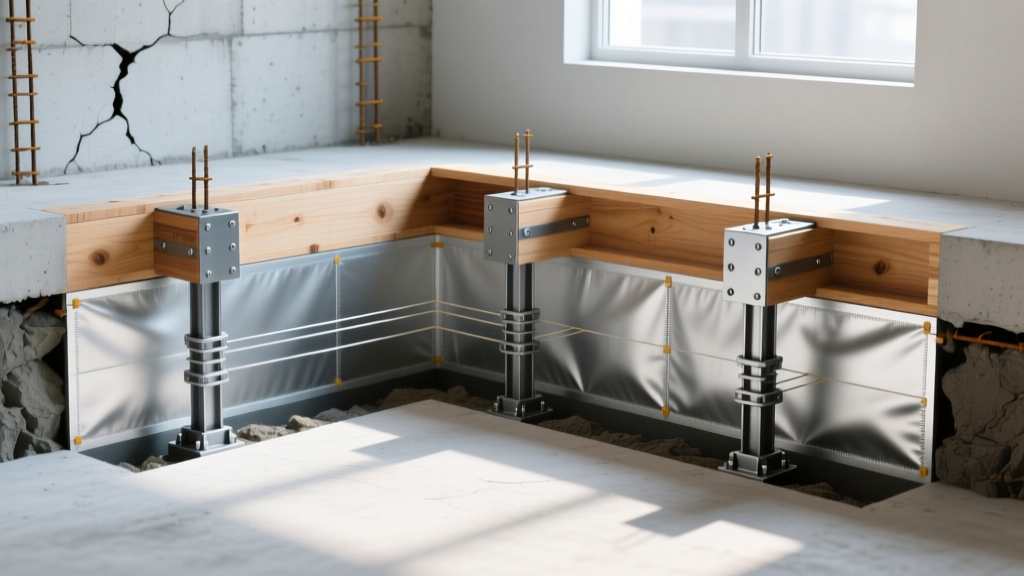
The Real Cost of Crawl Space Foundation Repair in 2026
When structural integrity fails beneath a home, the financial uncertainty can be paralyzing. The national average for crawl space foundation repair cost ranges from $4,500 to $12,000, but severe structural overhauls involving deep foundation piers and complete moisture remediation frequently exceed $30,000. Unlike slab-on-grade foundations, crawl spaces introduce a complex matrix of wooden structural members, masonry piers, and extreme moisture exposure, meaning repairs rarely involve just one trade or material.
This cost analysis dissects the exact pricing, engineering requirements, and material specifications for crawl space stabilization in 2026. We bypass generic estimates to provide the technical decision frameworks used by structural engineers and foundation contractors.
Cost Breakdown by Structural Failure Type
To accurately budget, you must isolate the specific failure mode. Crawl space issues generally fall into three categories: deep soil settlement, mid-span structural sagging, and moisture-induced material degradation.
1. Settlement and Sinking: Helical vs. Push Piers
When the perimeter foundation wall or interior masonry piers sink due to expansive clay or poorly compacted fill soil, the structure must be underpinned. The crawl space foundation repair cost for underpinning depends heavily on the type of pier used.
| Pier Type | Installation Method | 2026 Cost Per Pier | Best Application |
|---|---|---|---|
| Helical Piers | Torqued into soil using hydraulic motors | $1,800 - $2,800 | Lightweight structures, crawl spaces, new construction |
| Push Piers | Hydraulically driven using the home's weight | $1,400 - $2,200 | Heavy masonry homes, deep bedrock refusal |
| Slab Piers | Driven through concrete to lift grade beams | $1,600 - $2,500 | Perimeter grade beam stabilization |
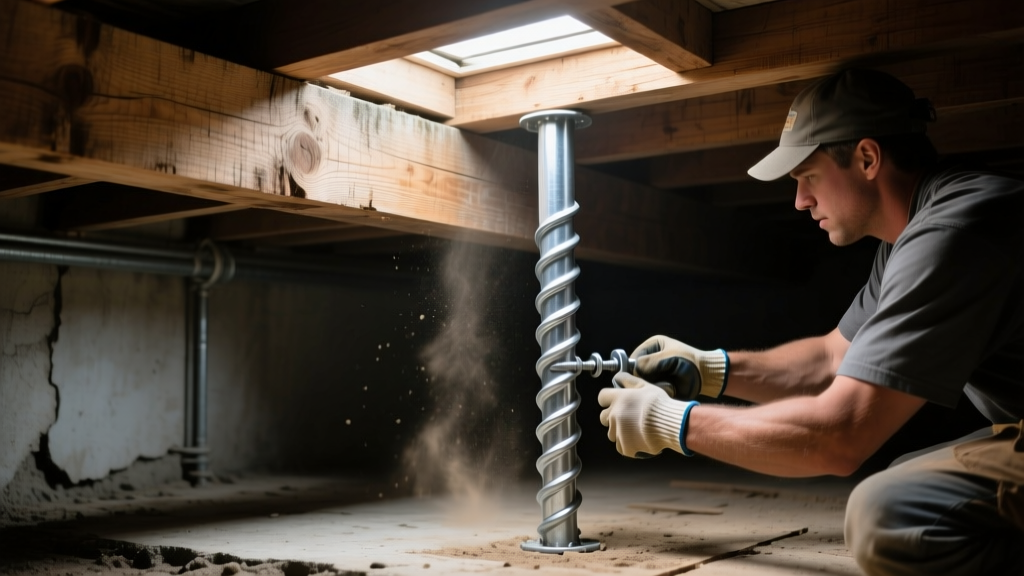
Expert Insight: Crawl space homes are often lighter, single-story, wood-framed structures. Push piers require the dead load (weight) of the house to provide the hydraulic resistance needed to drive the steel pipe to bedrock. If your home lacks sufficient dead load, push piers will simply push the house upward rather than driving the pier downward. In these scenarios, helical piers (such as those manufactured by Chance or Earth Contact Products) are mandatory. They are screwed into the earth to a specified torque rating (typically 7,000 to 9,000 ft-lbs), independent of the home's weight.
2. Sagging Floors and Girder Failure
If the perimeter walls are stable but the interior floors slope toward the center of the house, the main girder beam or floor joists are failing. The crawl space foundation repair cost for mid-span sagging is dictated by the repair technique:
- Adjustable Steel Columns (e.g., SmartJacks): Replacing rotting wooden lally columns or crumbling masonry stacks with heavy-duty, 20-ton adjustable steel columns costs $400 to $750 per column installed. This includes pouring a localized 24x24x12-inch concrete footing beneath the column to distribute the load.
- Sistering Floor Joists: If individual joists are warped, cracked, or notched by HVAC plumbers, contractors will 'sister' a new pressure-treated Southern Yellow Pine (PT SYP) joist alongside the old one. Expect to pay $150 to $300 per linear foot. This requires jacking the floor slowly (no more than 1/8 inch per day) to avoid cracking drywall above.
- Main Girder Replacement: If the primary load-bearing beam is compromised by termite damage or dry rot, replacing it with a steel I-beam or engineered LVL (Laminated Veneer Lumber) beam costs $3,000 to $8,000, heavily dependent on crawl space access and temporary shoring requirements.
3. Moisture-Induced Wood Rot and Encapsulation
Structural repairs will fail if the moisture source is not eliminated. According to the U.S. Department of Energy, unvented, conditioned crawl spaces significantly reduce moisture-related structural degradation and improve energy efficiency. The International Association of Certified Home Inspectors (InterNACHI) also mandates strict moisture control protocols to prevent fungal growth and wood-destroying organism activity.
Full crawl space encapsulation, including the 20-mil barrier, seam taping, wall insulation, and a commercial-grade dehumidifier (like the Santa Fe or AlorAir models), costs between $8.00 and $14.00 per square foot. If standing water is present, a perimeter French drain and a cast-iron sump pump (e.g., Zoeller M53) will add $2,500 to $4,500 to the project.
Hidden Costs That Inflate Your Final Bill
Contractor estimates often exclude site-specific variables that drastically alter the final crawl space foundation repair cost. Factor these into your budget:
- Low Clearance Excavation: If your crawl space clearance is under 18 inches, mini-excavators cannot enter. Hand-digging for concrete footings or pier installation increases labor costs by 40% to 60%.
- Structural Engineering Reports: Most municipalities require a stamped engineering letter for foundation underpinning. Independent structural engineers charge $600 to $1,500 for the site visit, soil analysis, and stamped repair plan.
- HVAC and Plumbing Relocation: If main supply lines or ductwork run directly beneath a failing girder, they must be temporarily supported and relocated by licensed tradesmen before the foundation crew can begin, adding $800 to $2,500.
- Permitting and Inspections: Depending on local building codes, permit fees range from $150 to $600, requiring multiple municipal inspections during the footing and final lifting phases.
Decision Matrix: Matching the Symptom to the Repair
Use this diagnostic framework to verify your contractor's proposed solution. If the symptom does not match the repair method, seek a second opinion.
| Visible Symptom | Probable Root Cause | Correct Repair Method | Est. Cost Range |
|---|---|---|---|
| Diagonal drywall cracks at door/window corners | Perimeter foundation settlement | Helical or Push Piers | $15,000 - $35,000+ |
| Bouncy, sloping floors in the center of the home | Undersized or settling interior girder | SmartJacks + Supplemental Beam | $3,500 - $8,000 |
| Doors sticking, musty odors, cupped hardwood | High humidity, wood rot, soil evaporation | 20-mil Encapsulation + Dehumidifier | $6,000 - $15,000 |
| Spongy floors near exterior walls, visible mold | Rim joist rot from splashback or poor grading | Rim joist replacement + exterior drainage | $4,000 - $10,000 |
Financing and ROI: Is the Repair Worth It?
Foundation repairs rarely yield a 100% return on investment at resale, but they are critical for preserving the asset's baseline value. According to the Environmental Protection Agency (EPA), unchecked moisture and structural shifting can lead to catastrophic indoor air quality issues and total structural failure. Unrepaired foundation damage can reduce a home's appraised value by 10% to 25%. Spending $20,000 on a comprehensive piering and encapsulation system to protect a $450,000 asset is a mandatory preservation cost, not an optional upgrade.
Frequently Asked Questions
Does homeowners insurance cover crawl space foundation repair?
Generally, no. Standard HO-3 policies exclude damage caused by earth movement, soil settlement, and gradual water seepage. Coverage is typically only granted if the foundation failure is the direct, sudden result of a covered peril, such as a burst plumbing line washing away the supporting soil.
How long does a typical crawl space repair take?
Interior repairs like installing adjustable steel columns or sistering joists take 2 to 4 days. Deep foundation underpinning (helical piers) requires 5 to 10 days depending on the number of piers and bedrock depth. Full encapsulation adds another 3 to 5 days.
Can I use wooden posts instead of steel jacks in my crawl space?
While pressure-treated 6x6 timber posts are code-compliant in some jurisdictions, they are highly susceptible to lateral shifting, shrinkage, and eventual rot if the vapor barrier fails. Heavy-duty, galvanized adjustable steel columns set on engineered concrete footings are the industry standard for longevity and precise load-bearing adjustment.
Written by
Elena RodriguezElena Rodriguez is a civil engineer and technical writer specializing in concrete technology, masonry systems, and ASTM/ACI compliance. She earned her B.S. in Civil Engineering from Texas A&M University and spent a decade at a materials testing laboratory, performing over 2,000 concrete compressive strength tests and masonry prism evaluations. Elena is an ACI-certified Field Testing Technician (Grade I) and a member of ASTM Committee C12 on Natural Building Stone. She currently consults on forensic engineering cases involving concrete failures and moisture intrusion. Based in San Antonio, TX, Elena is a proud member of the Society of Women Engineers (SWE) and coaches her daughter's FIRST Robotics team.
More from Elena Rodriguez
View all
Walls & Panels
Cost Analysis: Light Gauge Steel Framing Advantages and Disadvantages
Evaluate light gauge steel framing advantages and disadvantages through a strict cost analysis lens, comparing material, labor, and lifecycle expenses.
Aug 4, 2026

Walls & Panels
Gypsum Board Types: Exact Specifications, Thickness & Dimensions
Compare standard, Type X, and moisture-resistant gypsum board types. Get exact specifications, thicknesses, dimensions, and ASTM standards for your project.
Aug 4, 2026

Fire Resistance
Best Fire-Resistant Outdoor Decking Materials: 2026 Buyer Guide
Discover the best fire-resistant outdoor decking materials for 2026. Compare Class A PVC, aluminum, and hardwood options for WUI compliance and safety.
Aug 4, 2026