Foundation Repair Costs Dallas: 2026 Warning Signs & Pricing Guide
Diagnose structural failure early. Explore 2026 foundation repair costs Dallas homeowners face, soil-specific warning signs, and pier pricing data.
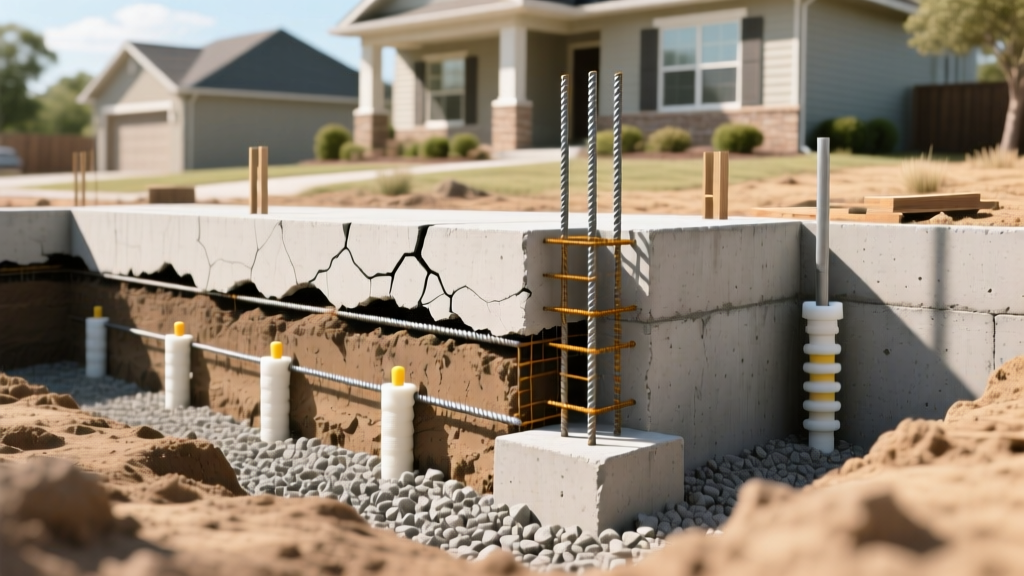
The North Texas Soil Matrix: Why Dallas Foundations Fail
Understanding foundation repair costs in Dallas requires first understanding the geology beneath your home. North Texas sits primarily on the Eagle Ford Shale and Austin Chalk formations. These soils possess a high Plasticity Index (PI often exceeding 40), meaning they act like a sponge—swelling significantly during heavy spring rains and shrinking violently during the brutal, dry summer months. This continuous cycle of expansion and contraction creates immense hydrostatic pressure and voids beneath slab-on-grade foundations, leading to differential settlement.
According to guidelines published by the Foundation Performance Association, slab-on-ground foundations in Texas are designed to flex slightly. However, when the deflection exceeds the structural tolerance of the concrete and the framing above it, cosmetic issues escalate into structural failures. Diagnosing these issues early is the single most effective way to control your ultimate repair bill.
5 Diagnostic Warning Signs of Differential Settlement
Before you call a contractor, conduct a thorough visual inspection of your property. Look for these specific indicators that point to active foundation movement rather than normal seasonal shifting.
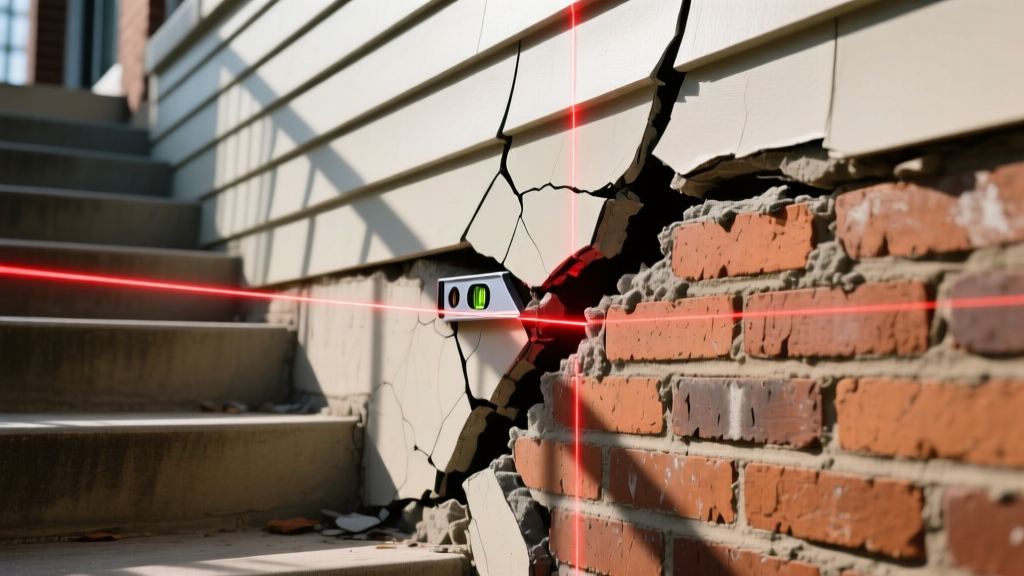
- Frieze Board Separation: Check the exterior trim where the brick masonry meets the soffit. A gap wider than 1/4 inch indicates the foundation is dropping away from the structural framing.
- Diagonal Drywall Fissures: Cracks originating from the top corners of door frames and extending toward the ceiling at a 45-degree angle are classic signs of shear stress caused by a dropping foundation pier.
- Slab Heave Indicators: If interior doors bind at the top of the frame rather than the bottom, your slab is likely heaving (pushing upward) in the center of the home due to trapped moisture beneath the grade beam.
- Weep Hole Water Intrusion: Inspect the weep holes just above the ground level on your brick exterior. If you see efflorescence (white, chalky mineral deposits) or soil washout, moisture is pooling against your grade beam, softening the supporting clay.
- Plumbing Line Shears: Unexplained spikes in your water bill or the sound of running water when all fixtures are off often indicate a cast-iron or PVC drain line has snapped due to slab movement.
Hairline cracks (less than 1/16 inch) in the center of a concrete slab are typically caused by plastic shrinkage during the original curing process and are rarely a structural concern. However, vertical displacement (where one side of a crack is higher than the other) exceeding 1/4 inch requires immediate professional evaluation.
2026 Dallas Foundation Repair Costs: Method-by-Method Breakdown
The financial impact of foundation stabilization varies wildly based on the depth of the load-bearing strata and the accessibility of the work site. Below is a detailed breakdown of current foundation repair costs Dallas homeowners can expect to pay in 2026.
| Repair Method | Primary Application | Cost Per Unit / Pier | Average Total Job Cost |
|---|---|---|---|
| Steel Push Piers | Heavy structural loads; reaching deep bedrock (25-45 ft) | $1,400 - $1,900 | $12,000 - $28,000+ |
| Pressed Concrete Piers | Lighter loads; shallower clay stabilization (12-20 ft) | $750 - $1,100 | $6,000 - $14,000 |
| Polyurethane Foam Jacking | Lifting sunken interior slabs, patios, and garage floors | $15 - $25 per sq. ft. | $2,500 - $6,500 |
| HDPE Root Barriers | Preventing moisture extraction by large trees near grade beams | $85 - $120 per lin. ft. | $1,500 - $4,000 |
| Interior Tunneling | Accessing interior grade beams without breaking the slab | $1,200 - $1,800 per tunnel | Add $3,500 - $8,000 |
Steel Piers vs. Pressed Concrete Piers: A Dallas-Specific Comparison
When evaluating foundation repair costs in Dallas, contractors will typically pitch either steel push piers or pressed concrete cylinders. The right choice depends entirely on the soil profile of your specific neighborhood.
Pressed Concrete Piers
This method uses a hydraulic ram to press 6-inch diameter concrete cylinders into the ground until they reach 'refusal' (the point where the soil resistance prevents further pressing). The Dallas Drawback: In areas with dense, dry Eagle Ford shale, the cylinders may hit a false refusal layer at only 10 or 12 feet. When the next heavy rain hits, that shallow clay layer softens, and the foundation can sink again. Pressed concrete is generally only recommended for lighter structures or garages in North Texas.
Steel Push Piers
Steel piers are driven hydraulically through the unstable clay until they socket into the limestone bedrock or a highly compacted load-bearing stratum, often 30 to 45 feet below the surface in the Dallas-Fort Worth metroplex. While the upfront cost is nearly double that of concrete, steel piers provide a permanent, load-bearing transfer that bypasses the active moisture zone entirely.
If you opt for steel piers, ensure your contract stipulates that the installation crew must provide a daily depth log showing the exact hydraulic pressure (PSI) and depth achieved for every single pier. This is your only proof that the piers actually reached bedrock.
The Hidden Cost: Plumbing Leaks and Hydrostatic Pressure
A massive, often overlooked variable in foundation repair costs is underground plumbing. If a foundation drops, it can shear the cast-iron drain lines common in Dallas homes built before 1985. Conversely, a leaking water line can wash out the soil supporting your grade beam.
Before any lifting begins, you must commission a hydrostatic pressure test ($350 - $500). This involves plugging the main sewer line and filling the system with water to check for drops in pressure. If a leak is detected, the foundation repair company will need to coordinate with a tunneling crew to excavate beneath the slab to repair the pipe and replace the compacted soil before the piers can be installed. Failing to fix a leak prior to lifting the slab will result in immediate warranty voidance and recurring settlement.
Proactive Mitigation: Managing the Dallas Microclimate
The Dallas Water Utilities department explicitly recommends foundation watering programs to combat the extreme summer evaporation rates. Relying solely on sprinklers is insufficient, as they are designed for turfgrass, not deep soil saturation.
- Soaker Hose Placement: Lay soaker hoses exactly 18 inches away from the edge of the foundation. Placing them directly against the concrete will cause water to pool in the expansion joint and erode the soil beneath the grade beam.
- Watering Schedule: During July and August, run soaker hoses for 45 minutes, three times a week per zone. The goal is to maintain a consistent moisture level, not to create mud.
- Tree Root Management: If you have large Oak or Elm trees within 20 feet of your home, install a 24-inch deep HDPE root barrier. A single mature tree can extract up to 150 gallons of water a day from the soil, creating a massive void beneath your slab.
When to Hire an Independent Structural Engineer
Most foundation repair companies in Dallas offer 'free inspections.' While many are highly ethical, their business model relies on selling piers. If your home exhibits severe structural distortion, or if you are preparing to sell and need a definitive engineering letter for a buyer's lender, bypass the free inspection.
Hire an independent, licensed Structural Engineer (P.E.) to conduct a third-party evaluation. Expect to pay between $600 and $950 for a comprehensive elevation survey and an unbiased repair prescription. This document will tell you exactly how many piers are required and where, allowing you to solicit apples-to-apples bids from multiple contractors without being upsold on unnecessary interior piers.
Frequently Asked Questions
Does homeowners insurance cover foundation repair in Dallas?
Generally, no. Standard policies exclude damage caused by soil expansion, contraction, and drought. The only exception is if the damage was the direct, sudden result of a covered plumbing leak, in which case the policy may cover the 'tear out and replace' of the slab to access the pipe, but rarely the structural stabilization itself.
How long does a typical Dallas foundation repair take?
An exterior-only job requiring 15-20 piers typically takes 3 to 5 days. If interior tunneling or extensive masonry landscaping restoration is required, expect the project to span 2 to 3 weeks.
Written by
James ThorntonJames Thornton is a construction industry veteran with 25 years of hands-on experience in wood framing, lumber grading, and residential building codes. He started as a framing carpenter in rural Oregon, earned his ICC Residential Building Inspector certification, and eventually became a senior plan reviewer for the City of Portland Bureau of Development Services. James holds a B.S. in Wood Science & Technology from Oregon State University and is a certified lumber grader through the West Coast Lumber Inspection Bureau (WCLIB). He has inspected over 3,000 residential construction sites and authored the city's internal guide on advanced framing techniques (2x6 at 24" O.C.). James lives in Bend, OR, where he builds custom timber-frame cabins and competes in lumberjack sports.
More from James Thornton
View all
Insulation
Best Home Insulation Materials: Complete 2026 Guide
Compare top home insulation materials for 2026. Find R-values, installed costs per square foot, and best uses for fiberglass, spray foam, and mineral wool.
Aug 4, 2026

Sustainable Building
Certify Your Green Building Material for LEED and WELL
Step-by-step guide to certifying a green building material for LEED v5 and WELL v2. Master EPDs, HPDs, and VOC limits for 2026 project specifications.
Aug 4, 2026

Stone & Masonry
Veneer Stacked Stone Panels: Interior Design & Style Showcase
Discover how veneer stacked stone panels transform interiors. Explore modern design profiles, material pairings, and technical installation specs.
Aug 4, 2026