Polyurethane Injection Foundation Repair Cost: 2026 Diagnosis Guide
Diagnose slab settlement and evaluate polyurethane injection foundation repair cost. Learn warning signs, material specs, and 2026 pricing per square foot.
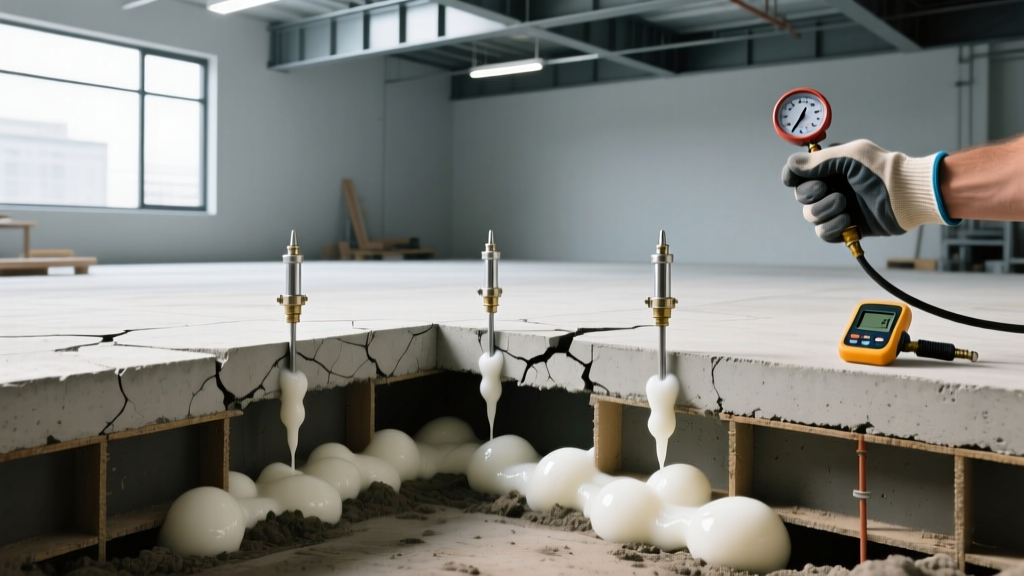
Diagnosing the Drop: When Polyurethane is the Correct Fix
Differential settlement and sub-slab voids are primary catalysts for concrete failure in residential and light commercial structures. Before evaluating the polyurethane injection foundation repair cost, an accurate diagnosis of the underlying soil mechanics and slab geometry is mandatory. Polyurethane resin injection (often termed polyjacking or slab jacking) is highly effective for correcting void-induced settlement, mitigating washouts, and lifting slabs that have lost subgrade support. However, it is not a universal cure for structural shear failures or severe hydrostatic pressure issues.
Accurate diagnosis requires moving beyond visual crack mapping. Professionals utilize altimeter-grade measurement tools like the ZIPLEVEL Pro-2000 or laser transit levels to create a precise topographical contour of the slab. This data reveals the exact vector and magnitude of the settlement. If the slab has dropped uniformly, the issue may stem from regional soil consolidation. If the drop is localized near plumbing penetrations or exterior drainage downspouts, subgrade erosion (piping) is the likely culprit.
Never authorize a polyurethane lift without first conducting a hydrostatic pressure test on the sub-slab plumbing. If an active leak is washing out the soil, injecting resin will not solve the problem; the expanding foam will simply follow the path of least resistance into the broken sewer line, causing massive blockages and requiring expensive excavation. Fix the leak and allow the subgrade to stabilize before lifting.
The Chemistry of the Lift: High-Density vs. Void-Fill Resins
The cost and success of the repair are directly tied to the specific chemical formulation of the two-component polyurethane resin used. According to guidelines referenced by the International Concrete Repair Institute (ICRI), selecting the correct density and reaction time is critical for load-bearing applications.
- High-Density Structural Lifting Resins (e.g., NCFI TerraThane 24-025, Prime Resins Prime Flex 985): These formulations yield a cured density of 3.5 to 5.0 pounds per cubic foot (pcf). They are designed to generate immense lifting pressure (up to 6,000+ PSF) to raise sunken concrete and provide structural load-bearing support. They react quickly (15-30 seconds) to allow for controlled, millimeter-precise lifting.
- Low-Density Void Fill Resins (e.g., Alchemy-Spetec AP Soil Gel): Yielding a cured density of 1.5 to 2.5 pcf, these foams expand aggressively (up to 25 times their liquid volume) to fill massive subterranean cavities, abandoned utility trenches, or sinkholes. They provide minimal lifting force but excel at stabilizing empty spaces economically.
"The most common failure in polyurethane slab lifting is not the material failing, but the concrete fracturing because the technician used a high-expansion, low-density void-fill foam to attempt a structural lift on a thin slab." — Geotechnical Forensics Review
Polyurethane Injection Foundation Repair Cost Breakdown
Pricing for polyurethane injection is rarely a flat rate; it is calculated based on the volume of resin required, the depth of injection, and the total square footage of the affected area. Below is the 2026 market data for residential and light commercial applications.
| Repair Category | 2026 Cost Range | Pricing Metric |
|---|---|---|
| Slab Lifting (Polyjacking) | $12.00 - $22.00 | Per Square Foot |
| Deep Soil Stabilization (Curtain Grouting) | $18.00 - $35.00 | Per Linear Foot |
| Sub-Slab Void Filling | $6.00 - $11.00 | Per Square Foot |
| Minimum Mobilization / Setup Fee | $1,200 - $1,800 | Flat Fee |
| Post-Lift Slab Jacking / Pier Integration | $850 - $1,400 | Per Pier Location |
Variables That Escalate the Final Invoice
While the base rates provide a strong baseline, specific site conditions will push costs toward the higher end of the spectrum:
- Depth of Injection: Standard lifts require injecting 2 to 4 inches below the slab. If soil borings reveal that the unstable, uncompacted fill dirt extends 10 feet down, technicians must use deep-soil injection rods, drastically increasing material volume and labor time.
- Access Constraints: Standard reactor rigs are trailer-mounted and require hose runs up to 250 feet. If the settlement is in a confined backyard with narrow gates, requiring portable, wheelbarrow-mounted proportioning pumps, expect a 15% to 20% surcharge for equipment downsizing and reduced pumping efficiency.
- Slab Thickness and Condition: Slabs thinner than 3.5 inches require a tighter drill grid (e.g., 3-foot spacing instead of 5-foot spacing) to distribute the lifting pressure evenly and prevent the concrete from snapping under the localized hydraulic force.
Step-by-Step Diagnostic & Repair Workflow
A professional polyurethane repair follows a strict sequence to ensure the slab is lifted to tolerance without causing secondary damage. According to structural resilience frameworks outlined by FEMA for foundation stabilization in shifting soil zones, systematic execution is vital.
The 5-Phase Execution Protocol
Phase 1: Topographical Mapping. Establish a benchmark elevation outside the zone of influence. Map the interior slab elevations to identify the precise hinge points and maximum deflection zones.
Phase 2: Grid Layout and Drilling. Mark a diamond or staggered grid pattern. Drill 5/8-inch injection holes through the concrete. Pro Tip: Never drill within 6 inches of a slab edge or control joint to prevent blowouts.
Phase 3: Port Insertion and Purging. Insert brass or steel injection ports into the holes. Run a quick air purge to clear concrete dust from the subgrade pathways.
Phase 4: Sequential Lifting. Inject the high-density resin starting from the lowest point (the fulcrum) and working toward the highest point. Monitor the slab with the laser level in real-time, stopping injection the moment the target elevation is reached.
Phase 5: Port Removal and Patching. Knock the ports below the surface using a hammer and punch. Fill the 5/8-inch holes with a rapid-setting hydraulic cement or epoxy-tinted concrete patch to match the existing floor.
Polyurethane vs. Mudjacking: A Diagnostic Comparison
When diagnosing a sunken driveway or warehouse floor, contractors often present both traditional mudjacking (cementitious slurry) and polyurethane injection. Understanding the physical differences dictates which method is appropriate for your specific soil profile.
| Feature | Polyurethane Injection | Traditional Mudjacking |
|---|---|---|
| Material Weight | 2 - 4 lbs per cubic foot | 100 - 120 lbs per cubic foot |
| Drill Hole Size | 5/8 inch | 1.5 to 2 inches |
| Water Resistance | Impervious (Closed-cell) | Susceptible to erosion/washout |
| Cure Time | 15 - 30 minutes | 24 - 48 hours |
| Best Application | Interior slabs, water-prone areas, precision lifts | Massive exterior voids, highway shoulders, low-budget exterior slabs |
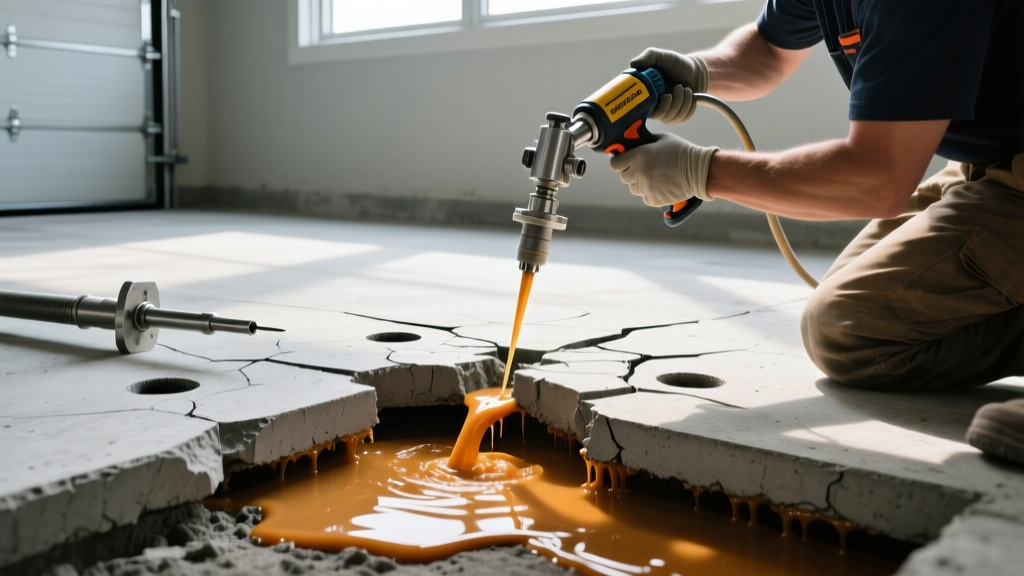
Expert Verdict: Is the Investment Justified?
When evaluating the polyurethane injection foundation repair cost, it must be weighed against the cost of full slab demolition and replacement. Tearing out and repouring a 500-square-foot garage slab typically costs between $4,500 and $7,500, not including the landscaping destruction or the 28-day concrete curing period required before heavy vehicles can return. Polyurethane lifting for that same area generally ranges from $6,000 to $11,000, but it restores the slab to a usable state in under two hours with zero environmental disruption.
The diagnostic key to justifying this premium is the presence of moisture. If the settlement is caused by expansive clays shrinking during a drought, or by water intrusion eroding sandy loam, polyurethane's closed-cell, hydrophobic nature ensures the repair will not wash away or absorb groundwater. For interior foundation repairs where dust, heavy equipment access, and immediate use are paramount, polyurethane injection remains the undisputed industry standard.
Written by
Priya KapoorPriya Kapoor is a real estate market analyst and construction economics researcher with expertise in housing affordability, development feasibility, and infrastructure investment. She holds a Master of Regional Planning from Cornell University and previously worked as a senior analyst at CBRE's Investment Properties group, where she modeled returns for $4B in mixed-use development pipelines. Priya now runs an independent research practice advising developers, municipalities, and REITs on construction cost forecasting and market timing. She publishes the quarterly "BuildMat Market Pulse" report tracking material price indices across 12 commodity categories. Based in Austin, TX, Priya serves on the board of Habitat for Humanity Austin and is a marathon runner.
More from Priya Kapoor
View all
Construction Cost
Cost to Build a 1600 Sq Ft Home in 2026: Full Breakdown
Accurate 2026 cost to build a 1600 sq ft home—material, labor, and regional pricing breakdowns included. Plan your budget with real-time estimates.
Aug 11, 2026

Wood & Lumber
Name the Types of Wood for Pressure Treatment and Preservation
Learn how to name the types of wood best suited for pressure treatment. Compare species treatability, chemical retention levels, and 2026 preservation costs.
Aug 4, 2026

Stone & Masonry
Stone Veneer Suppliers Lindenhurst: 2026 Cost Analysis
Analyze 2026 stone veneer costs in Lindenhurst, NY. Compare local supplier pricing, delivery fees, and Suffolk County installation labor rates.
Aug 4, 2026