Matching All Types of Roofing Materials to US Climate Zones
Discover how to match all types of roofing materials to your specific US climate zone. Compare costs, lifespans, and thermal performance data.
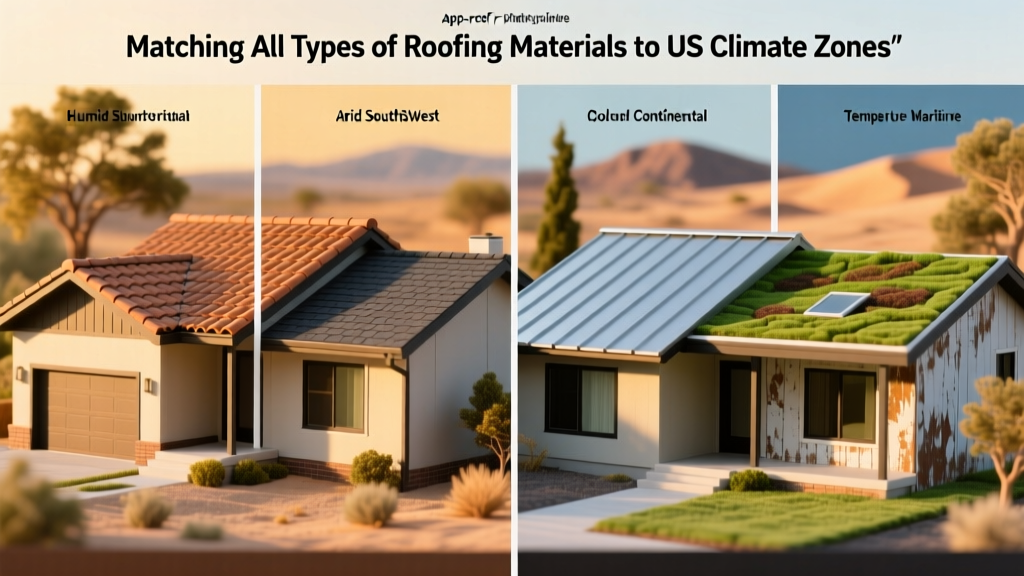
Roofing material degradation is rarely a product of age alone; it is primarily driven by localized environmental stressors. Ultraviolet (UV) radiation, thermal shock, moisture intrusion, and wind uplift dictate the actual lifespan of a roof system. When evaluating all types of roofing materials, contractors and homeowners must align material properties with the specific hygrothermal loads of their region. Installing a high-performing material in the wrong climate zone accelerates failure modes like galvanic corrosion, UV embrittlement, and ice damming.
The DOE Climate Zone Framework for Roofing
The U.S. Department of Energy and the International Energy Conservation Code (IECC) divide the country into eight distinct climate zones based on temperature and precipitation. According to the PNNL Building America Solution Center, these zones dictate not only insulation requirements but also the fundamental selection of exterior weather barriers. Ignoring these zone-specific parameters voids manufacturer warranties and leads to premature system failure.
Cold & Snow-Heavy Climates (Zones 5, 6, and 7)
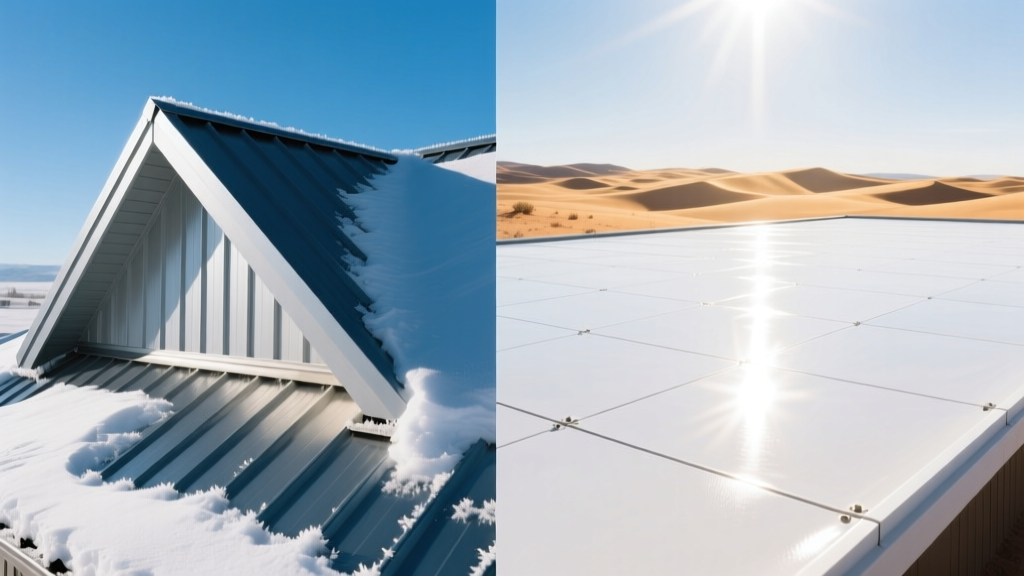
In northern zones, the primary enemies are ice damming, snow load deflection, and thermal shock (rapid temperature drops that cause materials to contract and crack).
Optimal Materials and Specifications
- Standing Seam Metal (24-gauge): Systems like Petersen PAC-CLAD with a 2-inch mechanical lock seam shed snow efficiently. The continuous panel design eliminates horizontal seams where ice can back up.
- Architectural Asphalt Shingles: Must feature high-seal adhesive strips. GAF Timberline HDZ shingles utilize a proprietary StrikeZone nailing area that ensures secure fastening even in sub-zero installation temperatures.
- Synthetic Slate: Products like DaVinci Roofscapes polymer slate resist the impact of falling ice and branches without the brittle fracture risk of natural slate in freeze-thaw cycles.
Hot & Arid Climates (Zones 2 and 3)
Desert environments subject roofs to extreme UV exposure and surface temperatures that can exceed 160°F. The primary failure modes are UV embrittlement of polymers, thermal expansion/contraction cracking, and heat transfer into the building envelope.
Optimal Materials and Specifications
- Cool Roof TPO/PVC (60-mil to 80-mil): For low-slope applications, Carlisle SynTec TPO membranes reflect solar energy. To meet California Title 24 and Energy Star requirements, the membrane must maintain an aged Solar Reflectance Index (SRI) of at least 64, as detailed by the Department of Energy's Cool Roof guidelines.
- Concrete and Clay Tile: Boral Concrete Roof Tiles provide exceptional thermal mass and natural ventilation channels beneath the battens, reducing attic heat gain by up to 40% compared to direct-to-deck asphalt.
- Elastomeric Silicone Coatings: For roof restoration, 100% silicone coatings (like Henry 887 Tropi-Cool) resist UV degradation and ponding water without chalking or chalking away like acrylics.
Coastal & High-Wind Humid Climates (Zone 1, 2, and Coastal Regions)
Coastal zones combine high humidity, salt spray, and extreme wind uplift from tropical cyclones. The dominant failure modes are galvanic corrosion of fasteners, wind tearing, and organic algae growth.
Optimal Materials and Specifications
- Aluminum Standing Seam: Unlike Galvalume steel, .032-inch aluminum is immune to saltwater corrosion. It is the mandatory choice for structures within 1,500 feet of the ocean.
- PVC Membranes: PVC (Polyvinyl Chloride) outperforms TPO in coastal environments due to its superior resistance to chemical pollutants and salt aerosols.
- Fiber Cement Slates: Products like CertainTeed WeatherSide offer the aesthetic of cedar without the moisture absorption and rot inherent to wood in high-humidity zones.
Expert Insight on Fasteners: In coastal high-velocity hurricane zones (HVHZ), using 304 stainless steel fasteners is a critical error. The salt environment will cause rapid crevice corrosion. You must specify 316 stainless steel fasteners for all metal roofing clips and flashings to pass ASTM B117 salt spray testing and secure Miami-Dade Notice of Acceptance (NOA) approvals.
Mixed & Temperate Climates (Zones 3 and 4)
Transitional zones experience both freezing winters and hot, humid summers. The freeze-thaw cycle is the primary driver of material fatigue, while humidity promotes moss and algae.
Optimal Materials and Specifications
- Algae-Resistant Architectural Shingles: Shingles embedded with copper-lined granules (e.g., Owens Corning Duration) prevent Gloeocapsa magma (black algae) streaking without requiring chemical washes.
- EPDM Rubber (Black): For low-slope residential or commercial applications, black EPDM remains highly flexible across extreme temperature swings (-40°F to 300°F), preventing the cold-cracking seen in modified bitumen.
Comprehensive Climate-to-Material Matrix
Use the following decision matrix to cross-reference your primary environmental threat with the optimal material specification and critical testing standard.
| Climate Zone | Primary Threat | Optimal Material | Critical Specification / Standard |
|---|---|---|---|
| Zones 5-7 (Cold/Snow) | Ice Dams, Thermal Shock | 24-Gauge Mechanical Lock Metal | ASTM D3161 Class F; 24" Ice & Water Shield |
| Zones 2-3 (Hot/Arid) | UV Degradation, Heat Transfer | 60-mil TPO / Concrete Tile | CRRC Rated; Aged SRI > 64 |
| Coastal / HVHZ | Salt Corrosion, Wind Uplift | .032" Aluminum Standing Seam | Miami-Dade NOA; 316 SS Fasteners |
| Zones 3-4 (Mixed) | Freeze-Thaw, Algae | Copper-Granule Asphalt Shingles | ASTM D3462; Algae Resistance Warranty |
Cost & Lifespan Adjustments by Climate
Material costs fluctuate based on regional demand and shipping weight, but the true cost metric is the climate-adjusted lifespan. A 30-year architectural shingle installed in Zone 2 (Phoenix, AZ) will typically degrade and lose granule adhesion in 14 to 18 years due to UV exposure. The same shingle in Zone 5 (Chicago, IL) may easily reach its 25-year mark. Conversely, a clay tile roof in Zone 2 will routinely exceed 50 years, justifying its high initial cost of $18.00 to $28.00 per square foot installed, compared to the $5.50 to $8.50 per square foot cost of asphalt.
Expert Troubleshooting: Hidden Climate Failures
Even when the primary material is matched to the climate, secondary components often fail if not specified correctly for the local environment.
- Flashing Incompatibility in Coastal Zones: Using copper flashing adjacent to aluminum roofing or galvanized steel gutters in a salt-air environment creates a severe galvanic cell. The aluminum or zinc will corrode rapidly. Always use isolated, compatible metals or apply heavy bituminous separation membranes.
- Underlayment Trapping in Hot Climates: Using a fully adhered peel-and-stick membrane over the entire roof deck in Zone 2 or 3 traps moisture vapor migrating from the interior, leading to deck rot. In hot-humid zones, use breathable synthetic underlayment (e.g., GAF FeltBuster) to allow outward drying.
- Snow Guard Omission in Zone 6: Metal roofs shed snow in massive sheets. Failing to install staggered, pad-style snow guards (like Alpine SnowGuards) over entrances and gutters in Zones 5-7 leads to catastrophic structural damage to lower rooflines and severe safety hazards.
Selecting the correct roofing system requires moving beyond aesthetic preferences and basic material costs. By rigorously aligning material chemistry, fastener specifications, and underlayment permeability with the specific hygrothermal demands of your local climate zone, you ensure the structural integrity and longevity of the building envelope.
Written by
James ThorntonJames Thornton is a construction industry veteran with 25 years of hands-on experience in wood framing, lumber grading, and residential building codes. He started as a framing carpenter in rural Oregon, earned his ICC Residential Building Inspector certification, and eventually became a senior plan reviewer for the City of Portland Bureau of Development Services. James holds a B.S. in Wood Science & Technology from Oregon State University and is a certified lumber grader through the West Coast Lumber Inspection Bureau (WCLIB). He has inspected over 3,000 residential construction sites and authored the city's internal guide on advanced framing techniques (2x6 at 24" O.C.). James lives in Bend, OR, where he builds custom timber-frame cabins and competes in lumberjack sports.
More from James Thornton
View all
Insulation
Best Home Insulation Materials: Complete 2026 Guide
Compare top home insulation materials for 2026. Find R-values, installed costs per square foot, and best uses for fiberglass, spray foam, and mineral wool.
Aug 4, 2026

Sustainable Building
Certify Your Green Building Material for LEED and WELL
Step-by-step guide to certifying a green building material for LEED v5 and WELL v2. Master EPDs, HPDs, and VOC limits for 2026 project specifications.
Aug 4, 2026

Stone & Masonry
Veneer Stacked Stone Panels: Interior Design & Style Showcase
Discover how veneer stacked stone panels transform interiors. Explore modern design profiles, material pairings, and technical installation specs.
Aug 4, 2026