IMC Insulation Materials Corp: Acoustic Sound Control Guide
Evaluate IMC Insulation Materials Corp acoustic products for 2026. Compare Sonopan panels, mineral wool batts, STC ratings, and soundproofing costs.
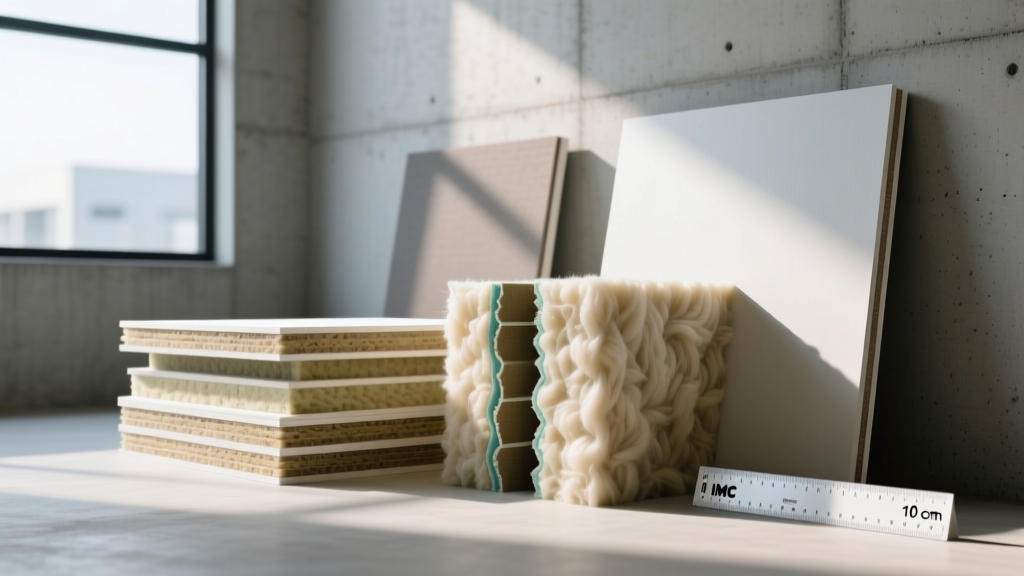
The Role of IMC Insulation Materials Corp in Modern Acoustics
Specifying sound control systems requires a precise understanding of mass, decoupling, and absorption. IMC Insulation Materials Corp has established a strong footprint in the North American market by distributing and manufacturing specialized acoustic building materials. Unlike standard thermal insulation providers, IMC focuses heavily on Noise Reduction Coefficient (NRC) and Sound Transmission Class (STC) optimization. For architects and contractors navigating the stringent 2026 building codes regarding multi-family residential and commercial acoustic privacy, understanding the exact performance metrics of IMC's product lines is critical. This guide breaks down their core acoustic offerings, assembly performance matrices, and real-world installation failure modes.
Core Acoustic Product Lines Breakdown
Sonopan Soundproofing Boards
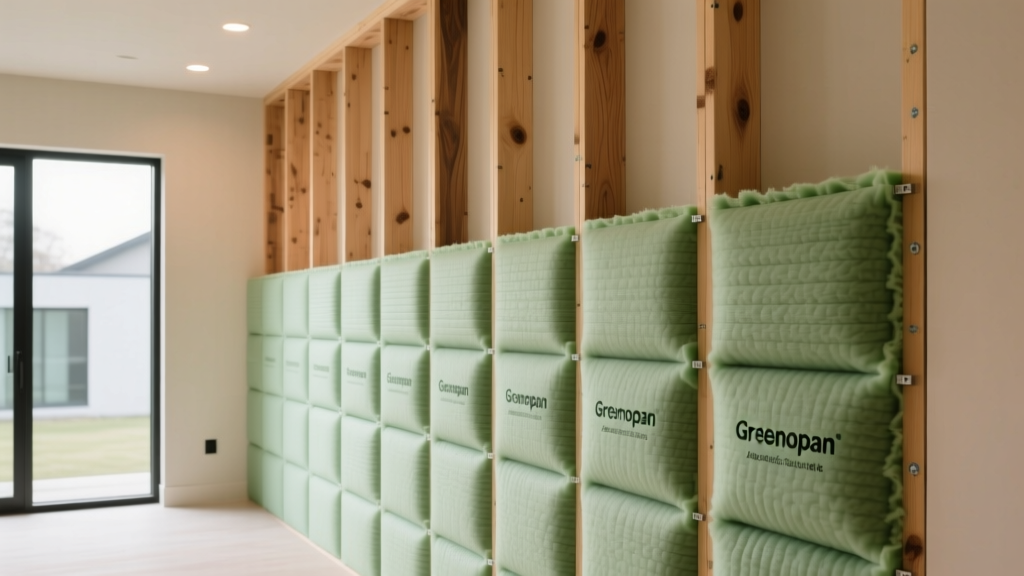
The flagship acoustic product distributed by IMC Insulation Materials Corp is the Sonopan soundproofing panel. Manufactured from 100% recycled wood fibers, these panels are distinctively green and feature a shiplap edge profile to prevent acoustic leakage at the seams. The standard 5/8-inch thick panel (4x8 feet) weighs approximately 43 lbs per cubic foot, providing significant mass to block airborne noise. When installed directly to wood or steel studs behind 5/8-inch Type X gypsum board, Sonopan typically yields a 5 to 8 point STC improvement over a bare cavity wall. For high-impact environments like home theaters or mechanical rooms, the 1-inch thick variant is recommended, pushing the assembly STC well above 55.
Acoustic Mineral Wool Batts
While mass blocks sound, absorption prevents cavity resonance. IMC supplies high-density mineral wool batts specifically engineered for acoustic dampening. Unlike standard fiberglass (which typically sits at 0.5 to 1.0 pcf), IMC's acoustic mineral wool ranges from 2.5 to 8.0 pcf (pounds per cubic foot). This higher density forces sound waves to expend kinetic energy as they navigate the dense fiber matrix, converting acoustic energy into trace amounts of heat. These batts are friction-fit into 16-inch or 24-inch on-center stud cavities and boast an NRC of 1.05 to 1.15, effectively eliminating the 'drum effect' common in empty wall cavities.
Relying solely on IMC's dense Sonopan boards will not stop low-frequency structure-borne noise (like bass or footfalls). To achieve STC 60+, you must combine mass (Sonopan), absorption (Mineral Wool), and decoupling (Resilient Channels or staggered studs). Omitting decoupling in a low-frequency environment will result in acoustic flanking, rendering your material investment useless.
Acoustic Performance Matrix: STC and IIC Ratings
To specify correctly, contractors must reference laboratory-tested assembly ratings. The following matrix demonstrates how IMC Insulation Materials Corp products elevate standard partitions, tested in accordance with ASTM E90 standards for airborne sound transmission.
| Wall Assembly Configuration | Estimated STC Rating | Low-Freq Performance (STC-125) | Material Cost / Sq Ft (2026) |
|---|---|---|---|
| Standard: 2x4 Wood Studs, 16" o.c., 1/2" Drywall both sides | STC 34 | Poor (Bass bleeds through) | $0.85 |
| Upgraded 1: 2x4 Studs + IMC Mineral Wool Batts + 5/8" Drywall | STC 43 | Fair (Speech muffled) | $2.10 |
| Upgraded 2: 2x4 Studs + Mineral Wool + Sonopan + 5/8" Drywall | STC 51 | Good (Loud music reduced) | $3.45 |
| Premium: Staggered Studs + Mineral Wool + Sonopan + RC + 2x 5/8" Drywall | STC 62+ | Excellent (Theater grade) | $6.80 |
Installation Failure Modes and Edge Cases
Even the highest-rated IMC acoustic materials will fail if installation protocols are violated. According to guidelines published by the National Institute of Building Sciences (NIBS), acoustic flanking and rigid contact account for over 70% of soundproofing failures in the field. Avoid these critical edge cases:
- The Drywall-to-Floor Hard Contact: If the final layer of gypsum board or the Sonopan panel touches the subfloor directly, vibrations will bypass the wall cavity entirely. Always leave a 1/4-inch gap at the floor plate and fill it with a non-hardening acoustic sealant (e.g., Tremco Acoustical Sealant or OSI SC-175).
- Electrical Box Back-to-Back Placement: Never install electrical outlets back-to-back on a shared acoustic partition. This creates a direct tunnel for airborne noise. Stagger boxes by at least 24 inches horizontally, and wrap the rear of the electrical boxes with acoustic putty pads or enclose them in drywall putty.
- Resilient Channel Short-Circuiting: When using resilient channels over IMC Sonopan panels, drywall screws must be exactly 1-1/4 inches. If a screw is driven too deep and bites into the underlying wood stud (short-circuiting the channel), the decoupling mechanism is instantly destroyed, dropping the assembly STC by up to 10 points.
- HVAC Flanking Paths: Sound travels through ductwork. If a supply duct feeds two adjacent rooms separated by an IMC-upgraded wall, the wall's STC rating is irrelevant. Install acoustic duct liners or inline duct silencers to mitigate cross-talk.
Cost Analysis for 2026 Residential Projects
Budgeting for acoustic upgrades requires separating material costs from specialized labor. Installing IMC mineral wool and Sonopan requires more precision than standard fiberglass and drywall, often increasing drywall labor costs by 15% to 20% due to the handling of acoustic sealants and resilient channels.
| Project Scope (1,000 Sq Ft of Wall Area) | IMC Material Cost | Specialized Labor Cost | Total Estimated Cost |
|---|---|---|---|
| Basic Cavity Fill (Mineral Wool Only) | $1,100 - $1,300 | $800 - $1,000 | $1,900 - $2,300 |
| Mass Upgrade (Mineral Wool + Sonopan) | $2,400 - $2,800 | $1,200 - $1,500 | $3,600 - $4,300 |
| Full Decoupled Assembly (RC + Sealants) | $4,500 - $5,200 | $2,500 - $3,200 | $7,000 - $8,400 |
Sourcing and Specification Guidelines
When drafting project specifications, architects should explicitly reference IMC Insulation Materials Corp by name to prevent contractors from substituting standard thermal batts for acoustic mineral wool. Specify the exact density (e.g., 'Mineral wool batts, minimum 2.5 pcf, NRC 1.05, as manufactured by IMC Insulation Materials Corp or approved equal'). For commercial projects requiring LEED or WELL Building Standard certifications, ensure that the specific IMC products selected carry the necessary Greenguard Gold certifications for low VOC emissions, which is standard for their 2026 Sonopan and mineral wool production runs.
'Achieving true acoustic privacy is not about finding a single magic material; it is about the meticulous execution of a multi-layered system combining mass, absorption, and isolation.' — Acoustical Society of America Design Principles.
By leveraging IMC Insulation Materials Corp's specialized product ecosystem and strictly enforcing field installation tolerances, builders can consistently deliver high-performance acoustic environments that meet modern regulatory and consumer demands.
Written by
James ThorntonJames Thornton is a construction industry veteran with 25 years of hands-on experience in wood framing, lumber grading, and residential building codes. He started as a framing carpenter in rural Oregon, earned his ICC Residential Building Inspector certification, and eventually became a senior plan reviewer for the City of Portland Bureau of Development Services. James holds a B.S. in Wood Science & Technology from Oregon State University and is a certified lumber grader through the West Coast Lumber Inspection Bureau (WCLIB). He has inspected over 3,000 residential construction sites and authored the city's internal guide on advanced framing techniques (2x6 at 24" O.C.). James lives in Bend, OR, where he builds custom timber-frame cabins and competes in lumberjack sports.
More from James Thornton
View all
Insulation
Best Home Insulation Materials: Complete 2026 Guide
Compare top home insulation materials for 2026. Find R-values, installed costs per square foot, and best uses for fiberglass, spray foam, and mineral wool.
Aug 4, 2026

Sustainable Building
Certify Your Green Building Material for LEED and WELL
Step-by-step guide to certifying a green building material for LEED v5 and WELL v2. Master EPDs, HPDs, and VOC limits for 2026 project specifications.
Aug 4, 2026

Stone & Masonry
Veneer Stacked Stone Panels: Interior Design & Style Showcase
Discover how veneer stacked stone panels transform interiors. Explore modern design profiles, material pairings, and technical installation specs.
Aug 4, 2026