Top Brick Mailbox Brands & Prefab Kits Reviewed for 2026
Compare top brick mailbox brands like Gaines and Stepstone. Analyze 2026 costs, prefab vs custom masonry, frost-line footings, and USPS specs.
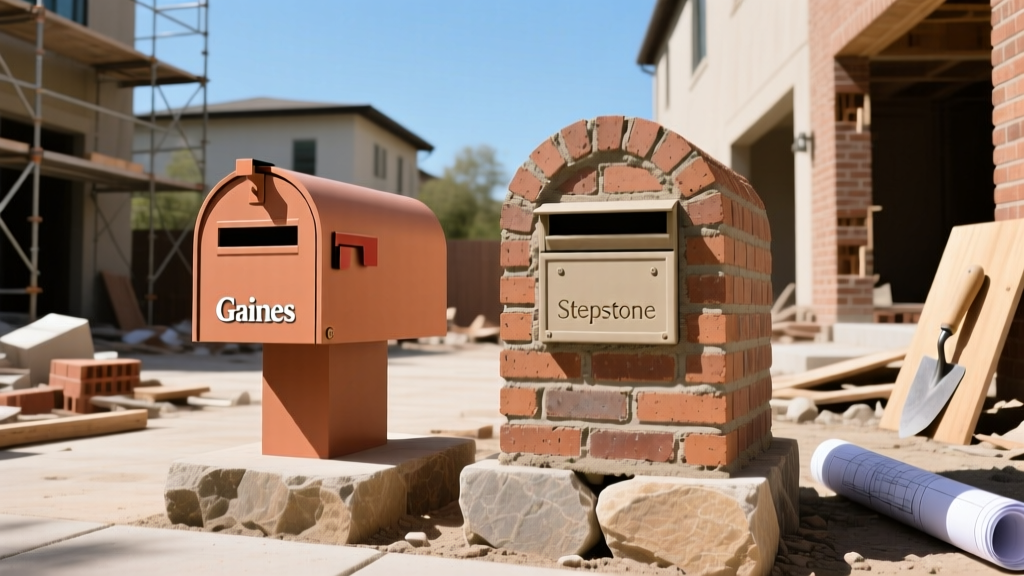
The Shift to Prefabricated Brick Mailbox Systems
The residential masonry market has seen a definitive shift toward engineered prefab systems over the last five years. Driven by a 22% increase in custom mason labor rates and stricter municipal right-of-way regulations, homeowners and contractors are increasingly turning to prefabricated brick mailbox kits. These systems bridge the gap between the aesthetic permanence of traditional clay masonry and the rapid deployment of modern landscaping products. In 2026, the market is dominated by two primary prefab technologies: structural aluminum cores with adhered brick veneer, and high-density architectural precast concrete. Understanding the engineering, material composition, and long-term failure modes of these systems is critical for selecting the right product for your specific climate and soil conditions.
Brand Deep-Dive: Gaines Manufacturing Veneer Kits
Gaines Manufacturing remains the benchmark for premium brick veneer mailbox systems. Unlike traditional masonry, the Gaines Windsor and Gaines Lancaster models utilize a structural aluminum or reinforced polymer core. The exterior is clad in 2.5-inch thick kiln-fired brick veneer slices, adhered with a proprietary polyurethane construction adhesive rather than traditional Portland cement mortar.
Technical Specifications & Failure Modes
- Core Material: 0.125-inch marine-grade aluminum extrusion.
- Veneer Thickness: 2.5 inches (sliced from standard modular clay brick).
- Weight: Approximately 350 lbs (fully assembled).
- 2026 Average Cost: $1,400 - $1,950 (including matching brick house numbers and heavy-duty steel mail compartment).
Edge Case Warning: The primary failure mode for the Gaines system in high-humidity coastal zones is adhesive degradation. While the polyurethane adhesive is rated for 150 PSI shear strength, prolonged exposure to salt spray and UV radiation can cause the veneer slices to delaminate after 12 to 15 years. For coastal installations, specify the optional mechanical wire-tie backing system offered in their 2026 premium tier.
Brand Deep-Dive: Stepstone Precast Brick Columns
Stepstone Inc. approaches the brick mailbox from an architectural precast concrete perspective. Their Brick Column Mailbox line does not use actual clay brick. Instead, it utilizes high-strength (5,000 PSI) precast concrete poured into polyurethane formliners that perfectly replicate the texture, tooling marks, and color variations of weathered modular brick.
Installation Realities
Because these are solid precast concrete monoliths, weight is the primary logistical hurdle. A standard Stepstone brick column mailbox weighs between 900 and 1,200 lbs. Installation requires a bobcat, skid steer, or small crane. The unit is lifted and set directly onto a pre-cured, steel-troweled concrete pad using a 1-inch bed of non-shrink grout. While this eliminates the need for a mason entirely, the heavy weight makes it highly susceptible to differential settlement if the subgrade is not properly compacted to 95% Proctor density.
Custom Masonry: The Traditional Brick-by-Brick Route
For estates, historic districts, or homeowners demanding absolute material authenticity, custom masonry remains the gold standard. Building a brick mailbox from scratch using standard modular clay brick (such as Acme Brick's Heritage Red or General Shale's Antique Brick) requires a highly skilled mason and a multi-day timeline.
2026 System Comparison Matrix
| System Type | Brand / Model | Material Core | 2026 Avg Cost | Install Time | Frost Susceptibility |
|---|---|---|---|---|---|
| Prefab Veneer | Gaines Windsor | Aluminum / Polymer | $1,650 | 4-6 Hours | Low (if anchored) |
| Precast Monolith | Stepstone Brick Column | 5,000 PSI Concrete | $1,200 | 2-3 Hours (heavy equip) | High (massive weight) |
| Custom Masonry | Acme Brick / CMU Core | CMU Block & Clay Brick | $3,800+ | 3-4 Days | Moderate (depends on footing) |
Critical Engineering: Footings and Frost Heave Prevention
The most common reason brick mailboxes fail is not material degradation, but subgrade failure. A brick mailbox is a rigid, unyielding structure. If the soil beneath it freezes and expands (frost heave), the mailbox will tilt, crack, or shear at the mortar joints. According to guidelines referenced by the American Concrete Institute, any masonry structure must be supported by a footing that extends below the local frost line.
Step-by-Step Frost-Proof Footing Spec
- Excavation: Dig a 24x24 inch hole to a depth 6 inches below your local frost line (typically 36 inches in Zone 5, 48 inches in Zone 6).
- Base Prep: Add 4 inches of compacted 3/4-inch crushed angular gravel for drainage.
- Forming: Insert a 12-inch diameter Sonotube, ensuring it extends 2 inches above final grade to shed surface water.
- Reinforcement: Drop a rebar grid (two #4 bars crossed and tied) into the bottom third of the tube. Extend two #4 vertical dowels 18 inches above the pour to pin into the CMU core of the mailbox.
- Pour: Fill with 4,000 PSI air-entrained concrete. Air entrainment (typically 4-6% microscopic air bubbles) is non-negotiable in freeze-thaw climates to prevent the footing itself from spalling.
USPS Compliance and Snowplow Clearance Rules
Before mixing mortar or ordering a prefab kit, you must adhere to strict federal and municipal placement rules. The USPS Mailbox Standards dictate precise mounting heights and setback distances to ensure carrier safety and accessibility.
USPS Mounting Specs: The bottom of the mailbox door must be 41 to 45 inches from the road surface. The mailbox must be set back 6 to 8 inches from the front face of the curb or road edge.
Mortar Selection and Efflorescence Mitigation
When constructing a custom brick mailbox, selecting the correct mortar type is critical for longevity. The Brick Industry Association strongly advises against using high-strength Type S or Type M mortar for above-grade brick veneer. Hard mortars trap moisture inside the brick, leading to freeze-thaw spalling and severe efflorescence (the white, powdery salt deposits that ruin brick aesthetics).
The Type N Mortar Advantage
For the above-grade brick courses of your mailbox, specify Type N mortar. Type N consists of 1 part Portland cement, 1 part hydrated lime, and 6 parts sand. This mix yields a compressive strength of roughly 750 PSI, which is lower than the brick itself. This is intentional: Type N is more permeable, allowing trapped moisture to evaporate through the mortar joints rather than forcing its way through the brick face. Furthermore, the high lime content gives Type N superior autogenous healing properties, meaning microscopic shrinkage cracks will naturally seal themselves when exposed to rain.
Sealing the Mail Compartment
Finally, the steel or aluminum mail compartment door embedded within the brickwork is a major thermal bridge and moisture entry point. Always apply a continuous bead of high-modulus silicone sealant (such as Dow Corning 795) between the metal door frame and the surrounding brick. Do not use polyurethane caulk, which degrades under UV exposure and will pull away from the masonry within three years, allowing wind-driven rain to rot the internal wooden framing or rust the steel lintels supporting the brickwork above the door.