White Wash Brick: Top Brand Product Lines & DIY Guide 2026
Compare top white wash brick brands like Romabio and Sherwin-Williams. Explore mineral limewash vs. acrylic coatings and factory-finished options.
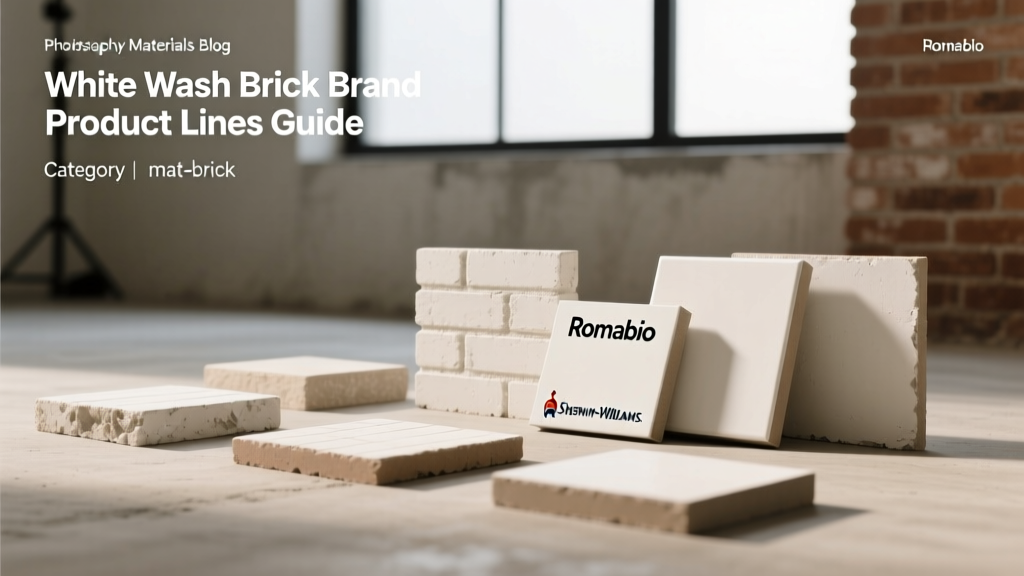
The Great Divide: Mineral Limewash vs. Acrylic 'Whitewash'
The term 'white wash brick' is frequently misused in the construction and design industries. In 2026, the market is split between two fundamentally different chemical processes: authentic mineral limewash and modern acrylic masonry paints. Understanding this distinction is critical, as applying the wrong product to a structural masonry wall can lead to catastrophic moisture entrapment and brick spalling.
Authentic limewash is a mineral-based coating composed of slaked lime (calcium hydroxide) and water. It penetrates the porous surface of the clay brick and calcifies, becoming part of the masonry itself. Acrylic 'whitewashes,' conversely, are film-forming polymers that sit on the surface. According to the National Park Service Preservation Briefs, applying non-breathable film-forming coatings to historic or solid masonry walls traps internal moisture, accelerating freeze-thaw degradation.
Brand Deep-Dive: Romabio Classico Limewash
Romabio has established itself as the premier manufacturer of mineral-based masonry coatings in North America. Their Classico Limewash line is the industry standard for achieving an authentic, breathable white wash brick finish. Unlike diluted paint, Classico is a high-pH mineral slurry that requires no primer on raw, unpainted brick.
Product Specifications & 2026 Pricing
- Composition: Slaked lime, mineral pigments, natural binders.
- pH Level: 12.4 (Highly alkaline, naturally mold-resistant).
- Coverage Rate: 225 sq. ft. per gallon (undiluted); up to 400 sq. ft. per gallon when diluted for a washed, distressed look.
- Current Retail Cost: $68.00 per gallon (approx. $0.17 to $0.30 per sq. ft. depending on dilution).
- Vapor Permeability: Highly breathable (allows internal masonry moisture to escape).
Best Use Case: Exterior solid masonry, historic brick restoration, and interior exposed brick where a mottled, organic, and chalky aesthetic is desired. Because it is a wash, it can be easily distressed with a damp sponge during application to reveal the underlying red or brown clay tones.
Brand Deep-Dive: Sherwin-Williams Loxon Masonry Coatings
For builders and homeowners who require a uniform, opaque white finish with higher washability than mineral lime, Sherwin-Williams offers the Loxon Concrete & Masonry Coating line. While not a traditional 'whitewash,' Loxon is frequently used to achieve a solid white brick aesthetic in commercial and modern residential builds.
Loxon is an acrylic-based system. To use it as a white wash, contractors typically apply Loxon Conditioner as a penetrating primer, followed by a single thinned coat of Loxon XP or ConFlex in a high-reflective white. Because it forms a micro-film, it bridges hairline mortar cracks, providing superior water resistance from the outside in.
Limitations and Edge Cases
While Loxon offers excellent UV stability and color retention, its breathability is significantly lower than Romabio's mineral limewash. The Brick Industry Association Technical Notes 20 dictates that masonry must be completely cured and dry before applying acrylic coatings. If Loxon is applied to brick with high internal moisture content, the acrylic film will blister and peel within 12 to 18 months. It is strictly recommended for cavity-wall construction with functioning weep holes, rather than solid mass masonry.
Factory-Finished White Wash Brick: Pine Hall & Acme Brick
For new construction projects where on-site coating is impractical or labor-prohibitive, manufacturers like Pine Hall Brick and Acme Brick offer factory-applied slurry-coated and engobe-finished white bricks. These are not painted; the white wash effect is achieved by applying a mineral slip (engobe) to the extruded clay before it enters the kiln, fusing the white pigment directly into the brick's fired surface.
Products like Pine Hall's 'English Edge' series or Acme's 'White Slurry' face brick provide a permanent, maintenance-free white wash aesthetic. The primary trade-off is cost and lead time. Factory-finished white wash brick typically carries a premium of $1.80 to $2.50 per brick over standard utility face brick, and custom kiln runs often require 12 to 16 weeks of lead time.
Comparison Matrix: DIY Coatings vs. Factory-Finished Brick
| Feature | Romabio Mineral Limewash | Sherwin-Williams Loxon | Factory Slurry Brick |
|---|---|---|---|
| Material Cost (per sq. ft.) | $0.17 - $0.30 | $0.45 - $0.65 | $1.80 - $2.50 (per brick) |
| Breathability (Perm Rating) | Excellent (Mineral) | Moderate (Micro-film) | Excellent (Unglazed) |
| Labor Intensity | High (Requires dampening) | Moderate (Spray/Roll) | Zero (Standard masonry) |
| Mortar Staining Risk | High (Must mask joints) | High (Bleeds into pores) | None (Pre-finished) |
| Aesthetic Result | Organic, mottled, chalky | Uniform, painted, solid | Integrated, textured clay |
Step-by-Step Application Protocol for Mineral Limewash
Achieving a professional-grade white wash brick finish with mineral limewash requires strict adherence to masonry preparation protocols. Failure to manage the brick's Initial Rate of Absorption (IRA) will result in patchy, uneven curing.
- Test the Substrate pH and IRA: Ensure the brick is unpainted and has a pH below 10. Test the absorption rate; if the brick absorbs water instantly, it has a high IRA and requires extensive pre-wetting.
- Pre-Dampen the Masonry: Using a pump sprayer, thoroughly mist the brick wall with clean water. The brick should be damp to the touch but not actively dripping. This prevents the dry clay from sucking the moisture out of the limewash before it can calcify.
- Mix and Agitate: Stir the Romabio Classico Limewash continuously. Mineral pigments settle rapidly. If diluting for a lighter wash, mix at a 1:1 ratio with water.
- Apply with a Masonry Block Brush: Do not use standard paint rollers. Use a stiff-bristled block brush to work the limewash deep into the brick pores and mortar joints. Apply in overlapping, circular motions.
- Distress and Wipe (Optional): Within 10 to 15 minutes of application, use a damp masonry sponge to wipe away excess limewash from the high points of the brick, revealing the natural clay color beneath and creating the signature 'white wash' depth.
- Curing Time: Allow 24 hours for initial set. The coating will appear translucent when wet and will cure to its final opaque white finish as it carbonates and absorbs CO2 from the atmosphere.
Troubleshooting Common White Wash Failures
Even with premium products, environmental factors and improper preparation can compromise a white wash finish. Here is how to diagnose and resolve the most common field issues:
- Efflorescence Bleed-Through: White, crystalline salt deposits pushing through the white wash. Cause: Soluble salts within the brick or mortar migrating to the surface with moisture. Fix: Dry-brush the salts off. Do not use acid washes on limewash, as the acid will neutralize and destroy the calcium hydroxide binder.
- Chalking and Flaking: The white wash rubs off on clothing or flakes in sheets. Cause: Applied to a previously sealed brick, or applied to dry brick that flash-dried the coating. Fix: Remove failing material with a stiff nylon brush and pressure washer. Re-dampen the wall thoroughly before reapplying a fresh mineral coat.
- Mortar Joint Discoloration: The mortar joints remain dark gray while the brick turns white. Cause: Mortar has a different porosity and pH than the clay brick, causing uneven absorption. Fix: Pre-treat mortar joints with a dedicated masonry primer or apply a heavier, undiluted second coat of limewash specifically targeting the joints.
Sourcing and Cost Breakdown
When budgeting a white wash brick project in 2026, material costs are only a fraction of the total expense. For a standard 2,000 sq. ft. exterior facade, expect the following financial breakdown:
DIY Mineral Limewash Route: Materials will cost approximately $400 to $600 (including primer, limewash, brushes, and sprayers). However, professional masonry painters charge between $3.50 and $5.50 per sq. ft. for labor, pushing the total installed cost to $7,000 - $11,000. The high labor cost is driven by the meticulous dampening and distressing process required for an authentic finish.
Factory-Finished Brick Route: If building a new structure, specifying factory-slurry white brick adds roughly $1,500 to $2,500 to the total brick material budget for a 2,000 sq. ft. home. Because the masons lay the brick exactly as they would standard face brick, there is zero premium on the masonry labor, making this the most cost-effective and durable route for new construction.