Best Stone Veneer for Interior Walls: Technical Specs Guide
Explore technical specifications for the best stone veneer for interior walls, including load limits, ASTM fire ratings, and substrate requirements.
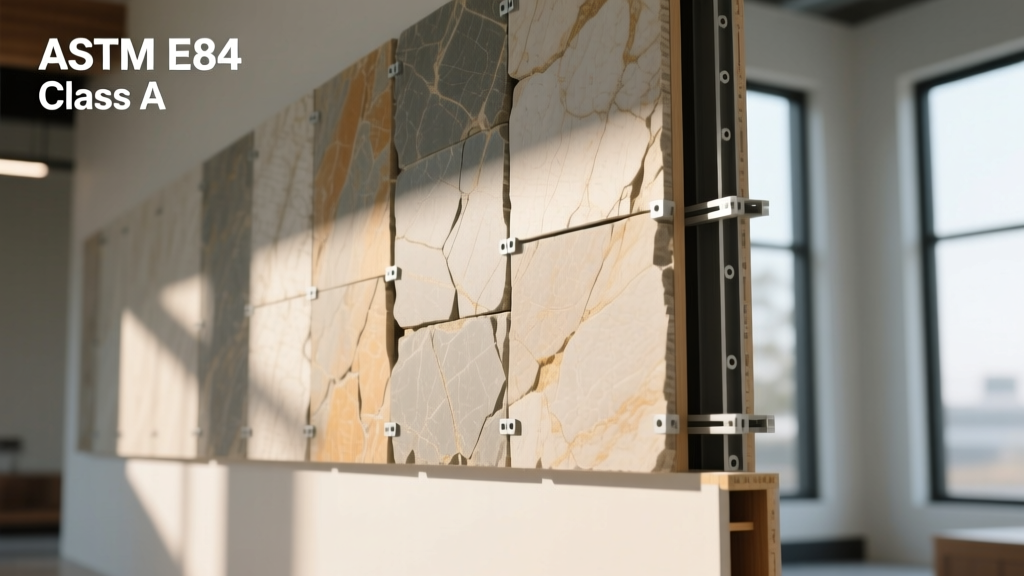
Core Material Classifications & Density Metrics
Selecting the best stone veneer for interior walls requires moving beyond aesthetics to evaluate structural load, thickness profiles, and material density. Interior applications lack the weathering demands of exterior facades but introduce strict constraints regarding floor joist deflection, wall framing load limits, and interior clearances. The three primary categories of interior stone veneer—Manufactured Stone Veneer (MSV), Natural Thin Stone Veneer (NTSV), and High-Density Polyurethane (HDPU)—each possess distinct technical profiles.
| Material Type | Average Weight (lbs/sq ft) | Thickness Profile | Compressive Strength (ASTM C170) | Interior Best Use Case |
|---|---|---|---|---|
| Manufactured Stone (MSV) | 10.0 - 12.5 | 1.0" - 2.5" | 2,000 - 4,000 psi | Feature walls, fireplace surrounds with cement board substrates |
| Natural Thin Stone (NTSV) | 12.0 - 15.0 | 0.75" - 1.5" | 4,000 - 10,000+ psi (varies by geology) | High-end residential accents, commercial lobbies requiring authentic geology |
| Polyurethane Faux (HDPU) | 1.0 - 1.5 | 1.0" - 2.0" | N/A (Tensile: ~400 psi) | Standard drywall applications, basement finishes, ceiling installations |
Substrate Load-Bearing Requirements & Deflection Limits
The most common failure mode for interior stone veneer is not material degradation, but substrate deflection. According to guidelines published by the Tile Council of North America (TCNA), any rigid masonry or stone finish requires a maximum deflection limit of L/360 under combined dead and live loads. Standard 2x4 interior partition walls framed at 24 inches on center (OC) frequently exceed this deflection limit when burdened with 150+ lbs of stone veneer.
Framing and Sheathing Specifications
- Stud Spacing: For MSV and NTSV exceeding 12 lbs/sq ft, wall framing must be upgraded to 16 inches OC minimum, utilizing #2 grade or better SPF (Spruce-Pine-Fir) lumber.
- Gypsum Board Limitations: Standard 1/2-inch drywall has a pull-out strength of approximately 40 lbs per fastener. While HDPU faux stone can be applied directly to drywall using construction adhesive, MSV and NTSV must never be bonded directly to paper-faced gypsum.
- Cementitious Backer Board: Specify 1/2-inch cement board (e.g., USG Durock or James Hardie HardieBacker 500). Fasten to studs using 1-1/4-inch corrosion-resistant alkali-resistant screws at 8 inches OC in the field and 6 inches OC at the edges.
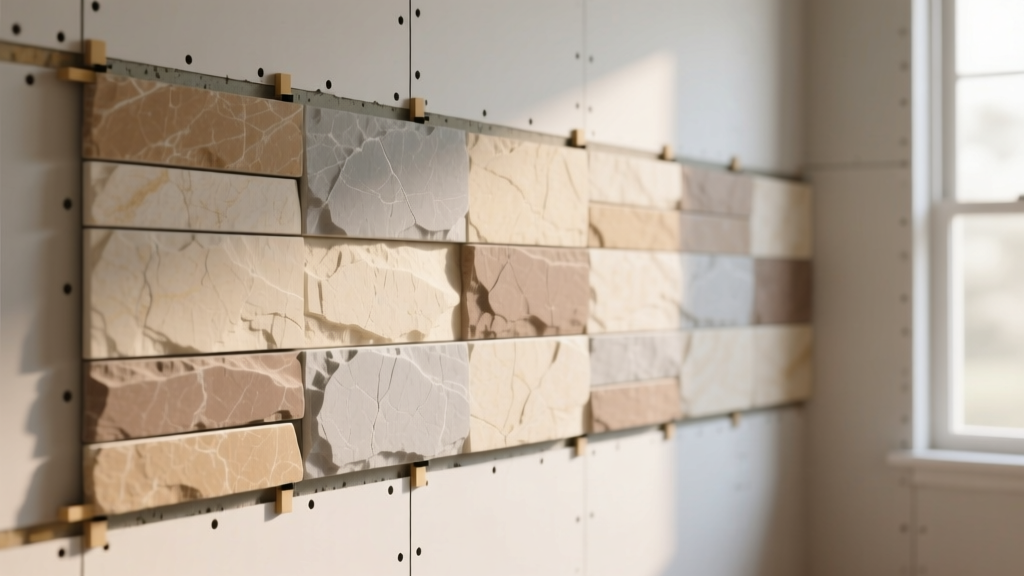
Fire Resistance, ASTM E84, and Interior Code Compliance
Interior building codes strictly regulate the flame spread and smoke development of wall coverings, particularly in egress corridors and commercial spaces. The benchmark standard is ASTM E84, which measures the Surface Burning Characteristics of Building Materials.
For interior fireplace surrounds, the technical specifications become more rigorous. The veneer must maintain structural integrity under continuous thermal cycling. Specify MSV products tested to ASTM C1670 (Standard Specification for Manufactured Stone Veneer) which mandates freeze-thaw and thermal shock resistance, ensuring the facing does not delaminate when exposed to the radiant heat of a 600°F firebox exterior.
Adhesive & Mortar Specifications for Interior Bonding
The chemical bond between the veneer and the substrate dictates the longevity of the installation. The Masonry Veneer Manufacturers Association (MVMA) outlines strict mortar protocols to prevent interior delamination caused by HVAC-induced humidity fluctuations.
Mortar Chemistry and ANSI Standards
- Scratch Coat (Cement Board Substrates): Apply a 1/2-inch scratch coat of Type S masonry cement mixed with washed masonry sand at a 1:3 ratio. Score the surface horizontally with a coarse rake to create a mechanical key.
- Setting Mortar (ANSI A118.4): For the actual veneer application, utilize a polymer-modified dry-set mortar meeting ANSI A118.4 specifications. Products like Custom Building Products VersaBond or ProGold Thin-Set offer enhanced polymer resins that improve shear bond strength to a minimum of 150 psi after 28 days of curing.
- Adhesive Alternatives for HDPU: For lightweight polyurethane panels, bypass mortar entirely. Specify a high-tack, solvent-free polyurethane construction adhesive (e.g., Loctite PL Premium 3X or OSI TeqBond). Apply in continuous vertical beads spaced 6 inches apart to prevent moisture entrapment behind the panel.
Troubleshooting Common Interior Veneer Failures
Even with premium materials, interior installations can fail if environmental and chemical variables are ignored. Below is a technical diagnostic matrix for the three most common interior stone veneer failures.
| Symptom | Root Cause Analysis | Technical Remediation |
|---|---|---|
| White, powdery efflorescence on interior stone faces | Moisture migration from an adjacent basement wall or plumbing leak dissolving soluble salts in the mortar bed, which then crystallize on the surface. | Identify and seal the moisture source. Clean the veneer with a diluted solution of sulfamic acid (never use muriatic acid on MSV, as it degrades the cement matrix and iron oxide pigments). |
| Veneer delamination at drywall seams | Improper substrate prep; mortar was applied directly over paper-faced gypsum or un-taped cement board joints, allowing lateral shear to break the paper bond. | Remove affected stones. Install a self-furring metal lath over the substrate, secured directly to the wall studs, and re-apply a 1/2-inch scratch coat before resetting the veneer. |
| Vertical cracking through mortar joints | Framing deflection exceeding L/360, or lack of expansion joints in a continuous run exceeding 15 linear feet. | For runs over 15 feet, integrate a flexible polyurethane sealant joint disguised as a mortar line. Reinforce wall framing with mid-height blocking to stiffen the stud bay. |
Frequently Asked Technical Questions
Can I install manufactured stone veneer over existing interior brick?
Yes, provided the existing brick is unpainted, structurally sound, and free of efflorescence. You must mechanically abrade the brick surface with a wire wheel to remove glaze and soot, then apply a bonding agent (such as Weld-Crete) before applying the scratch coat. Do not install directly over painted brick without first sandblasting or removing the paint chemically, as the mortar will only bond to the paint film, not the masonry.
What is the required clearance between MSV and an interior wood-burning stove?
While MSV itself is non-combustible, the clearance is dictated by the stove manufacturer's UL listing, not the veneer. Typically, a minimum 36-inch clearance to combustible walls is required. If you are installing a heat shield to reduce this clearance, the stone veneer must be applied to the heat shield's metal or cementitious surface with an air gap behind it, never directly to the drywall behind the shield.
How do I calculate the exact square footage needed for a veneer project?
Measure the total wall area in square feet and subtract the square footage of any large openings (doors, fireboxes). Then, measure the linear footage of all outside corners and purchase specialized corner pieces. Corner pieces are sold by the linear foot and typically cover 0.75 square feet of wall area each. Always add a 10% waste factor for MSV and a 15% waste factor for NTSV due to the irregular cutting required for natural stone fitting.
Written by
Elena RodriguezElena Rodriguez is a civil engineer and technical writer specializing in concrete technology, masonry systems, and ASTM/ACI compliance. She earned her B.S. in Civil Engineering from Texas A&M University and spent a decade at a materials testing laboratory, performing over 2,000 concrete compressive strength tests and masonry prism evaluations. Elena is an ACI-certified Field Testing Technician (Grade I) and a member of ASTM Committee C12 on Natural Building Stone. She currently consults on forensic engineering cases involving concrete failures and moisture intrusion. Based in San Antonio, TX, Elena is a proud member of the Society of Women Engineers (SWE) and coaches her daughter's FIRST Robotics team.
More from Elena Rodriguez
View all
Walls & Panels
Cost Analysis: Light Gauge Steel Framing Advantages and Disadvantages
Evaluate light gauge steel framing advantages and disadvantages through a strict cost analysis lens, comparing material, labor, and lifecycle expenses.
Aug 4, 2026

Walls & Panels
Gypsum Board Types: Exact Specifications, Thickness & Dimensions
Compare standard, Type X, and moisture-resistant gypsum board types. Get exact specifications, thicknesses, dimensions, and ASTM standards for your project.
Aug 4, 2026

Fire Resistance
Best Fire-Resistant Outdoor Decking Materials: 2026 Buyer Guide
Discover the best fire-resistant outdoor decking materials for 2026. Compare Class A PVC, aluminum, and hardwood options for WUI compliance and safety.
Aug 4, 2026