Modern Stone Veneer Exterior Maintenance and Cleaning Guide
Learn how to clean, seal, and maintain a modern stone veneer exterior. Expert tips on efflorescence removal, washing techniques, and sealing costs.
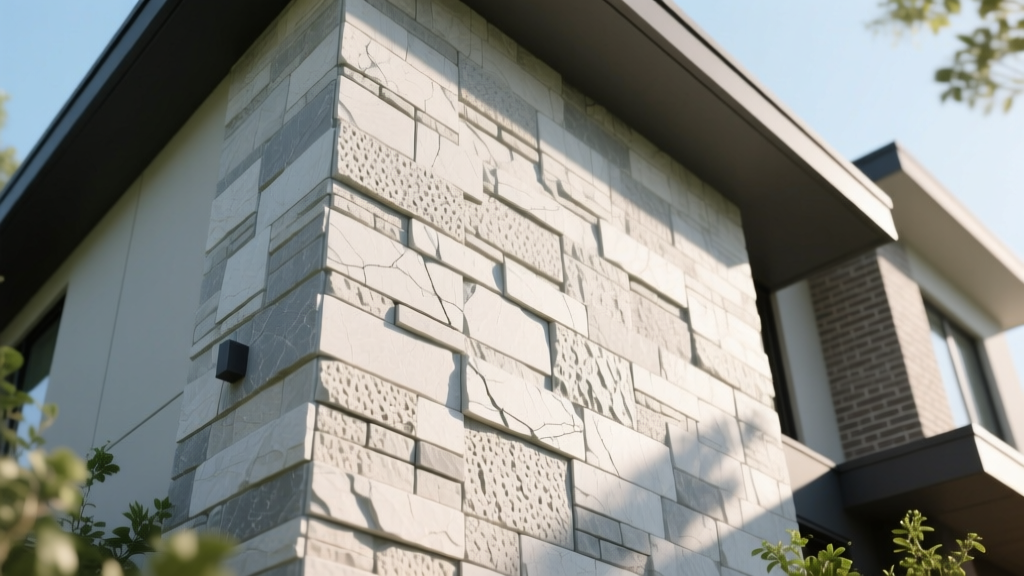
The Unique Maintenance Profile of Modern Stone Veneer
Maintaining a modern stone veneer exterior requires a fundamentally different approach than caring for traditional full-bed masonry. Modern thin veneers—whether manufactured stone veneer (MSV) or natural thin stone—are typically 1 to 1.5 inches thick and rely on a mortar scratch coat and metal lath for structural adhesion rather than sheer mass. Because manufactured veneers are cast from Portland cement blends and lightweight aggregates, they are highly susceptible to acid etching, moisture entrapment, and high-pressure damage. According to the Masonry Veneer Manufacturers Association (MVMA), improper cleaning techniques are the leading cause of premature aesthetic degradation in MSV installations. This guide provides a precise, actionable framework for washing, troubleshooting, and sealing your exterior veneer to ensure it lasts for decades without delamination or surface spalling.
Material Identification: Dictating Your Cleaning Strategy
Before applying any water or chemical agent, you must identify whether your modern stone veneer exterior is manufactured (concrete-based) or natural thin stone (quarried). The porosity and chemical composition of these materials dictate their tolerance to cleaning agents.
| Characteristic | Manufactured Stone Veneer (MSV) | Natural Thin Stone Veneer (NTV) |
|---|---|---|
| Composition | Portland cement, pumice, iron oxide pigments | Quarried slate, granite, limestone, or sandstone |
| Acid Sensitivity | Extreme: Acids dissolve the cement binder and strip pigments | Variable: Limestone/marble will etch; granite/slate are resistant |
| Max Pressure (PSI) | 1,500 PSI (with 40-degree white nozzle) | 2,000 PSI (with 25-degree green nozzle) |
| Sealer Requirement | Optional, but recommended for freeze-thaw climates | Highly recommended for porous stones like sandstone |
The Annual Washing Protocol: Step-by-Step Execution
Routine environmental dirt, pollen, and mild exhaust residue should be removed annually. The National Park Service Preservation Brief on masonry cleaning emphasizes that the gentlest method possible should always be employed first. Follow this exact sequence to prevent dirty water from being driven into the stone's pore structure.
Always saturate the stone veneer with clean water before applying any cleaning solution. A dry stone will absorb the chemical cleaner and the suspended dirt deep into its pores, causing permanent staining. A pre-wetted stone forces the cleaning solution to remain on the surface where it belongs.
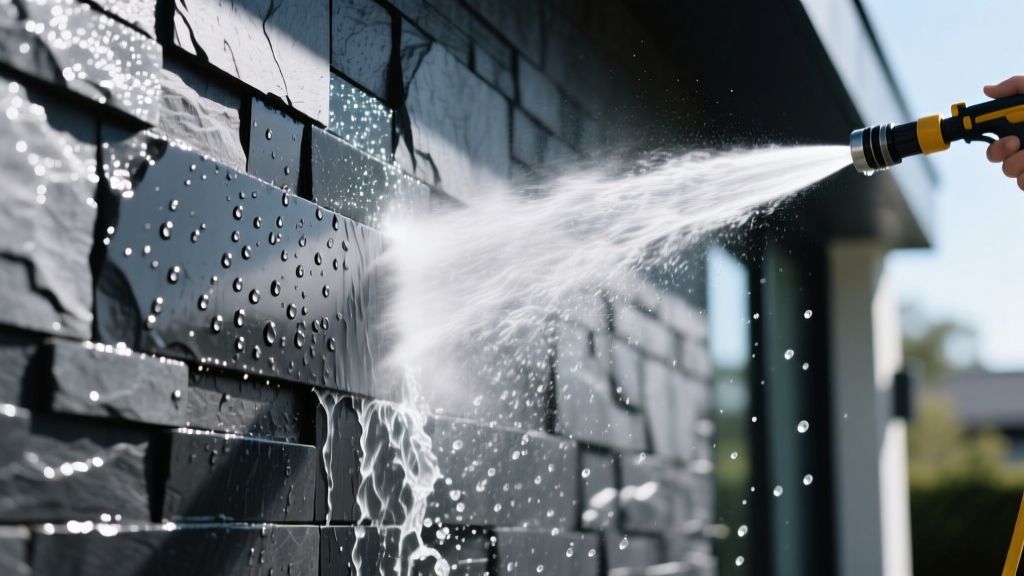
- Pre-Wet the Wall: Using a garden hose or a pressure washer on a low-pressure setting (under 800 PSI), soak the wall from the bottom up. This prevents streaking.
- Apply pH-Neutral Cleaner: For MSV, use a dedicated pH-neutral masonry cleaner (such as PROSOCO SureKlean® Limestone & Masonry Afterwash). Apply using a low-pressure pump sprayer from the bottom up to avoid streak marks.
- Dwell Time: Allow the solution to dwell for 3 to 5 minutes. Do not let the cleaner dry on the surface; mist it with water if necessary.
- Agitate Stubborn Areas: Use a stiff nylon bristle brush (never wire bristles, which leave rust-prone metal fragments) to gently agitate heavily soiled mortar joints or textured stone faces.
- Rinse Top-Down: Rinse the wall thoroughly from the top down using a pressure washer set to a maximum of 1,500 PSI. Keep the wand exactly 12 to 18 inches from the surface. Use a 40-degree (white) fan nozzle to disperse the force and prevent cutting into the mortar joints.
Troubleshooting Common Exterior Veneer Issues
When routine washing fails, specific chemical or mechanical interventions are required. Misdiagnosing these issues often leads to irreversible damage.
1. Efflorescence (White Powdery Residue)
Efflorescence occurs when water-soluble salts within the mortar or stone migrate to the surface and crystallize upon evaporation. The Fix: Do not use water immediately, as it will simply dissolve the salts and drive them back into the pores. First, dry-brush the surface vigorously with a stiff nylon brush. If the residue persists, apply a specialized efflorescence remover (like PROSOCO SureKlean® VanaTrol®) according to the manufacturer's dilution ratios.
2. Algae, Mildew, and Organic Staining
North-facing walls or areas shaded by heavy tree canopy often develop green or black organic growth. The Fix: Mix a solution of 1 part household bleach to 4 parts water, or use a commercial sodium hypochlorite-based masonry wash. Apply, let dwell for 10 minutes, and rinse thoroughly. Ensure your landscaping is protected, as heavy bleach runoff will kill surrounding vegetation.
3. Hard Water and Calcium Runoff
White, crusty deposits beneath windowsills or rooflines are typically calcium carbonate from hard water runoff, not efflorescence. The Fix: These require a mild, buffered acidic cleaner specifically formulated for calcium removal. Test in an inconspicuous area first, apply, agitate gently, and neutralize the area with a baking soda and water rinse afterward.
Sealing Modern Stone Veneer: Do You Need It?
A common misconception is that all exterior stone must be sealed. In reality, applying the wrong sealer to a modern stone veneer exterior can trap moisture inside the wall cavity, leading to lath rust, mortar degradation, and freeze-thaw spalling. You only need a sealer if the veneer is exposed to driving rain, lacks adequate roof overhangs, or is installed in a severe freeze-thaw climate.
| Sealer Type | Chemical Base | Breathability | Lifespan | Cost (Professional Application) |
|---|---|---|---|---|
| Penetrating Siloxane | Silane/Siloxane blend | High: Allows water vapor to escape | 5 - 7 Years | $1.50 - $2.50 per sq. ft. |
| Film-Forming Acrylic | Water-based Acrylic | Low: Traps vapor, creates a surface film | 1 - 3 Years | $1.00 - $1.75 per sq. ft. |
| Enhancing Sealer | Solvent-based resins | Medium: Darkens stone, traps some vapor | 3 - 5 Years | $2.50 - $3.50 per sq. ft. |
The Verdict: Always choose a penetrating silane/siloxane water repellent for MSV. These sealers line the microscopic pores of the concrete, creating a hydrophobic barrier that repels liquid water while remaining completely vapor-permeable. Avoid acrylic 'wet-look' sealers on exterior manufactured stone, as UV degradation will cause them to yellow and peel within two seasons.
Landscaping and Weep Screed Clearance
Maintenance extends beyond the stone itself to the environment immediately surrounding it. The most frequent cause of water intrusion and subsequent veneer failure is improper landscaping clearance.
- Soil and Mulch Clearance: Maintain a strict 4-inch vertical gap between the top of the soil/mulch grade and the bottom of the weep screed. Piling mulch against the weep screed blocks drainage, wicks groundwater into the wall cavity, and invites termite activity.
- Hardscape Clearance: Maintain a 2-inch gap between concrete patios, walkways, or driveways and the weep screed.
- Foliage Management: Trim all shrubs, vines, and tree branches at least 12 inches away from the stone surface. Direct contact traps moisture against the veneer, accelerates algae growth, and prevents the sun and wind from drying the wall after rain events.
When to Call a Professional Mason
While cleaning and sealing are manageable DIY tasks, certain warning signs indicate structural or moisture-management failures that require a licensed masonry contractor. If you notice the stone pieces physically pulling away from the scratch coat, bulging sections of the wall, or persistent efflorescence that returns within days of cleaning, you likely have a compromised weather-resistant barrier (WRB) or blocked weep system. Professional diagnostic evaluation and localized veneer replacement typically cost between $45 and $85 per square foot, depending on scaffolding requirements and regional labor rates. Addressing these structural warning signs immediately prevents water damage to the underlying wood framing, which can escalate repair costs into the tens of thousands of dollars.
Written by
James ThorntonJames Thornton is a construction industry veteran with 25 years of hands-on experience in wood framing, lumber grading, and residential building codes. He started as a framing carpenter in rural Oregon, earned his ICC Residential Building Inspector certification, and eventually became a senior plan reviewer for the City of Portland Bureau of Development Services. James holds a B.S. in Wood Science & Technology from Oregon State University and is a certified lumber grader through the West Coast Lumber Inspection Bureau (WCLIB). He has inspected over 3,000 residential construction sites and authored the city's internal guide on advanced framing techniques (2x6 at 24" O.C.). James lives in Bend, OR, where he builds custom timber-frame cabins and competes in lumberjack sports.
More from James Thornton
View all
Insulation
Best Home Insulation Materials: Complete 2026 Guide
Compare top home insulation materials for 2026. Find R-values, installed costs per square foot, and best uses for fiberglass, spray foam, and mineral wool.
Aug 4, 2026

Sustainable Building
Certify Your Green Building Material for LEED and WELL
Step-by-step guide to certifying a green building material for LEED v5 and WELL v2. Master EPDs, HPDs, and VOC limits for 2026 project specifications.
Aug 4, 2026

Stone & Masonry
Veneer Stacked Stone Panels: Interior Design & Style Showcase
Discover how veneer stacked stone panels transform interiors. Explore modern design profiles, material pairings, and technical installation specs.
Aug 4, 2026